 Blaine Siding
 Living on the Water in Sandy Point Comes With a Siding Cost
Sandy Point sits on the water in Blaine, in the far northwest corner of Whatcom County, and that location is exactly why the homes here need a different conversation about siding than a house ten miles inland. A waterfront setting on the Strait of Georgia means constant exposure to salt-laden air, wind that drives rain sideways into wall assemblies, and a wet season that runs long even by Pacific Northwest standards. Siding here isn't just cosmetic. It's the first line of defense against a climate that works on a building year-round, not just during storms.
We've worked on enough homes in this stretch of Whatcom County to know that what holds up in a sheltered inland neighborhood often doesn't hold up the same way a few blocks from Semiahmoo Bay. This page walks through what Sandy Point homes actually face, how we approach siding replacement for this kind of exposure, and why our company made the decision to install only James Hardie fiber cement siding rather than the wider range of products most contractors offer.
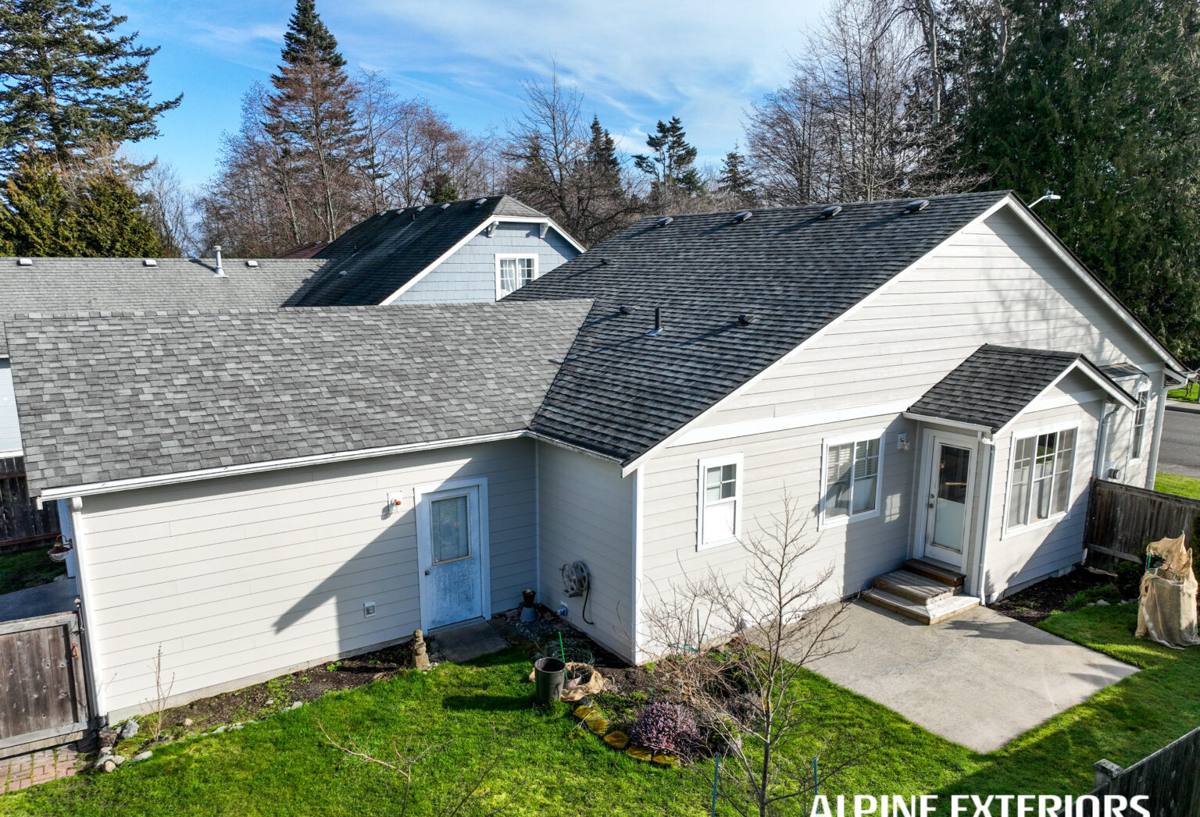
What Salt Air and Wind-Driven Rain Do to Exterior Siding
Salt-Laden Air and Corrosion
Homes close to saltwater deal with airborne salt settling on every exterior surface, not just the siding itself. Salt is corrosive to fasteners, flashing, and trim, and it accelerates the breakdown of paint films and coatings that aren't formulated to resist it. Over years, that corrosion works its way into small gaps and seams, and once moisture follows the same path, the damage compounds.
Wind-Driven Rain and Moisture Intrusion
Blaine gets its share of storms off the water, and wind-driven rain behaves differently than rain falling straight down. It gets pushed up under laps, into seams, and around penetrations that would stay dry in a calmer setting. Siding systems that rely on tight tolerances or that swell and shrink with moisture are more likely to open small gaps over time, and those gaps are exactly where wind-driven rain finds its way in.
A Long Moss and Algae Season
The Pacific Northwest's mix of moisture, mild temperatures, and shade gives moss and algae a long growing season, and waterfront humidity only extends it. On siding, that growth isn't just an appearance issue. Moss holds moisture against the surface, and on materials that aren't dimensionally stable, sustained moisture contact is where problems start.
Why Sandy Point Homes Often Show Wear Faster Than Inland Homes
A lot of homes in this area started as vacation or weekend properties before becoming full-time residences, which means exterior maintenance wasn't always on a regular schedule. Combine a less frequent maintenance history with direct water exposure, and it's common to see siding failures here five or ten years before we'd expect the same failure on a comparable inland home. That's not a knock on any particular product or past owner — it's just the math of exposure plus time.
Why We Only Install James Hardie Fiber Cement Siding
Our company made a deliberate decision years ago to stop offering the full menu of siding products and install James Hardie fiber cement exclusively. We still get asked why, especially by homeowners comparing quotes, so here's the honest reasoning rather than a sales pitch.
Vinyl siding is inexpensive and easy to install, but it's a petroleum-based product that expands and contracts significantly with temperature swings, and its seams and J-channels give wind-driven rain more opportunities to find a path behind the cladding. In a sheltered inland yard that's a minor concern. On an exposed waterfront lot, it's a real one. Engineered wood products like LP SmartSide use a wood-strand substrate that performs well when detailed and maintained correctly, but wood-based products are inherently more sensitive to sustained moisture exposure than fiber cement, and that sensitivity matters more here than almost anywhere else in the county. Cedar and primed spruce are beautiful, and we respect that some homeowners want that look, but real wood siding demands a maintenance commitment — repainting, caulking, moisture checks — that most homeowners underestimate, especially in a climate that gives wood so few dry stretches to recover.
James Hardie fiber cement is cement, sand, and cellulose fiber. It doesn't expand and contract the way vinyl does, it isn't subject to the same moisture-driven decay that wood products are, and it's non-combustible, which matters for insurance and peace of mind even outside wildfire-prone areas. Hardie's HZ5 product line is engineered specifically for climate zones with heavy moisture exposure, which fits Blaine's profile well. The ColorPlus factory finish is baked on under controlled conditions rather than field-painted, which gives it better adhesion and color consistency than site-applied paint, and it carries a substantial finish warranty on top of the product warranty. None of this makes fiber cement maintenance-free, but it shifts the maintenance burden from "constant vigilance" to "periodic inspection," which is a real difference on a home that takes this much weather.
How We Approach a Siding Replacement in Sandy Point
Assessment First
We start by actually getting behind the existing siding wherever we can, not just looking at the surface. On a waterfront home, moisture can be doing damage to sheathing or framing well before it shows up as a visible siding problem, and we want to know what we're dealing with before we quote the job.
Removal and What's Underneath
Once the old siding comes off, we inspect the sheathing and the water-resistive barrier underneath. This is the point where hidden rot, corroded fasteners, or a failed moisture barrier get caught and addressed, rather than sealed back up behind new siding and left to keep working on the structure.
Installing to Hardie's Specification
Fiber cement siding performs the way it's supposed to only when it's installed to the manufacturer's specification — correct fastener type and spacing, proper clearances, and correct lap and joint treatment. This is where a lot of the real-world complaints about any siding product actually trace back to installation shortcuts, not the material itself. We follow Hardie's published installation requirements because that's what keeps the warranty valid and the assembly performing as designed.
Flashing and Trim Detail Near Water
Around windows, doors, and any wall penetration, flashing detail is where wind-driven rain either gets stopped or gets in. On an exposed site like Sandy Point, we treat this as the most important part of the job, not an afterthought once the siding panels are up.
Comparing Siding Materials for a Waterfront Whatcom County Home
| Material | Moisture Behavior | Maintenance Demand | Fit for Sandy Point Exposure |
|---|---|---|---|
| Vinyl | Doesn't absorb moisture, but seams allow wind-driven rain behind panels | Low, but limited repair options | Weak in high-wind, high-salt exposure |
| Cedar / Primed Spruce | Absorbs and releases moisture; sensitive to sustained wet exposure | High — regular painting, caulking, inspection | Demanding upkeep in a long wet season |
| Engineered Wood (LP SmartSide) | Wood-strand core; performs well only with correct detailing and upkeep | Moderate to high | Sensitive to moisture-heavy waterfront conditions |
| James Hardie Fiber Cement | Dimensionally stable; not petroleum or wood-fiber based | Low to moderate — periodic inspection | Engineered product lines (HZ5) suited to this climate |
What Drives Siding Replacement Cost on a Waterfront Home
| Cost Factor | Why It Matters in Sandy Point |
|---|---|
| Hidden sheathing or framing repair | Long-term moisture exposure raises the odds of finding damage once old siding comes off |
| Access and site conditions | Waterfront lots and tighter beachside access can affect staging and logistics |
| Trim, flashing, and window detail | More flashing work is needed for adequate wind-driven rain protection |
| Siding profile and finish selection | Lap width, texture, and ColorPlus finish options affect material cost |
| Home size and wall complexity | Corners, gables, and dormers add labor beyond straight wall footage |
Signs a Sandy Point Home May Need Siding Replacement
- Soft or spongy areas when you press on the siding, especially near the bottom courses
- Persistent moss or algae growth that returns quickly after cleaning
- Visible warping, cupping, or gaps at seams and joints
- Paint that's failing faster than expected, or bubbling and peeling
- Corroded or rust-streaked fasteners and trim
- Rising energy bills that suggest the wall assembly is no longer keeping moisture and air where it should
- Interior signs like musty odors or discoloration on walls that share an exterior with the water side of the house
Beyond Siding: Roofing, Windows, and Decks for Waterfront Exposure
Siding rarely fails in isolation on a home this exposed. Roofing, windows, and decks all take the same salt air and wind-driven rain, and problems in one often show up as damage in another — a roof leak that saturates wall sheathing from above, or a failed window flashing that undermines the siding around it. We handle all four on Sandy Point homes, which lets us look at the exterior as one connected system rather than patching one component while ignoring what's happening next to it.
Why a Local Whatcom County Crew Matters Here
A crew that mostly works inland neighborhoods doesn't always have a feel for what a waterfront lot in Blaine actually experiences over a winter. Knowing to prioritize flashing detail, understanding how far salt exposure reaches inland from the water, and recognizing the difference between normal PNW weathering and exposure-driven failure all come from working this specific area repeatedly. That local pattern recognition is part of what you're paying for when you hire a contractor who knows Whatcom County's coastal edge, not just the region in general.
Get a Straightforward Look at Your Home
If your Sandy Point home is showing any of the wear signs above, or you're just planning ahead for a property that takes this much weather, we're happy to take a look and give you a straightforward assessment. There's no pressure and no obligation — just an honest read on where your siding stands and what your options are.