 Blaine Siding
 Building New in Sandy Point Means Building for the Water
Sandy Point sits close enough to the Strait of Georgia that the water is part of every building decision, whether you're thinking about it or not. If you're framing a new home or a major addition out here, the windows you choose and how they go in during construction will decide whether you're dealing with fogged glass, stained trim, and soft sill wood in ten years — or whether the house is still tight and dry in thirty. New-construction windows are not the same job as a replacement window dropped into an existing opening. They're installed before the siding goes on, tied directly into the house wrap and flashing, and they only get done right once. Get it wrong at this stage and it's hidden behind finished walls for years before anyone notices.
We install new-construction windows for homes in and around Blaine, including Sandy Point, and this page is about that specific job: what the local climate demands, what a correct install actually involves, and why doing it right the first time matters more here than almost anywhere else in Whatcom County.
What Sandy Point's Climate Does to Windows Over Time
Three things define the environment out here, and each one attacks windows in a different way.
Salt Air
Being this close to open saltwater means airborne salt settles on everything — glass, frames, hardware, fasteners. Salt is corrosive to untreated metal, and it accelerates the breakdown of lower-grade coatings and finishes. Hinges, cranks, and locking hardware take the brunt of it. Over years, salt exposure can pit metal components and cause finishes to chalk or discolor faster than they would a few miles inland.
Driving Rain
Wind off the water doesn't just bring rain — it pushes it sideways and up under trim, sills, and any gap in the weather barrier. A window that's fine in a calm rainstorm can leak in a wind-driven one if the flashing and sealant details weren't done correctly. This is the single biggest reason new-construction window failures happen: not bad glass, but water finding a path in through the rough opening.
Moss Season
Whatcom County's long, wet, mild winters are ideal moss and algae conditions. On windows, that shows up as green growth on north-facing sills, trim, and anywhere water sits instead of draining away. It's mostly cosmetic on the window itself, but it's a signal — if moss is thriving on a sill, moisture is sitting there longer than it should, and that's the same condition that eventually rots wood trim or works its way past a marginal seal.
New-Construction vs. Retrofit: Why the Install Method Matters
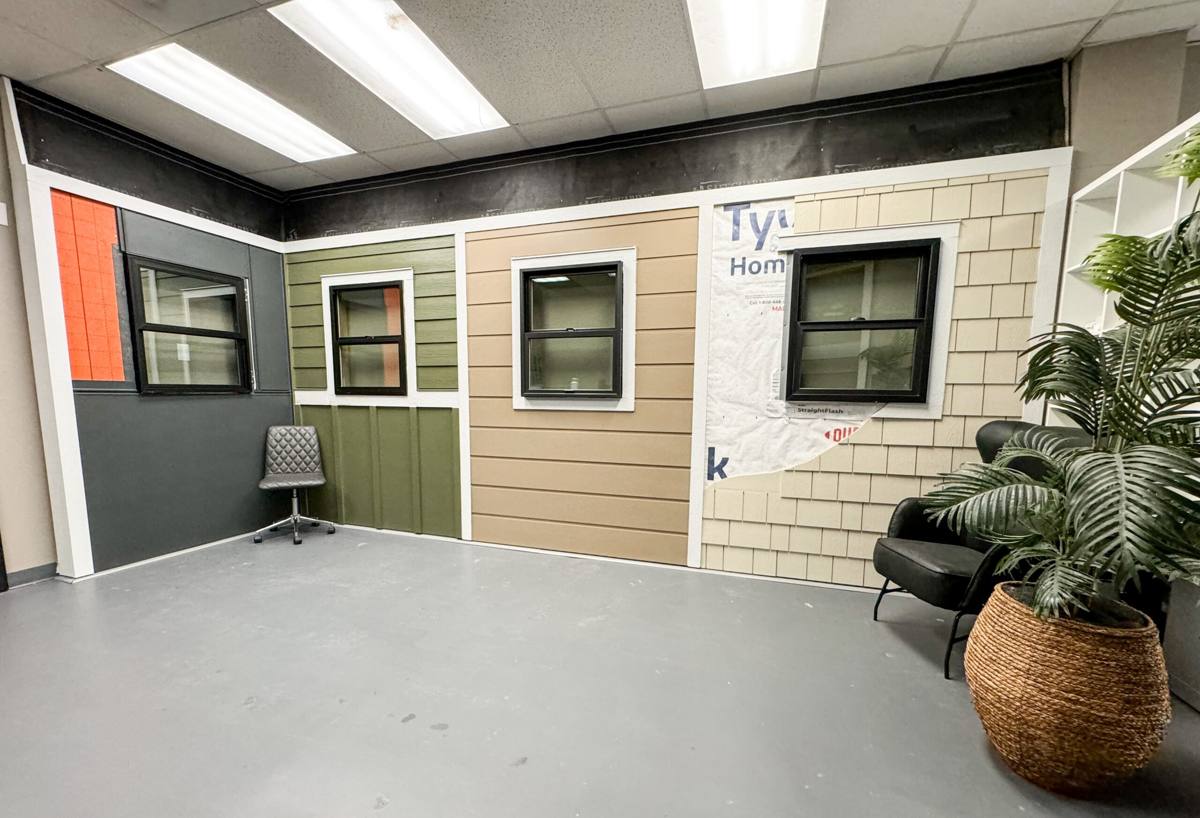
New-construction windows have a nailing fin (or flange) around the frame that gets integrated directly into the wall's water-resistive barrier before siding is installed. Done correctly, this creates a shingled, lapped system where water is directed out and down, away from the framing, no matter how hard the wind is blowing. Retrofit or "pocket" windows, by contrast, get installed into an existing opening without disturbing the surrounding wall — they rely more heavily on sealant and less on a fully integrated flashing system.
For a home actually being framed in Sandy Point, new-construction windows are almost always the right call, because you get one chance to build the flashing assembly correctly before it's buried behind house wrap and siding. The tradeoff is that there's no room for shortcuts — every layer has to be sequenced correctly, in order, before the next one goes on.
Choosing Frame Materials for a Salt-Air Site
Every frame material can work in a coastal environment, but they don't all age the same way, and they don't all cost the same to maintain over time. Here's how the common options compare for a Sandy Point new build.
| Frame Material | Salt Air Behavior | Maintenance | General Cost Position |
|---|---|---|---|
| Vinyl | Won't corrode; UV and salt exposure can affect long-term color and finish quality over decades | Low — rinse occasionally | Lower to mid |
| Fiberglass | Very stable dimensionally; resists corrosion and holds paint/finish well near salt air | Low | Mid to higher |
| Aluminum-clad wood | Exterior clad resists weather well if seams and corners are properly sealed; wood interior needs protection from any moisture intrusion | Moderate | Higher |
| Bare aluminum | Metal frame is more exposed to salt-driven corrosion and pitting over time without a quality finish | Higher | Varies |
Hardware matters as much as frame material. On any frame type, we push for stainless steel or otherwise corrosion-resistant hinges, cranks, and locks on Sandy Point installs — the frame can be perfectly sound while cheap hardware seizes up or stains within a few seasons.
Flashing and Water Management — the Part Nobody Sees
This is where a new-construction window job is actually won or lost, and it's invisible once the siding goes up. The correct sequence, generally, is:
- Sill pan flashing installed first, sloped slightly outward so any water that gets past the window has somewhere to go
- Window set into the rough opening, checked for level, plumb, and square before a single fastener goes in
- Side flashing lapped over the sill pan
- Head flashing lapped over the side flashing, tucked behind the house wrap above the window — never taped over the top of it
- House wrap and any remaining flashing tape integrated in proper shingle-lap order so every layer drains onto the one below it
Skip a step or do it out of order, and you've built a path for wind-driven rain to get behind the wall — the exact failure mode this stretch of coastline is hardest on. It's also the reason we won't rush this stage regardless of a build schedule; a window that takes an extra hour to flash correctly is a lot cheaper than one that has to be pulled out and redone after a leak shows up in the drywall.
Glass, Hardware, and Ventilation Choices Worth Getting Right the First Time
A few decisions on new-construction windows are easy to fix later and a few aren't. Glass package and hardware finish fall into the "hard to change later" category, so it's worth thinking through up front:
- Low-E, argon-filled glass is standard on most new builds now and helps with both energy performance and condensation resistance in our humid winters
- Operable sash design (casement vs. double-hung vs. sliding) affects how tightly the window seals against wind-driven rain — casements, which compress a gasket when latched, tend to seal tighter against driving rain than sliding sashes
- Screen and hardware finishes should be rated for coastal or marine environments, not just standard residential grade
- Sill design that sheds water cleanly to the exterior, rather than trapping it against the frame, cuts down on the staining and moss growth common on shaded, north-facing walls
Our New-Construction Window Process
For a Sandy Point build, our process generally runs through these stages:
- Review the rough openings against the window schedule before anything is installed, catching sizing issues while they're still cheap to fix
- Install sill pan and flashing in proper sequence for each opening
- Set, square, and fasten each window per manufacturer specification
- Integrate flashing with the house wrap in correct shingle-lap order
- Interior and exterior inspection of each opening before siding or interior finish work covers it up
- Final walkthrough with the builder or homeowner before the crew moves off the job
A Practical Checklist for Sandy Point New-Construction Windows
- Confirm frame material and hardware are rated for coastal/salt-air exposure
- Verify sill pan flashing is installed and sloped before the window goes in
- Check that flashing is lapped correctly — sill, then sides, then head — with no reverse laps
- Ask what glass package is specified and whether it suits Whatcom County's humidity and winter condensation patterns
- Confirm sills are designed to shed water away from the frame rather than pooling it
- Get openings inspected before siding covers the flashing work
Why a Local Blaine Crew Matters for New Builds
Window flashing details that work fine forty miles inland aren't always sufficient for a site catching wind straight off open water. A crew that already works Sandy Point and the surrounding Blaine area has seen where the wind-driven rain problems actually show up on homes here, knows which sill and flashing details hold up through a real moss season, and isn't learning the site's exposure for the first time on your build. That familiarity shows up less in any one dramatic decision and more in a dozen small ones — how tight the flashing laps are, which hardware grade gets specified, how sills are detailed — that add up to a window system that's still performing well a decade or two after the framing crew has moved on.
If you're framing a new home or addition in Sandy Point and want windows installed to hold up against salt air, driving rain, and everything a Whatcom County winter brings, we're happy to walk the plans with you. Reach out for a free, no-pressure estimate using the form below.