 Blaine Siding
 Why This Decision Matters More in Blaine Than Elsewhere
Every siding job starts with the same question: patch it or replace it? In a lot of the country, that's a straightforward call based on age and budget. In Blaine, it's complicated by geography. Sitting right on Semiahmoo Bay with Puget Sound weather rolling in off the water, homes here take on a combination of salt-laden air, sustained wind-driven rain, and a moss season that can run eight or nine months out of the year. Siding that would hold up fine in a drier inland climate can fail early here, and a repair that would buy years elsewhere might only buy months.
This guide walks through how to tell the difference between a fixable problem and a siding system that's done, what the climate does to that decision, and what actually drives cost on each path.
When Repair Is the Right Call
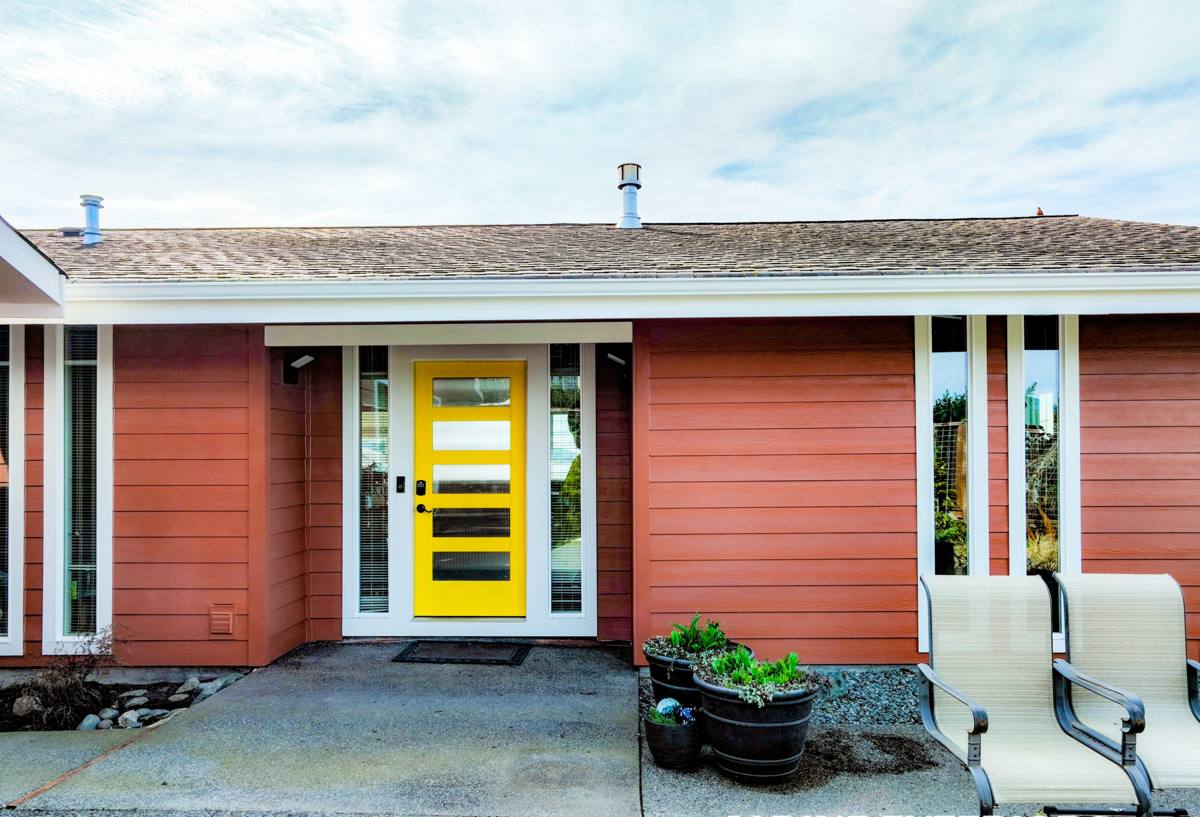
Repair makes sense when the damage is isolated and the rest of the siding is structurally sound. A cracked board from a stray branch, a section damaged by a ladder, or a small area of impact damage near grade doesn't necessarily mean the whole wall needs to come off.
Good candidates for repair
- Damage limited to one or two boards or panels, not spread across a wall
- Siding installed within the last 10-15 years that's otherwise performing well
- Cosmetic cracking or minor impact damage with no signs of moisture behind it
- Caulking and trim failures around windows and doors, with the field siding intact
- A single area of moss or mildew staining that hasn't compromised the substrate
The catch with repair is matching. Paint fades, factory finishes weather unevenly, and older profiles are sometimes discontinued. A patch that's structurally fine can still look like a patch. That's a cosmetic trade-off worth weighing, not a reason to avoid repair on its own.
When Replacement Is the Right Call
Replacement becomes the honest recommendation when the damage is systemic rather than isolated — meaning the problem isn't really about the boards you can see, it's about what's happening underneath or across the whole wall assembly.
Signs the whole system is compromised
- Soft or spongy spots when you press on the siding, especially near the bottom courses
- Widespread paint failure — peeling, bubbling, or chalking across multiple walls
- Visible warping, buckling, or boards separating from the wall
- Persistent moss or algae growth that keeps returning after cleaning
- Interior signs — musty smells, staining on inside walls, or bubbling interior paint near exterior walls
- Siding that predates modern water-resistive barrier and flashing standards
If you're finding rot at multiple penetration points — around windows, at corners, near the foundation — that's usually evidence of a systemic moisture problem in the wall assembly, not a handful of unlucky spots. Patching individual boards in that situation treats the symptom and leaves the underlying moisture path in place.
How Whatcom County's Climate Tips the Scale
The decision between repair and replacement isn't purely about what you see on the surface — it's also about what the local climate is doing to the materials over time.
Salt air
Blaine's proximity to the water means airborne salt is a constant, low-grade stressor on exterior materials. It accelerates the breakdown of paint films and can be harder on fasteners and trim than most inland siding is designed to handle. A repair on salt-exposed elevations often has a shorter useful life than the same repair would have a few miles inland.
Driving rain
Storms coming off the Strait of Georgia don't just drop rain straight down — they drive it sideways into wall assemblies, seams, and laps. Siding systems and installation details that aren't built for wind-driven rain are more likely to let moisture find its way behind the cladding, which is exactly the kind of hidden damage that turns a repair into a replacement once it's uncovered.
Moss season
Whatcom County's long wet season keeps moisture sitting on north-facing and shaded walls for months at a stretch. Moss and algae aren't just cosmetic — they hold moisture against the siding surface far longer than an exposed, sun-dried wall would experience. On materials that are moisture-sensitive at the core, that sustained dampness is what eventually shows up as soft spots and delamination.
What a Proper Inspection Should Cover
Before committing to either path, the siding should actually be opened up and checked in a few spots, not just looked at from the ground. A responsible inspection includes:
- Probing suspect areas with an awl or screwdriver to check for soft wood underneath
- Pulling a board or panel in a representative spot to look at the water-resistive barrier and flashing condition
- Checking window and door flashing integration, which is where a large share of hidden moisture problems originate
- Assessing how much of the wall is affected versus isolated to one elevation or section
- Reviewing the age and material of the existing siding against what's typically failing at that age
Be cautious of any inspection that quotes a full replacement without opening anything up, and equally cautious of one that recommends repair without checking behind the siding at all. Both extremes skip the step that actually answers the question.
Cost Factors: Repair vs. Replacement
Actual numbers vary by scope, but the factors that drive cost on each path are consistent. Use this as a framework for the conversation with your contractor rather than a quote.
| Factor | Repair | Full Replacement |
|---|---|---|
| Material cost | Lower — limited square footage | Higher — full elevation or whole house |
| Labor scope | Targeted, faster | Full crew, multi-day to multi-week |
| Color/texture match | Risk of visible patchwork | Uniform finish across all walls |
| What's exposed | Only the repaired area | Full wall assembly, flashing, sheathing condition |
| Warranty coverage | Often limited to the repaired section | Full manufacturer warranty on the new system |
| Long-term cost | Lower now, possible repeat repairs | Higher upfront, resets the clock on the whole house |
The line that trips people up most is the last one. A string of repairs on a siding system that's genuinely at the end of its life can add up to more, over five or ten years, than a single replacement would have cost — with the added downside of never fully solving the underlying problem.
Why the Material You Choose for Either Path Matters
If you're repairing, you're stuck matching the existing material. If you're replacing, you get to choose what goes back up — and that choice matters more in this climate than most homeowners expect. We install James Hardie fiber cement siding exclusively, and it's worth explaining why, since it directly affects how this repair-versus-replace conversation plays out on future decisions.
What we're weighing against
Vinyl, engineered wood products, and other fiber cement brands each have real strengths — cost, installed speed, or specific aesthetic options. But in a marine climate with sustained wind-driven rain and a long moss season, the products we've chosen not to install tend to share one or more of these trade-offs: higher sensitivity to moisture at cut edges and seams, factory finishes that don't hold up as long under UV and salt exposure, or field-applied paint that starts the weathering clock over from day one instead of using a factory-cured finish.
Why Hardie
James Hardie fiber cement is non-combustible, dimensionally stable in wet climates, and available with a factory-applied ColorPlus finish that's engineered to hold color and resist the kind of chalking and fading that salt air accelerates. Hardie's HZ5 product line is specifically engineered for climates with the sustained moisture exposure Whatcom County sees. The transferable warranty is also meaningfully stronger than what most alternatives offer — which matters directly to this article's topic, since a strong warranty is what keeps a future problem in "repair" territory instead of forcing a premature full replacement.
A Practical Way to Make the Call
When you're standing in front of the decision, run through it in this order:
- How much of the house is actually affected — one spot, one elevation, or the whole exterior?
- When you probe or open up a section, is the substrate underneath sound or soft?
- How old is the current siding relative to its expected service life?
- Will a repair actually match, or will it be visually obvious for the life of the house?
- What's the moisture exposure on the affected walls — north-facing, shaded, or directly exposed to prevailing storms?
If the answer to most of those points toward "isolated, sound, recent, matchable, low exposure" — repair is a reasonable, honest choice. If it points toward "widespread, soft, old, mismatched, high exposure" — replacement is going to serve you better, even though it costs more upfront.
Get an Honest Read on Your Siding
There's no substitute for someone actually opening up a section of your siding and looking at what's underneath before recommending a direction. If you're trying to figure out whether your Blaine home needs a repair or a full replacement, we're happy to come take a look, probe the areas in question, and give you a straight answer — no pressure either way. Reach out for a free estimate using the form below.