 Blaine Siding
 Everson's Climate Is Harder on Siding Than It Looks
Everson sits along the Nooksack River in Whatcom County, a few miles inland from the coastal wind and salt exposure that pounds homes closer to Blaine and Birch Bay. That inland position doesn't mean Everson homes get off easy — it means they face a different combination of problems. The river valley traps humidity, the tree cover around town shades north- and east-facing walls for much of the year, and the same marine-influenced weather system that soaks the rest of Whatcom County dumps steady rain on Everson for a good chunk of the calendar.
That combination — persistent moisture, limited direct sun on shaded elevations, and mild temperatures that never really dry things out — is exactly what moss, algae, and wood rot need to get established. Homes near the river or backed up against trees tend to see it worst, but any Everson property with siding that traps water instead of shedding it is a candidate. Add in the driving rain that comes through on winter storms, and siding seams, butt joints, and lower courses take a real beating over the years.
We're not going to pretend Everson deals with the same direct salt-air corrosion that coastal Blaine properties see. It doesn't. But the moisture load, the moss season, and the freeze-thaw cycles that hit Whatcom County's river valleys are just as capable of ruining the wrong siding material over time.
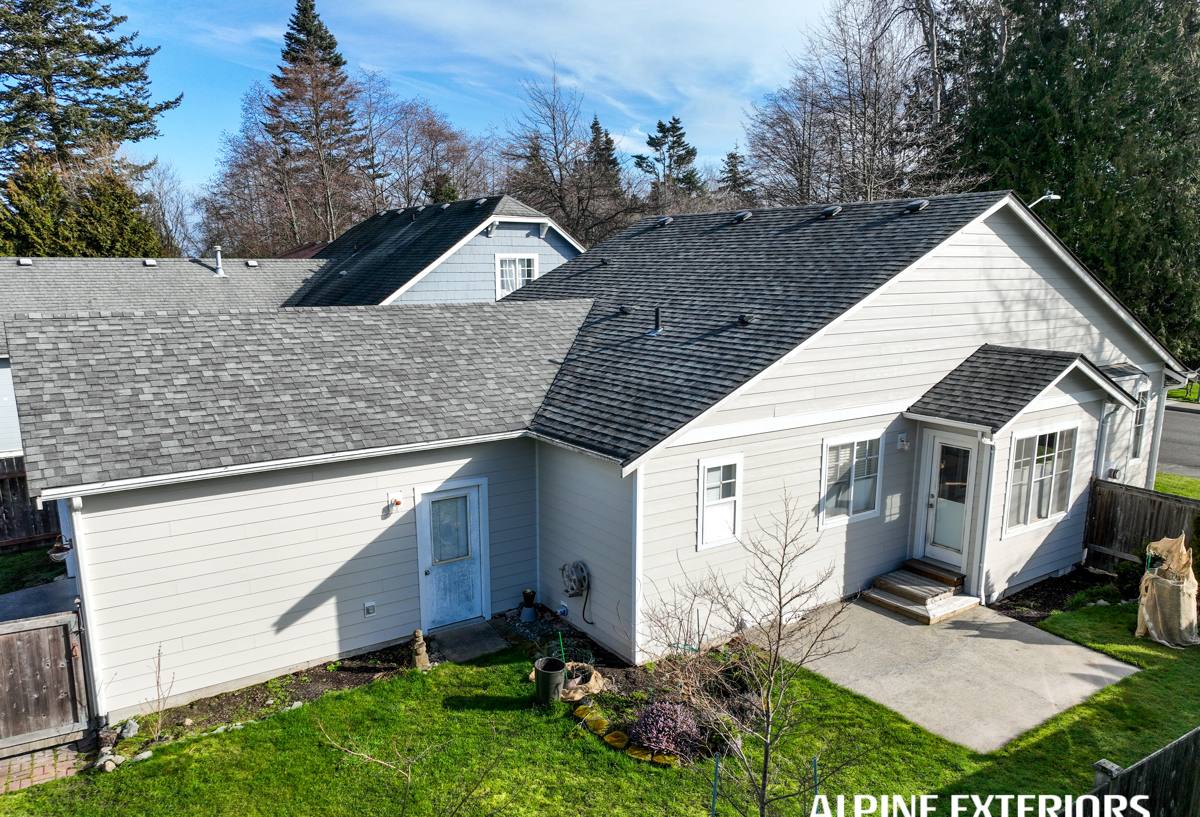
Why a Local Crew Matters for This Kind of Work
Siding failure in Everson usually isn't dramatic — it's slow. A hairline gap at a butt joint lets water behind the cladding. Moss holds moisture against a wall for months. A section that never gets direct sun stays damp long after the rest of the house has dried out. None of that shows up as an emergency; it shows up five years later as soft trim, peeling paint, or a stain on an interior wall.
A crew that works Whatcom County regularly knows which walls on an Everson home are going to be the problem walls before they even get on a ladder — the shaded side, the side facing prevailing wind-driven rain, the section near grade where sprinklers or landscaping keep moisture in contact with the wall longer than it should be. That's not something you get from a general contractor who does a few siding jobs a year alongside everything else. It comes from doing this specific work, in this specific climate, over and over.
Why We Only Install James Hardie Fiber Cement
We get asked why we don't offer vinyl, LP SmartSide, Cemplank, Allura, or primed wood siding. The honest answer: we used to see all of these products fail in this climate in predictable, avoidable ways, and we made a decision to stop installing materials we didn't fully trust here.
Vinyl is inexpensive and low-maintenance in dry climates, but it expands and contracts with temperature swings, can warp or crack in cold snaps, and doesn't hold paint if a homeowner ever wants to change the color. In a river valley with real freeze-thaw cycles, that expansion and contraction adds up over the years.
Engineered wood products like LP SmartSide are treated to resist moisture, but they're still wood-based, and wood-based siding depends heavily on flawless installation and ongoing maintenance to keep water out of cut edges and joints. In a climate where things don't dry out quickly, any lapse in that maintenance schedule shortens the material's life.
Primed cedar and spruce look great on day one but require repainting on a cycle most homeowners underestimate, and end-grain moisture intrusion is a constant fight in a wet climate. Other fiber cement brands like Cemplank and Allura are reasonable products on paper, but we've standardized on one manufacturer so our crews are installing to one exacting spec, every time, with one warranty structure behind it — rather than juggling installation details across several product lines.
James Hardie fiber cement is non-combustible, engineered specifically for wet Pacific Northwest climates through its HZ10 product line, and finished at the factory with ColorPlus technology — a baked-on finish that resists fading and chipping far better than field-applied paint. It doesn't rot, it doesn't feed moss the way some porous materials can, and it comes with a strong, transferable warranty when installed correctly. That's the standard we put on Everson homes, and it's the only one we stand behind.
A Quick Comparison
| Material | Moisture Resistance | Maintenance | Typical Lifespan |
|---|---|---|---|
| Vinyl | Good, but can warp/crack in cold | Low, but can't be repainted well | 20-30 years |
| Primed Wood (cedar/spruce) | Poor without diligent upkeep | High — repainting cycle required | 10-20 years |
| LP SmartSide / Engineered Wood | Good if installed and sealed correctly | Moderate | 20-30 years |
| James Hardie Fiber Cement | Excellent, climate-engineered | Low — factory finish, no repainting for years | 30-50+ years |
What Siding Replacement Looks Like on an Everson Home
Every project starts with a walk-around, not a sales pitch. We look at which walls are carrying the most moisture damage, check the condition of the sheathing and framing underneath the existing siding, and identify trouble spots like window flashing, deck ledger boards, and roof-to-wall transitions — all common places where water gets behind cladding in this climate.
- On-site inspection and honest assessment of what's actually wrong versus what's cosmetic
- Removal of failing siding and inspection of the wall assembly underneath
- Repair of any rot, damaged sheathing, or compromised framing before anything new goes up
- Installation of a proper water-resistive barrier and correct flashing details at every penetration
- James Hardie siding installed to manufacturer spec, with attention to fastener pattern, clearances, and caulking
- Final walkthrough so you understand what was done and why
That step where we repair what's underneath the old siding matters more than most homeowners expect. New siding over rotten sheathing just hides a problem that gets worse. We'd rather tell you what we found and fix it than cover it up.
Beyond Siding: Roofing, Windows, and Decks
Siding rarely fails in isolation. A roof that's shedding water onto a wall, a window that's not flashed correctly, or a deck ledger board holding moisture against the house all put stress on the siding around them. We handle roofing, windows, and decks alongside siding work for exactly that reason — it lets us look at an Everson home as one connected system instead of patching one component while ignoring what's causing the damage next to it.
If your roof is due, if your windows are original to the house and no longer sealing well, or if your deck attaches to the same wall where siding is failing, it's worth having all of it looked at together rather than tackling each one separately down the road.
Signs Your Everson Home May Need New Siding
- Soft or spongy siding when pressed, especially near the bottom courses or around windows
- Persistent moss or algae growth that comes back within weeks of cleaning
- Visible warping, buckling, or gaps at panel seams
- Paint that's peeling, bubbling, or failing faster than it should on a house this age
- Interior signs — stains, soft drywall, or musty smell near exterior walls
- Rising energy bills that suggest the wall assembly isn't insulating or sealing the way it used to
What Drives the Cost of a Siding Project
| Factor | Why It Matters |
|---|---|
| Extent of hidden damage | Rot repair behind old siding adds labor and material before new siding even starts |
| Home size and wall complexity | More corners, dormers, and trim details mean more cutting and detail work |
| Siding profile chosen | Lap, shingle, and panel styles from the Hardie lineup carry different material and labor costs |
| Access and site conditions | Trees, slopes, and tight lot lines around a property affect staging and labor time |
| Existing trim and flashing condition | Reusing versus replacing trim and flashing changes both cost and long-term performance |
What to Look for When Hiring a Siding Contractor
- Proper Washington contractor licensing and insurance, verifiable on request
- Willingness to inspect and discuss what's under the existing siding, not just quote a re-side sight unseen
- A clear explanation of the specific product line and installation spec being used
- Local references or a track record of work in Whatcom County's climate specifically
- A written estimate that breaks out material, labor, and any anticipated repair work
Let's Take a Look at Your Home
If you're noticing moss that won't quit, siding that's starting to look tired, or you just want an honest read on where your Everson home stands, we're happy to come take a look. There's no pressure and no obligation — just a straight assessment from a crew that knows this climate, followed by a clear estimate if you decide to move forward.