 Blaine Siding
 Custom Decks for Sandy Point: Built for Water, Not Against It
Sandy Point sits right on the water at the northern edge of Whatcom County, close to Blaine, and it's the kind of setting that makes an outdoor deck one of the most-used parts of the house. It's also a setting that's genuinely hard on wood, hardware, and finishes. Homes here take a steady dose of salt-laden air off the water, driving rain that comes in sideways during winter storms, and a moss and mildew season that runs longer than it does further inland. A deck built without those conditions in mind can look fine for a year or two and then start showing soft boards, corroded fasteners, and slick, moss-covered surfaces well before it should.
We build custom decks specifically for that environment. This isn't a generic deck package we adapt after the fact — the material choices, framing details, and hardware we use on a Sandy Point project reflect what we've actually seen hold up (and fail) on waterfront and near-waterfront homes in this part of the county.
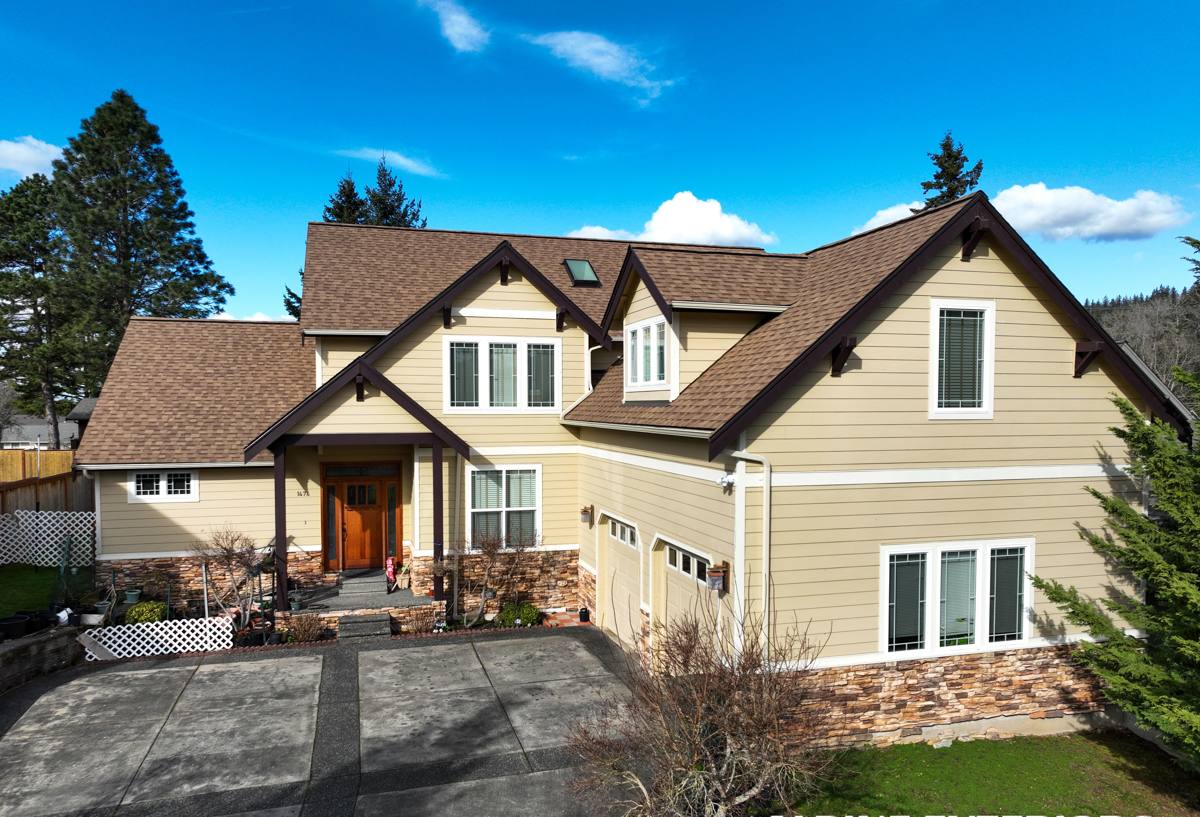
What Sandy Point's Climate Does to a Deck
Salt Air Off the Water
Airborne salt is corrosive to metal and hard on lower-grade finishes, and homes close to the water in Sandy Point get a steadier dose of it than houses set further back from the shoreline. Fasteners, post bases, and any exposed hardware take the brunt of this. Cheap or mismatched hardware corrodes visibly within a few seasons, and once a fastener starts to rust, the wood around it stays wetter longer, which speeds up rot from the inside out.
Driving Rain and Wind Exposure
Open, waterfront lots don't get the wind break that more sheltered, inland properties do. Storms off the water push rain sideways into ledger connections, stair stringers, and any horizontal surface where water can collect instead of shedding. That wind-driven moisture finds gaps a careless build would leave behind — around ledger flashing, at post-to-beam connections, and in decking that's been laid without enough gap for drainage and airflow.
A Long Moss and Mildew Season
Mild temperatures and near-constant moisture add up to a moss season that can run most of the year on shaded decks or north-facing surfaces. Moss doesn't just look bad — it holds moisture against the deck surface and turns boards slick and genuinely dangerous underfoot, especially on stairs. Decking with any real surface porosity gives moss and mildew something to grab onto; smoother, denser materials resist it longer, and airflow underneath the deck matters as much as the surface material itself.
Choosing the Right Decking Material for Sandy Point
There's no single "correct" decking material for every budget, but in a salt-air, high-moisture setting like Sandy Point, some trade-offs matter more than they would in a drier inland town. Here's how the common options actually compare for this specific environment:
| Material | Moisture & Salt Air Behavior | Maintenance | Typical Lifespan Here |
|---|---|---|---|
| Pressure-treated lumber | Resists rot when properly sealed, but end grain and fastener holes are vulnerable if the sealant isn't kept up | Needs re-staining or sealing every 1-2 years in this climate | 10-15 years with consistent upkeep |
| Cedar | Naturally rot-resistant but softer and more prone to surface checking under constant wet-dry cycling | Regular sealing or oiling to maintain color and moisture resistance | 10-20 years, highly dependent on maintenance |
| Composite decking | Doesn't absorb moisture the way wood does; performs consistently in salt air and driving rain | Occasional washing; no staining or sealing required | 20-30+ years, backed by manufacturer warranty |
| PVC decking | Fully synthetic, essentially immune to moisture absorption and salt exposure | Lowest maintenance of the common options | 25-30+ years, backed by manufacturer warranty |
We'll build with any of these depending on your budget and the look you want, but we're honest about the trade-off: real wood costs less up front and gives you that natural look, but it demands ongoing maintenance to hold up in this climate, and skipping a season of sealing shows up fast on a waterfront lot. Composite and PVC cost more initially but hold their finish and structural integrity with far less upkeep, which matters most on decks that see this much salt and moisture exposure.
Framing and Substructure: What's Underneath Matters Most
Ledger Attachment and Flashing
The ledger board — where the deck attaches to the house — is the single most common point of failure we find on decks that weren't built correctly, and it's also the hardest place to inspect once a deck is finished. Proper flashing at this connection has to shed water away from the house framing, not just sit there for looks. On wind-driven rain sites like Sandy Point, we don't cut corners on ledger flashing, because a leak here can damage the house's wall framing long before anyone notices a problem with the deck itself.
Footings and Post Bases
Waterfront and near-waterfront lots often have sandier, wetter soil than inland sites, which changes how footings need to be set. Post bases should hold posts up off the deck surface and out of standing water, using metal connectors rated for exterior, corrosion-prone environments rather than standard interior-grade hardware. Footings need to go to the correct frost depth and bear on stable soil, not just look adequate from the surface.
Fasteners and Hardware: Where Salt Air Does the Most Damage
More decks fail early from bad hardware than from bad decking boards. In a salt-air environment, we specify stainless steel or heavy hot-dip galvanized fasteners and connectors rather than standard coated deck screws, because standard coatings can wear through faster than they would inland. The same goes for joist hangers, post caps, and any structural connector — mismatched or under-rated hardware is a common shortcut we see on tear-offs, and it's almost always the first thing to show visible rust.
- Stainless steel or marine-grade fasteners at all structural connections
- Hidden fastener systems on composite and PVC decking to avoid surface corrosion staining
- Corrosion-resistant joist hangers and post bases rated for exterior, high-moisture use
- Properly flashed ledger connection, checked before any decking goes down
- Adequate board spacing and under-deck airflow to limit moss and mildew buildup
- Footings set to correct frost depth on stable, well-drained soil
Our Custom Deck Process in Sandy Point
Every property here is a little different — some are tight to the water, some have more setback, and lot conditions vary more than they would in a typical inland subdivision. Our process accounts for that instead of applying a one-size-fits-all package.
- On-site assessment: We look at your existing deck or building site, the soil conditions, sun and wind exposure, and how close you are to the water, since that changes our material and hardware recommendations.
- Design and material selection: We walk through decking material options honestly, including the maintenance trade-offs, so you're choosing based on real information rather than a sales pitch.
- Permitting: Waterfront and near-waterfront builds sometimes involve additional review depending on setback and site conditions; we handle the permitting process rather than leaving it to the homeowner.
- Framing and structural work: Ledger flashing, footings, and structural hardware go in first, and this is the stage where corners get cut on lower-quality jobs — it's also the stage we spend the most care on.
- Decking, railing, and finish work: Boards, railing systems, and any built-in features go in last, with attention to drainage gaps and fastener placement.
- Final walkthrough: We go over the finished deck with you, including what maintenance (if any) your chosen material will need going forward.
Signs Your Current Deck Needs Attention
If you already have a deck in Sandy Point, a few warning signs tend to show up earlier here than they would on a more sheltered, inland property:
- Soft, spongy, or bouncy boards, especially near the ledger or stairs
- Rust staining around fasteners, post bases, or metal connectors
- Persistent moss or algae on the deck surface, even after cleaning
- Visible gaps, cupping, or splitting in wood decking boards
- Loose or wobbly railings and stair stringers
- Discoloration or staining on the wall siding directly above the ledger connection, which can point to a flashing failure
Any of these is worth a look before it turns into a structural repair rather than a maintenance item.
Why a Local Crew That Already Works Sandy Point Matters
A crew that regularly builds decks along the water in and around Blaine sees how salt air, driving rain, and moss actually behave on real properties over a full year, not just how a material performs on a spec sheet. That experience shapes practical decisions on a build day: which hardware is worth the extra cost, where extra flashing attention pays off, and which details on a waterfront lot in Whatcom County are worth doing right the first time so you're not dealing with a repair call after the next winter storm off the water. A generic deck build and a deck built for Sandy Point's specific conditions can look identical on install day and age completely differently five years later.
Get a Free, No-Pressure Estimate
If you're planning a new custom deck in Sandy Point or need an honest look at one that's already showing its age, we're glad to come take a look. Reach out using the form below to schedule a free estimate — straightforward advice, no pressure, no upsell script.