 Blaine Siding
 Siding in the California Creek Area of Blaine
California Creek sits in the far northwest corner of Whatcom County, close enough to the water that homes here live under a different set of rules than houses twenty miles inland. The air carries salt. The rain doesn't just fall, it drives sideways on a windy afternoon. And for a good stretch of the year, anything shaded and damp grows moss whether you want it to or not. Exterior materials that hold up fine in a drier climate, or even in a milder part of western Washington, can struggle here faster than most homeowners expect.
We work this stretch of Whatcom County regularly, and the pattern is consistent: siding, trim, and fascia take the brunt of it on the north and west-facing walls, roofs collect moss and slow-draining debris in shaded valleys, and window seals and deck fasteners corrode faster than the manufacturer's glossy brochure implies. None of that is unusual for a coastal Pacific Northwest property. It's just the baseline you're building against.
What Salt Air, Rain, and Moss Actually Do to a House
Salt Air
Proximity to Semiahmoo Bay and the broader Strait of Georgia means airborne salt settles on exterior surfaces even on days you wouldn't call windy. Over years, that salt accelerates corrosion on exposed metal fasteners, flashing, and hardware, and it can degrade lower-quality paint finishes faster than inland exposure would.
Driving Rain
Blaine doesn't get the heaviest rainfall totals in the state, but wind-driven rain off the water is a real factor on exposed elevations. Wind-driven moisture finds gaps in caulking, seams in siding, and undersized flashing details that would never leak in a calmer climate. Water intrusion problems around here are usually less about total rainfall and more about wind direction meeting a weak point in the building envelope.
Moss Season
Shaded rooflines, north walls, and anything under tree cover stay damp for extended stretches in fall, winter, and spring. Moss and algae take hold on roofing, on siding with a rough or absorbent surface, and in gutters that aren't cleaned regularly. Left alone, moss holds moisture against the surface underneath it, which is where slow, hidden damage starts.
Why Siding Material Choice Matters Here More Than Most Places
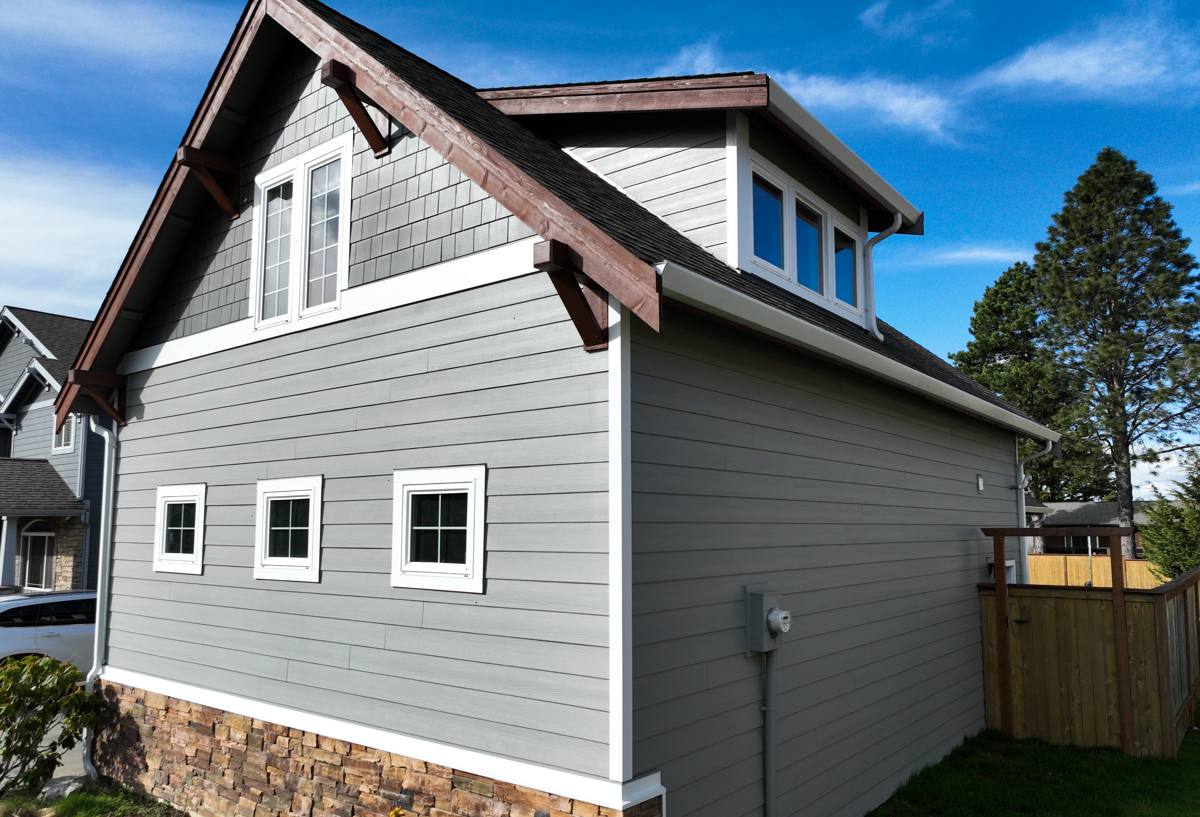
In a climate like California Creek's, siding material isn't just a cosmetic decision — it's the first line of defense for the whole structure. We install only James Hardie fiber cement siding, and we don't install vinyl, LP SmartSide, Cemplank, Allura, or primed wood siding. That's not a marketing position, it's a standard we've held because of what we've seen this climate do to those products over time.
The Short Version
- Vinyl can warp, fade, and become brittle with age, and it relies heavily on caulking and lap seams that wind-driven rain can work against over the years.
- Wood siding, even when primed, needs consistent repainting and sealing to keep moisture out — a maintenance schedule that's easy to fall behind on in a wet climate.
- Fiber cement alternatives to Hardie exist, but factory finish quality, engineering for regional moisture exposure, and warranty backing vary by manufacturer.
- James Hardie is non-combustible, holds a factory-applied ColorPlus finish that resists fading and chipping, and produces siding lines engineered specifically for high-moisture climates like ours.
We'd rather install one product correctly and stand behind it than offer a menu of options with different failure points. On a property exposed to salt air and driving rain, that matters more than it does in a lot of other markets.
Signs a California Creek Home May Need New Siding
Coastal exposure tends to show up as specific, recognizable problems before a full siding failure. Worth checking for:
- Soft or spongy spots when you press on siding, especially near the bottom edges and around window trim
- Persistent moss, algae, or black streaking that comes back within weeks of cleaning
- Paint that's peeling, bubbling, or chalking rather than just fading evenly
- Visible warping, cupping, or separation at siding seams
- Rust staining below nail heads or metal trim pieces
- Rising energy bills that don't match usage changes, which can point to a compromised building envelope
- Interior signs like musty smells, peeling interior paint, or discoloration on walls that back up to exterior siding
How We Approach a Siding Project in This Area
Inspection First
Every project starts with a real look at the current siding, the sheathing underneath where accessible, window and door flashing, and the specific exposures on each elevation. North and west walls near the water usually need the closest attention.
Removal and Prep
Old siding comes off, and we check what's underneath before anything new goes up. Hidden moisture damage, if it exists, gets addressed at this stage — not covered over. This is also when house wrap, flashing, and any necessary sheathing repairs happen.
Installation to Spec
James Hardie siding has manufacturer-specified installation requirements around fastening, clearances, caulking, and flashing details. In a coastal, high-moisture climate, skipping or shortcutting those details is exactly how premature failures happen. We install to spec, not to the fastest schedule.
Final Detailing and Cleanup
Trim, caulking, and touch-up work get finished, and the site gets cleaned up before we consider the job done.
Beyond Siding: How the Same Climate Affects Roofing, Windows, and Decks
We do siding, roofing, windows, and decks, and in a place like California Creek those systems work together to keep water out of a house. A new siding job with a failing roof valley above it, or leaking window flashing behind it, won't hold up the way it should.
| System | Main Local Stress | What We Watch For |
|---|---|---|
| Siding | Wind-driven rain, salt air, moss | Seam integrity, flashing, moisture behind panels |
| Roofing | Moss growth in shaded valleys, moisture retention | Underlayment condition, flashing, ventilation |
| Windows | Seal failure from wind and moisture cycling | Fogging, drafts, deteriorating caulk lines |
| Decks | Standing water, fastener corrosion, UV and salt exposure | Board spacing, ledger flashing, hardware condition |
When we're on site for one, we'll flag obvious issues with the others — not to upsell, but because ignoring a related problem usually costs more down the line.
Cost Factors for a California Creek Siding Project
Every home is different, but the variables that move price on jobs in this area are fairly consistent. We don't publish flat pricing because square footage alone doesn't tell the story here.
| Factor | Why It Matters Locally |
|---|---|
| Home size and wall complexity | More corners, gables, and dormers mean more cutting, flashing, and labor time |
| Existing damage found during removal | Hidden moisture or sheathing repair adds scope once old siding comes off |
| Siding profile and trim selection | Lap width, trim detail, and color options affect material cost |
| Site access and exposure | Waterfront or wind-exposed elevations sometimes need extra detailing at flashing points |
| Bundling with roofing, windows, or decks | Coordinating multiple systems in one project can be more efficient than separate jobs |
Why It's Worth Hiring a Local Crew
A siding crew that mainly works inland or in a different climate zone can miss the details that matter on a property exposed to salt air and coastal wind. Knowing which elevations in Whatcom County typically take the worst weather, how moss behaves on shaded rooflines through a Pacific Northwest winter, and where wind-driven rain tends to find its way in isn't something you learn from a manual — it's something you learn from doing the work here, repeatedly, and seeing what holds up and what doesn't.
That local knowledge shows up in small decisions: where extra flashing attention goes, which fastener spacing matters most on an exposed wall, and how a project should be sequenced around the wetter months so materials aren't sitting exposed longer than necessary.
Maintaining Your Siding Once It's Installed
Even the right material needs some basic upkeep in this climate.
- Rinse siding periodically to clear salt residue, especially on walls facing the water
- Keep gutters clear so water isn't overflowing down siding surfaces
- Trim back vegetation that keeps a wall shaded and damp
- Address moss or algae growth early rather than letting it establish
- Have caulking and trim checked periodically, since that's where wind-driven rain tends to test a house first
If you're weighing a siding, roofing, window, or deck project for a home in the California Creek area, we're happy to take a look and talk through what your property actually needs — no pressure, no obligation. A free estimate is a good first step to understanding your options and your budget.