 Blaine Siding
 Siding on the Semiahmoo Waterfront: A Different Kind of Exposure
Semiahmoo sits about as close to the water as a Whatcom County neighborhood can get, and that proximity shapes everything about how a home's exterior ages here. Homes along this stretch face a combination of conditions that inland Blaine properties simply don't deal with to the same degree: near-constant salt-laden air off Semiahmoo Bay and the Strait of Georgia, wind-driven rain that hits siding at an angle instead of falling straight down, and a moss and algae season that can run most of the year in the Pacific Northwest's damp, mild climate. None of this is unusual for the area, but it does mean the siding on a Semiahmoo home is working harder than siding almost anywhere else in the county.
We're a local exterior contractor, and we've spent enough time working on homes in this part of Whatcom County to know that "waterfront" isn't just a real estate term — it's a maintenance and materials problem. The right siding choice, installed correctly, can handle it for decades. The wrong choice, or a rushed installation, tends to show problems within a handful of years.
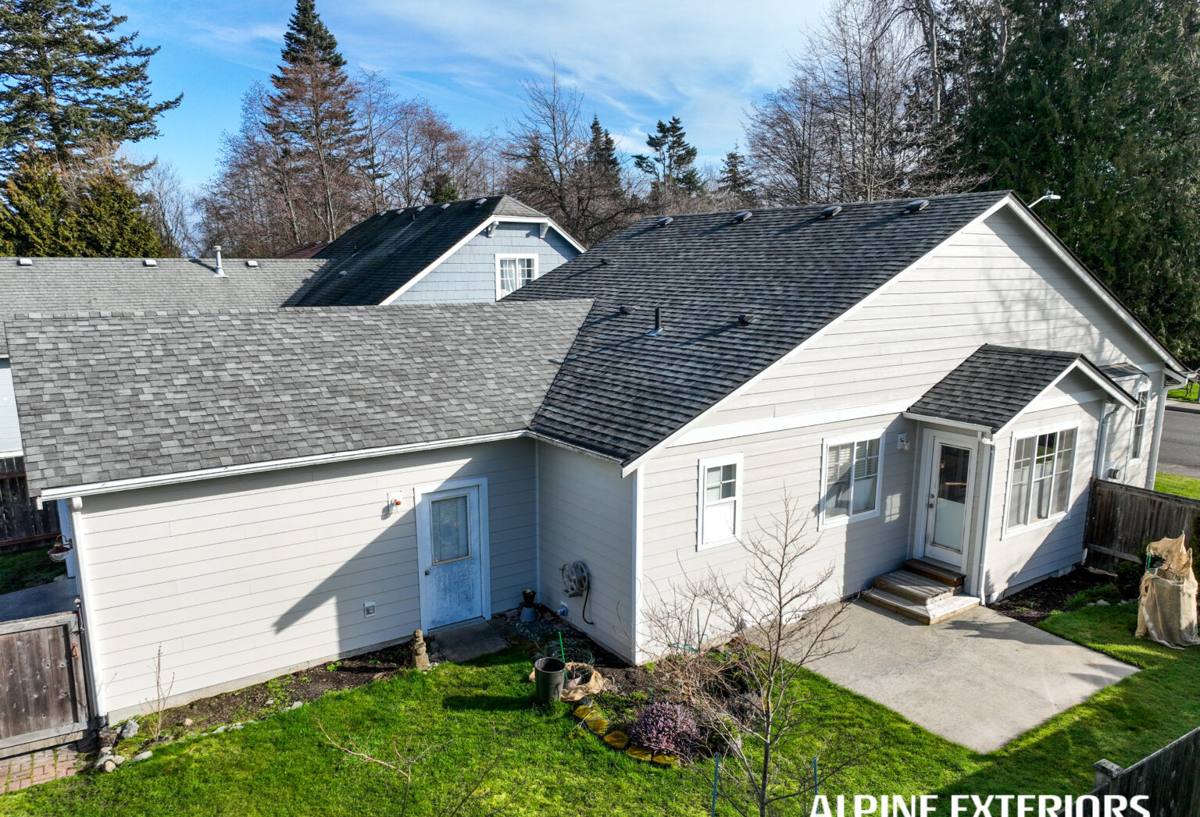
What Salt Air, Rain, and Moss Actually Do to a House
Salt Air
Airborne salt from the Strait of Georgia and Semiahmoo Bay settles on every exterior surface of a home, not just the siding. Over time it accelerates corrosion on fasteners, flashing, and any exposed metal trim, and it can degrade certain paint and coating systems faster than the manufacturer's stated lifespan would suggest inland. Siding materials that aren't formulated to resist this kind of exposure tend to chalk, fade, or develop surface breakdown sooner than they would a few miles from the water.
Driving, Wind-Driven Rain
Blaine gets a lot of rain in a typical year, and on the Semiahmoo waterfront it often arrives horizontally rather than vertically. That matters because wind-driven rain finds its way into seams, laps, and penetrations that a straight-down rainstorm would never reach. Siding systems, flashing details, and house wrap need to be installed with that reality in mind — generous overlaps, properly flashed windows and doors, and careful attention at every transition and penetration.
Moss and Algae
The Pacific Northwest's mild, wet climate is close to ideal for moss and algae growth, and homes with heavy tree cover, north-facing walls, or limited sun exposure see it worst. Moss holds moisture against a surface far longer than bare siding would, which is a problem for any material that isn't dimensionally stable when wet. Left unaddressed, sustained moisture contact is one of the more common paths to rot, swelling, and coating failure on exterior walls in this region.
Why We Only Install James Hardie Fiber Cement Siding
We install James Hardie fiber cement exclusively — we don't install vinyl, LP SmartSide, primed spruce, cedar, or other fiber cement brands like Allura or Cemplank. That's a deliberate standard, not a limitation of what we're capable of installing. On a site like Semiahmoo, the case for it is straightforward:
- Non-combustible core. Fiber cement doesn't rely on paint or coatings to resist fire the way some engineered wood products do.
- Dimensionally stable when wet. Unlike wood-based siding, it doesn't swell, cup, or delaminate from repeated wetting and drying cycles — a real advantage in a climate where siding rarely gets a long dry stretch to fully recover.
- Factory-applied ColorPlus finish. The finish is baked on in a controlled environment rather than field-applied, which means more consistent coverage and better long-term color and coating performance than most job-site painting can match, especially in a salt-air environment.
- Climate-engineered HZ product lines. James Hardie manufactures region-specific formulations, and the HZ5 line is engineered for the wetter, harsher climate zones the Pacific Northwest falls into — a meaningful distinction from a one-size-fits-all product.
- A strong, transferable warranty backed by a manufacturer with decades in the fiber cement category, which matters more, not less, on a home exposed to salt air and driving rain.
We're honest that other products have real strengths — vinyl is inexpensive and low-maintenance in mild climates, and engineered wood siding can look good and install quickly. But on a waterfront property in Whatcom County, we've made the call that fiber cement's moisture stability and non-combustible composition are worth prioritizing over lower upfront cost or faster installation, and it's what we put on homes we stand behind.
What Siding Replacement Looks Like on a Semiahmoo Property
Assessment
We start by looking at the whole exterior system, not just the siding surface. That means checking for moisture intrusion at window and door openings, evaluating the condition of the house wrap and flashing underneath the existing siding, and noting areas with heavy moss growth or limited sun exposure that will need extra attention during installation and afterward.
Removal and Substrate Check
Once the old siding comes off, we get a direct look at the sheathing and framing underneath. This is often the first real chance to catch hidden rot or moisture damage before it's covered up again — something that matters more on a property that's been absorbing salt air and driving rain for years than it would on a drier, more sheltered lot.
Water Management Details
Given the wind-driven rain this area sees, we pay close attention to flashing at windows, doors, and roof-to-wall transitions, along with proper house wrap installation and correct lap and fastening patterns for the Hardie product being installed. These details matter everywhere, but they matter more when rain is regularly hitting the wall at an angle instead of falling straight down.
Installation to Manufacturer Spec
James Hardie siding performs the way it's designed to when it's installed to the manufacturer's specifications — correct fastener type and spacing, proper clearances, and correct caulking and sealing at joints. Installed off-spec, even a good product can develop problems. That's a big part of why we treat installation quality as equal to product selection.
Comparing Siding Options for a Waterfront Property
| Material | Moisture Behavior | Salt Air Durability | Maintenance |
|---|---|---|---|
| James Hardie Fiber Cement | Dimensionally stable, doesn't swell or rot | Factory finish holds up well; non-combustible core | Low — periodic washing, no repainting for typical warranty period |
| Vinyl | Can warp or become brittle with temperature swings | Can fade or chalk faster near salt air over time | Low, but limited repair options if damaged or discolored |
| Engineered Wood (e.g. LP SmartSide) | Wood-based core is more moisture-sensitive if seals fail | Coating performance can be tested by prolonged damp exposure | Moderate — edge sealing and moisture monitoring matter more |
| Cedar | Natural material, absorbs and releases moisture | Requires diligent finish maintenance in salt air | High — regular refinishing and moisture management |
Why a Local Crew Matters Here
Semiahmoo isn't a generic siding job. A crew that mostly works inland or in drier parts of the county may not automatically think about wind-driven rain angles, salt exposure on fasteners, or the moss patterns specific to shaded, water-adjacent lots. We work throughout Blaine and the surrounding Whatcom County waterfront, and that regular exposure to this exact set of conditions shapes how we detail flashing, choose fasteners, and sequence a job around this area's weather windows. It's the difference between a crew that installs siding correctly in general and one that installs it correctly for this specific site.
Beyond Siding: Roofing, Windows, and Decks
Siding rarely fails in isolation on a property like this. A roof that's shedding water poorly, windows with failing flashing, or a deck that's trapping moisture against the house can all undermine even a well-installed siding job. We handle roofing, windows, and decks as well as siding, which lets us look at a Semiahmoo home's exterior as one connected system rather than treating each component separately. That matters most in an environment where water management is the common thread running through every part of the building envelope.
Planning a Siding Project on the Waterfront
Practical Checklist Before You Start
- Walk the exterior and note any areas with visible moss, algae staining, or soft-feeling siding
- Check window and door trim for gaps, staining, or signs of past water intrusion
- Look for chalking, fading, or coating breakdown, especially on walls facing prevailing wind and rain
- Note any areas with heavy shade or limited airflow — these dry out slowest after storms
- Ask any contractor you're considering how they detail flashing and water management, not just what siding brand they install
- Confirm whether the crew has experience specifically with waterfront or near-water properties in this climate zone
Timing matters too. Pacific Northwest siding projects are easiest to schedule and execute during drier stretches of the year, though a well-run crew can work around Blaine's weather with proper sequencing and protection of open wall sections.
Get a Straight Answer for Your Property
Every home on the Semiahmoo waterfront carries its own history of sun exposure, tree cover, and prior maintenance, and that history affects what your siding actually needs. If you're noticing moss buildup, fading, soft spots, or you're just planning ahead for a home in this environment, we're happy to take a look and give you a straightforward assessment — no pressure, no upsell. Use the form below to request a free estimate.