 Blaine Siding
 Blaine Harbor Sits Right Where Puget Sound Weather Gets Serious
Blaine Harbor is about as close to the water as a Whatcom County neighborhood gets, and that proximity shapes almost everything about how a house ages here. Homes near the harbor take on salt-laden air, wind-driven rain off the Strait of Georgia, and long stretches of damp, low-light weather that keep exterior surfaces wet far longer than homes just a mile or two inland. We've worked on enough houses in this corner of Blaine to know the pattern: it's rarely one dramatic failure that gets a homeowner to call us. It's a slow accumulation of small problems — a soft spot behind a downspout, a streak of moss creeping up a north wall, paint that won't hold past year four — that finally adds up to "let's just replace it right."
This page is about what that climate actually does to a house, and how our crew approaches siding, roofing, windows, and decks for homes in this specific area of Whatcom County.
What Salt Air Actually Does to a House
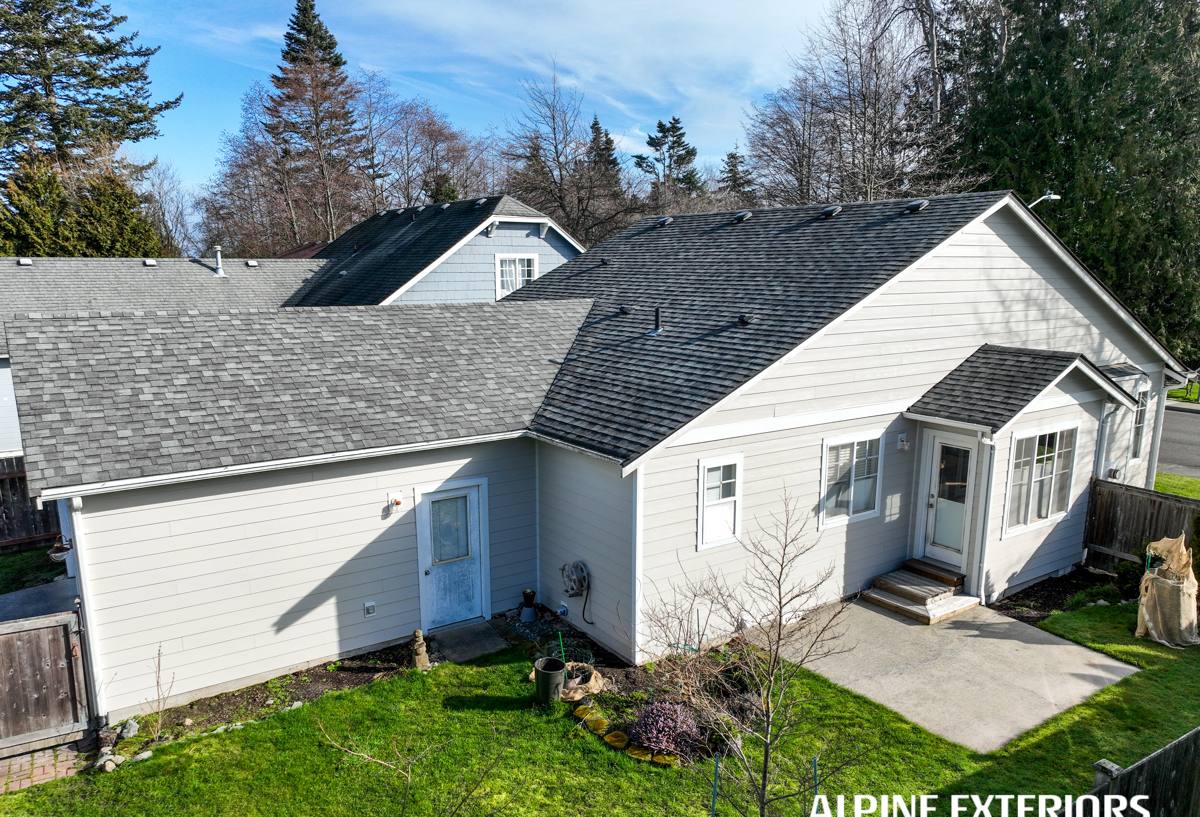
Salt air isn't just a coastal cliché. Airborne salt is corrosive to exposed metal — fasteners, flashing, hardware, even some prefinished trim coatings — and it accelerates the breakdown of paint films faster than the same product would wear a few miles inland. On a harbor-adjacent home, that means:
- Nail heads and fasteners that aren't corrosion-resistant can bleed rust through paint within a few seasons
- Standard paint and caulk lose adhesion faster, especially on the weather-facing (typically west and southwest) walls
- Metal flashing and gutter hardware need a genuinely corrosion-resistant spec, not just a standard-grade product
- Any gaps in the water-resistive barrier get exploited faster, because salt-laden moisture is more aggressive than plain rainwater
None of this means a house near the water is doomed to fail — it means the materials and fastening details have to be chosen with that exposure in mind from the start, not treated as an afterthought.
Driving Rain and Wind-Driven Moisture
Blaine sits in a part of Whatcom County that gets a steady diet of Pacific frontal systems, and near the water those systems often arrive with real wind behind them. Driving rain doesn't just fall — it gets pushed sideways into every seam, joint, and penetration on the weather side of a house. That matters more for siding performance than the amount of annual rainfall itself.
Where Wind-Driven Rain Finds Weaknesses
The failure points we see most often on harbor-side homes are the same ones any experienced siding crew watches for, but they show up sooner here:
- Butt joints and seams that weren't properly flashed or caulked at install
- Window and door trim where the water-resistive barrier wasn't lapped correctly
- Bottom courses of siding too close to grade, decking, or hardscape, where splash-back keeps the material wet
- Inside corners and roof-to-wall transitions, which take the brunt of both rain and runoff
A siding product's core material matters here, but so does the installer's attention to flashing, gapping, and sealant details — get the details wrong and even a good product will let water in.
The Long Moss Season
Between the marine humidity, the shade many harbor-area lots get from mature trees, and the long stretch of overcast Whatcom County winters, moss and algae growth is close to a year-round concern rather than a seasonal one. North- and east-facing walls, areas under eaves that don't get direct sun, and anything near a downspout tend to green up first. On some siding materials, that's mostly cosmetic. On others — particularly wood-based and engineered wood products — trapped moisture behind moss and algae growth can contribute to real deterioration over time, not just a discoloration problem.
This is one of the reasons we pay close attention to material choice on every harbor-area project, not just the labor.
Why We Install Only James Hardie Fiber Cement
We standardized on James Hardie fiber cement siding for every home we side, and in a climate like Blaine Harbor's, that choice matters more than in a drier inland location. Fiber cement is non-combustible and dimensionally stable — it doesn't swell, split, or delaminate the way wood-based products can when they stay damp for weeks at a stretch. James Hardie's ColorPlus factory finish is baked on under controlled conditions, which gives it better adhesion and UV resistance than field-applied paint, and their HardieZone HZ5 products are engineered specifically for cooler, wetter climates like ours in the Pacific Northwest.
We don't install vinyl, LP SmartSide, Cemplank, Allura, or primed wood siding. That's not a knock on every homeowner who has one of those products on their house today — it's a reflection of what we've chosen to stand behind after years of exterior work in exactly this kind of coastal, high-moisture environment. If you're weighing options, we're glad to talk through the honest trade-offs of each rather than just steer you toward what we sell.
How We Approach a Blaine Harbor Exterior
Because we handle siding, roofing, windows, and decks, we look at a home's exterior as one connected system rather than a set of separate trades. That matters most in a climate like this one, where a small gap between two systems — say, siding that isn't properly flashed where it meets a deck ledger, or a roof-to-wall transition that wasn't detailed for wind-driven rain — is exactly where water finds its way in.
What a Typical Project Looks Like
- An on-site walk-through where we look at drainage, grading, existing moisture damage, and sun/shade exposure on each elevation
- A written scope that spells out the water-resistive barrier, flashing details, fastener spec, and material selections — not just "new siding"
- Coordination with any roofing, window, or deck work happening at the same time, so transitions are detailed once, correctly, instead of patched later
- A final walk-through before we consider the job done
Cost Factors on a Harbor-Area Home
Every house is different, and we don't quote sight-unseen, but these are the main variables that move the number on a typical Blaine Harbor siding project:
| Factor | Why It Matters Here |
|---|---|
| Existing wall condition | Hidden rot or moisture damage near the water is more common and adds repair scope before new siding goes on |
| Home size and wall complexity | More corners, dormers, and trim details mean more flashing and labor, especially on wind-exposed elevations |
| Siding profile and trim package | Lap width, trim style, and accessory boards affect both material cost and labor time |
| Fastener and flashing spec | Corrosion-resistant hardware costs more up front but is worth it this close to salt air |
| Access and site conditions | Sloped lots, mature landscaping, and limited staging area near the water can add labor time |
| Scope beyond siding | Bundling roofing, window, or deck work can improve efficiency but changes overall project cost |
Why a Local Crew Matters for This Kind of Work
A crew that mostly works inland doesn't always think about corrosion-resistant fasteners as a default, or plan for the way moss establishes itself on shaded, damp walls near the water. We work in Whatcom County day in and day out, including the harbor-adjacent parts of Blaine, so those aren't special considerations for us — they're just how we spec every job in this area. That familiarity also means we're not guessing at how a house here will hold up in five or ten years; we've seen how these homes age and we build the details around that.
Signs Your Current Siding May Be Struggling
If you're not sure whether your home's exterior is due for a closer look, these are the signs we'd want to know about:
- Soft or spongy spots when you press on siding, especially near the bottom courses or below windows
- Persistent moss or dark streaking on north- or east-facing walls that comes back soon after cleaning
- Paint that's peeling, bubbling, or chalking well before you'd expect it to
- Visible gaps, cracking, or warping at seams and corners
- Rust staining running down from nail heads or metal trim
- Musty smells or visible staining on interior walls that share an exterior wall
What This Means for Your Home
None of this is meant to alarm anyone — plenty of houses in Blaine Harbor are holding up fine. But the climate here doesn't forgive shortcuts the way a drier inland area might, and that's worth factoring in whether you're patching a problem area, planning a full re-side, or just trying to decide how urgent a repair really is. If you're weighing your options, we're happy to take a look, tell you honestly what we see, and lay out what a proper fix or full replacement would involve — no pressure, no obligation. Reach out for a free estimate using the form below.