 Blaine Siding
 Why Decks in Sandy Point Wear Differently
Sandy Point sits close enough to the water that salt-laden air is part of daily life, not an occasional event. That air settles on every exposed surface of a deck — the boards, the railings, and especially the fasteners — and it accelerates corrosion in ways that inland Whatcom County decks simply don't experience at the same rate. Add in Blaine's long stretch of wet months, where driving rain comes in sideways off the water, and you have moisture finding its way into joints, end grain, and ledger connections that a drier climate would leave alone.
Then there's moss. Western Washington's moss season runs long, and on a shaded or north-facing deck it can be nearly year-round. Moss holds moisture against wood and decking surfaces far longer than open air would, which means boards that look fine on top can be staying damp underneath for weeks at a stretch. That combination — salt exposure, near-constant rain, and moss cover — is why deck repair in Sandy Point isn't just a smaller version of deck repair anywhere else. It's a different maintenance problem, and it needs to be diagnosed that way.
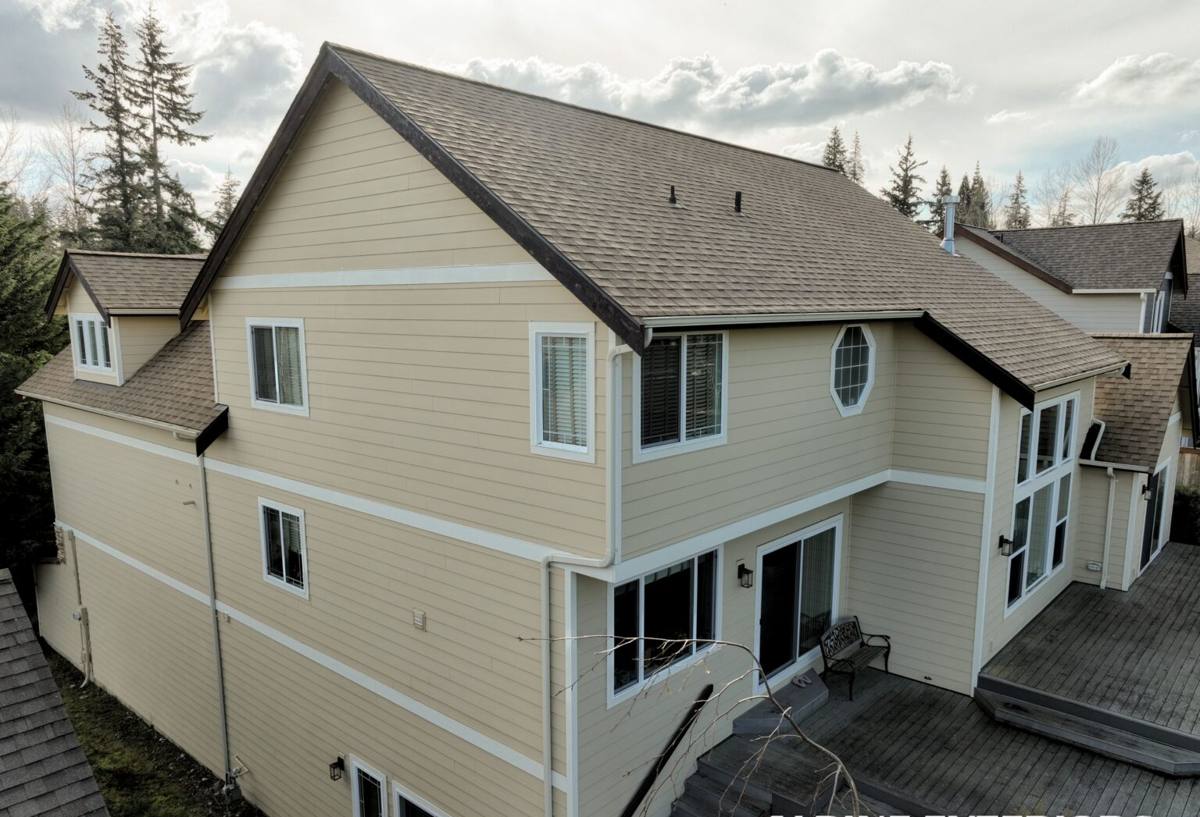
Signs a Sandy Point Deck Needs Repair
Most deck problems don't start with a dramatic failure — they start small and get ignored because the deck still looks usable. Here's what we look for, and what homeowners should watch for between visits:
- Soft or spongy spots underfoot, especially near the house or at board ends
- Rust streaking below screw heads or around metal hardware
- Persistent green or black staining that doesn't clean off with a simple wash
- Gaps opening up at the ledger board where the deck meets the house
- Railings or stair stringers that flex or feel less solid than they used to
- Fasteners backing out or snapping when touched
Any one of these on its own might be minor. Several together, or any sign near the ledger board or main support posts, is worth a proper look before the next wet season adds to the damage.
What's Actually Failing: The Usual Suspects
Ledger Board and Flashing
The ledger board — where the deck attaches to the house — is the single most important connection on the structure, and it's also the one most exposed to water running off siding and roof edges. Poor or missing flashing lets water sit against the ledger for months at a time. In a climate with as much sustained rain as this area gets, that's often where structural rot starts, hidden behind the rim joist where it's easy to miss on a casual look.
Fasteners and Hardware
Salt air is hard on metal. Fasteners and structural hardware that aren't rated for coastal or near-coastal exposure can corrode from the inside of the wood outward, so the problem is often worse than it looks from the surface. We see this most on older decks built with standard exterior-grade screws instead of stainless or heavy hot-dip galvanized hardware.
Decking Boards and Moss Buildup
Moss doesn't just look bad — it traps moisture against the board surface, which speeds up cupping, splintering, and rot on wood decking, and can stain or degrade the surface layer on composite products over time. Shaded sections of a deck, or areas under overhangs that don't get direct sun or wind, are almost always the first to show wear.
Framing and Support
Joists, beams, and posts underneath the visible decking take on splash-back moisture and, closer to the water, salt spray as well. A deck can look solid on top while the framing underneath has been quietly losing strength for years.
Repair or Replace? How We Make That Call
Not every deck problem means starting over, and we don't push replacement when a targeted repair will hold up. The decision usually comes down to how much of the structure is affected versus the surface.
| Factor | Points Toward Repair | Points Toward Replacement |
|---|---|---|
| Ledger board condition | Solid wood, isolated flashing fix needed | Soft or rotted wood at the house connection |
| Framing (joists, beams, posts) | Sound, maybe one or two members need swapping | Widespread soft spots or corrosion across the frame |
| Decking surface | Isolated boards cupped, cracked, or moss-stained | Most boards showing rot, splintering, or fastener failure |
| Railings and stairs | Loose but structurally intact | Flexing, cracked posts, or failed connections |
| Age and prior maintenance | Recently built or well-maintained | Old deck with a history of deferred maintenance |
In practice, a lot of Sandy Point decks fall somewhere in the middle: solid framing with a compromised ledger, or good bones with a handful of boards that need to go. That's exactly the kind of job a repair is built for — fix what's actually failing, leave what's still sound, and stop the cycle before it spreads.
What a Correct Repair Actually Involves
A repair that's done right isn't just swapping out the boards that look bad. It starts underneath.
- Structural check first. We inspect the ledger connection, flashing, joists, beams, and posts before touching the surface — repairing decking over a compromised frame just hides the real problem.
- Fix the water path. If flashing at the ledger is missing, damaged, or was never installed correctly, that gets corrected as part of the repair, not treated as a separate issue later.
- Replace only what's failed. Boards, joists, or hardware that are actually compromised get replaced; sound material stays, which keeps the cost proportional to the actual damage.
- Upgrade fasteners where it matters. In a salt-air setting like Sandy Point, replacement hardware should be stainless steel or rated for coastal exposure — not a like-for-like swap with whatever was there before, if what was there before is part of why it failed.
- Address moss and staining. Surface cleaning and, where appropriate, a protective finish help slow moss regrowth on the areas most exposed to shade and moisture.
Our Process for Sandy Point Deck Repairs
We keep it straightforward, because homeowners deserve to know what they're paying for before work starts, not after.
1. On-Site Inspection
We walk the whole deck, check underneath where accessible, and test the ledger, framing, and any suspect boards or railings by hand — not just a visual pass from a distance.
2. Honest, Written Scope
You get a clear explanation of what's actually wrong, what needs to be repaired versus what's cosmetic, and a written scope of work before anything is scheduled. If a repair genuinely isn't the right call because the damage is too extensive, we'll tell you that directly instead of running up a repair bill on a deck that needs to be rebuilt.
3. The Repair Itself
Structural issues get addressed first, then flashing and water management, then decking and railings. We use fasteners and hardware suited to a near-coastal environment, not just whatever matches the existing look.
4. Cleanup and Recommendations
We clean up the work area and walk you through what to watch for going forward, including realistic moss and moisture maintenance for your specific deck's exposure.
Materials That Hold Up to Salt Air and Moss
Every decking and fastener choice is a trade-off, and we'll walk through them honestly rather than push one option.
| Material | Where It Fits | Trade-off in This Climate |
|---|---|---|
| Pressure-treated lumber | Framing, budget-conscious deck boards | Needs sealing on a regular schedule; end grain is a moisture entry point |
| Cedar | Homeowners who want a natural look | Naturally moisture-resistant but still needs upkeep near salt air; softer surface |
| Composite decking | Low-maintenance surface boards | Higher upfront cost; some products stain from moss and organic buildup if not cleaned |
| Standard exterior screws | Interior or fully covered framing only | Prone to corrosion in salt air; not our standard for exposed or coastal work |
| Stainless or coastal-rated hardware | Any exposed fastener on a Sandy Point deck | Costs more per fastener, but it's the difference between a repair that lasts and one that doesn't |
Maintenance Checklist Between Repairs
A little upkeep goes a long way toward stretching the time between repairs, especially in a moss-prone, salt-air setting.
- Sweep off standing debris and organic buildup regularly, especially in shaded corners
- Rinse salt residue off the deck surface and railings periodically, not just after storms
- Check the ledger board area at the house connection once or twice a year for staining or gaps
- Look underneath the deck when accessible for early signs of moisture or soft framing
- Re-treat or reseal wood decking on the schedule appropriate to the product, not just when it looks dry
- Address moss as soon as it appears rather than letting it establish over a season
Why Local Experience in Sandy Point Matters
A deck repair crew that mostly works inland doesn't see salt-air fastener corrosion or shaded-moss damage often enough to know it on sight. Working regularly in Sandy Point and the surrounding Blaine and Whatcom County area means we already know which parts of a deck fail first in this specific environment, what flashing and fastener choices actually hold up here, and how to scope a repair that accounts for a long wet season instead of assuming average Pacific Northwest conditions. That local pattern recognition is often the difference between a repair that's still solid in five years and one that's back on the schedule next season.
If your deck in Sandy Point has soft spots, rust staining, persistent moss, or just doesn't feel as solid as it used to, we're happy to take a look and give you a straight answer about what it needs. Reach out for a free, no-pressure estimate using the form below.