 Blaine Siding
 Sandy Point Homes Face a Tougher Climate Than Most of Whatcom County
Sandy Point sits right up against the Strait of Georgia, and that waterfront location changes what a home's exterior has to deal with day in and day out. Homes just a few miles inland in Blaine get a milder version of our weather. Out here, the salt air is heavier, the wind off the water drives rain sideways into wall assemblies, and shaded, moisture-trapping corners hold onto moss and algae for most of the year. Siding that's rated "fine" for the general Pacific Northwest can still underperform on a lot like this.
That's not a reason to panic about your siding — it's a reason to be specific about material choice and installation detail. A home in Sandy Point doesn't need exotic construction. It needs ordinary best practices done correctly, with a product that's actually built to handle sustained coastal exposure.
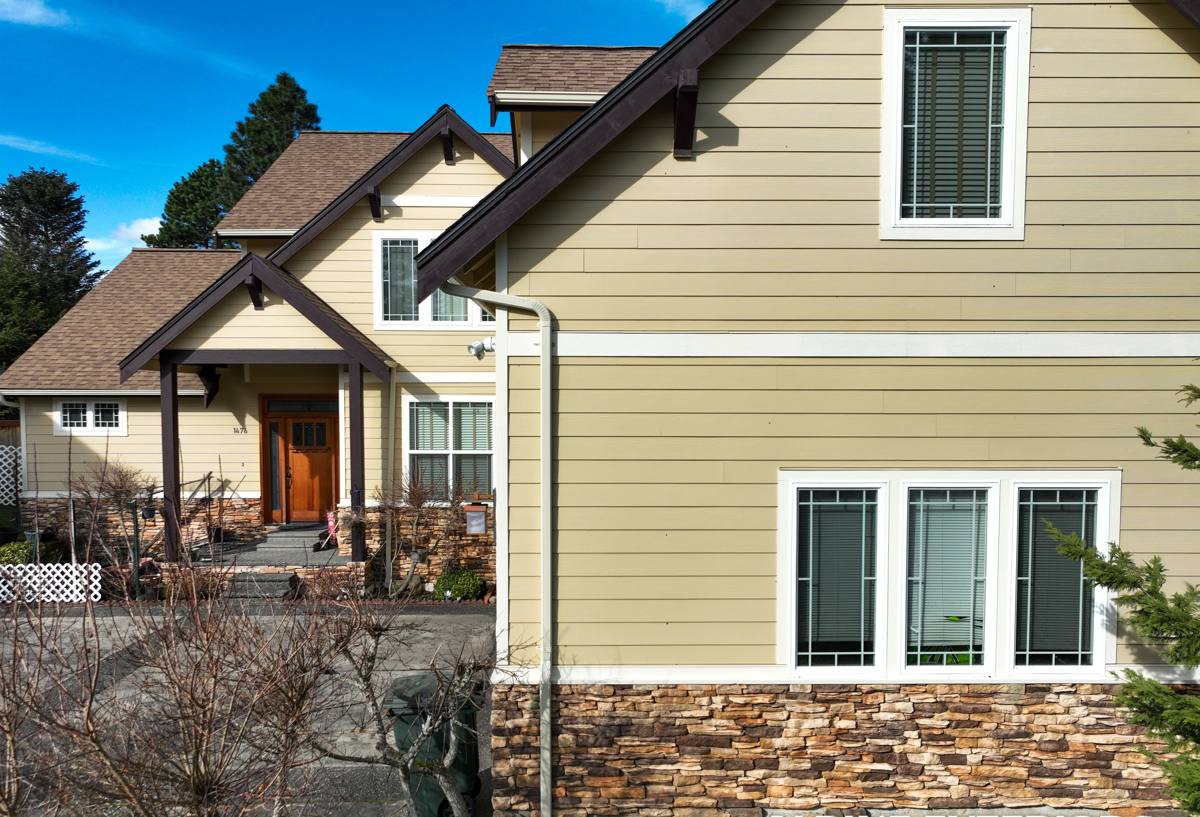
What Salt Air, Driving Rain, and Moss Actually Do to Siding
Salt Air and Corrosion
Airborne salt is corrosive to metal fasteners, flashing, and trim components, and it accelerates the breakdown of some paint films and coatings over time. It doesn't destroy siding overnight, but it shortens the useful life of anything not rated for coastal exposure, and it's harder on exposed cut edges and fastener heads than people expect.
Wind-Driven Rain
Rain that falls straight down is a lesser threat than rain that's being pushed sideways by wind off open water. Wind-driven rain finds every gap in a siding installation — unsealed joints, missing flashing, panels installed too tight to the ground or roofline — and pushes water behind the cladding instead of letting it run off the face. Once water gets behind siding repeatedly, the sheathing, framing, and insulation behind it are what actually suffer.
Moss and Trapped Moisture
Whatcom County's long wet season already favors moss and algae growth on siding, roofs, and trim. On a shaded or north-facing wall near the water, that season runs even longer. Moss itself doesn't eat through most siding materials, but it holds moisture against the surface for extended periods, which is a problem for any product that isn't dimensionally stable when wet — and it's unattractive enough that most homeowners want it kept off the visible parts of the house.
What a Correct Siding Installation Actually Involves Here
"Siding installation" sounds like one job, but on a coastal lot it's really three systems working together: the water barrier behind the cladding, the cladding itself, and the details where they meet trim, windows, and the ground.
Weather-Resistive Barrier and Flashing
A correctly lapped weather-resistive barrier, properly integrated flashing at every window, door, and roof-to-wall intersection, and correct kick-out flashing where rooflines meet walls are what actually keep wind-driven rain out of the wall cavity. The siding material is the visible layer; the flashing and barrier underneath it are what do most of the real work in a storm.
Fastening and Clearances
Manufacturer-specified fastener type, spacing, and penetration depth matter more in a coastal, high-wind environment than in a sheltered one. So does maintaining proper clearance between the bottom of the siding and grade, decks, patios, and roof surfaces — clearance that's frequently shorted on older installations and is one of the most common causes of rot and moss buildup at the base of a wall.
Trim, Joints, and Caulking
Every butt joint, corner, and trim-to-siding seam is a potential entry point for water. Correct caulking with a product rated for the material and exposure, plus proper sealing at penetrations (hose bibs, vents, light fixtures), closes those entry points before they become a problem.
Why We Install Only James Hardie Fiber Cement
We standardized on James Hardie fiber cement siding for every project, including work in exposed, marine-influenced areas like Sandy Point. Fiber cement is non-combustible, dimensionally stable when wet, and resistant to the freeze-thaw and moisture cycling that this stretch of coastline sees regularly. James Hardie's ColorPlus factory-applied finish is baked on and formulated to hold color and resist fading under UV and salt exposure far better than most field-applied paint systems, which matters on a wall that faces open water most of the year.
| Consideration | James Hardie Fiber Cement | Vinyl | Untreated Wood / Primed Spruce |
|---|---|---|---|
| Behavior in wind-driven rain | Dimensionally stable; holds seal at joints | Can flex, warp, or gap under wind load | Absorbs moisture at cut edges and joints |
| Salt air exposure | Fiber cement core unaffected; factory finish resists fading | Can chalk, fade, and become brittle over time | Finish breaks down faster; needs more frequent recoating |
| Moss / moisture holding | Won't rot or swell if moss holds moisture against it | Won't rot, but traps moisture behind panels if ventilation is poor | Vulnerable to rot where moss holds moisture long-term |
| Fire resistance | Non-combustible | Combustible, can melt or deform | Combustible |
| Typical maintenance | Periodic wash; repaint not required for finish life | Low maintenance but limited repair options if damaged | Regular repainting/sealing required |
We don't install LP SmartSide, vinyl, Cemplank, Allura, primed spruce, or cedar. Some of those are decent products for the right project — this is about our own standard, not a claim that competitors' materials are unusable. But we've made a professional decision to put one system on the homes we work on, back it with one warranty structure, and know that system inside and out for climates exactly like this one. On a lot facing sustained salt air and wind-driven rain, that consistency is worth more to a homeowner than a lower material cost up front.
Which Hardie Product Line Fits Coastal Exposure
James Hardie makes climate-engineered product lines, and their HZ5 formulation is built for the wetter, cooler climate zone that includes western Washington's coastline. It's formulated to resist moisture-related damage in exactly the conditions Sandy Point sees — a meaningfully different product than the version of Hardie siding sold in drier inland climates.
Our Siding Installation Process for Sandy Point Homes
Every project starts with an on-site look at the specific exposure of your home — which walls take the worst of the wind and rain, where moss has been an issue, and where the existing siding or trim shows signs of past water intrusion. From there:
- Remove old siding and inspect sheathing and framing underneath for hidden rot or moisture damage before covering anything back up
- Repair or replace any compromised sheathing, framing, or trim discovered during tear-off
- Install a correctly lapped weather-resistive barrier and integrate flashing at every window, door, and roof intersection
- Install James Hardie fiber cement siding and trim to manufacturer specifications for fastening, spacing, and clearance
- Detail all joints, corners, and penetrations with appropriate sealants for a coastal, high-moisture environment
- Walk the finished exterior with you and point out anything worth knowing for long-term maintenance
Nothing in that list is unusual — it's the standard of a job done right. What changes on a Sandy Point project is the attention paid to flashing, clearance, and joint detailing, because this location gives the water and wind more chances to find a shortcut than a sheltered inland lot would.
Cost Factors for Siding Installation in Sandy Point
Every home is different, and we'll only give you real numbers after seeing the house, but these are the main factors that move the price on a project out here:
| Factor | Why It Matters |
|---|---|
| Extent of tear-off and any hidden repair | Older exteriors near the water more often reveal moisture damage once opened up |
| Home size and wall complexity | More corners, dormers, and trim detail means more labor and material waste |
| Siding profile and trim package | Lap width, trim style, and accent details all affect material cost |
| Access and site conditions | Waterfront lots, decks, and tight setbacks can affect staging and scaffolding needs |
| Flashing and detail work required | Homes with more window and roofline intersections need more flashing labor |
Because coastal exposure raises the stakes on flashing and moisture management, we'd rather price a Sandy Point job accurately after a walk-through than guess low and run into surprises during tear-off.
Maintenance That Actually Matters After Installation
Fiber cement siding installed correctly is low-maintenance, not no-maintenance. In a moss-prone, salt-air location, the practical upkeep is simple: rinse the exterior periodically to clear salt residue and organic buildup, keep gutters and downspouts clear so water isn't overflowing onto walls, trim back vegetation that's shading walls and keeping them damp longer than they need to be, and have joints and caulking checked every few years since sealants are the one component that ages faster than the siding itself.
Why It Matters That We Already Work This Neighborhood
A crew that's worked other homes in Sandy Point and along this stretch of the Blaine coastline already knows which walls typically take the worst weather, where past moss and moisture problems tend to show up, and how the local dike and drainage conditions affect clearance at the base of a home. That's not something you can fully substitute with general siding experience from a contractor who mostly works sheltered inland lots. It shows up in the small decisions — flashing details, fastener choice, where extra sealant is worth the time — that determine whether a siding job holds up through twenty years of this specific climate or needs attention in five.
If you're planning a siding project on a Sandy Point home, we're happy to walk the exterior with you, point out what your specific exposure requires, and put together a free, no-pressure estimate. There's no obligation — just a straight assessment from a crew that already knows this stretch of coastline.