 Blaine Siding
 Dakota Creek's Exterior Climate: What Homes Here Are Actually Up Against
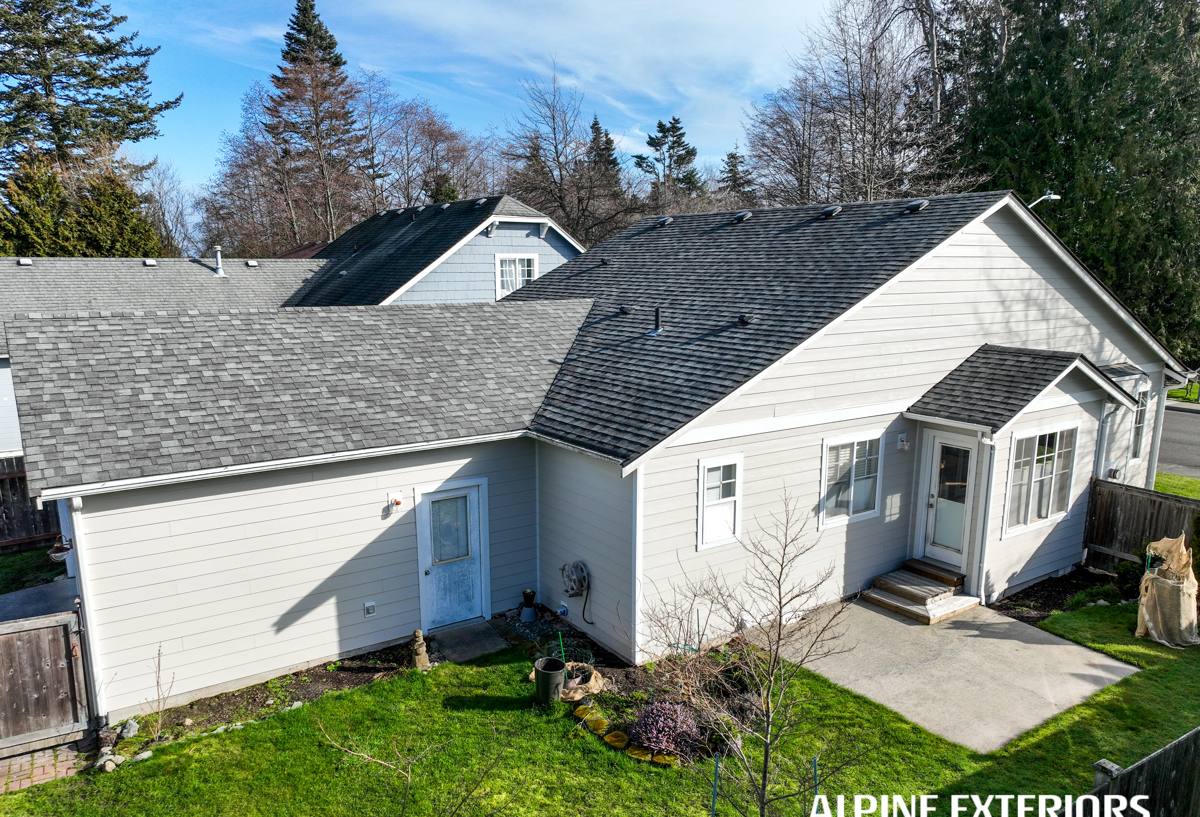
Dakota Creek sits close enough to Semiahmoo Bay and the Strait of Georgia that salt-laden air is a constant, low-grade presence on every exterior surface in the area. Add in Whatcom County's long, wet fall-through-spring stretch of driving rain off Puget Sound and the Pacific, and you have a combination that wears down exterior materials faster than most homeowners expect when they first move into the area. Then there's moss season, which in this part of Washington isn't really a season at all — it's most of the year. Shaded north- and west-facing walls, roof valleys, and anywhere air doesn't move freely stay damp long enough for moss, algae, and mildew to take hold and spread.
None of this is dramatic in the way a windstorm or a hard freeze is. It's cumulative. A wall that looks fine this year can be hiding softened trim, failing caulk joints, or a fastener starting to corrode, and the homeowner won't know until paint starts bubbling or a soft spot shows up under a finger press. That's the pattern we see most often on siding calls in Dakota Creek and the surrounding Blaine area — slow moisture damage that could have been caught, or avoided altogether, with the right material and the right install.
How Salt Air, Rain, and Moss Show Up on Siding Specifically
Salt Air and Fasteners
Airborne salt accelerates corrosion on anything metal — nail heads, flashing, hose bibs, light fixtures. On a siding system, that means fastener corrosion can show up as rust streaking or, over time, a fastener that loses its grip. Materials and fastening schedules that work fine forty miles inland don't always hold up the same way this close to the water.
Driving Rain and Wind-Driven Moisture
Rain in this region rarely falls straight down. Wind off the water pushes it sideways into wall assemblies, which puts real pressure on seams, butt joints, corner trim, and anywhere siding meets a window, door, or roofline. A siding product that swells, wicks moisture, or relies on perfect field caulking to stay sealed is going to get tested here more than almost anywhere else in the state.
Moss, Algae, and Prolonged Dampness
Shaded walls and anything under overhangs or tree cover stay damp for extended stretches. Organic growth isn't just cosmetic — sustained moisture against a wall surface is what eventually leads to rot in the substrate behind it, especially on wood-based products.
Why We Only Install James Hardie Fiber Cement
We made a decision a while back to standardize on James Hardie fiber cement siding and stop installing everything else — no vinyl, no LP SmartSide, no Cemplank or Allura, no primed spruce or cedar. That's not a marketing position. It's what we settled on after weighing how different siding materials actually perform against exactly the conditions Dakota Creek deals with.
Fiber cement is made from cement, sand, and cellulose fiber. It doesn't have the wood content that gives moisture a food source, and it doesn't have the thermal expansion behavior that causes vinyl to warp, buckle, or pull away from fasteners in temperature swings. James Hardie's HZ5 product line, in particular, is engineered for the Pacific Northwest's wet climate zone specifically — freeze-thaw cycling, sustained moisture exposure, and coastal conditions were part of the design brief, not an afterthought.
The ColorPlus factory finish is also part of why we standardized on this product. It's baked on in a controlled environment rather than field-applied, which means better adhesion and color consistency than a job-site paint job, and it holds up better against the fading and chalking that constant marine moisture and UV exposure cause over time. Hardie also backs the product with a strong, transferable warranty — which matters more here than in drier climates, because warranty terms are exactly what get tested when a product has to perform against this much sustained moisture.
None of this means the products we don't install are junk. Vinyl is inexpensive and low-maintenance in the right setting. Cedar has a look some homeowners specifically want. LP SmartSide has real fans. Our position is narrower than "those products are bad" — it's that for a coastal Whatcom County property, non-combustible fiber cement with a factory finish is the material we're willing to put our name behind, and we'd rather turn down work than install something we don't believe will hold up here.
How the Common Options Compare on the Factors That Matter Locally
| Factor | James Hardie Fiber Cement | Vinyl | Wood / Cedar | Engineered Wood (LP SmartSide) |
|---|---|---|---|---|
| Moisture resistance | Cement-based, not wood-fed | Doesn't absorb, but seams can leak | Absorbs; prone to rot if unmaintained | Better than raw wood, still wood-fiber based |
| Salt air / coastal exposure | Engineered for it (HZ5 line) | Can become brittle over time | Needs frequent refinishing near salt air | Moderate; finish maintenance matters |
| Moss/algae resistance | Non-organic surface, factory finish | Non-organic, but can trap moisture behind panels | Organic surface, prone to growth | Organic content, prone to growth if coating fails |
| Fire resistance | Non-combustible | Combustible | Combustible | Combustible |
| Finish durability | Factory-baked ColorPlus finish | Color molded in; can fade/chalk | Field-applied, needs recoating | Field or factory finish varies |
Why Installation Quality Matters as Much as the Material
A great siding product installed poorly will still fail in this climate, and a lot of the moisture problems we get called out to look at trace back to installation shortcuts rather than the material itself. In an area with this much wind-driven rain, the details that get skipped on a rushed job are exactly the ones that keep water out:
- Proper flashing at every window, door, and roofline transition, not just caulk covering a gap
- Correct fastener placement and spacing so panels stay secure without over-driving or cracking the board
- Adequate clearance between siding and grade, decks, and roof lines to avoid wicking moisture
- Sealed and back-primed cut edges, since a factory finish only protects the face of the board
- Rain screen or drainage plane detailing appropriate for a coastal wall assembly
- Weep paths left open rather than caulked shut, so any moisture that does get behind the siding can drain out
We install to manufacturer spec because that's what keeps the warranty valid and, more practically, because it's what actually keeps water out of the wall assembly over the life of the house.
Beyond Siding: The Rest of the Exterior Envelope
Siding doesn't work in isolation, and in Dakota Creek's climate the roof, windows, and any exterior decking are dealing with the same salt air and driving rain. We handle roofing, windows, and decks alongside siding, and there's a real advantage to having one crew look at the whole exterior rather than treating each component separately. A window that's leaking at the flashing can damage siding around it. A roof edge that isn't properly detailed can send water down a wall. A deck ledger board attached without the right flashing can rot both the deck framing and the siding behind it. When one contractor is responsible for how these systems meet each other, those transition points get the attention they need instead of falling into a gap between trades.
Why a Local Crew Matters Here
A crew that works Whatcom County regularly knows which walls in a given neighborhood take the worst weather, what Blaine's permitting process looks like, and how a coastal property here behaves differently than a similar-looking house even twenty or thirty miles inland. That familiarity shows up in small decisions — where to add extra flashing, which wall orientations need closer attention to drainage detailing, how aggressive to be about ventilation behind the siding — that a crew unfamiliar with this specific stretch of coastline might not think to make.
Signs It Might Be Time to Look at Your Siding
Most siding problems in this area develop slowly, so it helps to know what to look for before a small issue becomes an expensive one:
- Paint that's peeling, bubbling, or chalking heavily, especially on north- or west-facing walls
- Soft spots when you press on siding near the bottom of walls or around window trim
- Visible moss or algae buildup that keeps coming back after cleaning
- Rust streaking around fasteners or trim
- Gaps opening up at seams, corners, or where siding meets windows and doors
- A musty smell or visible staining on interior walls that share an exterior wall with siding trouble
Getting a Straight Answer About Your Home
Every property in Dakota Creek carries its own combination of sun exposure, shade, wind direction, and proximity to the water, and that combination affects how hard the exterior is working and how much time is left on the current siding. If you're noticing any of the signs above, or you'd simply like an honest read on where your home stands, we're happy to take a look. Reach out for a free, no-pressure estimate — someone from our crew will walk the exterior with you and give you a straightforward assessment, no obligation attached.