 Blaine Siding
 Two Very Different Materials, One Important Decision
If you're replacing siding in Blaine, you've probably run into both names: James Hardie fiber cement and LP SmartSide engineered wood. They get grouped together a lot because they're both marketed as upgrades over vinyl, both come pre-primed or factory-finished, and both are sold by reputable national manufacturers. But they are fundamentally different materials with different long-term behavior, especially in a place like Whatcom County where salt air off the Strait of Georgia, driving winter rain, and a long moss season put real stress on a home's exterior year after year.
This page walks through what each product actually is, how they perform in our specific climate, and why we made the decision to install James Hardie exclusively rather than offering both.
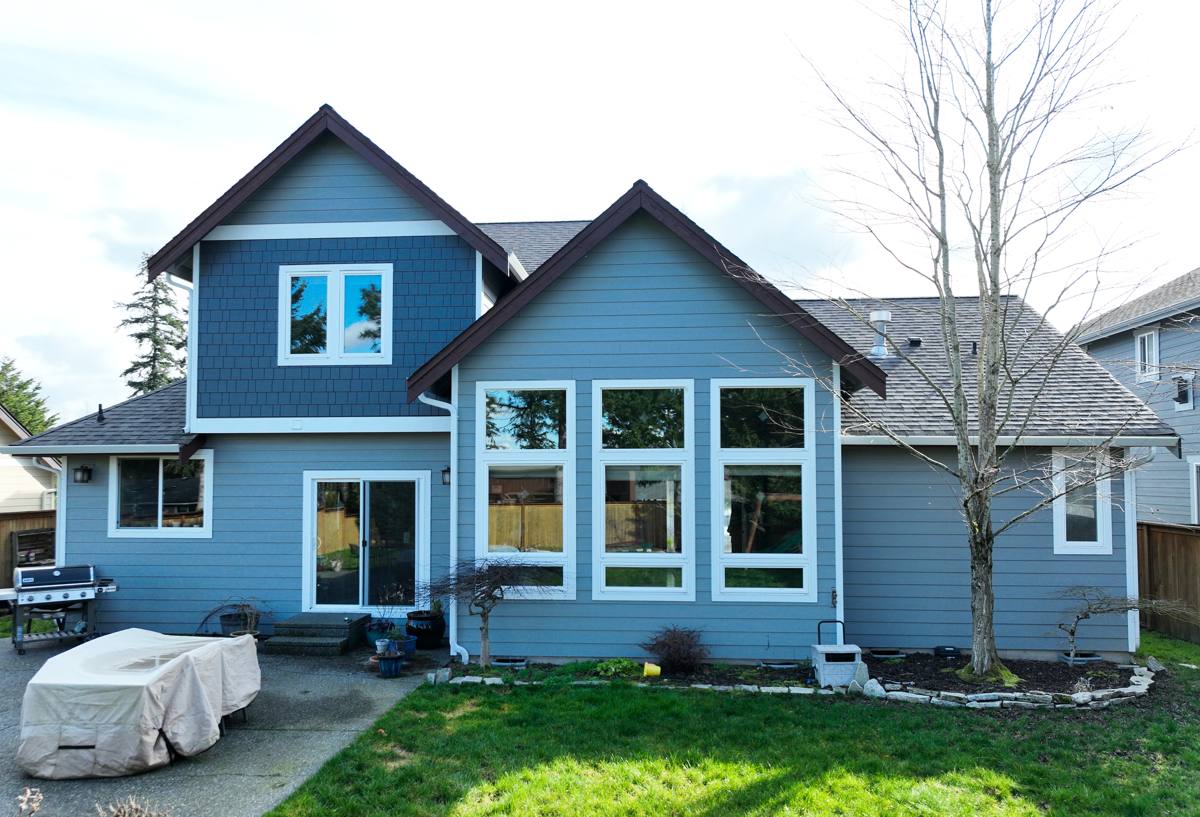
What LP SmartSide Actually Is
LP SmartSide is an engineered wood product. It's made from wood strands bonded with resin under heat and pressure, then coated with a resin-saturated overlay and treated with zinc borate to resist fungal decay and insects. It's a genuine improvement over the OSB siding products of decades past that gave engineered wood a bad reputation, and LP has put real engineering into making it more moisture-resistant than earlier generations.
It has real strengths worth naming honestly:
- Lighter than fiber cement, which can mean faster installation labor
- Easier to cut and nail without specialized fiber-cement blades or tools
- Comes in lap, panel, and trim profiles with a reasonably wide style range
- Backed by a manufacturer limited warranty, including a 5-year workmanship provision when installed by a certified installer
The core issue isn't that LP SmartSide is a poorly made product. It's that it is still, at its foundation, wood. And wood — no matter how it's engineered, resin-treated, or borate-protected — behaves differently than cement once water finds a way in.
What James Hardie Actually Is
James Hardie siding is fiber cement: a mix of Portland cement, sand, and cellulose fiber, cured into a dense, stable plank. There's no wood fiber for moisture to travel through or fungus to feed on, and no organic material for pests to target. It's factory-finished with the ColorPlus baked-on finish system (on most product lines), and it's engineered in climate-specific formulations — including an HZ5 line built for colder, wetter regions — rather than a single one-size-fits-all board.
The trade-offs run the other direction from LP: it's heavier, requires fiber-cement-rated blades and fasteners, and costs more up front both in material and labor. It is not the easiest or cheapest product to install correctly — which is exactly why installation quality matters so much, something we'll get to below.
Why the Coastal Climate Here Changes the Calculus
Blaine sits right on the water, at the northern edge of Whatcom County, and that location matters more for siding than most homeowners realize. Salt-laden air accelerates the breakdown of finishes and fasteners. Driving rain off the Strait pushes moisture sideways into wall assemblies, not just straight down. And our extended damp season — the stretch from late fall through spring when surfaces rarely fully dry out — means anything organic on the exterior of a house gets a long runway to grow moss, algae, and mildew.
What This Means for Wood-Based Products
Engineered wood siding's moisture resistance depends on an intact factory coating and correctly sealed joints, seams, and cut edges. In a climate that stays wet for months at a stretch, any breach in that protective layer — a missed caulk joint, a scratch from installation, an improperly flashed window — gives water a path into a material that can swell, delaminate, or support fungal growth once it's inside. It's not that this happens on every LP SmartSide job. It's that the margin for error is smaller here than it would be in a drier inland climate, and the consequences of an error compound over a Blaine winter rather than drying out between storms.
What This Means for Fiber Cement
Fiber cement doesn't have that same failure mode. It can get wet and dry out without swelling, rotting, or feeding mold, because there's no organic material in the board itself. That doesn't mean installation quality stops mattering — flashing, caulking, and proper clearance from grade are still essential on any siding product — but the material itself isn't the weak link the way an engineered wood product can be. In a moss-prone, salt-air, high-rainfall environment like Blaine, that's a meaningful difference in how the siding ages over 20 or 30 years rather than just how it looks the first few.
Side-by-Side Comparison
| Factor | James Hardie Fiber Cement | LP SmartSide Engineered Wood |
|---|---|---|
| Core material | Cement, sand, cellulose fiber | Wood strands with resin binder |
| Combustibility | Non-combustible | Combustible (treated, but wood-based) |
| Moisture behavior | Does not swell or rot; dries without structural damage | Resin-treated but still vulnerable if the protective layer is breached |
| Pest/fungal resistance | Not a food source for insects or fungus | Zinc borate treated, but wood-based material |
| Factory finish | ColorPlus baked-on finish (most lines), long fade resistance | Primed or pre-finished, typically needs repainting sooner |
| Weight / install labor | Heavier, requires fiber-cement tools and technique | Lighter, faster to cut and hang |
| Typical material cost | Higher | Lower to moderate |
| Warranty structure | Long-term limited warranty, transferable | Limited warranty, shorter workmanship provisions |
| Coastal/moss climate fit | Strong — no organic material to feed growth | Requires diligent sealing and maintenance to hold up |
Maintenance: The Part Homeowners Underestimate
Every siding product needs some maintenance. The difference is what happens if that maintenance gets deferred — and in a busy household, it usually does at some point.
With engineered wood, deferred maintenance has a compounding cost: if caulking cracks or a coating chips and goes unnoticed through a wet Blaine winter, water can get behind the surface and start doing damage that isn't visible from the outside until it's significant. With fiber cement, deferred maintenance mostly costs you appearance — moss or algae staining that needs a wash, a touch-up on a scratched finish — not structural integrity of the board itself.
For homeowners who want to power-wash, inspect caulking annually, and stay on top of touch-ups, either product can perform well for a good stretch of time. For homeowners who want a lower-maintenance material that tolerates a missed year or two without consequence, fiber cement has a real advantage in this climate.
Fire Consideration
It's worth a mention even though it's not the primary driver of most siding decisions in this area: James Hardie fiber cement is non-combustible, while LP SmartSide, as an engineered wood product, is combustible even with its treatments. This matters more in wildfire-exposed regions than it does in coastal Whatcom County, but it's part of a complete honest comparison and a factor some homeowners weigh into insurance or long-term risk planning regardless of location.
Cost Over the Life of the Siding
Sticker price tells an incomplete story. LP SmartSide typically costs less installed than James Hardie, and for some budgets that gap matters. But the fair comparison isn't installed cost — it's cost per year of service life, factoring in repainting cycles, caulk maintenance, and the risk of moisture-related repair if something goes wrong. James Hardie's ColorPlus finish is engineered to go far longer between repaints than a primed wood-based product typically needs, and the absence of rot risk removes a category of repair cost that engineered wood carries. Over a 20-30 year horizon, the higher upfront cost of fiber cement is often offset by lower maintenance spending — though we won't pretend there's a precise dollar figure that applies to every home, since that depends on exposure, upkeep, and the specific home.
Why We Standardized on James Hardie
We used to get asked to quote both products side by side, and we found ourselves giving the same honest answer every time: for a home on the water in Whatcom County, fiber cement's moisture behavior, non-combustibility, and factory finish durability made it the product we were comfortable standing behind for the long haul. Rather than install a product we'd have reservations recommending to our own families, we made the call to specialize in James Hardie only — climate-engineered HZ5 formulations, ColorPlus factory finish, and a strong transferable warranty when installed to Hardie's spec.
That specialization means our crews aren't switching between install methods and tool setups from job to job. They know fiber cement — the fastening patterns, the flashing details, the clearances that actually matter — because it's what we do every day.
Questions Worth Asking Any Contractor Before You Decide
- Are they certified installers for the specific product they're proposing?
- Will they show you the manufacturer's installation instructions for your climate zone?
- What does their workmanship warranty cover, separate from the manufacturer's material warranty?
- How do they handle flashing at windows, doors, and roof lines — the details that determine whether either product actually performs?
- Can they explain, specifically, why they recommend one product over another for a home in your location?
If you're weighing siding options for a home in Blaine or elsewhere in Whatcom County, we're glad to walk through what we see on coastal homes and give you a straightforward, no-pressure estimate for James Hardie fiber cement siding — no sales pitch, just an honest look at your home and what it needs.