 Blaine Siding
 Point Roberts: A Small Peninsula With a Tough Exterior Climate
Point Roberts sits on its own little finger of land at the bottom of a peninsula that hangs south from the Tsawwassen area of British Columbia, bordered by Boundary Bay on one side and the Strait of Georgia on the other. Being part of Whatcom County but geographically cut off from the rest of Washington means it gets treated, weather-wise, almost like an island. Homes here are exposed to open water on multiple sides, and that exposure shapes everything about how the exterior of a house ages.
We work throughout the Blaine area and out to Point Roberts regularly, and the pattern is consistent: homes closer to the water and homes tucked under tree cover show exterior wear years ahead of similar homes farther inland. That's not bad luck. It's salt air, driving rain, and a long moss season doing exactly what they do to building materials that aren't built to handle them.
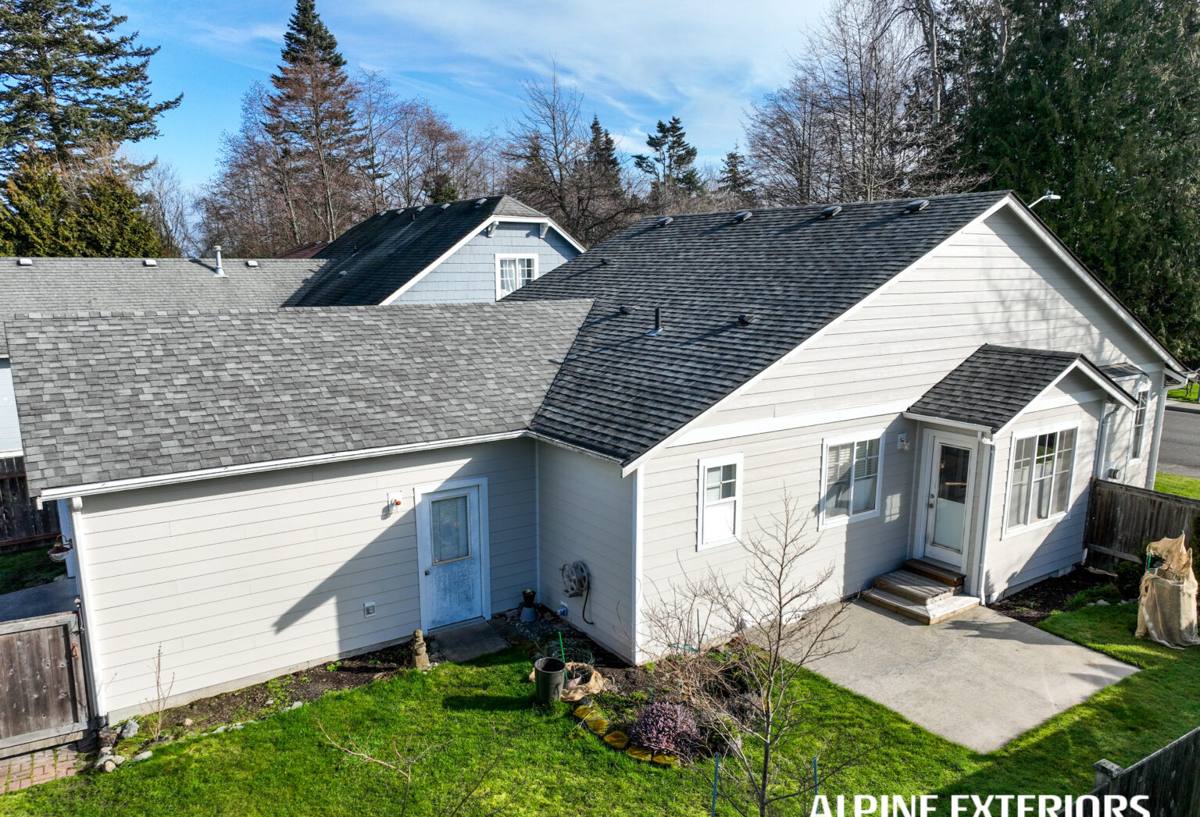
The Three Things That Wear Down a Point Roberts Exterior
Salt-laden marine air
Wind off the Strait of Georgia and Boundary Bay carries fine salt spray onto siding, trim, fasteners, and roofing. Salt is corrosive to metal fasteners and flashing, and it's abrasive to paint and factory finishes over time. Materials that rely on a surface coating to stay protected — some engineered woods, some vinyl trims, bare cedar — lose that protection faster in a salt-air environment than they would a few miles inland.
Wind-driven rain
This isn't gentle Pacific Northwest drizzle. Storms coming off open water push rain sideways into wall assemblies, especially on south- and west-facing elevations with no windbreak. Wind-driven rain finds every weak seam, gap, or improperly lapped joint in a siding or roofing system. A house that would be fine with average rainfall inland can develop moisture problems here simply because the water is being forced into the building rather than falling straight down onto it.
A long moss season
Cool temperatures, high humidity, and shaded, tree-covered lots — common on Point Roberts lots — add up to a moss and algae season that runs most of the year, not just a few wet months. Moss holds moisture against a surface far longer than open air would, which accelerates rot in wood-based products and can stain and degrade coatings on other materials. Roofs and north-facing siding are usually hit hardest.
Why We Install Only James Hardie Fiber Cement Siding
Given those three conditions, siding choice matters more here than in a drier, more sheltered part of the county. We install James Hardie fiber cement exclusively — not vinyl, not LP SmartSide or other engineered wood products, not Cemplank or Allura, not primed spruce or cedar. That's a deliberate standard, not a default, and it's worth explaining why.
Fiber cement is non-combustible and dimensionally stable, meaning it doesn't expand, contract, warp, or swell with the moisture swings that a marine climate produces. Hardie's ColorPlus factory-applied finish is baked on under controlled conditions and backed by its own finish warranty, so it holds color and resists the fading and chalking that field-applied paint can suffer under years of salt spray and UV. Hardie also makes climate-engineered HZ product lines specifically formulated for damp, humid coastal regions like ours, rather than a single one-size-fits-all formulation.
What that means next to the alternatives
Vinyl siding can work loose or distort under sustained wind-driven rain and temperature swings, and it doesn't offer the same fire performance. Engineered wood products depend heavily on edges and cut ends staying sealed — a single missed detail during installation or a later repair can let moisture in, and once wood-based sheet siding takes on water, swelling and delamination follow. Bare or primed wood siding needs a real maintenance commitment: repainting and caulking on a cycle that most homeowners underestimate, especially with moss constantly reintroducing moisture to the surface. None of these are "bad" products in every setting. They're just a harder match for a peninsula getting salt air and driving rain from open water on more than one side.
It's Not Just Siding: Roofing, Windows, and Decks Take the Same Beating
Siding gets the headline attention, but the rest of the exterior envelope faces the identical conditions, and neglecting one piece undermines the others.
Roofing
Moss on a roof isn't just cosmetic. It lifts shingle edges, holds water against the roof deck, and shortens the life of the roofing system. Metal flashing and fasteners in a salt-air environment need corrosion-resistant materials and careful detailing at every penetration and valley.
Windows
Older windows and worn seals let wind-driven rain track in around the frame, which is often mistaken for a siding leak when the real path of water is the window flashing. Correctly integrating window flashing with the siding system is one of the most important — and most commonly rushed — parts of an exterior job.
Decks
Outdoor living space on Point Roberts deals with the same salt exposure and damp shade that affects siding. Fastener choice, ledger flashing, and material selection matter as much on a deck as they do on a wall.
We handle all four — siding, roofing, windows, and decks — because a house is one connected system. A new siding job installed against a leaking window or a moss-choked roof just relocates the water problem instead of solving it.
Why a Local Crew Matters More Out Here
Point Roberts has a wrinkle most job sites don't: it's only reachable by land through Canada, or by water or air. That changes how a contractor has to plan a project. Materials, equipment, and crew all need to make that crossing, permits and scheduling need to account for it, and a company unfamiliar with the drive doesn't build in the time or logistics it actually takes. We work this route regularly and plan Point Roberts jobs around that reality up front, rather than treating it as an inconvenience discovered mid-project. Local familiarity also means we know what "normal" looks like for exterior wear in this specific exposure, and can tell you honestly whether what you're seeing is cosmetic or structural.
Comparing Siding Options for a Marine-Exposed Home
| Material | Salt-Air Performance | Moisture Behavior | Maintenance |
|---|---|---|---|
| James Hardie fiber cement | Strong; non-combustible, factory-finished | Dimensionally stable, resists warping | Low; occasional wash, no repainting cycle |
| Vinyl | Can distort under sustained wind and temperature swings | Sheds water but seams can work loose over time | Low, but limited repair options if damaged |
| Engineered wood (LP SmartSide, etc.) | Moderate; depends on sealed edges and coating integrity | Vulnerable to swelling if edges or cuts aren't sealed | Moderate; edge sealing and coating upkeep |
| Bare or primed wood/cedar | Weakest without diligent upkeep | Absorbs moisture readily, especially under moss | High; regular repainting and caulking |
Signs Your Point Roberts Home May Need Siding Attention
- Moss or dark streaking that returns quickly after cleaning, especially on north- and shade-facing walls
- Soft or spongy spots when you press on siding, particularly near the bottom courses and around windows
- Peeling, bubbling, or chalking paint on wood or engineered wood siding
- Visible gaps at seams, corners, or trim where wind-driven rain could be tracking in
- Rust staining below fasteners or flashing, a common sign of salt-air corrosion
- Warped, buckled, or separated panels, especially on south- and west-facing elevations
- Interior signs like musty smells, peeling interior paint, or staining near exterior walls
What Drives the Cost of an Exterior Project Here
| Factor | Why It Matters |
|---|---|
| Extent of moisture damage found during tear-off | Rotted sheathing or framing needs repair before new siding goes on |
| Home size and elevation complexity | More corners, gables, and dormers mean more flashing detail and labor |
| Siding profile and trim selection | Lap width, trim style, and color choice affect material cost |
| Window and door integration | Proper flashing at openings adds labor but prevents future leaks |
| Site access and logistics | Point Roberts' land access through Canada is a real scheduling factor |
| Scope: siding-only vs. combined roofing/window work | Bundling exterior work can reduce redundant setup and scaffolding costs |
How We Approach a Point Roberts Project
We start with an on-site look at the whole exterior, not just the siding, because the roof, windows, and wall system all affect each other. We check for the moisture and moss patterns described above, look at flashing details around windows and rooflines, and give you an honest read on what's cosmetic versus what needs to be addressed before new siding goes on. If tear-off reveals sheathing or framing damage, we'll show you what we found and talk through the repair before covering it back up. Every siding job is installed to James Hardie's specifications, using the HZ product line appropriate for this climate, because correct installation is what makes the warranty and the material's real-world performance hold up.
If you're weighing a siding, roofing, window, or deck project for a home on Point Roberts, we're happy to take a look and walk you through what we're seeing and why. Reach out for a free, no-pressure estimate — there's a short form below to get started.