 Blaine Siding
 Why Sandy Point Siding Wears Differently Than Inland Homes
Sandy Point sits right up against the water, and that changes what siding has to deal with day to day. Homes a few miles inland in Whatcom County get rain and cold, but they don't get the constant salt-laden air coming off the Strait, and they usually don't take wind-driven rain sideways into the same wall for hours at a stretch. That combination — salt, moisture, and wind pressure — is harder on siding seams, fasteners, and paint film than straight rainfall alone.
Add in the region's long moss season, which here can run from fall through late spring, and you've got siding that's rarely fully dry. Moisture that would evaporate off a wall in a drier climate instead sits, feeds moss and mildew growth, and works into any gap, crack, or failed caulk joint it can find. Repair work in Sandy Point has to account for all of that, not just patch what's visibly broken.
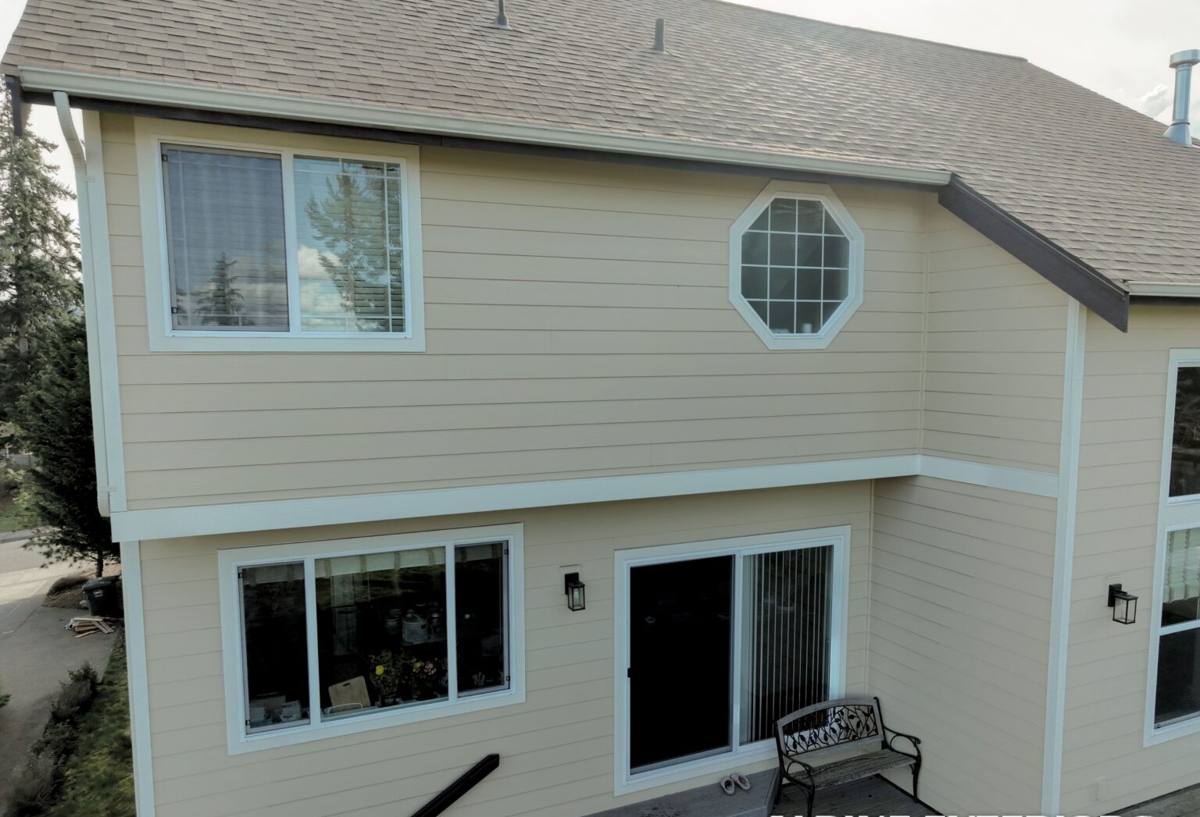
Common Signs a Sandy Point Home Needs Siding Repair
Some damage is obvious. A lot of it isn't, especially where moss has covered a panel or a north-facing wall never fully dries out between storms. Here's what we look for and what homeowners should watch for between inspections:
- Soft or spongy spots when you press on a panel — usually a sign moisture has gotten behind the surface
- Visible cracking, splitting, or buckling, especially near corners and window trim
- Paint that's bubbling, peeling, or chalking heavily on one side of the house more than others
- Moss or dark streaking that keeps coming back within weeks of cleaning
- Gaps opening up at seams, butt joints, or where siding meets trim, flashing, or the foundation
- Fasteners backing out, rust streaks below nail heads, or panels that have started to sag
- A musty smell near an exterior wall, or interior drywall staining on that same wall
Any one of these on its own might be minor. Several together, especially on the sides of the house that face prevailing wind and rain, usually mean water has been getting behind the siding for a while.
What a Correct Siding Repair Actually Involves
A lot of "repair" work in coastal areas is really just cosmetic — caulk the gap, slap on paint, call it done. That approach doesn't hold up in Sandy Point's conditions, because it treats the surface without checking what's underneath.
Inspection before anything gets touched
We start by pulling back or removing the damaged section to see what's happening behind it: the house wrap or building paper, the sheathing, the flashing at windows and penetrations. Salt air and repeated wetting can degrade a wall assembly well before the siding itself shows obvious failure. If we find soft sheathing or compromised wrap, that gets addressed before new siding goes back on — otherwise you're just covering the same problem again.
Matching material and fastening correctly
Repairs need to match the existing siding's profile, exposure, and fastening pattern, and they need proper clearances at grade, roof lines, and adjoining trim so water has somewhere to go instead of pooling against the wall. Fastener choice matters too — the wrong nail or screw in a salt-air environment corrodes faster and telegraphs rust stains through the finish within a season or two.
Sealing and finish work
Joints get sealed with a product rated for the exposure, not whatever's on the truck. Any exposed cut edges on fiber cement get sealed per manufacturer spec, since an unsealed cut edge is one of the more common places moisture problems start on an otherwise sound repair.
Repair vs. Replace: How We Make That Call
Not every damaged section needs a full re-side, and not every "small" repair is actually small once you're behind the wall. We look at a few factors before recommending either path:
| Factor | Leans toward repair | Leans toward replacement |
|---|---|---|
| Extent of damage | Isolated to one or two panels/areas | Spread across multiple walls or elevations |
| Underlying wall condition | Sheathing and wrap are sound | Rot, mold, or wrap failure found behind siding |
| Age of existing siding | Siding is mid-life, otherwise performing | Siding is near or past its expected service life |
| Material type | Fiber cement in generally good shape | Wood, LP, or vinyl showing widespread wear |
| Recurrence | First repair in this area | Same spot has needed repair more than once |
We'll tell you honestly which side of that table your house falls on. A targeted repair is the right call plenty of the time — we're not going to talk a homeowner into a full re-side when a section of good repair work will hold up fine.
Why the Original Siding Material Changes the Repair Conversation
This is where a lot of Sandy Point homeowners get surprised. The material you're repairing matters as much as the workmanship, because some products simply don't take repeated wetting and drying near saltwater as well as others.
LP SmartSide and similar engineered wood products can be repaired, but the strand-based core is more sensitive to sustained moisture exposure than fiber cement — once water gets past a failed seam or caulk joint, swelling at that spot tends to progress rather than stay put. Cedar and other wood siding can be beautiful, but it needs consistent refinishing to keep water out, and in a moss-heavy, salt-air environment that maintenance schedule gets demanding fast. Vinyl doesn't rot, but it becomes brittle with age and UV/salt exposure, cracks rather than flexes on impact, and can't be color-matched or patched invisibly the way a repaint can with other materials.
That's a big part of why we only install James Hardie fiber cement siding on this coast. It's non-combustible, engineered specifically for wet climates (Hardie's HZ5 product line is built for exactly this kind of weather exposure), and it holds its factory-applied ColorPlus finish far longer than field-applied paint on wood or engineered wood substrates. When we do need to replace a section — whether it's an isolated repair, a full elevation, or the whole house — Hardie is what goes back up, because it's the product we're willing to warranty and stand behind long-term in salt air.
If your existing siding is one of the other materials and it's failing repeatedly in the same spots, that's usually the moment to talk about a phased or full replacement rather than another patch.
Our Repair Process for Sandy Point Homes
- On-site inspection — we look at the damaged area and the surrounding wall, not just the spot you called about
- Assessment of what's behind the siding — wrap, sheathing, and flashing condition where accessible
- Written scope and honest recommendation — repair, partial replacement, or full re-side, with our reasoning explained
- Material matching or upgrade path — matching existing fiber cement, or discussing a Hardie transition if the current material is the underlying issue
- Repair execution — proper flashing, sealed cut edges, correct fastening, and finish work to match
- Final walk-through — so you can see exactly what was done and why
Ongoing Maintenance in a Moss and Salt-Air Environment
A good repair buys you time, but Sandy Point's climate doesn't let up once the work is done. A few habits keep repaired and existing siding performing well between service visits:
- Rinse siding periodically to clear salt residue and slow moss regrowth, especially on shaded, north-facing walls
- Keep gutters and downspouts clear so runoff doesn't sheet directly down a wall section
- Trim back vegetation that keeps a wall shaded and damp longer than the rest of the house
- Have caulk joints and trim intersections checked yearly — they're usually the first thing to fail, well before the siding field itself
- Address small issues immediately rather than waiting for a full season of wetting to make them worse
Why Local Experience in Sandy Point Matters
Siding repair here isn't the same job as siding repair twenty miles inland. A crew that hasn't worked this specific stretch of Whatcom County coastline can miss how much salt exposure a north or west wall actually gets, underestimate how fast moss returns without proper drainage detailing, or use a caulk and fastener spec that's fine for a drier climate but won't hold up here. We've done repair and replacement work on homes exposed to this exact combination of wind, salt air, and moisture, and we build every repair around those conditions rather than a generic checklist.
What Siding Repair Typically Costs
Every job is different, but these are the general factors that move the price up or down. We'll give you a firm number after the on-site inspection — not a phone estimate.
| Factor | Effect on cost |
|---|---|
| Size of the damaged area | Larger or more spread-out damage costs more than one isolated section |
| Condition behind the siding | Sheathing or wrap repair adds cost beyond the siding itself |
| Material match availability | Discontinued colors or profiles may need repainting or a broader repair scope |
| Access and wall height | Second-story or hard-to-access walls add labor time |
| Trim and flashing work | Repairs that include corner or window trim take longer than field panels alone |
If you're seeing moss buildup, soft spots, or paint failure on your Sandy Point home's siding, it's worth having someone look at it before another wet season sets in. We offer free, no-pressure estimates — use the form below and we'll take a look at what's actually going on with your walls.