 Blaine Siding
 Windows Built for Dakota Creek's Marine Climate
Dakota Creek sits close enough to the water that homes here take a different kind of weathering than houses a few miles inland in Whatcom County. Salt-laden air works into weep holes and hardware. Driving rain off the Strait doesn't fall straight down — it pushes sideways into any gap in the flashing or seal. And the long stretch of damp, low-light months every year means moss and algae get a head start on any surface that stays wet, including window sills, tracks, and the wood trim around older frames. None of this is dramatic on its own, but it adds up year after year, and it's why windows that look fine from the curb can be failing quietly on the inside.
This page is specifically about window replacement for Dakota Creek properties — not a general overview of siding, roofing, or whole-house exteriors. If you're dealing with foggy double-panes, sticking sashes, drafts around the frame, or trim that's gone soft, this is the service and the reasoning behind how we handle it here.
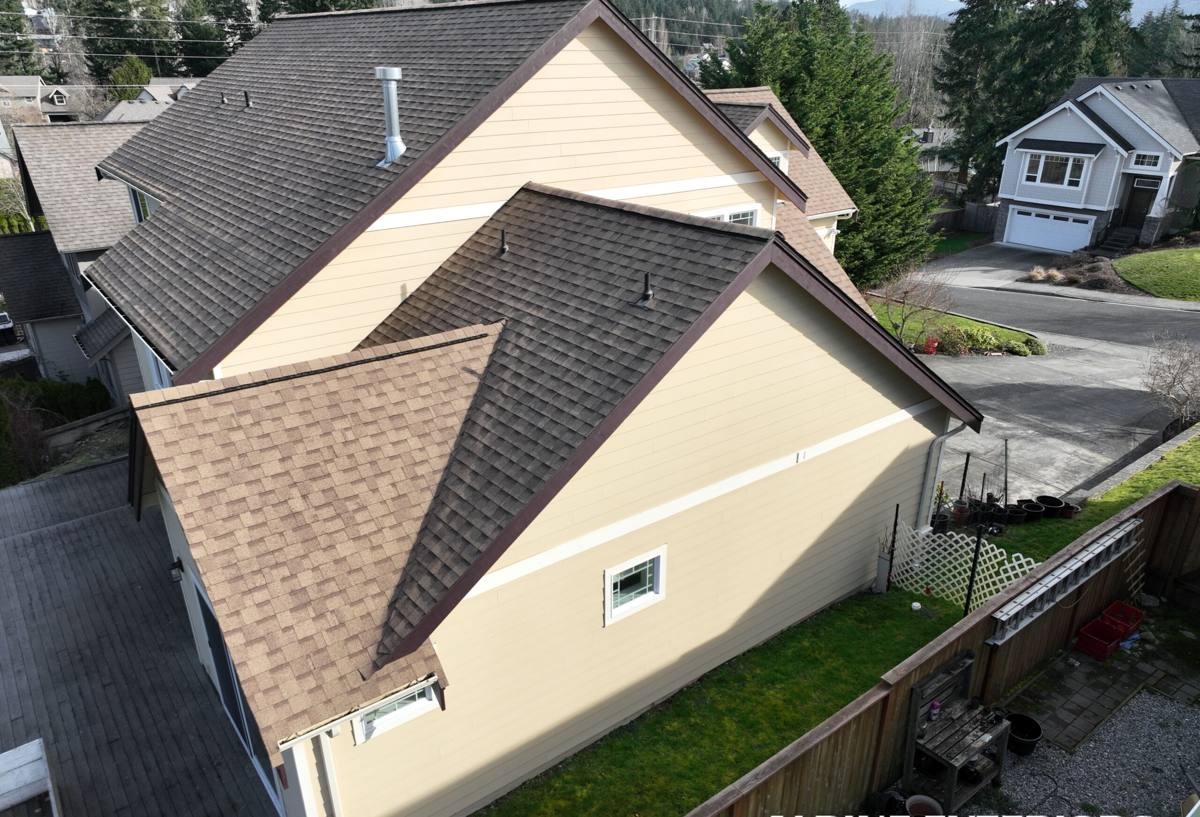
Why Windows Fail Faster This Close to the Water
Salt Air and Hardware
Salt in the air is corrosive to unprotected metal — hinges, balance springs, cranks, and screws. On budget windows with thin or exposed hardware, this shows up as stiff operation, rust bleed onto the sill, or locks that stop engaging cleanly well before the glass itself has any problem. It's one reason hardware quality matters more here than it would for the same window installed 40 miles inland.
Driving Rain and Wind-Driven Water
Wind off the water doesn't just test a window's seal — it tests everything behind the window: the flashing, the sill pan, the way the rough opening was wrapped before the window ever went in. A window can have a perfectly good frame and still leak if the water management behind it was done wrong. This is the single most common root cause we find when a homeowner says a "brand new" window is leaking.
Moss, Algae, and Prolonged Dampness
Long wet seasons mean wood sills, wood-clad frames, and exterior trim stay damp longer than they would in a drier climate. Moss and algae need that sustained moisture to establish, and once they do, they hold even more water against the surface. On wood components this accelerates rot from the outside in, often starting at joints and corners where water collects.
What a Correct Window Replacement Actually Involves
Swapping a window is not just measuring an opening and setting new glass into it. A correct install in this climate has to solve for water management first, energy performance second, and appearance third — in that order — because the first thing that fails is almost never the glass.
Sill Pan and Flashing
Every opening gets a sloped sill pan so any water that does get past the window sheds back out, not into the wall cavity. Flashing tape integrates with the house wrap in the correct shingle-lap order (bottom pieces overlapped by the ones above) so water always has a path down and out.
Air and Moisture Sealing
Low-expansion foam or backer rod and sealant around the frame — not just caulk smeared on the exterior trim — controls both air leakage and condensation risk inside the wall. Interior and exterior sealing are treated as two separate jobs with two different goals.
Level, Plumb, and Properly Shimmed
A window that isn't shimmed correctly will bind, won't lock tight, and puts uneven stress on the frame that shows up as premature seal failure. This is a slower, more careful step than it looks like from outside, and it's where a lot of quality difference between crews actually lives.
Choosing the Right Frame Material for This Location
There's no single "best" window for every home — the right choice depends on the home's exposure, the homeowner's maintenance appetite, and budget. Here's how the common options actually compare for a property near Dakota Creek:
| Frame Material | Behavior in Salt Air / Driving Rain | Maintenance | Typical Fit |
|---|---|---|---|
| Vinyl | Won't corrode or rot; performs well if installed correctly | Low — occasional cleaning | Most homes, best value |
| Fiberglass | Very stable dimensionally, holds paint well, resists moisture-driven warping | Low to moderate | Homes wanting a paintable, longer-term frame |
| Wood-clad | Exterior clad protects the wood, but any breach in the cladding lets moisture reach wood underneath | Higher — needs monitoring at joints and corners | Homes prioritizing interior wood appearance |
| Aluminum | Conducts cold and can condensate more in a damp marine climate unless thermally broken | Low | Limited use; mainly modern/specialty designs |
We'll walk through these trade-offs honestly during your estimate rather than pushing one product line. The right answer for a house that catches direct wind off the water is often different from the right answer for a more sheltered lot a few streets back.
Signs a Dakota Creek Home Needs Window Replacement
- Fog or moisture trapped between panes — the seal on the insulated glass unit has failed
- Visible rust streaks on hardware, hinges, or locks
- Soft, spongy, or discolored wood at the sill or bottom corners of the frame
- Persistent moss or dark staining on the sill or exterior trim that keeps coming back after cleaning
- Drafts you can feel near the frame edges on windy days
- Windows that are hard to open, close, or lock — often a sign the frame has shifted or warped
- Condensation forming on the interior glass or frame more than it used to
- Noticeably higher heating bills with no other explanation
Any one of these on its own might just need a repair or a reseal. Several together on the same window, or the same symptom across multiple windows on one exposure of the house, usually points to replacement being the more sensible long-term move.
How Our Process Works
1. On-Site Assessment
We look at each window's condition, the wall assembly behind it where visible, and which direction of the house takes the worst weather. Homes with a clear line to the water get evaluated differently than a more sheltered side of the same house.
2. Straightforward Estimate
You get a clear breakdown of frame material options, glass packages, and what the flashing and sealing work involves — no pressure to decide on the spot.
3. Careful Removal
Old windows come out with attention to what's underneath. If we find rot, compromised sheathing, or old flashing that was done wrong, we tell you before covering it back up, not after.
4. Correct Installation
Sill pan, flashing integration, shimming, and sealing are done in the order that actually manages water, not just the order that's fastest.
5. Cleanup and Walkthrough
We test operation and locking on every window, clean the work area, and walk the job with you before we consider it done.
What Drives the Cost
Every home is different, but the main variables that move the price on a Dakota Creek window job are consistent:
| Factor | Why It Matters |
|---|---|
| Frame material chosen | Vinyl, fiberglass, and wood-clad carry different material costs and lead times |
| Number and size of openings | More or larger windows mean more labor and material |
| Condition behind the old window | Rot or damaged framing found during removal adds repair scope |
| Glass package | Standard dual-pane vs. upgraded low-E or impact-resistant glass |
| Access and exposure | Second-story or hard-to-reach windows on a windy elevation take more time |
We'll always be upfront about which of these apply to your home before work starts — there shouldn't be surprises in the middle of a job.
Energy Performance and Condensation
In a marine climate, insulated glass with a good low-E coating does two jobs at once: it keeps heat in during the cool, wet months, and it reduces the temperature difference between the glass and room air that causes interior condensation. Persistent condensation on the inside of a window isn't just an annoyance — over time it can feed mold growth on sills and nearby trim, especially in rooms with less airflow. Correctly sized, correctly sealed replacement windows address both the comfort and the moisture side of that problem together.
Why Local Experience in This Area Matters
A crew that regularly works Dakota Creek and the surrounding Blaine area already knows which exposures take the worst wind-driven rain, how fast moss reestablishes on sills here compared to a drier part of Whatcom County, and what the salt air does to hardware over a few seasons. That's not something you can fully substitute with a generic install checklist — it shapes decisions like where to add extra flashing attention, which frame materials we'd steer away from on a directly exposed elevation, and how we sequence a job around the wetter months so the opening isn't sitting exposed longer than it needs to be.
After Installation: Keeping Windows Performing
New windows still benefit from basic upkeep in this climate. Rinse salt residue off exterior frames and hardware periodically, especially after storms. Keep sills and tracks clear of debris where moss and algae like to start. Check exterior sealant lines once a year for any separation, and address it early rather than waiting for a leak to show up on the inside. None of this is heavy maintenance — it's the kind of five-minute check that keeps a good install performing for its full lifespan.
If you're seeing any of the signs above, or you just want an honest read on whether your windows are due, we're glad to come take a look. The estimate is free, there's no pressure to commit, and you'll get a straight answer about what your home actually needs — use the form below to get started.