 Blaine Siding
 Windows Built for the Dakota Creek Climate
Dakota Creek sits close enough to the water that homes here take a different kind of weather beating than houses even a few miles inland. Salt-laden air off the Strait of Georgia and Semiahmoo Bay works into window frames and hardware year-round. Driving rain, pushed sideways by wind off the water, tests every seal and flashing detail a window has. And Whatcom County's long, wet moss season keeps siding, trim, and window perimeters damp for months at a stretch. None of that is unique to Dakota Creek by itself, but the combination — salt, wind-driven rain, and sustained moisture — is exactly the profile that separates a window installation that lasts twenty-plus years from one that starts failing at year five.
Window replacement isn't just a product swap. The window unit itself might be rated for coastal exposure, but if the flashing, sill pan, and air-sealing details underneath aren't done correctly for this specific climate, water will eventually find its way behind the trim. We've built our process around what actually happens to a window opening in a Dakota Creek microclimate, not a generic installation checklist.
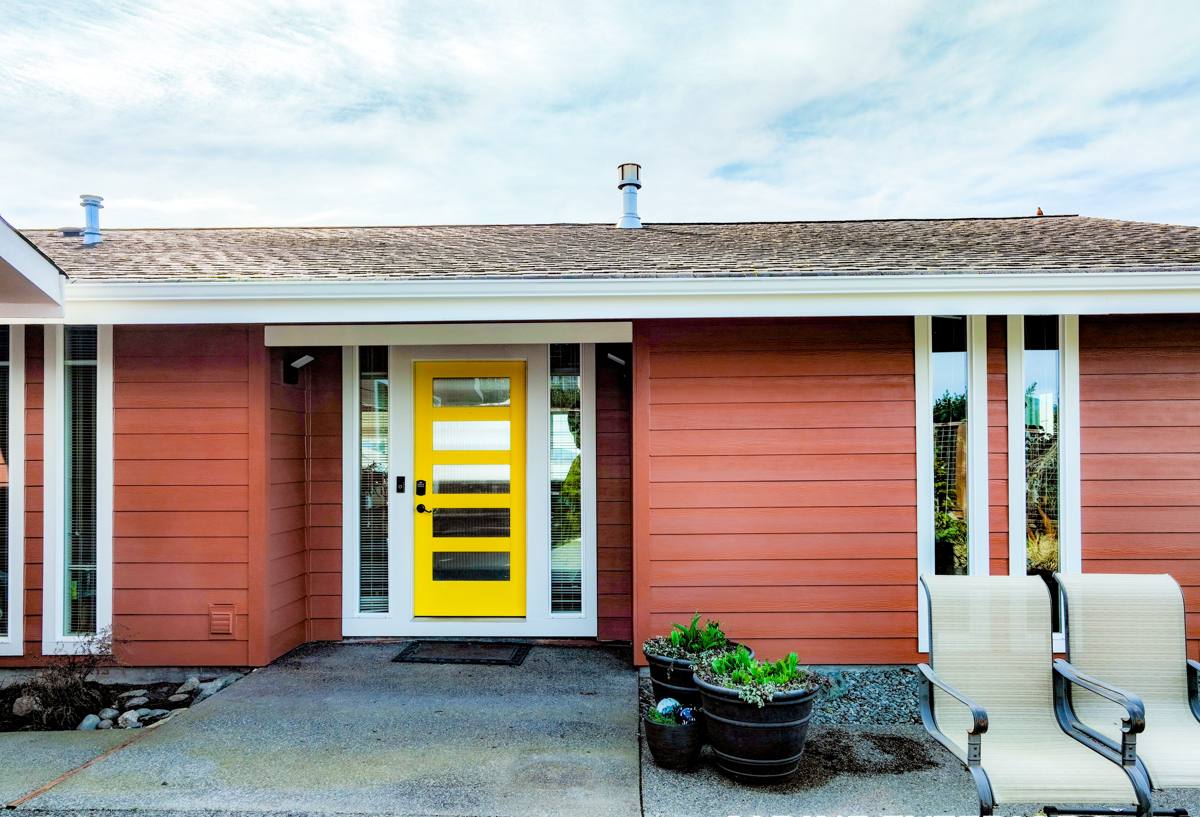
What Salt Air and Coastal Wind Do to a Window Over Time
Salt air is corrosive to exposed metal — hinges, cranks, screws, and especially older aluminum frames. It doesn't happen overnight, but over years it pits hardware, seizes moving parts, and can accelerate corrosion on fasteners that were never rated for a marine-influenced environment. Vinyl and fiberglass frames don't corrode the same way, but their hardware and screws still need to be marine-appropriate, and the installation still needs to keep salt-laden moisture from sitting against any metal components.
Wind-driven rain is the bigger structural concern. A standard rain event drops water straight down, and a reasonably competent installation sheds it fine. Driving rain off open water hits windows at an angle, and it can push water sideways and even slightly upward into gaps that would never see moisture in a more sheltered inland location. That's why the details around the window opening — not just the window itself — matter so much here:
- Sill pan flashing that directs any intruded water back out, not into the wall cavity
- Head flashing with a drip edge that actually clears the wall below it
- Properly lapped weather-resistive barrier integration, shingle-style from bottom to top
- Sealant used only where it belongs — as a backup to good flashing, never as the primary defense
- Corrosion-resistant fasteners rated for coastal exposure
Moss Season and Moisture Retention Around Window Openings
Blaine's long wet season means the areas around window trim, especially on north- and west-facing walls, stay damp longer than homeowners often expect. Moss and algae growth on siding and trim isn't just cosmetic — it holds moisture against the wall assembly, which keeps wood trim and sheathing wet longer after every rain event. If a window installation already has marginal flashing or gaps in the weather barrier, that extended dampness is what turns a small flaw into hidden rot over a few seasons.
This is part of why we pay close attention to the condition of the sheathing and trim we uncover during a tear-out. On older Dakota Creek homes, especially those with original wood windows or early vinyl replacements from decades past, it's common to find some degree of moisture staining or soft wood around the opening once the old unit comes out. Finding it during installation, when it can be addressed properly, is far better than finding it years later as a bigger repair.
What a Correct Window Installation Actually Involves
Before the Old Window Comes Out
We check the opening's rough dimensions against the new unit, confirm the exterior trim and siding condition, and plan for how the existing weather barrier will integrate with new flashing. On a house with visible moss growth or staining near the window, we flag it up front rather than surprise you with a change order mid-job.
During Removal
Careful removal matters more on older Dakota Creek homes than it might elsewhere, because the sheathing behind decades-old windows in a coastal, moss-prone environment is more likely to need attention. We remove the old unit in a way that lets us inspect the full opening — sill, jambs, and header — before anything new goes in.
Sill Pan and Flashing
This is the step that determines whether a window survives coastal weather long-term. A sloped sill pan, properly integrated head and jamb flashing, and correct shingle-lap sequencing with the house wrap are non-negotiable on our jobs, regardless of what the original installation looked like.
Setting and Sealing the Window
The unit gets shimmed level and plumb, fastened per the manufacturer's specification (which affects the warranty), and insulated around the frame without over-packing, which can bow the frame and affect operation. Exterior sealant goes on as a secondary barrier, not a substitute for good flashing.
Interior and Exterior Finish
Interior trim, insulation, and finish work get buttoned up, and exterior trim is sealed and painted or capped appropriately for continued moss and moisture exposure.
Choosing the Right Window for This Environment
There's no single "best" window brand for coastal Whatcom County — the right choice depends on your home's style, budget, and how much maintenance you want to take on. What matters more than the brand name is the frame material's behavior in salt air and sustained moisture, and the quality of hardware.
| Frame Material | Coastal/Salt Air Behavior | Maintenance Consideration |
|---|---|---|
| Vinyl | Doesn't corrode; performs consistently in salt air | Low maintenance; hardware quality varies by manufacturer |
| Fiberglass | Excellent stability, resists warping from moisture cycling | Low maintenance; higher upfront cost |
| Wood (clad or unclad) | Handsome, but bare wood needs real upkeep in this moisture profile | Higher maintenance; clad exteriors reduce but don't eliminate upkeep |
| Aluminum | Prone to pitting and corrosion over time in salt air unless well-coated | We're selective about where we recommend this locally |
We're upfront when a product isn't a good fit for this specific setting. That's not a knock on any manufacturer — it's about matching the frame material and hardware spec to what Dakota Creek's air and rain actually do to a window over ten or twenty years.
Signs Your Current Windows Are Losing the Fight
- Fogging or moisture between double-pane glass — the seal has failed
- Visible staining, soft wood, or bubbling paint on interior or exterior trim
- Drafts you can feel even with the window fully latched
- Hardware that's stiff, corroded, or won't latch tightly anymore
- Moss or dark streaking building up on trim and sills faster than the rest of the wall
- Noticeably higher heating bills without another explanation
Any one of these on its own might just mean a minor repair. Several together, especially on an older home, usually means the windows and their flashing are due for a real look.
Why a Crew That Already Works Dakota Creek Matters
Window installation isn't a one-size-fits-all trade. A crew that mostly works drier, more sheltered inland areas can do a technically fine installation and still miss the specific details that matter here — the sill pan slope that accounts for driving rain, the fastener spec that resists salt corrosion, the flashing sequence that keeps moss-season moisture out of the wall. We work in Blaine and Whatcom County regularly, which means we're not guessing at how a house near the water behaves — we've seen what holds up and what doesn't.
We also don't treat every window opening the same. A south-facing window on a sheltered lot doesn't need the same level of attention as a west-facing one catching wind straight off the water. Part of doing this correctly is recognizing which openings on your specific home need the most careful detailing.
What to Expect: Cost Factors
Every home and window package is different, so we don't quote sight-unseen. But the main factors that move the price on a Dakota Creek job are generally the same ones:
| Factor | Why It Matters |
|---|---|
| Frame material chosen | Vinyl, fiberglass, and clad-wood carry different material costs and lifespans |
| Number and size of openings | Larger or more numerous windows mean more labor and material |
| Condition of existing sheathing/framing | Hidden moisture damage found during tear-out adds repair scope |
| Flashing and trim complexity | Custom trim details or unusual openings take more time to detail correctly |
| Access and site conditions | Second-story or hard-to-access windows take longer to install safely |
Generally, straightforward single-window replacements on an easily accessible wall land at the lower end of the typical range for the trade, while full-home window replacement with tear-out repairs runs higher. We'll walk your specific windows with you and give you real numbers, not a ballpark pulled from a different climate.
Our Process, Start to Finish
- On-site walkthrough of every window being considered, checking current condition and flagging any visible moisture concerns
- Honest recommendation on frame material and window style based on your home's exposure and budget
- Written estimate with a clear scope — no vague allowances for "surprises"
- Careful removal with inspection of the opening before anything new goes in
- Correct sill pan, flashing, and weather barrier integration on every unit
- Final walkthrough with you to confirm operation, sealing, and finish
If you're weighing window replacement for a Dakota Creek home, we're happy to take a look and give you a straightforward, no-pressure estimate — just fill out the form below.