 Blaine Siding
 Why Dakota Creek Homes Take a Different Kind of Beating
Dakota Creek sits close enough to Semiahmoo Bay and Drayton Harbor that salt-laden air is part of daily life, not an occasional weather event. That air finds its way into every seam, nail head, and unpainted cut edge on a house, and over years it does slow, quiet damage that homeowners often don't notice until trim starts to bubble or fasteners bleed rust through the paint. Add in the driving, wind-pushed rain that comes off the Strait during fall and winter storms, and you have a climate that tests horizontal siding joints and window flashing far harder than a typical inland Whatcom County lot.
Then there's moss. The combination of mild temperatures, long wet stretches, and shaded, tree-lined lots around Dakota Creek gives moss and algae exactly what they need to colonize north-facing walls, lower courses near grade, and anywhere airflow is restricted. None of this is unusual for the area — it's just the reality of building an exterior wall a few miles from the water in the Pacific Northwest. The siding, the flashing details, and the fasteners all have to be chosen and installed with that reality in mind.
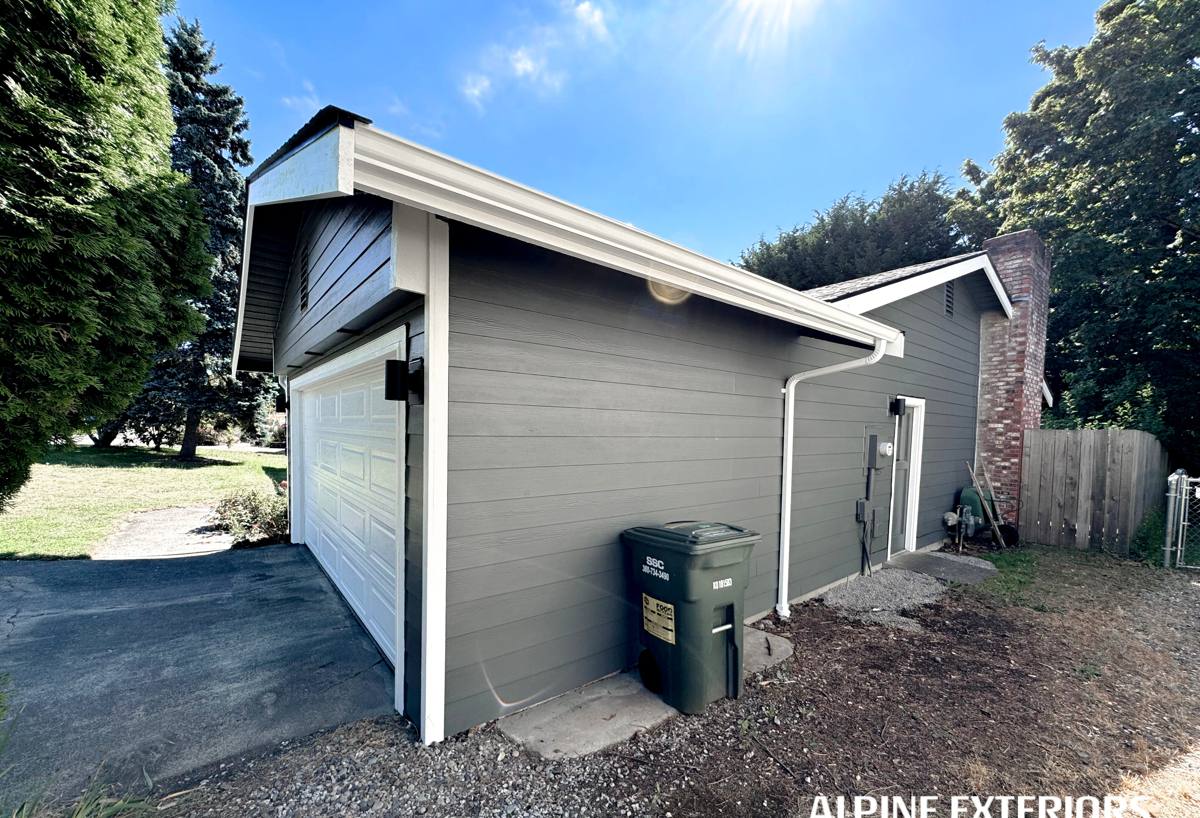
What James Hardie Is Engineered to Handle Here
We install James Hardie fiber cement siding exclusively, and in a climate like this one, the reasons are practical rather than promotional. Hardie board is non-combustible, dimensionally stable in wet-dry cycling, and manufactured in HardieZone formulations specifically for regions like ours.
HardieZone HZ5 and the Pacific Northwest
James Hardie engineers its products by climate zone, and the HZ5 formulation used in western Washington is built to resist moisture-driven damage — the freeze-thaw swings, prolonged dampness, and humidity that would eventually warp or delaminate a less stable material. That matters more in Dakota Creek than it would in a dry inland climate, because the siding here rarely gets a long stretch to fully dry out between rain events.
ColorPlus Finish vs. Field-Applied Paint
Hardie's ColorPlus factory finish is baked on under controlled conditions, which gives it better adhesion and UV resistance than paint rolled on-site in variable weather. In a salt-air environment, that matters because field-applied paint tends to fail first at seams and cut edges — exactly the spots where moisture and salt exposure concentrate. ColorPlus doesn't eliminate the need for touch-up paint at field cuts, but it removes the weakest link from most of the wall.
What a Correct Installation Looks Like on a Dakota Creek Home
Buying the right siding product only pays off if it goes on correctly. In this climate, a handful of details separate a job that lasts decades from one that starts showing problems in five to seven years.
Fasteners That Won't Fail Near Salt Air
Standard fasteners can corrode faster than the siding around them when they're exposed to salt-influenced air, and a corroding nail head telegraphs a rust stain through paint long before it fails structurally. We fasten with corrosion-resistant nails rated for the exposure, driven to the manufacturer's specified depth and pattern — not just "close enough," since over-driven or under-driven fasteners are one of the most common causes of premature siding failure regardless of climate.
Clearances That Keep Moss From Taking Hold
James Hardie's installation instructions call for specific clearances — typically at least 6 inches between the bottom of the siding and the ground or paved surfaces, and roughly 1–2 inches above roof lines, decks, and other flat surfaces. Those clearances aren't arbitrary; they keep the lowest courses of siding from sitting in standing moisture and organic debris, which is exactly where moss and algae get their first foothold on a house. Skipping this detail to save a few inches of coverage is one of the most common shortcuts we see on homes that develop moss and rot problems early.
Flashing, House Wrap, and Joint Treatment
Behind every properly installed Hardie wall is a continuous weather-resistive barrier, correctly lapped flashing at windows, doors, and any roof-to-wall intersections, and joints that are either flashed or caulked per manufacturer spec — never just butted together and hoped for. Driving rain finds gaps that vertical rain never would, so horizontal joint treatment gets extra attention on Dakota Creek homes that face open water or prevailing wind.
James Hardie vs. Other Siding Options in This Climate
We only install James Hardie, but homeowners deserve to understand why, especially when comparing bids that include other materials. Here's how the common alternatives hold up against the specific conditions Dakota Creek homes face.
| Material | Salt Air / Moisture Resistance | Moss & Algae Resistance | Long-Term Maintenance |
|---|---|---|---|
| James Hardie (HZ5, ColorPlus) | Engineered for wet coastal climates; dimensionally stable | Factory finish resists staining better than raw wood or vinyl surface film | Occasional rinse; touch-up paint only at field cuts |
| Vinyl siding | Won't rot, but expands/contracts more with temperature swings and can warp near heat sources | Textured surfaces trap moss and algae; harder to clean without damage | Low, but panels can crack or fade and are hard to spot-repair invisibly |
| Cedar (untreated/primed) | Absorbs moisture; prone to cupping and rot in prolonged damp conditions | Highly susceptible without regular sealing and cleaning | High — refinishing and moisture monitoring every few years |
| LP SmartSide (engineered wood) | Treated to resist moisture, but relies on intact caulking and paint film at every cut and seam | Moderate; performance depends heavily on maintaining the factory coating | Moderate to high — edge sealing and paint upkeep are non-negotiable |
This isn't a knock on every one of these products in every application — vinyl and engineered wood both have a place in the market, and cedar has real appeal for homeowners who want a natural look and are willing to maintain it. But for the salt air, rain exposure, and moss pressure specific to Dakota Creek, we've made Hardie our standard because it holds up with the least ongoing intervention.
What Drives Cost on a Dakota Creek Project
Every home is different, so we don't quote broad numbers until we've walked the property, but a few factors consistently move the price on jobs in this area:
| Factor | Why It Matters Here |
|---|---|
| Existing wall condition | Homes with hidden moisture damage behind old siding need sheathing repair before new siding goes on — common on older Dakota Creek homes that have taken decades of coastal weather |
| Tear-off vs. re-side | We don't install over existing siding when it's hiding moisture problems, which is more often the case near the water than inland |
| Home height and access | Multi-story homes and tight lots near the creek or shoreline can require more scaffolding and staging time |
| Trim and detail complexity | Homes with more windows, dormers, and roof intersections need more flashing and joint work, which adds labor |
| Siding profile and color | Lap width, shingle-style panels, and ColorPlus color selection all affect material cost |
Our Installation Process
- Inspection and moisture check. Before we quote anything, we look at the existing siding, trim, and — where accessible — the sheathing underneath for signs of past water intrusion.
- Tear-off and sheathing repair. We remove old siding fully rather than covering over it, and repair or replace any compromised sheathing before moving forward.
- Weather barrier and flashing. A continuous weather-resistive barrier goes on with correctly lapped flashing at every penetration and transition.
- Hardie installation to spec. Panels and fasteners go in per James Hardie's published instructions and the clearances this climate demands — not a generic install pattern.
- Trim, caulking, and touch-up. Field cuts get sealed and painted, joints are treated correctly, and trim is finished to match.
- Final walk-through. We review the finished work with the homeowner before calling the job done.
Why Local Experience Matters
A crew that already works Blaine and the surrounding Whatcom County waterfront knows what a Dakota Creek job needs before the first panel goes up. That includes recognizing which walls take the worst of the wind-driven rain, knowing where moss pressure will be heaviest based on tree cover and sun exposure, and understanding local permitting expectations for exterior work. It also means we've seen how different materials actually perform after several winters in this specific microclimate — not just how they're rated on a spec sheet. That local track record is part of why we standardized on one product system instead of offering whatever's cheapest to install that week.
Keeping Your Siding Looking Right After Installation
Hardie siding installed correctly is low-maintenance, not no-maintenance. A little seasonal attention goes a long way in this climate:
- Rinse the exterior annually (a garden hose is usually enough) to clear salt residue and early moss growth before it takes hold
- Inspect caulking at trim and joints every year or two, and re-caulk any cracked or separated beads promptly
- Touch up paint at any field-cut edges that were exposed during installation or later repairs
- Keep gutters clear so water sheets off the roof rather than running down the wall face
- Trim back vegetation and tree limbs that shade siding and keep it damp longer than it needs to be
- Address any moss or algae growth early with a gentle wash rather than letting it establish and stain the finish
If you're planning a siding project in Dakota Creek or elsewhere around Blaine, we're happy to take a look at your home and talk through what it actually needs — no pressure, no generic quote. Reach out for a free estimate using the form below.