 Blaine Siding
 Windows Built for Dakota Creek's Coastal Conditions
Dakota Creek sits close enough to the water and to open farmland that homes here take weather from more than one direction — salt-laden air off the bay, driving rain pushed in by wind, and a wet season that runs long even by Whatcom County standards. Windows are one of the first parts of a house to show that wear, usually years before most homeowners think to look. Sashes that stick, frames that feel soft at the bottom corners, or glass that fogs between the panes are all signs the window is no longer doing its job.
We install custom windows for homes throughout the Dakota Creek area, and we size and spec every job around what this specific climate does to a window over time — not just what looks good in a showroom. That's a different starting point than a generic replacement job, and it shows in how the windows perform ten years down the road.
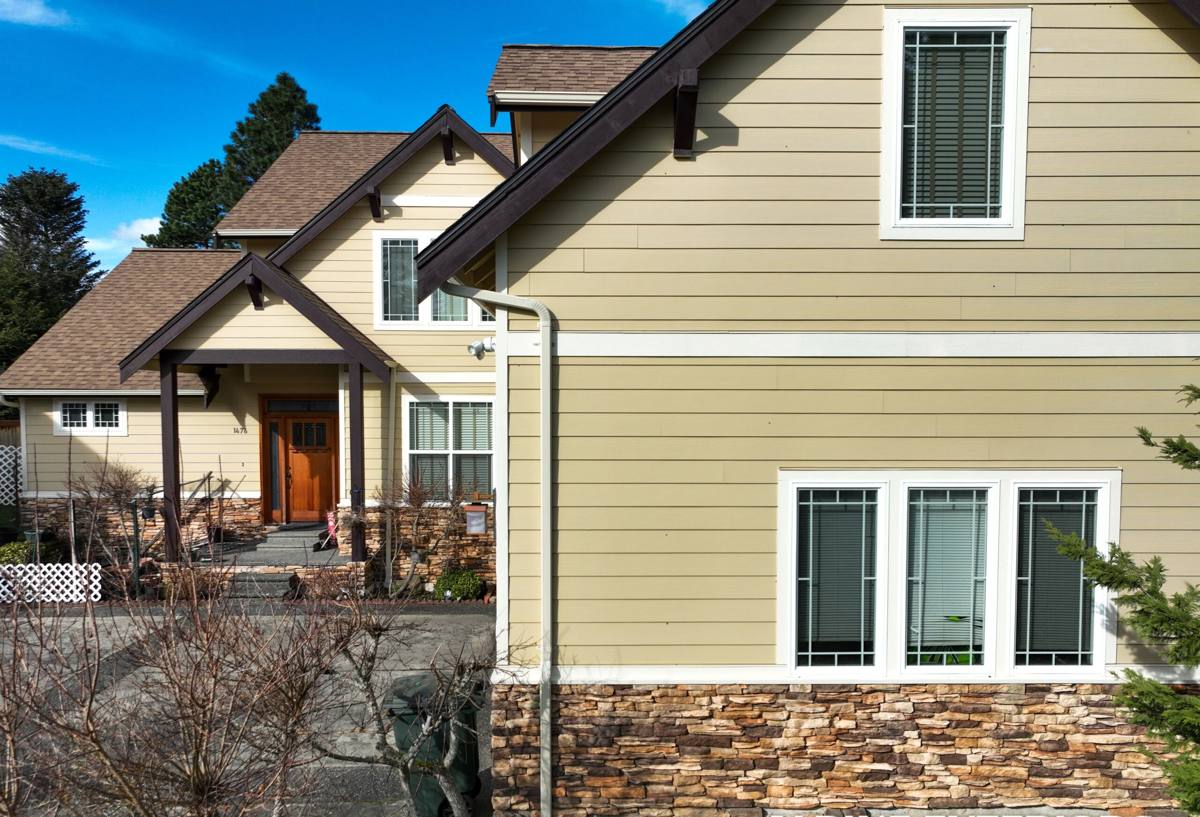
What Salt Air, Driving Rain, and Moss Season Actually Do to a Window
Each of these factors wears on a window in a different way, and together they add up faster than most homeowners expect.
Salt Air
Even a few miles inland, airborne salt settles on exterior surfaces and accelerates corrosion on hardware — hinges, cranks, locks, and screws. On older aluminum-frame windows it can pit the frame itself. Vinyl and fiberglass don't corrode, but exposed fasteners and hardware still need to be rated for coastal exposure or they'll fail early.
Driving Rain
Wind-driven rain doesn't just hit a window — it pushes water sideways and upward against the frame, testing seals and flashing details that a calm-weather rain would never reach. A window that's watertight in a light drizzle can still leak during a wind-driven storm off the Strait if the flashing wasn't done correctly at installation.
Moss Season
Whatcom County's long wet stretch, roughly October through April, keeps exterior wood and window sills damp for extended periods. That moisture supports moss and algae growth on sills, sashes, and nearby trim, and it keeps wood-frame windows wet long enough for rot to set in at joints and end grain if the finish isn't holding up.
Signs a Dakota Creek Home Needs New Windows
- Visible gaps or daylight around the frame when the window is closed
- Fogging or a milky haze between panes of double-pane glass — a sign the seal has failed
- Soft, spongy, or discolored wood at the sill or lower frame corners
- Windows that are difficult to open, close, or lock, especially after damp weather
- Noticeable drafts or a cold zone near the window even with it fully closed
- Condensation forming on the inside of the glass regularly during winter
- Rising heating bills with no other clear explanation
Any one of these on its own isn't necessarily urgent. Several at once, or any sign of active rot, usually means it's time to look at replacement rather than another round of caulk and weatherstripping.
Choosing Window Materials for This Climate
There's no single "best" window material — the right choice depends on the home, the budget, and how much maintenance the homeowner wants to take on. Here's how the common options hold up specifically against salt air, driving rain, and a long wet season:
| Material | Salt Air Resistance | Moisture Behavior | Maintenance |
|---|---|---|---|
| Vinyl | Excellent — won't corrode or rust | Doesn't absorb water; seams need to be well-sealed | Low — occasional cleaning |
| Fiberglass | Excellent — very stable in coastal exposure | Dimensionally stable wet or dry, resists warping | Low — very durable finish |
| Wood-Clad | Good if hardware and cladding are marine-rated | Interior wood needs the exterior clad seal to stay intact | Moderate — watch cladding seams and interior finish |
| Aluminum | Poor to fair unless marine-grade and well-coated | Prone to condensation without a thermal break | Higher — coating and hardware need monitoring |
For most Dakota Creek homes we lean toward vinyl or fiberglass for full-exposure walls — south and west sides that take the brunt of driving rain — and we're comfortable using wood-clad on more protected elevations where a homeowner wants that look. We size hardware and finish choices to the exposure, not just the style.
What a Correct Installation Actually Involves
The window unit itself is only part of the job. Most window failures we get called out to fix in this area trace back to installation shortcuts, not the product. A correct job includes:
Flashing and Water Management
Proper head flashing, sill pan flashing, and integration with the home's weather-resistive barrier so that any water that does get past the window sheds down and out, not into the wall cavity. This is the single biggest factor in whether a window stays watertight through a wind-driven storm.
Air Sealing
Continuous, properly installed insulation and sealant around the full perimeter of the rough opening — not just a bead of caulk at the trim — to stop both drafts and the moist air infiltration that feeds interior condensation.
Correct Sizing and Shimming
A window that's shimmed level and square operates and seals correctly for the life of the product. One that's forced into an out-of-square opening will bind, leak, or fail early no matter how good the unit is.
Hardware Rated for the Exposure
Fasteners, hinges, and locking hardware specified for coastal or high-moisture exposure so they don't become the first point of failure.
How We Approach a Custom Windows Job in Dakota Creek
- On-site assessment — we look at each window opening, the exposure it faces, and the condition of the surrounding framing and siding before recommending anything.
- Material and product selection — matched to that specific wall's exposure, the home's style, and the homeowner's budget and maintenance preferences.
- Accurate measurement — custom sizing for the actual opening, not a stock size that gets forced to fit.
- Removal and prep — old units removed carefully, framing checked for rot or damage and repaired before the new window goes in.
- Installation with full flashing and air-sealing detail — the water-management and sealing work described above, done to spec on every opening.
- Interior and exterior finish work — trim, caulking, and touch-up so the finished job looks intentional, not patched.
- Final walkthrough — operation, locks, and seals checked with the homeowner before we call it done.
Cost Factors for Custom Window Replacement
Every home and job is different, so we don't quote pricing sight unseen — but these are the main factors that move the number up or down:
| Factor | Why It Matters |
|---|---|
| Window material | Vinyl is typically the most budget-friendly; fiberglass and wood-clad cost more upfront but bring different durability and maintenance trade-offs |
| Number and size of openings | More windows and larger custom sizes increase material and labor cost |
| Condition of existing framing | Rot or water damage found during removal adds repair work before the new window can go in |
| Exposure and flashing complexity | Full-exposure walls facing driving rain often need more thorough flashing detail |
| Glass and hardware upgrades | Options like upgraded low-E glass or higher-grade hardware add cost but also long-term performance |
A Checklist Before You Hire a Window Contractor
- Ask whether they'll inspect and repair rotted or damaged framing before installing, not just install over it
- Ask specifically how they handle flashing and water management at the sill and head — not just "we seal it"
- Confirm the window's warranty terms and what's covered on both the product and the installation labor
- Ask for the manufacturer and product line by name, not just "vinyl" or "premium"
- Confirm they carry current licensing and insurance for work in Washington
- Ask how they handle hardware selection for coastal or high-moisture exposure specifically
Why Local Experience in Dakota Creek Matters
A crew that regularly works homes in and around Blaine and Dakota Creek already knows which walls in this area take the worst of the driving rain, how far salt air travels inland here, and how long the wet season keeps wood and sills damp. That's not something you get from a manufacturer spec sheet — it comes from seeing how windows actually hold up on homes with this exact exposure, year after year. It means fewer surprises during installation and a job that's built for the conditions it will actually face, not generic conditions from a training manual.
If you're weighing whether it's time to replace windows on a Dakota Creek home, we're glad to take a look and give you an honest read — no pressure, no inflated urgency, just what we actually see. Request a free estimate using the form below and we'll set up a time to come out.