 Blaine Siding
 Siding Installation Built for Dakota Creek's Coastal Exposure
Dakota Creek sits in the part of Blaine that takes weather seriously. Homes here are close enough to the water to pick up salt-laden air on a regular basis, exposed to driving rain that comes in sideways off winter storms, and shaded enough by mature trees and marine humidity to grow moss on almost anything that holds moisture for more than a few days. Siding in this pocket of Whatcom County doesn't fail because it's old — it fails because it was never matched to what this specific stretch of coastline throws at it year after year.
This page covers what siding installation actually needs to accomplish on a Dakota Creek home, what a correct job looks like from the sheathing out, and why we install one product system — James Hardie fiber cement — rather than offering a menu of options that includes materials we don't think hold up here.
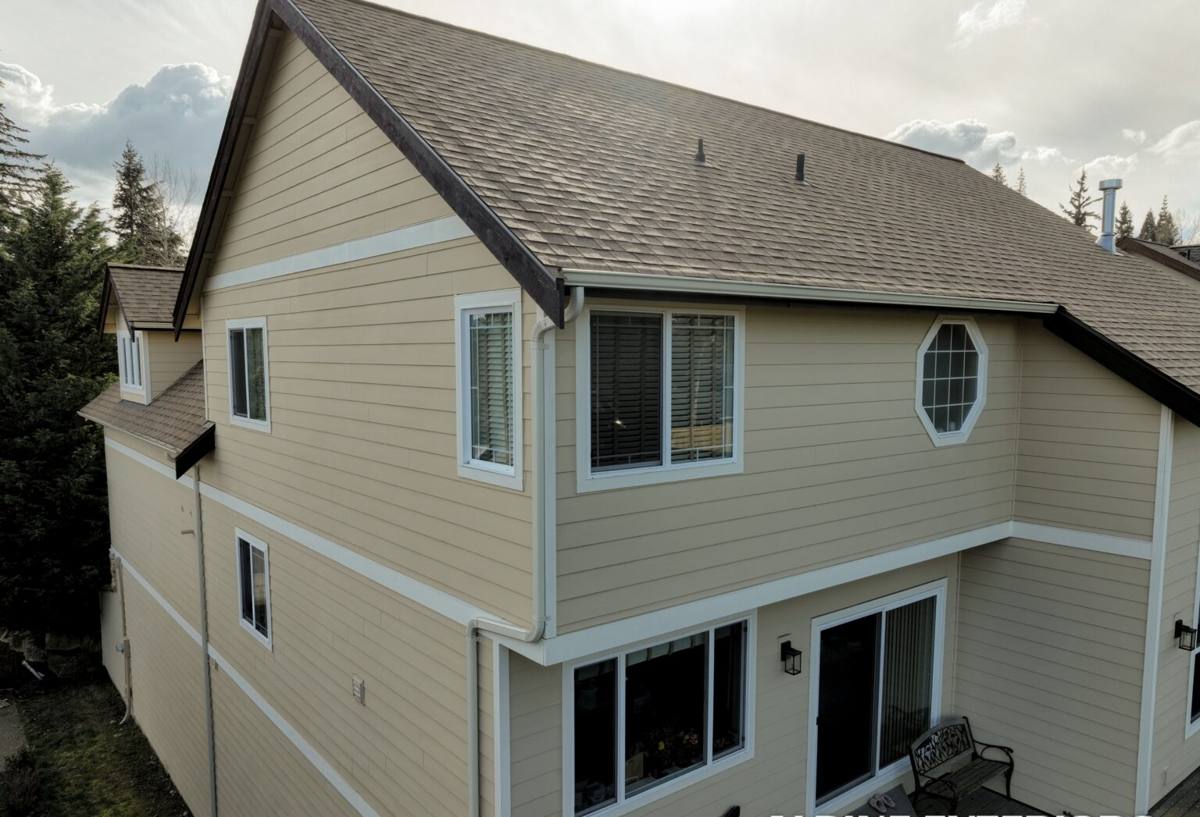
What Salt Air, Driving Rain, and Moss Season Do to Siding
Three things wear down siding in Dakota Creek faster than they would twenty or thirty miles inland, and a correct installation has to account for all three at once.
Salt Air
Airborne salt doesn't just affect metal fasteners and flashing — it accelerates the breakdown of paint films, caulk, and adhesives, and it settles into any surface with texture or porosity. Siding that isn't factory-finished tends to chalk, fade, and lose its seal faster in a salt-air environment than the same product would in a dry inland climate.
Driving Rain
Rain that comes in at an angle — which is normal here, not an occasional event — pushes water sideways at the very seams, laps, and penetrations that a calm-weather installation might get away with cutting corners on. Butt joints, window and door flashing, and the transition points where siding meets trim, decks, or roofs are where driving rain finds every shortcut a crew took.
Moss and Algae Season
Whatcom County's wet season runs long, and shaded, north-facing, or tree-covered walls in Dakota Creek stay damp for extended stretches. Moss and algae don't just look bad — they hold moisture against the siding surface, and on materials that absorb water or swell, that constant dampness accelerates rot, delamination, and paint failure.
Why We Install Only James Hardie Fiber Cement
We install one siding system: James Hardie fiber cement. We don't offer vinyl, LP SmartSide, Cemplank, Allura, primed spruce, or cedar, and that's a deliberate standard, not a lack of options. Each of those products has a real place in the market — but every one of them asks a Dakota Creek homeowner to accept a trade-off in salt exposure, moisture behavior, or long-term maintenance that we're not willing to install and stand behind.
Non-Combustible and Dimensionally Stable
Fiber cement doesn't burn, and it doesn't expand and contract with moisture the way wood-based or wood-fiber products can. That matters directly for driving-rain performance: a material that swells when wet and shrinks when it dries eventually opens gaps at the joints, and those gaps are exactly where wind-driven rain gets in.
Factory-Applied ColorPlus Finish
James Hardie's ColorPlus finish is baked on in a controlled factory environment rather than field-applied with a brush or sprayer after installation. In a salt-air environment, that matters — a factory finish resists fading and chalking longer than most site-applied paint, and it comes with its own finish warranty separate from the product warranty.
Climate-Engineered Product Lines
James Hardie makes different formulations for different climate zones. The HZ5 line is engineered for regions that see cold, wet weather and freeze-thaw cycles — which describes the Pacific Northwest far better than the HZ10 formulation made for hot, humid southern climates. Installing the wrong regional formulation is a mistake some out-of-area suppliers and crews make; it's not a mistake we make on a Dakota Creek home.
A Warranty That Transfers
James Hardie backs its siding with a long, transferable non-prorated warranty when it's installed to their specifications. That warranty is only as good as the installation behind it, which is why manufacturer training and correct field practice matter as much as the product itself.
Material Comparison for Dakota Creek's Coastal Conditions
| Material | Salt Air / Coastal Resistance | Moisture & Moss Behavior | Maintenance Over Time |
|---|---|---|---|
| James Hardie Fiber Cement | Factory finish resists chalking and fade; won't corrode | Dimensionally stable; doesn't swell or rot when wet | Occasional wash; repaint interval is long |
| Vinyl | Can become brittle and fade unevenly with UV and salt exposure | Doesn't rot, but seams and laps can trap moisture behind panels | Low, but panels can warp or crack and are hard to color-match when replaced |
| LP SmartSide / Wood-Fiber | Field finish wears faster in salt air; edges are moisture-sensitive | Engineered wood strand core is vulnerable if the finish or caulk fails | Requires diligent caulk and paint upkeep to avoid edge swelling |
| Cedar / Primed Spruce | Natural wood weathers quickly in salt-laden, high-moisture air | Absorbs moisture; prone to rot and moss growth if not maintained | Highest — regular refinishing, caulking, and moss treatment needed |
This isn't a claim that the other materials are junk — it's the honest reason we chose to specialize. Every product on that list can perform reasonably well somewhere. We don't think this particular coastal stretch of Blaine is the right place to install most of them.
What a Correct Siding Installation Actually Involves
The siding panel itself is only part of the system. On a Dakota Creek home, the details underneath and around the panels are what determine whether the job holds up through its first few winters or starts showing problems early.
Water-Resistive Barrier and Flashing
Every wall needs a continuous, correctly lapped weather-resistive barrier, and every penetration — windows, doors, hose bibs, light fixtures, vents — needs flashing that directs water back out, not into the wall cavity. Given how much wind-driven rain this location sees, flashing details are not optional extras; they're the difference between a wall that sheds water and one that slowly rots from the inside.
Fastening and Clearances
James Hardie specifies exact fastener types, spacing, and penetration depth, along with minimum clearances from grade, roof lines, and decks. Skipping these specs is one of the most common ways installers void the manufacturer warranty without the homeowner ever knowing until there's a problem.
Joint and Caulk Practices
Butt joints and trim transitions need to be treated correctly — some should be caulked, some should be flashed and left to shed, and using the wrong approach traps moisture instead of releasing it. In a moss-prone, high-humidity climate, a joint that holds water instead of shedding it becomes a growth site within a season or two.
Ventilation Behind the Cladding
A rainscreen gap or drainage plane behind the siding lets any moisture that does get past the outer layer drain and dry out instead of sitting against the sheathing. This is especially important on shaded or north-facing walls, which are exactly the walls in Dakota Creek that stay damp longest during moss season.
Our Installation Process
- On-site assessment — we look at wall orientation, existing moisture damage, shading, and drainage before quoting anything.
- Tear-off and sheathing inspection — old siding comes off and we check the sheathing underneath for rot or soft spots before anything new goes on.
- Weather-resistive barrier and flashing — a continuous barrier is installed and every window, door, and penetration is flashed correctly.
- Rainscreen/drainage layer — where appropriate for the wall assembly, to keep moisture moving out instead of trapped in.
- James Hardie panel installation — installed to manufacturer fastening, spacing, and clearance specifications so the warranty stays intact.
- Trim, joints, and caulking — finished per Hardie's detailing so joints shed water rather than hold it.
- Final walkthrough and cleanup — we review the finished work with the homeowner before we consider the job done.
Signs Your Dakota Creek Home's Siding Needs Attention
- Moss or dark streaking that returns within months of being cleaned off
- Paint that's chalking, peeling, or fading unevenly on the sides of the house facing prevailing weather
- Soft or spongy spots when you press on the siding near the bottom edges or around windows
- Visible gaps opening up at butt joints or trim over time
- Warping, buckling, or panels that no longer sit flat against the wall
- Rising energy bills that suggest the wall assembly is no longer keeping moisture and air where it belongs
Why a Crew That Already Works Dakota Creek Matters
Siding installation isn't a one-size-fits-all job, and a crew that's spent time on homes in this specific area of Blaine has already learned which walls need extra flashing attention, which orientations grow moss fastest, and how the local building department expects work to be documented and inspected. That's different knowledge than what a crew based somewhere dry and inland brings to the job, even if they're competent installers in their own climate.
It also matters for accountability. A local crew is still around next year and the year after — for warranty questions, for a caulk touch-up, or just to look at something that doesn't seem right. That's harder to get from a company that only shows up in Whatcom County occasionally.
Keeping Moss and Moisture Under Control After Installation
Correctly installed James Hardie siding dramatically reduces maintenance, but it doesn't eliminate the climate. A yearly rinse to knock down early moss growth, keeping gutters clear so overflow doesn't run down the wall, and trimming back vegetation that keeps a wall shaded and damp will all extend the life of the finish well beyond what a neglected wall achieves — Hardie or otherwise.
Cost Factors to Expect
| Factor | Why It Affects Price |
|---|---|
| Tear-off and disposal of existing siding | More layers or hazardous old materials add labor and disposal cost |
| Sheathing repair or replacement | Rot found underneath old siding has to be fixed before new siding goes on |
| Home size and wall complexity | More corners, gables, and penetrations mean more flashing and trim work |
| Siding profile and trim selection | Lap width, trim style, and accent choices affect material cost |
| Access and site conditions | Slopes, tight lot lines, and staging needs affect labor time |
We won't quote a number without seeing the house, but every estimate breaks these factors out so you know what you're paying for and why.
If your Dakota Creek home is due for new siding, we'd rather walk the property with you and give you a straight answer than guess over the phone. Reach out for a free, no-pressure estimate using the form below.