 Blaine Siding
 Why Decks Take a Beating in California Creek
Homes in the California Creek area sit close enough to the water that salt-laden air is a daily fact of life, not an occasional nuisance. Add Whatcom County's long wet season, driving rain off the Strait of Georgia, and months where moss and algae never fully dry out, and you have a climate that's genuinely hard on exterior wood structures. A deck here isn't just furniture in the yard — it's an assembly of fasteners, framing, and surface material that's constantly being tested by moisture cycling: wet, damp, wet again, with only short dry stretches to recover.
That's different from decks in drier parts of the state, and it's why a repair that would hold up fine in eastern Washington can fail early here. Ledger connections corrode faster. Framing that isn't properly flashed traps water instead of shedding it. Horizontal surfaces stay damp longer, which feeds moss and speeds up rot in end grain and fastener holes. None of this means a deck can't last for decades in California Creek — it means the repair has to account for the environment it's actually sitting in, not a generic textbook environment.
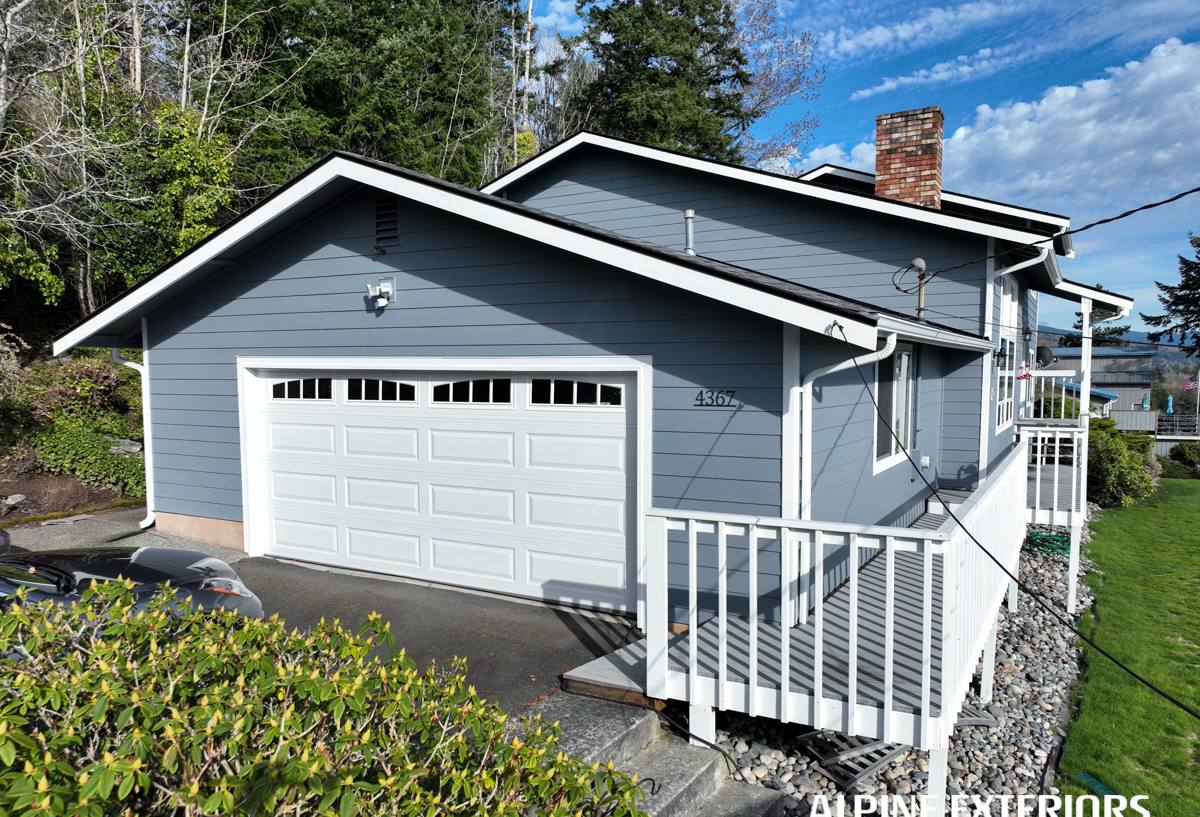
Signs Your Deck Needs Repair, Not a Full Rebuild
Most decks we look at in this area don't need to be torn out — they need targeted repair of the parts that took the brunt of the weather. Knowing which is which saves homeowners money and unnecessary disruption.
Surface-Level Wear
Graying, minor splintering, and a light coat of moss on boards that still feel solid underfoot are cosmetic and maintenance issues, not structural ones. Soft spots under a specific board, however, usually mean water has been sitting there long enough to start breaking down the wood fibers.
Structural Red Flags
These are the things that move a project from "repair a board or two" to "this needs real attention now": a ledger board that's pulling away from the house, joists you can flex by hand, railing posts that wiggle at the base, or a support post showing rot where it meets a concrete footing. Any of these affect the safety of the whole structure, not just the spot where you see the damage.
What a Correct Deck Repair Actually Involves
Ledger and Attachment Points
The ledger board — where the deck bolts to the house — is the single most important connection on most decks, and it's also the one most prone to hidden water damage because it sits directly against the building envelope. A proper repair means pulling back decking or siding as needed to actually see the ledger and the flashing behind it, not just re-driving a few lag bolts and calling it done. If the flashing has failed, water has likely been getting into the rim joist or wall framing behind it, and that has to be addressed before anything else.
Framing and Support
Joists, beams, and posts get evaluated for rot, checking (cracking along the grain), and connector corrosion. In a salt-air environment, galvanized joist hangers and hardware can corrode faster than the wood around them, so we check the metal as carefully as the lumber. Damaged framing members get sistered or replaced — patching around a compromised joist just moves the problem down the road.
Decking and Railings
Individual boards get replaced where soft, split, or badly cupped. Railings are checked for post attachment and code-relevant spacing, since a railing that looks fine but isn't properly anchored is one of the more common liability issues we find on older decks in this area.
Common Problem Areas We See on Whatcom County Decks
- Ledger-to-house connection — the top source of hidden rot, especially on older decks built before current flashing standards
- Fastener corrosion — screws and nails that weren't rated for treated lumber or coastal exposure, leaving black streaking and weakened holding power
- Post bases — where wood sits in standing water or direct soil contact and rot climbs up from the bottom
- North-facing and shaded sections — slower to dry, so moss and mildew build up faster and surfaces stay slick longer into spring
- Stair stringers — end-grain cuts that absorb water readily if not sealed or capped
Repair or Replace? How We Decide
We don't default to "replace everything" just because a deck has problems, and we don't patch over structural issues just to keep the price down. The decision comes down to a handful of practical factors:
| Factor | Leans Toward Repair | Leans Toward Replacement |
|---|---|---|
| Framing condition | Isolated rot in one or two members | Widespread rot across joists, beams, or ledger |
| Age of structure | Under ~15 years, built to reasonable standards | Older deck nearing the end of typical lumber lifespan |
| Fastener/hardware condition | Localized corrosion, spot-replaceable | Hardware failing throughout, undersized for current code |
| Footings and posts | Solid, adequately sized and set | Undersized, shifting, or improperly set footings |
| Overall layout | Layout still works for how you use the space | You want a different footprint, size, or railing style anyway |
In practice, most of the calls we get in California Creek turn out to be repairable: a ledger reflash, a handful of joists sistered, decking swapped where it's failed, and hardware upgraded. Full replacement usually only makes sense when the framing is compromised in multiple places or the deck was undersized or under-built to begin with.
Materials We Use and Why
What goes back into the repair matters as much as the repair itself. Our standard is to match or upgrade materials for this specific climate rather than use whatever is cheapest.
| Material | How It Handles This Climate | Maintenance |
|---|---|---|
| Pressure-treated lumber | Good rot resistance when properly sealed and detailed; still needs coating | Periodic sealing/staining; inspect fastener points yearly |
| Cedar | Naturally rot-resistant, ages well visually, but softer and more prone to surface wear near the water | Needs regular sealing to hold color and resist moisture uptake |
| Composite decking | Doesn't rot or splinter; some boards can hold moisture at cut ends if not capped properly | Low — occasional cleaning, no staining |
| Stainless or coated coastal-rated fasteners | Resists the corrosion that plain galvanized hardware sees near salt air | None beyond visual inspection |
We're honest about trade-offs rather than pushing one product as a cure-all. Composite decking costs more up front and needs less upkeep; wood costs less initially but needs a homeowner willing to reseal it on a schedule. For hardware, we treat coastal-rated fasteners as a baseline in this area, not an upsell — standard galvanized hardware simply doesn't hold up as long this close to salt air, and re-doing a repair in five years because the fasteners failed first costs more than doing it right once.
Our Deck Repair Process, Start to Finish
- On-site assessment — we get under the deck where possible, check the ledger, probe suspect framing, and look at footings and post bases, not just the walking surface.
- Written scope — you get a clear description of what's damaged, what we recommend fixing, and what it costs, before any work starts.
- Demo of the affected areas only — we remove decking, railing, or framing that's actually compromised, keeping sound material in place.
- Structural repair — sistering or replacing joists and beams, correcting flashing at the ledger, addressing post and footing issues.
- Hardware upgrade — replacing corroded fasteners and connectors with hardware suited to coastal exposure.
- Decking and railing reinstall — new boards and railing components installed and fastened to current standards.
- Final check — we walk the deck with you, point out what was done, and flag anything worth keeping an eye on going forward.
Maintenance Checklist to Get More Years Out of a Repaired Deck
A good repair buys you time, but a little seasonal attention buys you a lot more of it in a climate like this.
- Sweep leaves and debris off the deck surface before fall rains set in — trapped organic matter holds moisture against the wood
- Scrub moss off with a stiff brush and a deck-safe cleaner each spring, rather than pressure-washing aggressively, which can drive water into the wood grain
- Check the gap between boards periodically — debris packed into gaps blocks drainage and keeps the deck wetter than it should be
- Look under the deck once a year for early signs of rot, especially near the ledger and post bases
- Reseal or restain wood decking on the schedule the product calls for — don't wait until it's visibly gray and worn
- Keep gutters and downspouts near the deck clear so roof runoff isn't dumping extra water onto or under the structure
Why Hire a Crew That Already Works California Creek
A deck repair done by someone unfamiliar with this specific stretch of Whatcom County coastline often misses the details that matter most here — the fastener grade, the flashing detail at the ledger, how far north-facing sections need to be built up to handle moss and slow drying. We work on homes in this area regularly, so we're not guessing at what the salt air and rain do to a structure over a few winters — we've seen it firsthand on decks just like yours. That local knowledge shows up in small decisions throughout the job: which hardware we default to, how we detail flashing, and where we tell a homeowner a repair will hold versus where we recommend going further.
We also know that not every deck in California Creek needs the same fix. A deck tucked against the house with good sun exposure ages differently than one out in the open facing the water. We adjust the repair to the actual exposure of your deck, not a one-size-fits-all approach.
Get a Straight Answer About Your Deck
If you're noticing soft spots, a shaky railing, or a deck that just doesn't feel as solid as it used to, it's worth having someone take a real look before those problems get worse or more expensive to fix. We offer free, no-pressure estimates for deck repair in California Creek and the surrounding Blaine area — fill out the form below and we'll get back to you with an honest assessment of what your deck actually needs.