 Blaine Siding
 Siding in California Creek Has to Do More Than Look Good
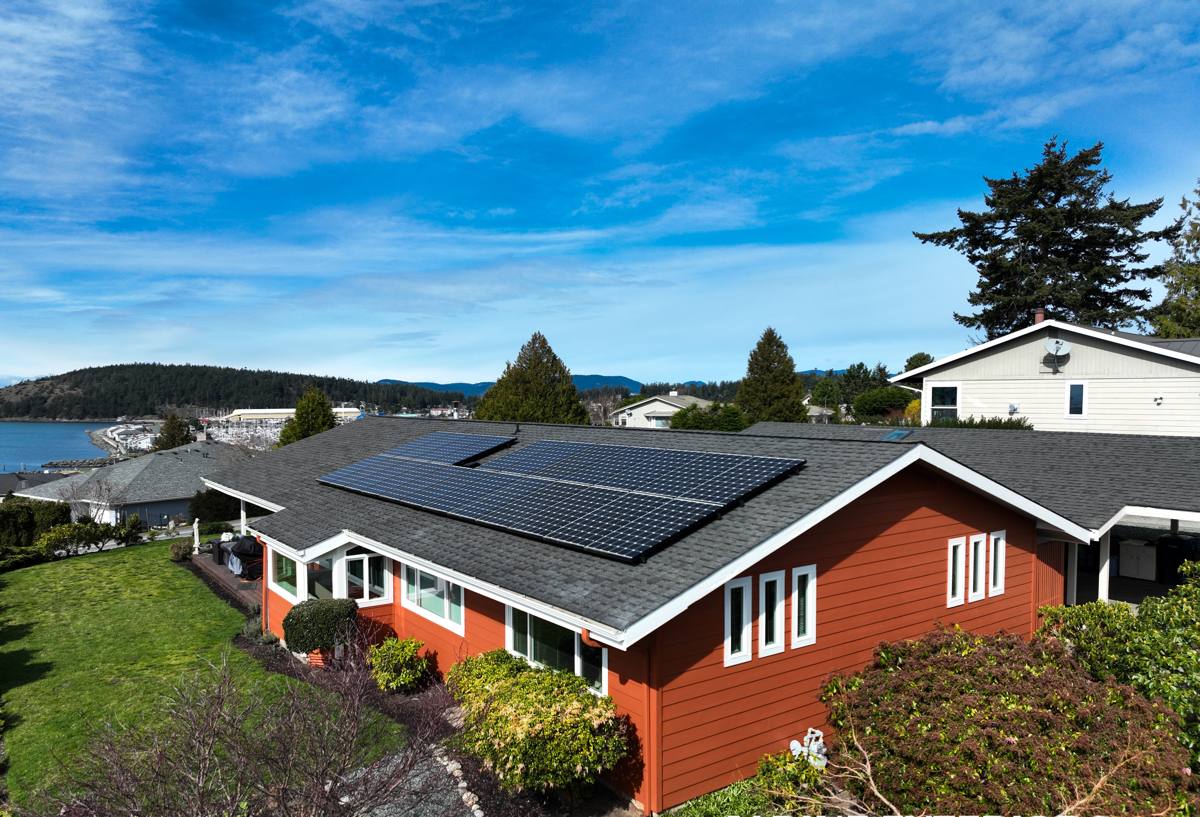
California Creek sits close enough to the water that homes here take a different kind of weather beating than siding fifteen or twenty miles inland. Between the salt-laden air moving in off Semiahmoo Bay and Drayton Harbor, the steady wind-driven rain that Whatcom County sees for a good chunk of the year, and the long shoulder seasons where everything stays damp and shaded, siding in this area is doing real structural work, not just decorative work. When we install siding on a California Creek home, we're thinking about how that wall assembly will hold up in year eight and year eighteen, not just how it photographs on day one.
This page is specifically about siding installation — new siding on a home that needs it, whether that's because the existing siding has failed, the home is being renovated, or an addition needs to match. We install exclusively in James Hardie fiber cement, and everything below explains why that choice matters more here than it might in a drier, more sheltered part of the country.
What the Coastal Climate Actually Does to Siding Over Time
Salt Air and Corrosion
Airborne salt doesn't just affect boats and cars near Blaine — it settles on exterior surfaces and accelerates corrosion of fasteners, trim metal, and any siding material that relies on painted or coated finishes to stay sealed. Over years, salt exposure can pit and degrade lower-quality coatings and hardware faster than the same materials would wear in an inland climate. This is one of the reasons fastener choice and finish quality matter as much as the siding panel itself.
Driving Rain and Water Intrusion
Blaine's weather doesn't just rain straight down — wind off the water pushes rain sideways into wall assemblies, which is a much tougher test for siding than vertical rainfall. Water finds its way in through poorly lapped seams, under-caulked joints, and siding that was face-nailed too tight or hung without proper clearance. A siding system that isn't detailed for wind-driven rain will eventually let moisture behind the cladding, and once that happens the problem is often in the sheathing and framing long before it's visible on the surface.
Moss, Shade, and Trapped Moisture
Between tree cover and the long grey stretch of fall through spring, California Creek homes deal with an extended moss season. Moss and algae growth on siding isn't just cosmetic — it holds moisture against the surface for longer periods, which is hard on wood-based products and on caulked joints that weren't detailed to shed water and dry quickly. Siding that can't tolerate sustained dampness without swelling, delaminating, or hosting biological growth is fighting an uphill battle in this location.
Why We Install Only James Hardie Fiber Cement
We standardized on James Hardie for every home we side, including in California Creek, because it's a non-combustible, engineered fiber cement product built to hold its shape and finish in exactly the conditions described above. Hardie's ColorPlus factory-applied finish is baked on and warranted separately from the substrate, which matters in a salt-air environment where field-applied paint tends to fail first. The material itself doesn't swell, rot, or feed moss the way wood-based siding can, and it's engineered in climate-specific HZ (HardieZone) formulations so the product installed here is matched to the Pacific Northwest's moisture and temperature profile rather than a generic national spec.
We don't install vinyl, LP SmartSide, Cemplank, Allura, primed spruce, or cedar. That's a deliberate standard, not a lack of options — after years of installing and maintaining siding in coastal Whatcom County conditions, Hardie fiber cement is what we trust to perform over the long term without turning into a maintenance headache for the homeowner.
What a Correct Siding Installation Actually Involves
The siding panel is only part of the system. A correct installation in a location like California Creek depends on everything underneath and around it being detailed right — most siding failures we get called to inspect trace back to installation shortcuts, not the material itself.
Weather-Resistive Barrier and Flashing
Every wall gets a continuous weather-resistive barrier installed and lapped correctly before a single piece of siding goes up. Flashing at windows, doors, and any horizontal trim has to be integrated with that barrier so water is directed out and down, never trapped behind the cladding. This step is invisible once the job is done, which is exactly why it's the step that gets skipped by crews trying to move fast.
Fastening and Clearances
Hardie has specific fastener spacing, nailing patterns, and clearance requirements — from the ground, from roof lines, from decks and patios — that are engineered into their installation guidelines for a reason. Fastening too tight, too loose, or in the wrong location voids warranty coverage and creates entry points for water. We follow manufacturer specifications on every job, not a shortcut version of them.
Joints, Caulking, and Butt Seams
In a wind-driven rain climate, how panel seams and joints are treated matters as much as the panels themselves. Butt joints need proper backing and sealant compatible with the ColorPlus finish, not just a bead of whatever caulk is on the truck. Done right, these joints stay tight and don't become the first failure point in year three or four.
| Installation Factor | Why It Matters in California Creek |
|---|---|
| Weather-resistive barrier continuity | Blocks wind-driven rain from reaching sheathing before it can drain back out |
| Manufacturer-spec fastening | Keeps panels secure without over-driving nails that crack the material or void warranty |
| Ground and roofline clearances | Reduces splash-back moisture and prevents trapped dampness that feeds moss |
| Joint and caulk detailing | Keeps seams sealed against sideways-driven rain instead of becoming leak points |
| Trim and flashing integration | Directs water away from windows, doors, and horizontal surfaces instead of behind them |
Our Process for a California Creek Siding Installation
The process is the same discipline on every home, adjusted for the specifics of the property once we're on site:
- Free on-site evaluation of the existing siding, sheathing condition where accessible, and any moisture or moss issues already present
- A written estimate covering material, labor, and any sheathing repair or replacement identified during evaluation
- Removal of existing siding and inspection of the wall assembly underneath before anything new goes up
- Repair of any damaged sheathing or framing found during tear-off — this gets flagged and discussed before we cover it back up
- Installation of weather-resistive barrier, flashing, and James Hardie fiber cement siding to manufacturer specification
- Final walkthrough so you can see the finished work and ask questions before we consider the job done
Cost Factors for Siding Installation in California Creek
Every home is different, so we don't publish blanket per-square-foot pricing — but the variables that actually move a siding installation estimate are consistent from job to job:
| Factor | How It Affects the Job |
|---|---|
| Home size and wall complexity | More corners, gables, and cutouts mean more labor and material waste |
| Sheathing condition underneath old siding | Rot or moisture damage found during tear-off requires repair before new siding goes on |
| Siding profile and trim details | Lap width, shingle-style panels, and custom trim add labor time versus a standard lap profile |
| Site access | Steep lots, limited staging area, or multi-story walls affect scaffolding and crew time |
| Existing damage or full tear-off | A full replacement with disposal costs more than siding over a sound, prepared surface where applicable |
The only way to get an accurate number is an on-site look, which is why we start every project with a free evaluation instead of a phone-quote guess.
Signs a California Creek Home May Need New Siding
Some of these are easy to spot from the ground; others take a closer look. If you're seeing more than one of these, it's worth having someone take a look before it turns into a bigger repair:
- Visible warping, buckling, or panels that look wavy from a distance
- Soft spots when pressed, especially near the bottom courses or below windows
- Persistent moss or algae growth that comes back shortly after cleaning
- Paint that's peeling, bubbling, or failing faster than a normal repaint cycle
- Visible gaps at seams, trim, or corners where caulking has shrunk or pulled away
- Rising energy bills that suggest air and moisture are getting through the wall
- Interior signs like staining, musty smell, or bubbling drywall on exterior walls
Why Hiring a Crew That Already Works This Area Matters
Siding installation isn't one-size-fits-all across Whatcom County. A crew that mostly works drier, inland conditions may not automatically account for salt exposure, wind-driven rain angles, or the extended damp season that defines the Blaine area and the water-adjacent neighborhoods around it, including California Creek. Knowing which details matter most here — clearance heights, joint sealing, flashing integration — comes from having installed and later serviced siding in this specific climate, not just from reading a manufacturer's general installation manual.
We also stand behind the work with both the manufacturer's product warranty and our own installation workmanship, so if something isn't right, it's on us to fix it, not something you have to chase down later.
Get a Free, No-Pressure Estimate
If your California Creek home needs new siding — or you're just trying to figure out whether repair or full replacement makes more sense — we're happy to come take a look, explain what we see, and give you a straight answer. There's no obligation and no pressure attached to the estimate. Fill out the form below and we'll get in touch to schedule a time.