 Blaine Siding
 Building Decks for California Creek Homes
California Creek sits close enough to the water and the open weather patterns that roll through Whatcom County that a deck here has to earn its keep. It's not just an outdoor living space — it's a structure that spends every day of the year exposed to salt-laden air, sideways rain, and the long stretch of gray, damp months that Blaine is known for. A deck built the way it might be built inland, or built cheap and fast, tends to show its age within a few seasons out here: soft spots, rust streaks at the fasteners, green film on the boards by late fall. A deck built correctly for this specific stretch of coastline holds its footing, its finish, and its safety margin for decades.
We work in and around California Creek regularly, which means we're not guessing at what this climate does to lumber, hardware, and footings — we see it on job after job. This page walks through what a properly built deck for this area actually requires, what our process looks like, and why the details matter more here than they would somewhere with milder weather.
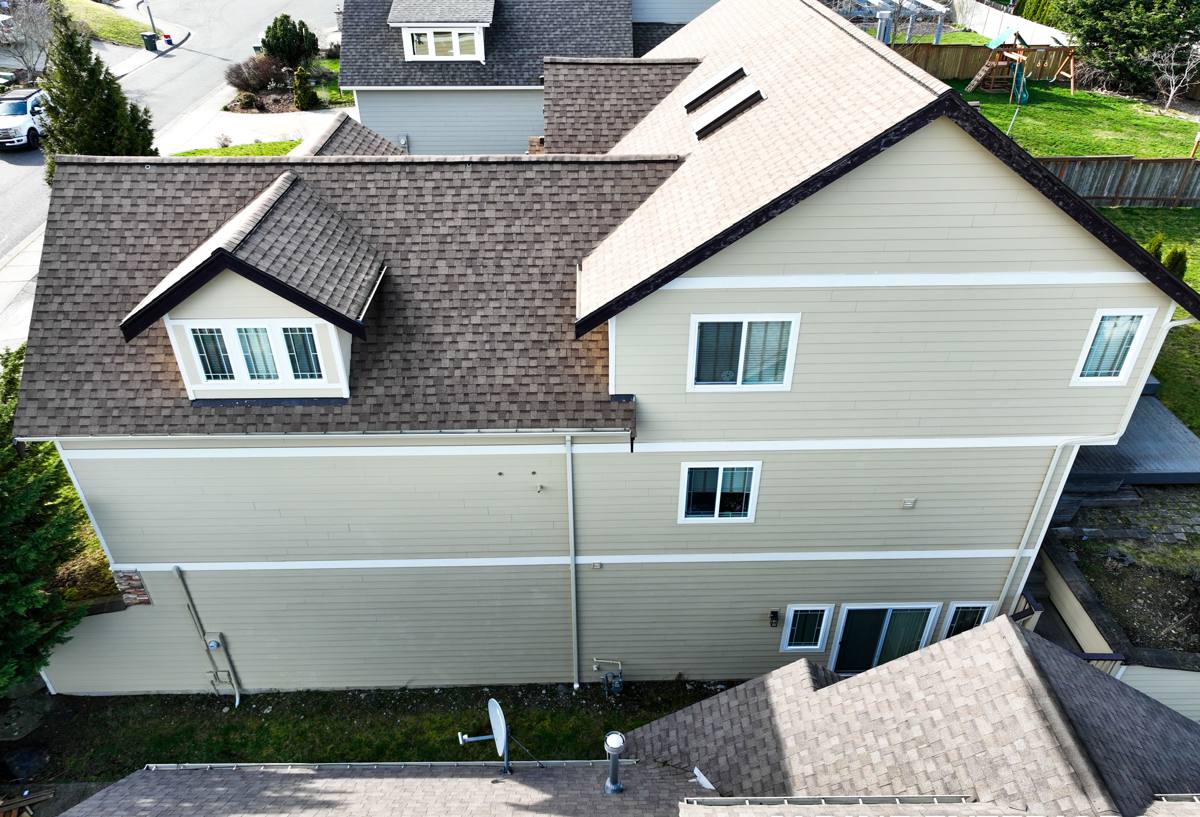
What Blaine's Climate Does to a Deck
Three things drive almost every deck problem we get called out to fix in this area, and they all trace back to the local climate.
Salt Air
Proximity to the Strait of Georgia and the Salish Sea means the air carries salt, even a few miles inland. Salt accelerates corrosion on anything metal — fasteners, joist hangers, railing hardware, post bases. Standard galvanized hardware that would be fine in a drier, inland climate can start showing rust bleed within a couple of years near the coast. That rust doesn't stay cosmetic; it weakens the connection it's supposed to protect.
Driving Rain
Whatcom County doesn't just get a lot of rain — a good portion of it comes in sideways, driven by wind off the water. That matters for a deck because it means water gets pushed into places a straight-down rain never would: under railing caps, into end-grain cuts, behind ledger boards, into any gap where flashing wasn't done right. A deck that's only detailed for vertical rainfall will leak and rot at exactly those pressure points.
Moss Season
The long stretch of cool, wet months creates ideal conditions for moss and algae growth on any horizontal wood surface that doesn't get much direct sun. Beyond looking bad, moss holds moisture against the decking surface, which is exactly what accelerates rot in untreated or poorly finished wood — and it makes boards slick and genuinely dangerous underfoot.
Getting the Foundation Right: Footings, Ledger, and Drainage
Everything above ground depends on what's below it and behind it. Two areas deserve special attention on a California Creek build:
Footings
Frost depth and soil drainage both factor into footing design here. Undersized or shallow footings are one of the most common causes of a deck that starts to rack or sag within a few years, especially on sites with heavier, slower-draining soil. We size and set footings based on the actual soil conditions on site, not a one-size-fits-all guess.
Ledger Attachment and Flashing
Where the deck attaches to the house is the single most failure-prone connection on any deck, and it's almost always a water problem, not a structural one. Proper ledger flashing — installed so water sheds out and away from the house band joist rather than behind the ledger board — is non-negotiable given how much wind-driven rain this area gets. A ledger without correct flashing will trap water against the house framing, and that damage is often invisible until it's serious.
Decking Material Options for This Climate
There's no single "best" decking material — there's a best fit for your budget, your maintenance appetite, and how much sun and moss exposure your particular site gets. Here's how the common options actually compare for a coastal Blaine property:
| Material | Moisture Behavior | Maintenance | Typical Lifespan |
|---|---|---|---|
| Pressure-treated wood | Absorbs and releases moisture; needs sealing to resist salt air and rain intrusion | Annual cleaning and re-sealing recommended | 15–20 years with upkeep |
| Cedar | Naturally rot-resistant but still needs finish maintenance in this rain volume | Periodic staining/sealing to hold color and resist moss | 20–25 years with upkeep |
| Capped composite | Won't rot or absorb water into the core; surface sheds moisture well | Periodic washing to keep moss/algae from taking hold | 25–30+ years, manufacturer-backed |
| PVC decking | Fully moisture-resistant, no wood fiber to feed rot or mold | Lowest maintenance; occasional washing | 30+ years, manufacturer-backed |
We install all of these, and we'll tell you honestly which one fits your project. Wood costs less up front but asks for a real annual maintenance commitment in a climate that doesn't give it much of a break. Composite and PVC cost more initially but hold up with far less intervention against exactly the conditions — moisture and moss — that are hardest on wood here. Our professional standard is to walk you through the real trade-offs rather than push whatever has the best margin.
Framing and Fasteners That Actually Hold Up
The framing under the decking is where a lot of corner-cutting happens because nobody sees it once the boards go down — and it's exactly where the salt air does its quiet damage over time. We use fasteners and structural hardware rated for coastal/high-moisture exposure, not standard-grade galvanized hardware that starts showing rust within a few seasons this close to the water. Joist hangers, structural screws, post bases, and any concealed fastening system all get the same treatment. It costs a little more upfront and saves a full hardware failure ten years down the road.
Railings, Stairs, and Code Requirements
Railing height, baluster spacing, and stair geometry are all governed by building code, and Whatcom County enforces these through the standard residential permitting process. Beyond the legal minimums, we build railings and stairs to be genuinely solid underfoot — no flex, no wobble at the top rail — because a railing that just barely passes inspection isn't the same as a railing that feels safe to lean on in twenty years of wet weather.
Common Requirements We Build To
- Guardrail height and baluster spacing that meet current residential code
- Stair rise and run consistency, with proper handrail attachment
- Post-to-frame connections rated for lateral load, not just fastened for looks
- Proper permitting and inspection scheduling handled as part of the project, not left to the homeowner
Our Process From Estimate to Finished Deck
A California Creek deck project with us generally follows the same steps:
- On-site assessment — we look at your soil, drainage, sun/shade exposure, and how the deck ties into the house before recommending a design.
- Material and design conversation — we walk through decking, railing, and framing hardware options against your budget and maintenance preference, using the trade-offs above as a starting point.
- Permitting — we handle the Whatcom County/Blaine permit application and inspection scheduling for the project.
- Site prep and footings — footings are sized and set for your actual soil conditions, not a generic template.
- Framing and flashing — ledger flashing, joist layout, and coastal-rated hardware go in before any decking is installed.
- Decking, railing, and stairs — installed per your chosen material's manufacturer specs, since composite and PVC systems have specific fastening and gapping requirements that affect the warranty.
- Final walkthrough — we go over the finished deck with you, including what maintenance it actually needs going forward.
Maintenance Checklist for California Creek Decks
Whatever material you choose, a little seasonal attention goes a long way against this area's moss and moisture. A simple routine to follow:
- Sweep debris and standing leaves off the deck surface regularly, especially in fall
- Wash the deck surface at least once a year to break up early moss and algae growth before it takes hold
- Check railing and post connections annually for looseness or rust bleed at fasteners
- Re-seal or re-stain wood decking on the schedule your finish product recommends — don't wait for it to look faded
- Clear gaps between boards so water and debris don't pack in and hold moisture against the framing
- Inspect ledger flashing and the house connection point for any signs of water staining
Why a Local Blaine Crew Matters for This Job
Deck-building advice that works in a dry inland climate can be the wrong advice a few miles from the water. Fastener grade, ledger flashing detail, footing depth for local soil, and how much maintenance a given decking material will realistically need — all of it changes based on actually knowing what California Creek's weather does to a structure year over year. A crew that already works this specific area isn't learning those lessons on your project; we've already applied them on the decks we've built nearby.
If you're planning a new deck or replacing one that's showing its age, we're glad to come take a look and put together a straightforward, no-pressure estimate — just fill out the form below.