 Blaine Siding
 Deck Replacement in California Creek: A Different Climate Than It Looks
California Creek sits on the edge of Blaine, low-lying and close to the water, with the mix of waterfront and inland lots and heavier tree cover that comes with sitting near a creek and wetland system instead of open, sun-exposed ground. That setting is part of what makes the area pleasant to live in, and it's also exactly what shortens the life of an outdoor deck. Damp ground, filtered sun through mature trees, and steady airflow off the water all work against wood and hardware in ways that a deck on a dry, open inland lot doesn't have to deal with.
We build and replace decks across Whatcom County, and California Creek is regular territory for our crew. We treat deck replacement as its own trade with its own failure points, not a scaled-down version of siding or roofing work, and that matters most in a spot like this, where a deck can look fine on the surface for years while the framing underneath is already failing.
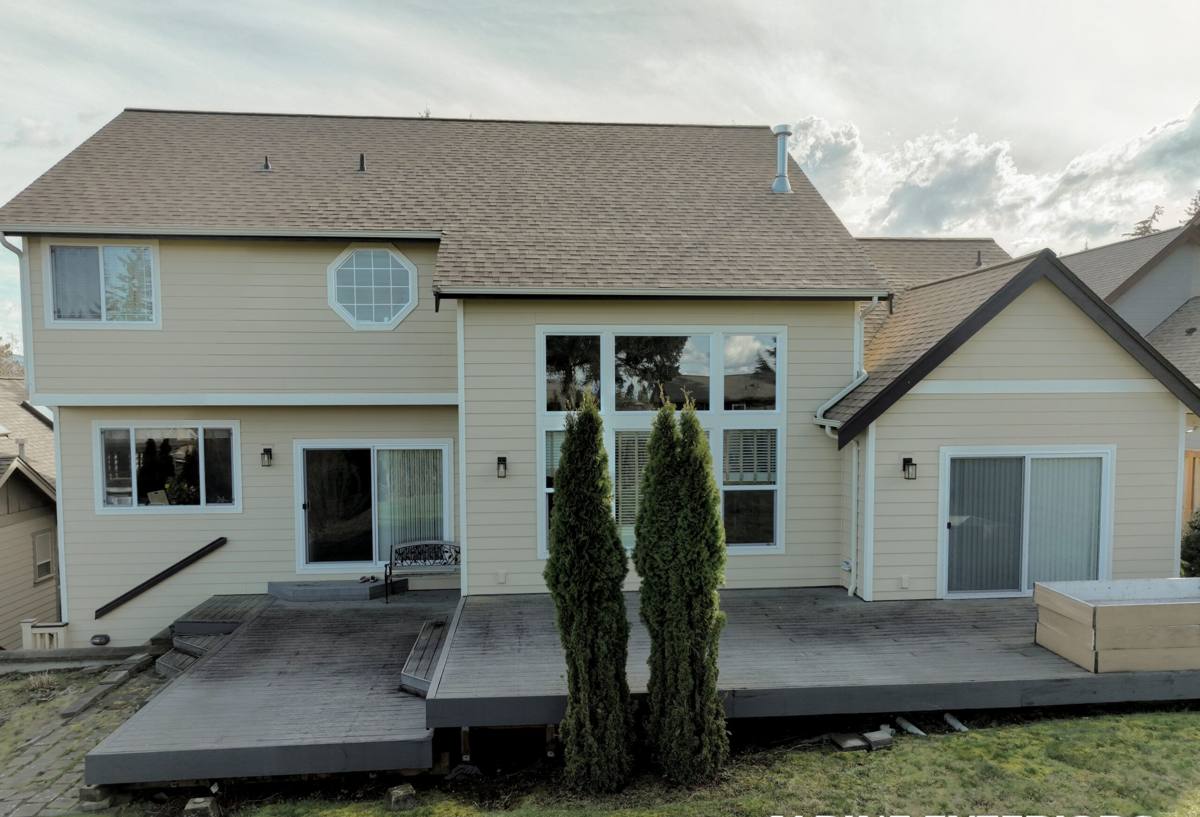
What This Climate Does to a Deck
Salt Air Off the Water
California Creek's proximity to Blaine's harbor and bay means salt-laden air reaches decks here more consistently than it does further inland in the county. Salt speeds up corrosion on fasteners, joist hangers, and any exposed metal hardware, and it's usually the hardware, not the decking boards, that fails first on an older deck near the water. A deck that looks structurally sound from the top can have badly corroded connectors underneath long before that shows on the surface.
Driving Rain and Standing Moisture
Storms off the water don't fall straight down. Wind pushes rain sideways into ledger connections, stair stringers, and any horizontal surface that doesn't shed water quickly. Deck boards and framing take that load directly, and because a deck surface is horizontal rather than vertical like a wall, water sits on it and works into joints and end grain longer than it would on siding. That's a harder moisture load than most homeowners expect from a structure that's technically outdoors and exposed to weather year-round.
A Long Moss Season
Tree cover along the creek keeps a lot of California Creek decks shaded for large parts of the day, and shaded, damp wood is exactly where moss and algae take hold. Once established, moss holds moisture against the board surface, which speeds up rot in wood decking and turns the boards genuinely slippery underfoot. On this kind of lot, moss season can run most of the year rather than just the wet months, and it tends to come back within a season or two on a deck that wasn't built with drainage and airflow in mind.
Repair or Replace? Signs a California Creek Deck Has Reached the End
Not every tired-looking deck needs full replacement, but a few signs point toward the framing itself being compromised rather than just the surface boards:
- Soft, spongy, or bouncy spots underfoot, especially near the house or stairs
- Visible rot, splitting, or crumbling wood at the ledger board where the deck meets the house
- Rust staining running down from fasteners, joist hangers, or post connectors
- Persistent moss or algae that returns quickly after cleaning
- Railings or posts that flex or feel loose when pushed
- Gaps opening up between the ledger and the house wall, which can mean water has been tracking into the wall assembly
- A deck built before current attachment and flashing standards, even if it still looks solid on top
Any one of these on its own might be a repair. Several together, or anything involving the ledger connection or main support posts, usually means the honest answer is replacement rather than patching around a structural problem.
What a Correct Deck Replacement Involves
Substructure and Footings
Everything about a deck's long-term performance starts below the decking boards. Footings need to sit below frost depth and bear on undisturbed, adequately compacted soil, which matters on the softer, wetter ground that's common near a creek. Posts and beams sized correctly for the span and load, rather than reused or guessed at, are what keep a deck from developing the bounce and sag that shows up years down the road on an underbuilt frame.
Fasteners and Hardware
Given the salt air this area sees, we don't treat fastener choice as a minor detail. Hot-dip galvanized or stainless connectors, hangers, and screws rated for contact with modern treated lumber hold up far longer than standard hardware, which can corrode within a few years this close to the water. Mismatched metals between hardware and fasteners is a common, avoidable cause of the rust staining and early hardware failure we see on older California Creek decks.
Ledger Attachment and Flashing
The ledger board, where the deck bolts into the house, is the single most important flashing detail on the whole structure and one of the most common places we find hidden rot on a tear-off. Proper flashing directs water away from the house rim joist instead of letting it pool at the connection, and in a driving-rain climate like this one, that detail is not optional trim work. It's the difference between a deck that lasts and one that quietly rots the house behind it.
Decking Material and Drainage
Board spacing, gapping, and any under-deck drainage system all affect how fast water leaves the surface after a storm. A deck built without enough drainage in mind stays wet longer after every rain, which is exactly the condition moss and rot both need to take hold, especially under the tree cover common along the creek.
Decking Material Options for This Climate
| Material | Moisture and Moss Behavior | Maintenance | Typical Lifespan Here |
|---|---|---|---|
| Pressure-treated wood | Absorbs moisture at cut ends and fastener holes; needs sealed cuts to resist rot | Annual cleaning and periodic sealing or staining | 10-15 years before boards need replacing |
| Cedar | Naturally rot-resistant but still absorbs surface moisture; moss grows readily if shaded | Regular cleaning, sealing, and moss treatment to hold appearance | 15-20 years with consistent upkeep |
| Composite decking | Doesn't absorb moisture into the board core; moss can still grow on the surface film in deep shade | Periodic washing; no sealing or staining required | 25-30+ years, backed by manufacturer warranty |
We don't push one material on every homeowner, because the right choice depends on budget, how much upkeep someone wants to do, and how shaded the specific lot is. What we will say plainly: on a heavily shaded, moisture-prone lot near the creek, a low-maintenance composite decking product usually costs less over the life of the deck than a wood deck that needs regular sealing and moss treatment to keep from rotting early. On a more open, sun-exposed lot, wood or cedar is a reasonable choice as long as it's maintained on schedule.
Our Deck Replacement Process
- On-site assessment: We walk the existing deck, check the ledger and framing where accessible, and look at sun and shade exposure across the lot before recommending anything.
- Scope and material discussion: We go over decking material options honestly, including upfront cost versus long-term maintenance, so the decision fits the homeowner's budget and how the deck actually gets used.
- Permitting: Deck replacement typically requires a permit, and lots near a creek or wetland can carry additional setback or critical-area review depending on the property. We handle that process rather than leaving it to the homeowner to sort out.
- Tear-off and framing inspection: Once the old decking and, where needed, the old framing come off, we get a direct look at the ledger connection, posts, and footings before anything new goes in.
- Rebuild: New footings, framing, ledger flashing, and decking go in to current code and manufacturer specifications, with corrosion-resistant hardware throughout.
- Final walkthrough: We walk the finished deck with the homeowner, cover basic care for whatever material was installed, and answer questions before calling the job done.
Timing a Deck Replacement Around the Season
Whatcom County's wettest, windiest stretch generally runs from late fall through winter, and California Creek's low-lying, tree-shaded setting means the ground and the site itself tend to stay wet longer after storms than a more open lot would. Spring and summer are the more workable window for footing excavation and framing, since dry ground and dry lumber both make for a better long-term build than working between storm systems. That said, a deck with a failing ledger connection or rotted support posts is a safety issue worth addressing on its own timeline rather than waiting for ideal weather.
Why a Crew That Already Works California Creek Matters
A crew that regularly builds and replaces decks in this specific setting knows things a generic quote doesn't capture: which lots hold moisture longest after a storm, where moss comes back fastest, and which hardware and flashing details are worth the extra time on a creek-adjacent property versus a dry inland one. That local pattern recognition shapes real decisions on the job, not just talking points, from where to add extra drainage to which fastener grade is worth the upgrade to how a ledger gets flashed so it holds up against wind-driven rain off the water rather than just average rainfall. A deck built without that local context tends to show its weak points within a few wet seasons, right around the time a homeowner assumed it was just getting broken in.
Get a Free, No-Pressure Estimate
If your California Creek deck is showing soft spots, rust staining, or moss that keeps coming back, or if you're just planning ahead for a replacement, we're glad to take a look and give you a straightforward assessment of what it actually needs. Reach out using the form below to schedule a free, no-pressure estimate.