 Blaine Siding
 Siding That Has to Work in a Tough Waterside Climate
California Creek sits close enough to the water that the air itself is different from siding a few miles inland. Salt-laden moisture off the Salish Sea, wind-driven rain that hits walls sideways instead of straight down, and a moss and algae season that can stretch for most of the year all put steady stress on exterior walls. Whatcom County's marine climate doesn't produce dramatic weather events so much as constant, low-grade exposure — and constant exposure is exactly what wears out the wrong siding material or a rushed installation.
For homes in this part of Blaine, siding isn't just a cosmetic choice. It's the layer standing between a wet, salty, moss-friendly environment and the wood framing underneath. We install fiber cement siding here specifically because it holds up to that combination better than the alternatives, and we install it the way it's engineered to be installed — not the shortcut version.
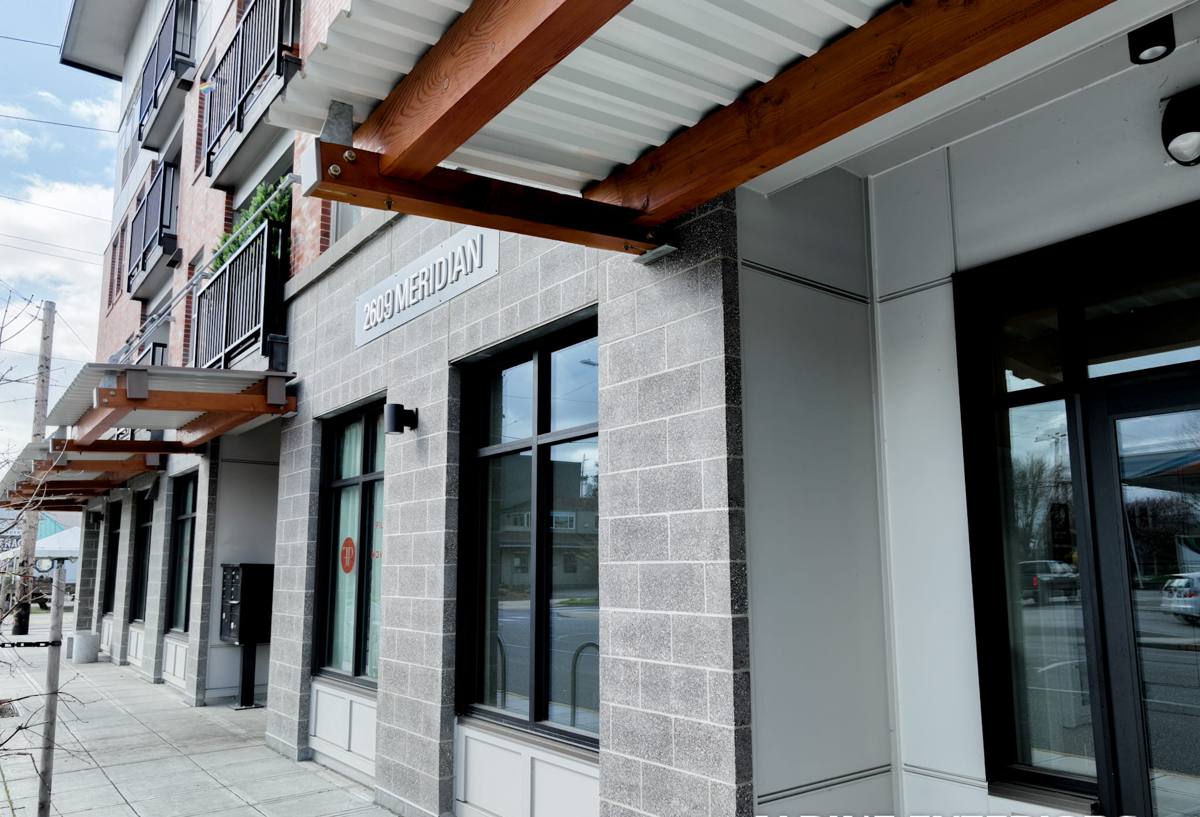
What Salt Air, Rain, and Moss Actually Do to a Wall
Salt air
Airborne salt is corrosive to metal fasteners, flashing, and trim, and it accelerates the breakdown of finishes that aren't formulated to resist it. Over years, a siding product with a weak factory finish will chalk, fade, or let moisture behind the surface faster in a salt-air environment than it would twenty miles inland.
Driving rain
Wind off the water pushes rain into laps, seams, and butt joints instead of letting it run straight down the face of the wall. That means every seam, corner, and penetration on a California Creek home is under more pressure to actually shed water, not just resist it in calm conditions.
Moss and algae
Shade, moisture, and mild temperatures year-round make this a prime environment for moss and algae growth on north-facing walls, under eaves, and anywhere airflow is limited. Left alone, that growth holds moisture against the siding surface and stains it permanently over time.
Why Fiber Cement Is the Right Material Here
Fiber cement is dense, dimensionally stable, and doesn't feed mold or rot the way wood-based products can. It doesn't warp or swell when it takes on repeated moisture exposure, and it holds paint and factory finish far longer than wood or engineered-wood alternatives in a wet climate. That combination is exactly what a California Creek home needs: a material that shrugs off constant dampness instead of slowly absorbing it.
We install James Hardie fiber cement exclusively. That's a deliberate standard, not a default. Hardie's ColorPlus factory finish is baked on and warranted against fading in a way field-applied paint isn't, and Hardie's HZ product system is engineered by climate zone — including a version built specifically for wet, marine environments like ours. We don't install vinyl, LP SmartSide, primed wood, or cedar, because none of them match fiber cement's combination of moisture resistance, non-combustibility, and long-term finish stability in a salt-air, high-moss climate. We'd rather explain that once, up front, than install something we know will need more attention five years from now.
The HZ5 Advantage for Waterside Homes
James Hardie's HZ5 product line is engineered for regions with sustained moisture exposure and freeze-thaw cycling — which describes the Pacific Northwest, and especially properties close to open water, far better than a one-size-fits-all siding product does. HZ5 panels are formulated for better moisture management in exactly the conditions California Creek homes face all winter.
What a Correct Installation Actually Involves
Fiber cement siding is only as good as the installation behind it. Most of the failures we get called out to inspect on older homes trace back to installation shortcuts, not the material itself. On a job near the water, we hold to a few non-negotiables:
- Minimum clearance from grade, decking, and roof lines so the bottom edge of the siding never sits in standing water or splash-back
- Correct fastener type and spacing — corrosion-resistant fasteners driven to the manufacturer's pattern, not just "close enough"
- Properly lapped and sealed flashing at every window, door, and penetration, since these are the spots where wind-driven rain finds its way in first
- A drainage plane and rainscreen gap behind the siding so any moisture that does get past the surface has somewhere to go
- Factory-cut and field-cut edges sealed or back-primed so raw cement edges aren't left exposed to constant moisture
- Caulking only where the manufacturer specifies it — over-caulking traps moisture just as reliably as under-caulking lets it in
None of this is exotic. It's standard fiber cement installation practice. But it takes longer to do right, and it's the first thing skipped by a crew trying to move fast.
Our Process on a California Creek Home
1. Assessment and moisture check
We start by looking at what's actually happening behind the existing siding — moisture staining, soft sheathing, failed flashing — not just what's visible from the curb. On homes near the water, this step matters more, because trapped moisture does more damage per year here than it would inland.
2. Tear-off and sheathing repair
We remove the old siding, inspect and repair any compromised sheathing or framing, and confirm the water-resistive barrier underneath is sound before anything new goes up.
3. Installation to Hardie's fastening and clearance specs
Panels, trim, and accessories go up following the manufacturer's requirements for our climate zone — proper laps, gaps, fastener placement, and flashing integration at every opening.
4. Finish details and final inspection
Trim, corners, and caulking are finished, and we walk the job checking clearances and seams before calling it complete. A siding job that looks finished from the street can still have a gap in flashing that won't show up until the next hard rain — we check for that before we leave.
Cost Factors on a Local Siding Replacement
Every home is different, but the same variables tend to move the price on jobs in this area. Rather than quote a number that doesn't fit your house, here's what actually drives cost:
| Factor | Why It Matters Near California Creek |
|---|---|
| Existing siding removal | Wood or vinyl tear-off often reveals moisture damage that needs repair before new siding goes on |
| Sheathing and framing condition | Homes with a history of moisture intrusion near the water more often need structural repair underneath |
| Home height and access | Multi-story homes and tight lots near the creek can require more staging and time |
| Trim and window count | Every opening needs correct flashing — more openings means more detail work, done right |
| Product line and profile | HZ5 panels and specific plank profiles or shingle-style siding vary in material cost |
| Color and finish | ColorPlus factory finishes carry a different cost than field-painted siding but last considerably longer |
We walk every property in person before quoting, because the difference between a straightforward re-side and one with hidden moisture repair underneath isn't something you can price from a photo.
Maintenance in a Salt-Air, High-Moss Climate
Fiber cement is low-maintenance compared to wood, but "low-maintenance" isn't "no-maintenance" this close to the water. A short seasonal routine keeps a correctly installed Hardie system performing for decades:
- Rinse siding annually to clear salt residue and organic buildup, especially on north- and west-facing walls
- Keep gutters clear so overflow doesn't run down the face of the siding
- Trim back vegetation and tree cover that keeps walls shaded and damp longer than necessary
- Check caulking at trim and window flashing every year or two for cracking or separation
- Address moss or algae growth early with a gentle wash rather than pressure that can damage the finish
- Watch for chalking or fading on older, non-ColorPlus siding as an early sign the finish is breaking down
Why Local Experience on This Product Matters
Fiber cement installed to spec performs the same way anywhere. What changes house to house is exposure — how much wind-driven rain a particular wall takes, how much shade keeps moss growing longer, how close the foundation sits to grade that stays wet through the winter. A crew that already works California Creek and the surrounding Blaine waterfront has already seen which details matter most on this stretch of Whatcom County coastline, and builds every job around them rather than treating every house the same.
That's the difference between siding that looks right on installation day and siding that's still performing correctly in fifteen years.
If you're planning a siding replacement on a California Creek home, we're happy to walk the property, look at what's happening behind your current siding, and put together a straightforward, no-pressure estimate — just fill out the form below.