 Blaine Siding
 Point Roberts Is Its Own Climate Problem
Point Roberts sits on a small peninsula that pokes south from the Canadian mainland, cut off from the rest of Whatcom County by the international border. Geography aside, the exterior of a home here takes a beating that's different in degree from what you'll find a few miles inland in Blaine or Ferndale. The peninsula is surrounded by water on three sides, which means near-constant exposure to salt-laden air, wind-driven rain coming off the Strait of Georgia, and a damp, shaded moss season that runs longer than most homeowners expect. Siding that's marginal on a protected inland lot fails faster out here.
None of that is exotic or unpredictable — it's just Pacific Northwest coastal exposure at full strength. But it means the margin for error in material choice and installation detail is smaller. A house wrap seam that's "close enough," a caulk joint left un-backed, or trim that wicks water at the end grain will show problems sooner on a Point Roberts home than it would twenty miles away.
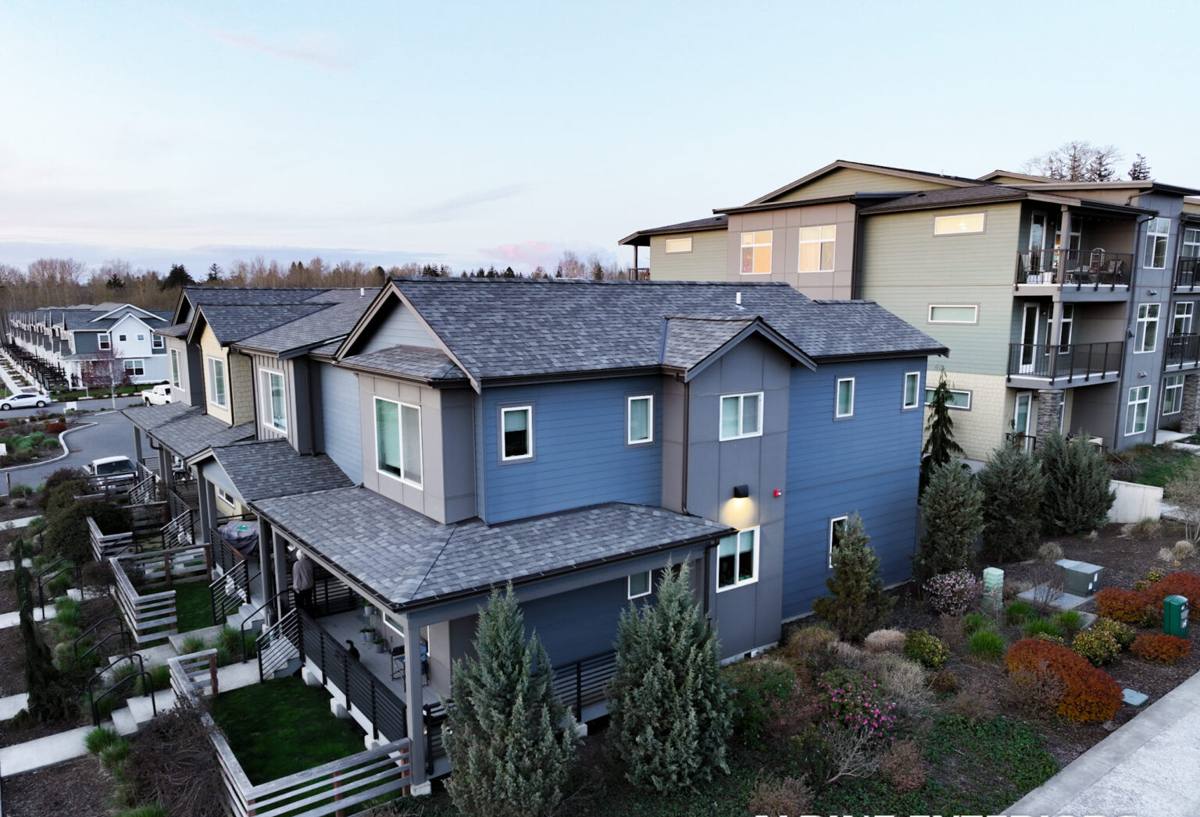
What Salt Air, Driving Rain, and Moss Actually Do to Siding
Salt Air
Airborne salt is corrosive to exposed metal fasteners, flashing, and hardware, and it accelerates the breakdown of finishes that aren't built to handle it. Paint films chalk and fade faster near open water. Fasteners that aren't corrosion-resistant can bleed rust streaks down a wall within a few seasons.
Driving Rain
Storms off the Strait don't just fall straight down — they come in sideways, and a peninsula with no windbreak takes the full force of it. That kind of wind-driven rain finds every gap in a water-resistive barrier, every under-flashed window head, and every siding lap that wasn't installed with the right reveal and fastening pattern. The house doesn't need a flood to get water damage; it just needs one weak point and a few years of repeated exposure.
Moss and Shade
Point Roberts has a lot of mature tree cover and damp, shaded north- and east-facing walls that dry out slowly. Moss and algae take hold anywhere siding stays damp longer than it should, and once established they hold moisture against the surface, which speeds up rot in wood-based products and paint failure on any siding regardless of material.
A Border Community Changes the Job Logistics, Not the Standard
Point Roberts is only reachable by land through Canada, or by boat or small plane. That's a fact of the geography, and it matters for a construction project even if it has nothing to do with the siding itself. Material deliveries, crew scheduling, and dump runs all have to account for border crossing time and documentation. A contractor who hasn't worked the peninsula before will often underestimate this and either show up short on materials mid-job or burn a day figuring out logistics they should have planned for in advance.
A crew that already works Point Roberts regularly has that part solved before the first board goes up: materials ordered and staged with crossing time built into the schedule, the right permits and paperwork sorted ahead of time, and a realistic timeline given to the homeowner from day one instead of a schedule that assumes mainland conditions. That's not a marketing point — it's the difference between a job that runs on schedule and one that stalls waiting on a delivery.
What Correct Siding Installation Involves
Fiber cement siding is only as good as the water management system underneath it. On a coastal, rain-exposed home, the visible siding is the last line of defense, not the only one. A correct installation includes several layers most homeowners never see once the job is done:
- A continuous, properly lapped weather-resistive barrier (house wrap) installed shingle-style so every seam sheds water downward
- Rigid flashing at every window and door head, integrated with the house wrap rather than just caulked over it
- Correct starter strip and bottom clearance so the first course of siding doesn't wick moisture from grade or hardscape
- Proper fastener type, spacing, and depth per the manufacturer's installation instructions — over- or under-driven nails are one of the most common causes of early siding failure
- Correct reveal and lap on every course, kept consistent around corners, windows, and utility penetrations
- Factory-primed or factory-finished cut edges sealed in the field, since a raw cut edge is the fastest path for moisture into fiber cement
- Kick-out flashing at roof-to-wall intersections so runoff is diverted away from the siding field instead of running down it
Skipping or rushing any one of these doesn't usually cause an immediate, visible problem. It shows up two, five, or eight years later as a soft spot, a stain, or a section of siding that needs to come off and be redone — usually costing more than doing it right the first time would have.
Why We Only Install James Hardie Fiber Cement Here
We standardized on James Hardie fiber cement siding for every home we work on, including Point Roberts, and the reasoning holds up especially well on a peninsula with this kind of exposure. Fiber cement doesn't rot, and it isn't a food source for the moss and algae that thrive in the peninsula's shaded, damp microclimates the way untreated wood products can be. It's non-combustible, holds paint and factory finish longer under UV and salt exposure than most wood-based sidings, and James Hardie's HZ5 product line is engineered specifically for the freeze-thaw and moisture cycling common to Pacific Northwest coastal climates.
The factory-applied ColorPlus finish is baked on under controlled conditions and backed by its own finish warranty, which matters on a home that's going to see more UV reflection off open water and more salt exposure than an inland property. We don't install vinyl, LP SmartSide, Cemplank, Allura, or bare wood siding on any home — not because those products don't have a place in the market, but because we've standardized our crew, our fastening details, and our warranty process around one system we can install correctly every time and stand behind. On a home exposed to this much weather, consistency in the install is as important as the material itself.
Our Process for a Point Roberts Job
| Stage | What Happens | Why It Matters Here |
|---|---|---|
| Site visit & assessment | Walk the exterior, check current siding condition, moisture readings where relevant, identify problem walls (usually north/east-facing) | Shaded, damp walls need different attention than sun-exposed ones |
| Scope & material plan | Confirm Hardie product line, trim details, color, and full material list | Materials get ordered and staged with border crossing time built in |
| Scheduling | Crew and delivery dates set around ferry/border logistics and weather windows | Avoids mid-job delays waiting on materials or crew access |
| Tear-off & sheathing check | Remove old siding, inspect sheathing for hidden rot before it's covered again | Coastal moisture often causes damage that isn't visible until old siding comes off |
| House wrap & flashing | Full weather-resistive barrier and flashing system installed per manufacturer spec | This layer does most of the real water management work |
| Siding installation | Hardie panels/lap installed with correct fasteners, reveal, and sealed cut edges | Consistent detailing is what prevents early failure in this climate |
| Final walkthrough | Review the completed exterior with the homeowner, confirm warranty registration | Documents the install for the transferable Hardie warranty |
Cost Factors Specific to This Job
Every siding estimate is specific to the house, but a few factors tend to move the number more on Point Roberts jobs than elsewhere:
| Factor | How It Affects the Job |
|---|---|
| Tear-off condition | Homes with rot hidden under old siding need sheathing repair before new siding goes on — this isn't visible until demo starts |
| Wall exposure | Shaded, damp walls may need extra flashing detail or ventilation consideration versus sun-exposed elevations |
| Trim complexity | Homes with more corners, windows, and roof-to-wall intersections take more flashing and detail work per square foot |
| Material logistics | Delivery timing across the border is planned into scheduling, not typically a cost driver, but it does affect timeline |
| Access | Driveway and staging space affects how efficiently material and equipment can be moved to the work area |
Signs Your Current Siding Is Losing the Fight
Homeowners on the peninsula often live with early warning signs for longer than they should, partly because damage on shaded or rear-facing walls isn't seen daily. Worth checking for:
- Persistent moss or algae growth that returns within a season of cleaning
- Soft or spongy spots when pressed, especially near the bottom courses or under windows
- Paint that's peeling or bubbling rather than just fading evenly
- Visible gaps, warping, or cupping in individual boards
- Rust streaking below fastener heads
- Interior signs — musty smell, staining, or soft drywall near exterior walls, which can point to moisture already past the siding
Any one of these alone isn't necessarily an emergency, but on a coastal, rain-exposed home they tend to compound quickly once they start.
Choosing a Crew for a Point Roberts Project
Because of the access situation, a siding project out here has more moving parts than a typical mainland job. A few things worth asking any contractor before hiring:
- Have they completed projects on Point Roberts before, and do they have a realistic plan for material delivery and crew scheduling around the border?
- Will they inspect and repair sheathing if rot is found during tear-off, or just cover it back up?
- What fiber cement product line and fastening spec will they actually use, and is it appropriate for HZ5 coastal exposure?
- Is the manufacturer's warranty registered in the homeowner's name upon completion?
- Do they give a written timeline that accounts for weather and logistics, rather than a generic mainland schedule?
A crew that's already familiar with the peninsula isn't just more convenient — it usually means fewer surprises mid-project and a schedule that actually holds.
Get a No-Pressure Estimate
If your Point Roberts home is showing signs of moss, moisture, or aging siding, or you're planning ahead of a needed replacement, we're happy to walk the exterior with you and give an honest assessment — no pressure, no obligation. Use the form below to request a free estimate.