 Blaine Siding
 Point Roberts Is Its Own Climate Problem
Point Roberts sits on a peninsula that's only reachable by land through Canada, and that geography isn't just a curiosity for homeowners — it means the exclave takes the full brunt of marine weather with almost nothing to break it up. Wind comes off the water from multiple directions, salt-laden air settles on every exterior surface, and the tree cover that shades so much of Whatcom County gives way to open, exposed lots along the shoreline. Add in the long, wet, low-light stretch of fall through spring, and you have a spot where exterior materials get tested harder and faster than almost anywhere else in the county.
Board and batten siding is a popular choice out here for good reason — the vertical lines read as clean and traditional, and it suits the mix of cottages, year-round homes, and remodels that make up the peninsula's housing stock. But the look only holds up if the material underneath and the installation behind it are matched to what this specific location throws at a house.
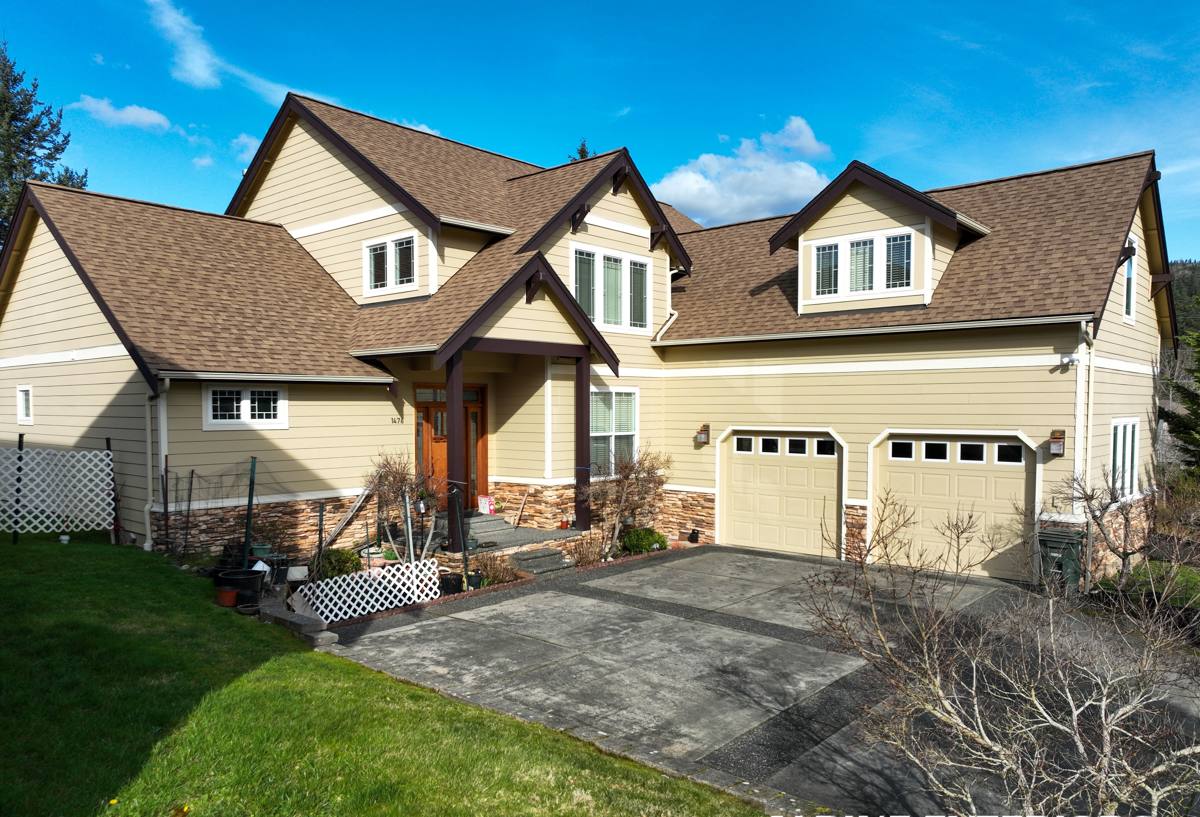
What Board & Batten Actually Is
Board and batten is a siding pattern, not a single product — wide flat panels (or boards) are installed vertically, and narrower strips called battens cover the seams between them. Historically it was built from solid wood boards. Today the pattern is most commonly achieved with either a single engineered panel product milled to look like board and batten, or true individual boards and battens installed as separate pieces over a weather-resistant barrier.
The pattern matters less than what's holding it together. Every seam, every batten, and every panel edge is a place water can find its way behind the siding if the install is careless — and on a site with this much wind-driven rain, "careless" shows up fast as staining, soft spots, or paint failure.
Why It Shows Up So Often in This Area
- It matches the mix of craftsman, farmhouse, and simple coastal architecture common on the peninsula
- Vertical lines shed water differently than horizontal lap siding, which some homeowners prefer on exposed elevations
- It reads well on smaller cottage-style footprints as well as larger rebuilds
- It pairs cleanly with stone, shake accents, or trim work already on the house
What This Climate Does to Siding Over Time
Three things drive most of the siding failures we see on the water side of Whatcom County, and Point Roberts gets all three at once.
Salt Air
Airborne salt is corrosive to exposed metal fasteners, flashing, and trim, and it accelerates the breakdown of coatings that aren't built to resist it. On a peninsula with water on three sides, salt exposure isn't limited to homes right on the beach — it travels on the wind well inland.
Driving Rain
Rain that comes in sideways doesn't behave like rain falling straight down. It gets pushed up under laps, into seams, and behind trim that would stay dry in a more sheltered spot. Vertical board and batten has more seam length per square foot than lap siding, which makes correct flashing and sealing even more important here than on a typical inland home.
Moss Season
The extended damp season across this part of Washington means moss and algae have months to establish themselves on north-facing walls, shaded elevations, and anywhere moisture lingers. Moss holds water against the siding surface, and on materials that can't tolerate sustained dampness, that's a slow path to rot and coating failure.
Why We Only Install James Hardie for This Application
Fiber cement doesn't absorb and swell the way wood-based products can, and it doesn't feed moss and algae the way some organic-based siding materials do over time. For a project sitting in Point Roberts' salt air and moisture load, that stability is the whole point. We install James Hardie board and batten using their vertical HardiePanel product with battens, or true board and batten configurations depending on the look the home calls for — both built on a fiber cement core engineered specifically for the wetter, harsher side of the Pacific Northwest through Hardie's HZ10 climate designation.
The factory-applied ColorPlus finish is also relevant here specifically. A finish that's baked on at the factory under controlled conditions holds up to UV and moisture cycling more consistently than field-applied paint, which matters on a site where a paint job gets tested by salt air and driving rain within its first year, not its fifth.
What a Correct Board & Batten Install Actually Involves
The visual pattern is the easy part. What separates a board and batten job that lasts from one that fails early is almost entirely hidden once the project is done.
- A weather-resistant barrier installed correctly behind the siding, lapped to shed water downward
- A drainage gap or rain screen strategy so any moisture that does get behind the siding can escape instead of sitting against the wall
- Correct fastener type, spacing, and penetration depth — this is not a place to save time with an undersized nail pattern
- Batten placement and fastening that doesn't just cover the seam cosmetically but actually manages water at that joint
- Flashing at every window, door, and roofline intersection, sized and lapped for wind-driven rain, not just vertical rainfall
- Proper clearance at the foundation and any adjoining roof or deck surfaces so moisture and debris don't wick into the bottom of the boards
Skip any one of these on a sheltered inland lot and you might get away with it for years. Skip one on an exposed Point Roberts elevation and it tends to surface as a problem within a single wet season.
How We Approach a Point Roberts Project
Working on the peninsula comes with logistics that don't apply to a typical Blaine or Whatcom County job, and a crew that hasn't accounted for them can turn a straightforward siding project into a scheduling headache.
Border Crossing and Scheduling
Point Roberts is only reachable by road through Canada, which means crew scheduling, material deliveries, and equipment access all need to be planned around crossing times rather than treated as an afterthought. We build that into the project timeline up front rather than discovering it mid-job.
Site Assessment First
Before we quote anything, we look at which elevations take the worst of the wind and rain, where moss has already established itself, and what condition the existing wall assembly is in underneath the current siding. That assessment changes how we detail flashing and drainage on that specific house.
Full Removal, Not Overlay
We don't install new siding over old siding or damaged sheathing. On a site with this much moisture exposure, whatever is hidden behind the old material needs to be seen, and repaired if needed, before anything new goes up.
Correct Detailing at Every Penetration
Every window, vent, hose bib, and light fixture is a place water can get behind the siding. We flash and seal each one to the same standard, regardless of how visible it is once the job is finished.
Cost Factors on a Point Roberts Project
Board and batten pricing depends on the same core factors as any siding project, with a few added considerations specific to this location.
| Factor | Why It Matters Here |
|---|---|
| Home size and wall complexity | More corners, gables, and dormers mean more seams and flashing detail to get right |
| Existing wall condition | Moisture-damaged sheathing found during removal adds repair scope before new siding goes on |
| Elevation exposure | Water-facing walls may warrant extra attention to drainage detailing versus more sheltered sides |
| Access and logistics | Border crossing scheduling and delivery timing factor into project sequencing |
| Color and finish selection | ColorPlus factory finishes come in a range of options; some premium colors carry a modest upcharge |
| Trim and batten detail level | Wider batten spacing, corner treatments, and trim complexity affect labor time |
Maintaining Board & Batten in This Climate
Fiber cement is low-maintenance, not no-maintenance. A little attention goes a long way on a site this exposed.
- Rinse salt residue and grime off exterior walls periodically, especially on water-facing elevations
- Keep gutters clear so overflow doesn't run down the siding face and feed moss growth
- Trim back vegetation that shades walls and keeps them damp longer than they need to be
- Inspect caulking at trim and penetrations annually and have any cracked sealant addressed before wet season
- Address any moss or algae growth early rather than letting it establish and hold moisture against the surface
Why Local Experience on This Peninsula Matters
A crew that's already worked in Point Roberts knows the border crossing routine, knows which elevations on this peninsula take the worst weather, and has already seen what happens to different siding materials and installation shortcuts after a few wet seasons out here. That's not something a contractor can fully substitute with general experience elsewhere in Whatcom County — the exposure here is genuinely more aggressive, and the logistics of getting crews and materials onto the peninsula reward a contractor who's already worked out that routine.
If you're weighing board and batten siding for a Point Roberts home, we'd rather walk your specific house with you than talk in generalities. If you'd like a straightforward look at what your project would involve, use the form below to request a free, no-pressure estimate.