 Blaine Siding
 Why Point Roberts Siding Wears Differently
Point Roberts sits on its own small peninsula, surrounded on three sides by water and cut off from the rest of Whatcom County by the international border. That geography is exactly why siding here fails faster than it does on homes ten miles inland. Salt-laden air comes off the water and settles on every exterior surface, wind-driven rain finds its way into laps and joints that would stay dry on a more sheltered lot, and the long, damp Pacific Northwest shoulder seasons give moss and algae months at a time to take hold on shaded walls and roof lines. None of this is unusual for a waterfront community — it's just a heavier version of what every Blaine-area home deals with, and it means siding repair here has to account for exposure, not just cosmetics.
We've done repair and replacement work across Whatcom County long enough to know the difference between a wall that needs a patch and one that's already lost its structural integrity underneath the surface. That distinction matters more in a place like Point Roberts, where a small, ignored problem has more time and more moisture working against it before anyone notices.
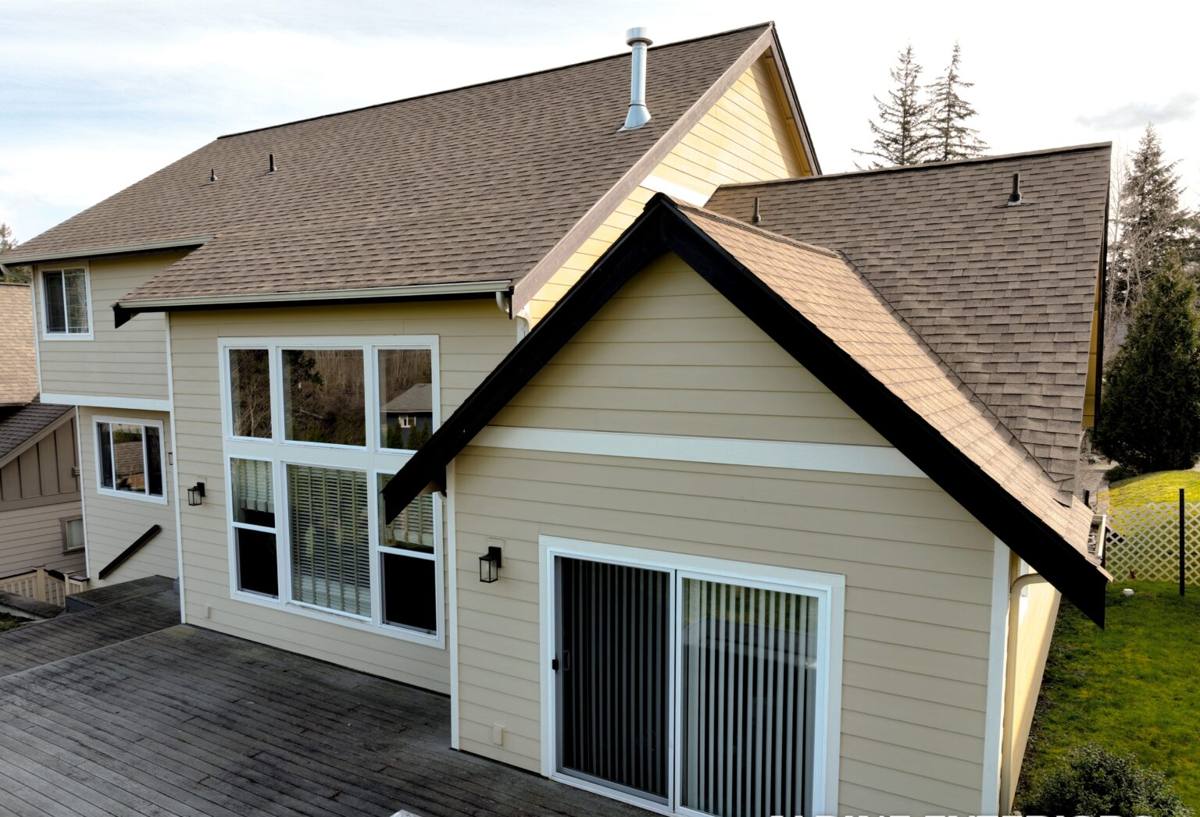
What "Siding Repair" Actually Covers
Siding repair is a broad term, and not every job that falls under it is the same size or urgency. On a typical service call in this area we're usually looking at one or more of the following:
- Replacing a handful of damaged or rotted boards while leaving the rest of the wall intact
- Re-flashing and re-caulking around windows, doors, and utility penetrations where water has been getting behind the siding
- Fixing impact damage from storms, fallen branches, or landscaping equipment
- Addressing moss and algae staining that's gone past a simple wash and into the substrate
- Correcting old repair work that was never installed to spec and is failing again
The goal of a repair is always to stop the problem at its source and restore the wall to a condition where it will hold up for years, not just to make it look presentable for a season. That means every repair starts with figuring out why the siding failed in the first place — because if the underlying cause isn't fixed, the same spot will be back on our schedule again.
Repair vs. Replacement — Knowing Which One You Need
Not every damaged wall needs to be torn off and re-sided. As a rough guide: if the damage is isolated to a few boards or a specific area, and the sheathing and moisture barrier behind it are still sound, repair is usually the right call. If the damage is spread across multiple walls, if there's evidence of long-term water intrusion into the framing, or if the siding is an older product nearing the end of its practical life, a full or partial replacement often ends up being the more honest recommendation — and the more cost-effective one over time, since repeated patch jobs on failing material rarely pencil out.
Where Damage Shows Up First on Point Roberts Homes
Certain areas of a home take the brunt of this climate before the rest of the wall shows any sign of trouble:
- Corners and butt joints — these are the seams where water intrusion starts if caulking or flashing wasn't detailed correctly the first time
- Walls facing prevailing wind and rain — typically the west and southwest exposures on this stretch of coastline, where driving rain hits siding almost horizontally during storms
- North-facing and shaded walls — these stay damp longest after a storm and are where moss and algae establish first
- Areas around trim, hose bibs, and vents — any penetration through the siding is a potential entry point if it wasn't flashed and sealed properly
- Bottom courses near grade or decks — splash-back and standing moisture accelerate wear at the lowest rows of siding
If you're noticing soft spots, dark staining that doesn't wash off, paint that's bubbling or peeling in a specific pattern, or a musty smell near an exterior wall, those are worth a look before the next wet season, not after.
What a Correct Repair Job Actually Involves
A repair that's done right takes more steps than just pulling off a bad board and nailing up a new one. Here's what we walk through on every job:
- Assessment — we pull back enough siding to see what's actually happening underneath: the condition of the moisture barrier, the sheathing, and the framing, not just the visible surface
- Root cause identification — determining whether the failure came from a flashing gap, a caulking failure, a grading issue directing water at the wall, or simple age and exposure
- Material matching — sourcing siding that matches the existing profile, reveal, and finish as closely as possible so the repair doesn't stand out
- Proper moisture management — correcting or replacing house wrap, flashing, and drainage details in the repair area, not just covering the damage back up
- Reinstallation to spec — correct fastening, proper gaps and clearances, and caulking only where it belongs
- Finish work — painting or color-matching so the repaired section blends with the surrounding wall
Skipping the moisture management step is the most common shortcut in cheap repair work, and it's the one that guarantees you'll be paying for the same repair again in a few years — often after the damage has spread.
Why We Only Repair and Install James Hardie Fiber Cement
We don't stock or install vinyl, LP SmartSide, primed spruce, cedar, or off-brand fiber cement products. On a coastal, high-moisture site like Point Roberts, that standard matters more than it does in drier parts of the state. Fiber cement doesn't rot, doesn't feed moss and algae the way wood-based products can, and doesn't warp or buckle from repeated wet-dry cycling the way vinyl can over time in direct salt exposure. James Hardie's ColorPlus factory finish is also baked on under controlled conditions and backed by a real finish warranty — which matters when you're trying to color-match a repair to siding that's been on the house for a few years and has weathered under coastal sun and salt air.
When we repair a Hardie wall, we can source matching profiles and, in many cases, matching ColorPlus colors, so the repaired section doesn't turn into a visible patch. That's a meaningfully different outcome than trying to match a discontinued vinyl profile or field-paint a repair on cedar and hope it weathers the same as the surrounding boards.
Why a Crew That Already Works Point Roberts Matters
Point Roberts is geographically part of Whatcom County, but it's not connected to the rest of the mainland U.S. by road — getting there means crossing into Canada and back out again. That's not a minor detail when you're hiring a contractor. A crew unfamiliar with that logistics reality can end up costing you in scheduling delays, rescheduled appointments, or contractors who simply won't take small repair jobs out there because the trip isn't worth it for them.
We work Point Roberts regularly as part of our normal Blaine-area service area, so the border crossing, material staging, and scheduling around it are already worked out before your job is ever quoted. That means fewer delays, a crew that shows up when it says it will, and a job that doesn't get pushed to the bottom of the list because the location is inconvenient.
What Drives the Cost of a Siding Repair
Every repair is different, but the same handful of factors determine where a job lands on the price range:
| Factor | Why It Matters |
|---|---|
| Extent of visible damage | A few boards is a very different job than a full wall section |
| Hidden moisture damage | Rotted sheathing or framing behind the siding adds carpentry work beyond the siding itself |
| Material matching | Matching an existing profile and color takes more sourcing time than a like-for-like new install |
| Access and height | Second-story walls, tight side yards, or landscaping obstacles affect labor and equipment needs |
| Root cause repairs | Fixing the flashing, grading, or moisture barrier issue that caused the damage, not just the siding |
We give straightforward, itemized estimates so you can see what you're paying for — the repair itself and, where relevant, the underlying fix that keeps it from happening again.
Simple Maintenance That Extends the Life of a Repair
Once a section is repaired correctly, a little regular upkeep goes a long way in this climate:
- Rinse salt residue off siding a few times a year, especially on walls facing the water
- Keep gutters clear so water isn't overflowing directly onto siding below
- Trim back vegetation and tree cover that keeps shaded walls damp longer than necessary
- Soft-wash moss and algae buildup before it stains or takes hold in seams and joints
- Re-caulk at the first sign of cracking or gapping around trim and penetrations
- Walk the exterior once a year, ideally before the wet season, looking for soft spots or discoloration
None of this requires a professional visit every time — it's mostly about catching small issues while they're still small.
Get an Honest Look at Your Siding
If you're dealing with damaged, stained, or aging siding on a Point Roberts home, we're happy to come take a look and tell you plainly whether you're looking at a repair, a partial replacement, or something more. There's no pressure and no upsell — just a straight assessment from a crew that already knows this stretch of coastline. Fill out the form below to schedule a free estimate.