 Blaine Siding
 Metal Roofing Built for a Point Roberts Marine Climate
Point Roberts sits on saltwater on three sides, which means every roof out here deals with conditions most inland Whatcom County homes never see. Salt-laden air corrodes unprotected metal faster than clean air does. Wind-driven rain off the strait finds every gap in flashing and fastener work. And the tree cover and persistent damp mean moss gets a foothold on any roof that isn't shedding water cleanly. A metal roof is one of the better answers to all three problems, but only if it's specified and installed correctly for this exact environment. A generic install — the kind that works fine forty miles inland — will not hold up the same way out here.
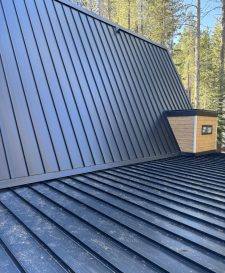
What Salt Air, Rain, and Moss Actually Do to a Roof
It helps to understand the mechanisms, because they drive almost every decision below.
Salt Air and Corrosion
Airborne salt is conductive and mildly corrosive. On bare or poorly coated steel, it accelerates rust at cut edges, fastener heads, and anywhere the protective coating has been scratched during handling or installation. Aluminum resists this better than steel, and properly coated steel (Galvalume or a quality paint system) resists it far better than uncoated or thin-mil panels. The coating and the finish matter as much as the base metal.
Driving Rain
Rain that comes in sideways off the water doesn't just run down a roof plane — it gets pushed uphill under laps, into fastener penetrations, and around penetrations for vents and chimneys. A roof detailed for calm, vertical rainfall will leak here even if it would be fine elsewhere. Every seam, lap, and penetration needs to be treated as if wind-driven water will find it, because it will.
Moss and Organic Growth
Moss needs moisture, shade, and something to hold onto. Metal roofing gives it far less to grab than shingles do, but moss can still establish in valleys, at panel overlaps, and anywhere debris collects and holds moisture against the surface. Moss that's allowed to sit traps water against the panel, which speeds up coating breakdown and, on exposed-fastener panels, can work into fastener holes.
Choosing the Right Metal Roofing System
Not all metal roofing is the same product wearing a different color. For a coastal, moss-prone site like Point Roberts, the choice between panel systems is one of the most consequential decisions on the job.
| System | How It's Fastened | Coastal / Moisture Performance | Typical Trade-Off |
|---|---|---|---|
| Standing seam (concealed fastener) | Interlocking seams, clips hidden under the panel | No exposed penetrations for water or salt to work into; best long-term performance in wind-driven rain | Higher material and labor cost |
| Exposed-fastener panel (e.g., ribbed/corrugated) | Screws driven through the panel face, with washers | Workable if fasteners and washers are matched to the metal and re-driven or replaced on schedule; more entry points for water over time | Lower upfront cost, more long-term maintenance |
| Stone-coated steel | Fastened similarly to exposed-fastener panels, with a textured coating | Good impact and wind resistance; still relies on fastener integrity at penetrations | Heavier system, mid-range cost |
We don't refuse to install exposed-fastener systems — they're a legitimate, budget-conscious option and plenty of them perform well when detailed correctly. But we're upfront with Point Roberts homeowners that any exposed-fastener roof on a saltwater-exposed site is signing up for periodic fastener inspection and re-sealing as part of normal maintenance, not a one-time install and forget it. Standing seam trades a higher install cost for far less of that ongoing maintenance burden, which is often the better math on a waterfront or near-waterfront home.
What a Correct Installation Actually Involves
The panel itself is maybe a third of what makes a metal roof perform. The rest is in details that don't show up in a sales brochure.
- Underlayment: A synthetic, high-temp, self-adhering underlayment at eaves, valleys, and penetrations — not felt paper, which breaks down under sustained moisture exposure.
- Fastener spec: Fasteners and washers matched to the panel metal to avoid galvanic corrosion (mixing incompatible metals accelerates rust at every contact point).
- Flashing at every transition: Valleys, sidewalls, chimneys, and vent penetrations get formed metal flashing, not just caulk or mastic — sealants are a backup, not the primary water barrier.
- Ventilation: Ridge and soffit ventilation that keeps moist air from condensing under the panel deck, which matters as much for moss and rot prevention as roof-surface treatment does.
- Edge and end treatments: Cut panel edges sealed or capped so bare steel isn't left exposed to salt air.
- Panel layout: Laps and seams run to shed wind-driven rain based on this site's prevailing wind and exposure, not a generic layout.
Tear-Off vs. Overlay
Metal can sometimes go over an existing roof deck, but on a site with this much moisture exposure we typically recommend a full tear-off so the deck can be inspected and any hidden rot or trapped moisture from the old roof gets addressed before it's sealed under a new system for another 30-plus years.
Our Process for Point Roberts Roofing Jobs
Point Roberts is part of Whatcom County but it's geographically separated from the rest of the mainland U.S. — the only land route in and out runs through Canada. That's not a footnote; it shapes how a roofing job actually gets scheduled and supplied.
- On-site assessment: We walk the roof, check the deck condition where accessible, and look at exposure — how much direct salt spray and wind the roof plane actually takes.
- Material staging: Because getting a crew and a truckload of panel and flashing material back and forth isn't a same-day errand out here, we plan material delivery and crew scheduling as a single trip whenever possible, rather than making multiple runs.
- Tear-off and deck check: Old roofing comes off, the deck gets inspected, and any repairs are done before anything new goes down.
- Underlayment and flashing first: The full water-management layer goes in before a single panel is fastened.
- Panel installation: Panels are run and fastened to spec for this site's exposure and wind conditions.
- Final walk-through: We check every penetration, seam, and edge before we call it done, and go over basic upkeep with the homeowner.
What Drives the Cost
Metal roofing costs more upfront than asphalt shingles, and the range on any given Point Roberts home depends on a handful of factors more than on brand name.
| Factor | Why It Moves the Price |
|---|---|
| Panel system | Standing seam runs higher than exposed-fastener panel due to labor time and hardware |
| Roof pitch and complexity | Steep pitches, multiple valleys, and dormers add labor and flashing work |
| Tear-off vs. overlay | Tear-off adds disposal and deck-repair cost but reduces long-term risk |
| Deck condition | Rot or soft spots found during tear-off mean deck repair before the new roof goes on |
| Penetrations | Chimneys, skylights, and multiple vents each need custom flashing |
| Access and logistics | Waterfront or limited-access lots can add setup and material-handling time |
We'll always walk you through where your specific quote is coming from rather than giving a number with no explanation behind it.
Keeping Moss and Salt Damage From Coming Back
A correctly installed metal roof needs far less maintenance than shingles, but "far less" isn't "none." A short annual routine keeps it performing the way it's designed to for decades.
- Clear debris (needles, leaves, moss fragments) out of valleys and off the panel surface, especially under overhanging trees.
- Check that gutters are clear so water isn't backing up under the eave edge.
- Look at fastener heads on exposed-fastener systems for early rust or a raised washer, and have them re-sealed or replaced before they leak.
- Rinse visible salt film off the roof surface after long dry spells, if it's safely accessible.
- Have flashing at chimneys, vents, and valleys checked every few years rather than waiting for a leak to show up inside the house.
Why a Crew That Already Works Point Roberts Matters
A roofing crew based elsewhere in Whatcom County can absolutely do good work here, but there's a real logistical difference between a company that treats Point Roberts as a routine part of its territory and one that treats it as a special trip. Crews familiar with the area already account for the border crossing when scheduling material delivery and crew time, know what this specific exposure to salt air and wind actually does to different roofing products over the years, and are set up to come back promptly for warranty service or a maintenance check without it being a logistical headache. On an exclave where a "quick callback" isn't actually quick unless it's planned for, that familiarity saves real time and hassle for the homeowner.
Get a Straight Answer for Your Roof
If you're weighing metal roofing for a Point Roberts home, we're glad to come take a look, walk the roof, and give you a straightforward assessment of what your specific site needs — no pressure, no upsell. Fill out the form below to schedule a free estimate.