 Blaine Siding
 Roofing on an Exposed Peninsula
Point Roberts sits on its own finger of land at the bottom of a larger peninsula, with water on three sides and almost nothing between the shoreline and your roof deck to slow the wind down. That geography is what makes roofing here different from roofing a few miles inland in Blaine or elsewhere in Whatcom County. Homes in Point Roberts take a steady diet of salt-laden air, wind-driven rain that gets pushed sideways under normal flashing details, and a moss season that can run eight months or longer in shaded, north-facing sections of a roof. A roof that would be perfectly adequate in a drier, more sheltered part of the county can fail early out here if it wasn't specified and installed with those conditions in mind.
This page is specifically about replacing roofs on Point Roberts homes — not a general overview of roofing. If you own or manage a property out here, this is what actually matters for getting a roof that holds up.
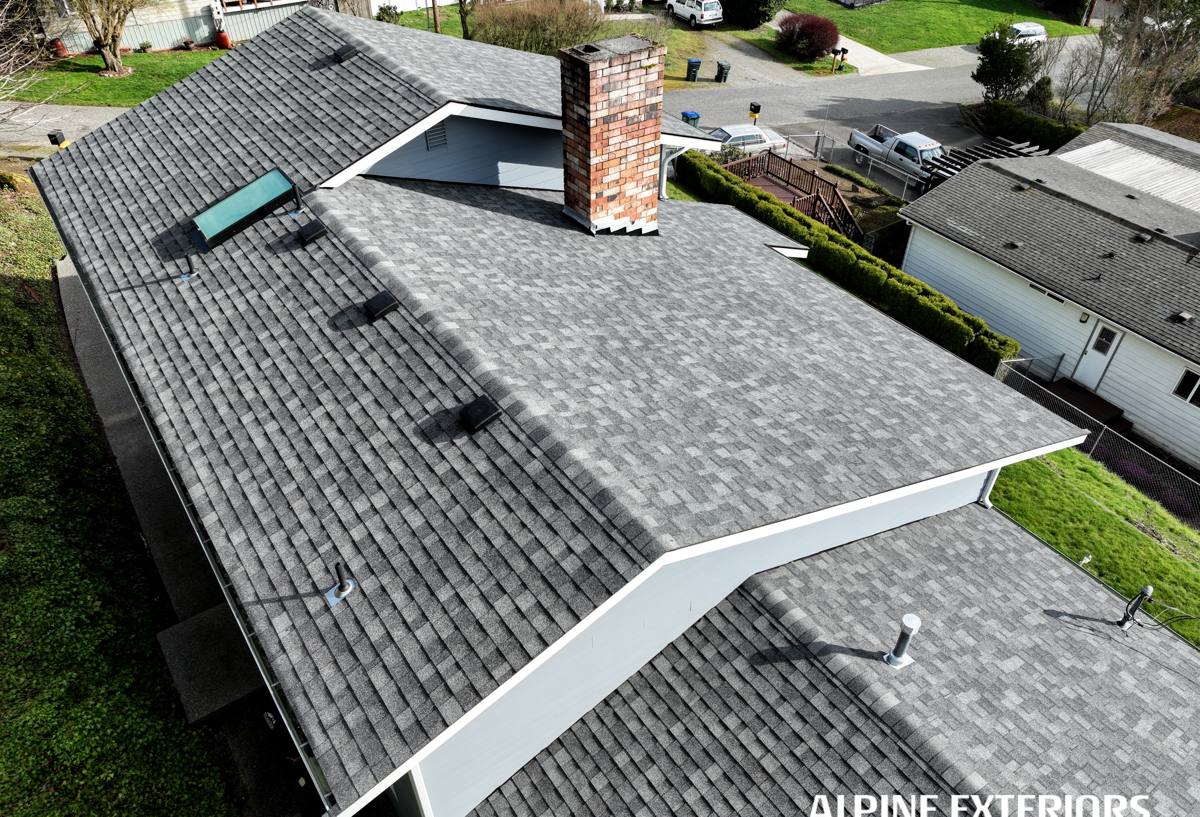
What Salt Air and Coastal Wind Actually Do to a Roof
Salt air is corrosive to exposed metal, full stop. It doesn't matter whether that metal is a nail head, a flashing panel, a vent boot collar, or a gutter — anything with unprotected or marginal-grade metal on a Point Roberts roof will corrode faster than the same material would inland. This shows up over time as:
- Rust streaking below fasteners, valleys, and flashing joints
- Pitting and thinning on lower-grade galvanized flashing
- Premature failure of exposed fastener heads on metal roofing or trim
- Corrosion-driven leaks at penetrations long before the shingles themselves are worn out
Wind adds a second problem: driving rain doesn't fall straight down here, it gets pushed at an angle and forced into laps, valleys, and edge details that would shed water fine in calmer conditions. That's why edge metal, valley construction, and underlayment choices matter more on an exposed Point Roberts lot than they would on a sheltered inland roof of the same age and pitch.
Moss and Sustained Moisture
The long damp season here gives moss and algae plenty of time to establish, especially on north-facing slopes, under tree cover, and anywhere debris collects. Moss isn't just cosmetic — as it grows, it lifts shingle edges, holds water against the roofing material far longer than it would otherwise sit, and accelerates granule loss on asphalt shingles. On an older roof, thick moss can trap enough moisture that the deck underneath starts to suffer even before you see an interior leak.
Signs a Point Roberts Roof Is Due for Replacement
Because of the exposure out here, we look for a slightly different set of warning signs than we would on a more sheltered roof:
- Rust stains running down from flashing, valleys, or fastener lines
- Granule buildup in gutters, or bald patches where granules have washed off
- Moss beds thick enough that you can't see the shingle surface underneath
- Curling, cupping, or cracked shingles, especially on wind-exposed slopes
- Soft spots in the decking when walked, usually near valleys or wall intersections
- Daylight or water staining in the attic near penetrations, chimneys, or skylights
- A roof that's simply reaching the end of its material's realistic service life given this exposure — often sooner than the manufacturer's inland-rated lifespan
Any one of these on its own might just mean a repair. Several at once, or a roof past the 15–20 year mark in this environment, usually means it's more cost-effective to replace than to keep patching.
What a Correct Roof Replacement Looks Like Out Here
Tear-Off and Deck Inspection
We remove the old roofing down to the deck rather than layering over it. That's the only way to actually see what's happened underneath — soft or delaminated sheathing, rusted-through nail plates, or moisture staining that tells us where water has been getting in longer than anyone realized. Any compromised decking gets replaced before anything new goes down; covering over bad decking just guarantees a shorter life for the new roof.
Underlayment and Water Management
Given the driving rain out here, we don't treat underlayment as a formality. Valleys, eaves, and any area prone to ice or wind-driven water get self-adhered membrane rather than felt alone, and the rest of the field gets a synthetic underlayment that holds up to job-site weather delays without degrading. This is one of the biggest differences between a roof that's built for Point Roberts conditions and one that's just built to a minimum code spec.
Flashing and Fastener Grade
This is where salt-air corrosion resistance actually gets decided. We use corrosion-resistant flashing and fasteners appropriate to coastal exposure rather than the cheapest galvanized option, particularly at valleys, chimneys, skylights, and wall-to-roof transitions. Skimping here is the single most common reason we see leaks develop at the 5–8 year mark on roofs that otherwise look fine.
Ventilation
Proper intake and exhaust ventilation keeps the underside of the deck dry and reduces the moisture load that feeds moss growth and accelerates shingle aging from below. A roof replacement is the right time to correct ventilation problems, since the deck and soffit are already exposed.
Material Choices for Salt Air and Moss Exposure
There's no single "right" roofing material for Point Roberts — it depends on the home, the budget, and how much maintenance the owner wants to take on. Here's how the common options actually compare in this specific environment:
| Material | Salt Air Performance | Moss Resistance | Maintenance |
|---|---|---|---|
| Standard 3-tab asphalt shingles | Fasteners and flashing need upgraded grade; shingle body itself is unaffected by salt | Low — needs regular cleaning in shaded areas | Moderate |
| Architectural (laminate) asphalt shingles | Same fastener/flashing considerations; thicker mat holds up better to wind uplift | Better with algae-resistant granules, still benefits from cleaning | Moderate |
| Standing seam metal roofing | Excellent when specified in a coastal-rated finish and grade; poor if a lower-grade panel is used | High — smooth surface sheds moss and debris well | Low |
| Cedar shake | Weathers naturally but fasteners must be corrosion-resistant | Low — shake is especially prone to moss and rot retention in a damp climate | High |
Our default recommendation for most Point Roberts homes is a good architectural shingle with algae-resistant granules and upgraded flashing and fasteners, or a properly specified metal roof for owners who want to minimize long-term maintenance. We're honest about the trade-offs either way rather than pushing one product because it's easier to install or carries a better margin.
Why Local Experience on Point Roberts Specifically Matters
Point Roberts is geographically part of Whatcom County but physically separated from the rest of it — reaching it means crossing an international border, which is a logistics detail that trips up crews who don't already work here regularly. Material deliveries, crew scheduling, and permitting all take a bit more planning than a typical in-town job. A crew that already has a routine for getting materials and equipment onto the peninsula doesn't pass that friction on to you as delays or surprise costs.
More importantly, a crew that has actually replaced roofs here knows which details matter for this specific exposure — where the wind hits hardest on a given lot orientation, which valleys tend to hold moss, and which flashing grade actually holds up rather than looking fine on installation day and failing in year six. That's knowledge that only comes from doing the work here repeatedly, not from a general roofing background alone.
Our Process for a Point Roberts Roof Replacement
- On-site inspection. We walk the roof and check the attic where accessible, looking specifically for the salt-air and moisture patterns common to this area.
- Honest scope and estimate. You get a written estimate that spells out material grade, flashing details, and any deck repair allowances — no vague line items.
- Scheduling around border logistics and weather. We plan material delivery and crew timing to avoid mid-job delays specific to working on the peninsula.
- Tear-off and deck repair. Old roofing comes off completely; any soft or damaged decking is replaced and documented before we move forward.
- Installation to a coastal-appropriate spec. Upgraded underlayment, flashing, and fasteners go in at every vulnerable point, not just where code requires it.
- Final walkthrough. We review the finished roof with you, including gutter and ventilation function, before calling the job complete.
What This Typically Costs
Every roof is different, but a few factors move the price more than others on Point Roberts jobs specifically:
- Roof size and pitch — steeper, more cut-up roofs take longer and use more material
- Amount of deck repair needed once the old roofing comes off
- Material choice — architectural shingle versus metal versus cedar
- Number of penetrations, valleys, and flashing transitions
- Access and staging logistics tied to the peninsula's location
Rather than quote a number that won't mean much without seeing your roof, we'd rather walk it, give you a real written estimate, and explain exactly what's driving the cost. If a competitor's number is a lot lower, it's worth asking what flashing grade and underlayment they're actually specifying — that's usually where the difference comes from.
If your Point Roberts roof is showing rust streaks, heavy moss, or you're just not sure how much life it has left given what this exposure does to a roof over time, we're happy to take a look. The estimate is free, there's no pressure, and you'll get a straight answer about whether replacement makes sense now or repair can reasonably buy you more time — just fill out the form below.