 Blaine Siding
 Everson Roofs Work Harder Than People Realize
Everson sits inland from Blaine, but it's still squarely inside the same Whatcom County weather system that soaks the whole region for most of the year. That means long stretches of steady, driving rain, short windows of good drying weather, and a moss season that can run eight months or longer on a roof that doesn't get much direct sun. Homes closer to the water pick up marine moisture in the air as well, which adds a corrosive edge to fasteners and flashing that inland framing and siding don't usually deal with. A roof here isn't just shedding water during storms — it's staying wet, drying out, and getting wet again on a loop that never really stops from October through May.
That cycle is what actually wears a roof out. It's rarely one big storm that causes failure. It's years of moisture sitting in the wrong place — under moss mats, behind poorly lapped flashing, in an attic that can't vent properly — doing slow damage that isn't visible from the ground until it shows up as a stain on a ceiling.
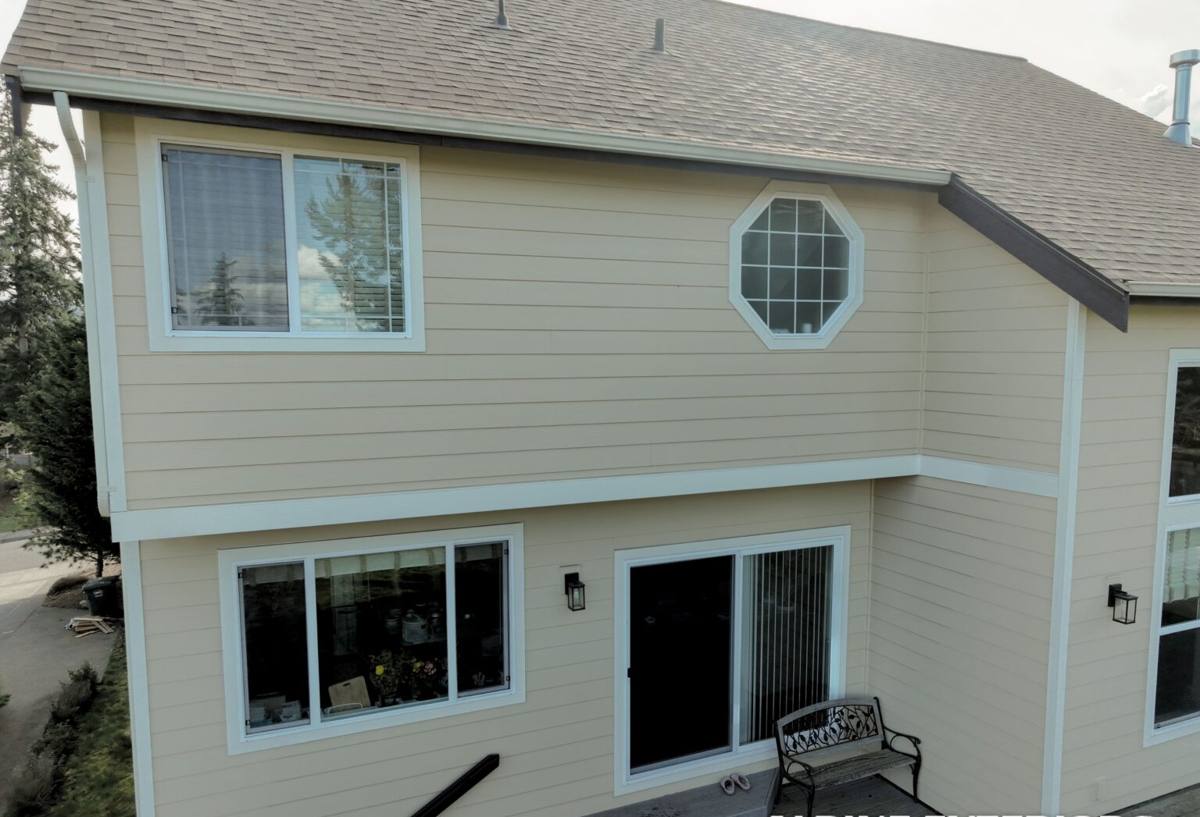
What a Roof in This Climate Actually Needs to Do
Shed water fast, every time
Roofs here need steep enough water paths, correctly lapped courses, and properly sealed penetrations so that water never has a chance to sit. Any spot where water can pool — a low valley, an under-pitched section, a poorly flashed chimney — becomes the first place a roof fails.
Resist moss, not just tolerate it
Moss doesn't just look bad. It holds moisture against the roofing material, lifts shingle edges as it grows, and works its way into laps and fastener lines. A new roof installation is the best time to build in moss resistance — proper zinc or copper strips, material choice, and airflow — rather than fighting moss after the fact with chemical treatments every year.
Vent correctly
Attic and roof ventilation matters more here than in drier climates. Poor airflow traps humid air against the underside of the roof deck, which speeds up rot, encourages mold, and shortens the life of the roofing material from underneath — damage the homeowner never sees until it's expensive.
Our New Roof Installation Process
We run the same disciplined process on every Everson roof, whether it's a straightforward tear-off or a more complicated multi-plane roof with valleys and dormers.
1. Inspection and scope
Before we quote anything, we walk the roof and the attic. We're checking deck condition, existing ventilation, flashing points, and any signs of past leaks — not just counting squares. This tells us if we're looking at a straightforward re-roof or if there's deck repair or ventilation work that needs to be part of the scope.
2. Tear-off and deck inspection
Full tear-off to bare deck, not roofing over an existing layer. This is the only way to actually see and fix soft or rotted decking, which is common on older roofs in a climate that holds moisture as long as this one does. Any bad sheathing gets replaced before anything new goes down.
3. Underlayment and moisture protection
Ice-and-water shield at eaves, valleys, and all penetrations — the spots that see the most standing water and the most freeze-thaw stress. Synthetic underlayment across the rest of the field for a consistent, breathable moisture barrier under the roofing material.
4. Flashing and detail work
New flashing at chimneys, walls, skylights, and valleys. This is where most roof leaks actually originate, and it's also where corner-cutting is easiest to hide once shingles are down. We don't reuse old flashing on a new roof.
5. Roofing material installation
Installed to manufacturer spec for nailing pattern, exposure, and fastener count — the details that determine whether a warranty is actually valid if something goes wrong down the road.
6. Ventilation and final details
Intake and exhaust venting balanced to the attic space, ridge and soffit vents installed or corrected as needed, and a full site cleanup including magnetic sweep for stray nails.
Comparing Roofing Materials for an Everson Home
There's no single right answer — it depends on the roof's pitch, the home's style, and how much long-term maintenance you want to take on. Here's how the common options stack up for this climate specifically.
| Material | Typical Lifespan | How It Handles Rain & Moss | Maintenance |
|---|---|---|---|
| Architectural asphalt shingle | 25–30 years | Good with proper underlayment and algae-resistant granules; moss can still take hold without airflow and zinc strips | Periodic moss removal, gutter checks |
| Standing seam metal | 40–50+ years | Sheds water fast, very moss-resistant on steeper pitches, minimal seams for water to find | Low; occasional fastener and sealant checks |
| Synthetic/composite shingle | 30–50 years | Strong moisture resistance, doesn't absorb water like older wood-look products | Low to moderate |
| Wood shake | 20–30 years with upkeep | Absorbs moisture readily; highest moss and rot risk in this climate without diligent maintenance | High; annual inspection recommended |
For most Everson homes, architectural asphalt shingle remains the practical middle ground — solid performance, reasonable cost, and a wide range of warranty options from manufacturers like GAF, CertainTeed, and Owens Corning. Metal earns its higher upfront cost on steeper roofs or for homeowners planning to stay long-term and wanting to minimize maintenance calls.
The Details That Actually Determine How Long a Roof Lasts
Two roofs can look identical from the street and age completely differently based on details you'd never notice during install. These are the ones we treat as non-negotiable:
- Ice-and-water shield coverage at eaves, valleys, and around every penetration — not just the minimum code requirement
- Balanced attic ventilation so intake and exhaust actually work together instead of fighting each other
- Correct fastener count and placement per manufacturer spec, not a faster nailing pattern that voids the warranty
- New flashing everywhere, never reused on a fresh install
- Proper starter course and drip edge so the first and last courses don't become the first failure point
- Moss-resistant strips or granules at ridges, where moss establishes first on a shaded or north-facing plane
Signs an Everson Roof Needs Replacing, Not Just Repairing
- Granules collecting in gutters or at downspout outlets
- Shingles that are cupping, curling, or cracking, especially on south- or west-facing slopes
- Moss mats thick enough to hold visible moisture after a dry day
- Daylight visible through the roof deck from inside the attic
- Ceiling stains that reappear after repair, or show up in a new spot each season
- A roof approaching or past the 20–25 year mark with no major work done
- Soft spots underfoot during inspection, indicating deck rot beneath the surface
One or two of these on their own might mean a targeted repair is enough. Several together, especially on an older roof, usually mean repair costs start approaching replacement cost without buying you much more life out of the roof.
What Affects the Cost of a New Roof in Everson
Every quote is specific to the roof, but the same handful of factors drive most of the variation we see on Everson jobs:
| Factor | Why It Matters |
|---|---|
| Roof size and number of planes | More cuts, valleys, and hips mean more labor and material waste |
| Pitch and access | Steep or hard-to-access roofs require more safety setup and slower work |
| Existing deck condition | Rotted sheathing found at tear-off adds material and labor not visible in advance |
| Layers to remove | Roofs with a second layer already on them cost more to strip |
| Material choice | Asphalt, synthetic, and metal carry different material costs and install labor |
| Ventilation upgrades | Adding or correcting ridge/soffit venting is worth doing during a re-roof, not after |
As a broad range, most full asphalt shingle replacements on a typical single-family home run from the mid four figures into the low five figures, with metal roofing costing meaningfully more upfront. The only way to get a number that actually applies to your roof is a walk-through — we're not going to guess at deck condition or scope from a photo.
Why a Crew That Already Works in Whatcom County Matters
A roofer who mostly works drier climates tends to under-detail the moisture protection because it's never bitten them before. Around Blaine, Everson, and the rest of Whatcom County, the roof that gets built right the first time is the one that accounts for a long wet season, real moss pressure, and — for homes anywhere near the water — the added corrosion factor from marine air. That's not a specialty add-on; it's just what correct installation looks like here. We also know which manufacturer warranties actually hold up in this climate and which ones come with fine print about ventilation or installation requirements that get skipped by crews in a hurry.
If your roof is showing its age, or you just want an honest read on how many years it's got left, we're glad to come take a look. Fill out the form below for a free, no-pressure estimate — we'll walk the roof, tell you what we actually see, and give you a straight answer either way.