 Blaine Siding
 Metal Roofing for Everson Homes: What This Corner of Whatcom County Actually Needs
Everson sits in a stretch of Whatcom County that takes weather seriously. Homes here deal with a combination most roofing materials weren't designed for: salt-laden air drifting in off the water, long stretches of driving rain that comes in sideways as much as it comes straight down, and a moss season that can run most of the year in shaded, north-facing sections of a roof. A roof that works fine in a drier inland climate can start showing problems here within a handful of years. Metal roofing, installed correctly for this specific environment, is one of the few systems that holds up to all three of those stresses at once instead of just one or two.
This page is about metal roofing specifically for Everson-area homes near Blaine — not a general overview of metal roofing everywhere. The fastener choices, panel coatings, underlayment strategy, and detailing around valleys and penetrations all change depending on what the roof is actually up against. Here, that means corrosion resistance, wind-driven water intrusion, and moss management are the three things we design around first.
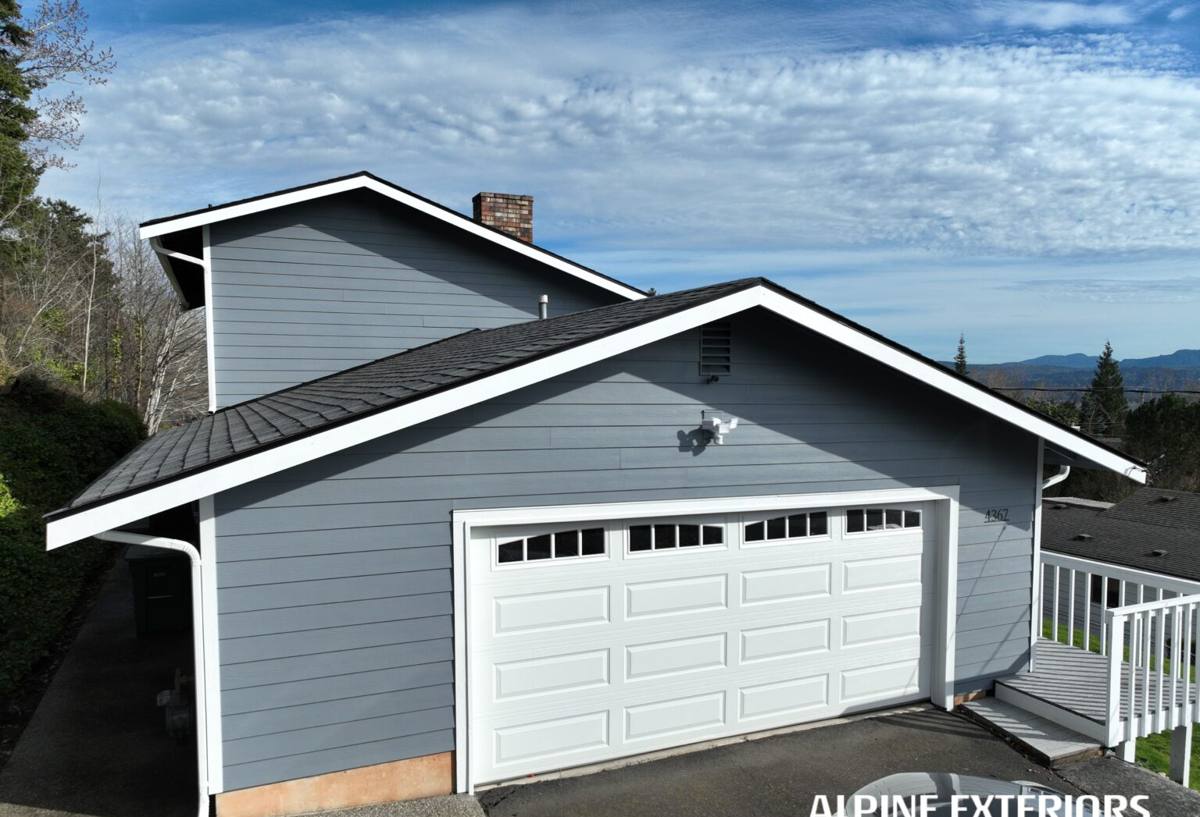
What Salt Air, Driving Rain, and Moss Actually Do to a Roof Over Time
Salt Air and Corrosion
Airborne salt doesn't need to be blowing off the ocean directly onto a roof to cause damage — it travels on humid air and settles on any exposed metal, especially fasteners, flashing, and cut edges. Over years, untreated or poorly coated metal components can corrode from the inside of a joint outward, long before it's visible from the ground. This is why fastener and flashing material matter as much as the panel itself.
Driving Rain and Wind-Driven Water
Rain that falls straight down is easy to shed. Rain that's being pushed sideways by wind behaves differently — it can work its way under lapped edges, around poorly sealed penetrations, and into any seam that wasn't detailed with wind-driven water in mind. A roof that sheds a normal storm can still leak during a wind event if the underlayment and flashing weren't built for lateral water movement.
Moss and Sustained Moisture
Shaded roof sections that stay damp for extended periods are where moss establishes itself. On roofing materials with any texture or seam it can grip, moss holds moisture against the surface, which accelerates deterioration and can lift edges or fasteners over time. Metal panels give moss far less to hold onto than shingles or shakes, but panel choice, slope, and drainage detailing still affect how much of a problem it becomes.
Metal Roofing Systems: What We Actually Install and Why
Not all metal roofing is the same product wearing different colors. The panel profile, seam type, and coating all affect how a roof performs against salt air, wind-driven rain, and moss specifically.
| System | Best Fit For | Key Trade-Off |
|---|---|---|
| Standing seam (concealed fastener) | Full roof replacements, homes wanting maximum weather resistance | Higher upfront cost, but no exposed fasteners to corrode or work loose over time |
| Exposed-fastener panel | Budget-conscious full replacements, outbuildings | Lower cost, but fasteners and washers need periodic inspection near salt-exposed areas |
| Stone-coated steel | Homeowners wanting a shingle or shake appearance with metal durability | More installation detail work around laps and fasteners |
For most Everson-area homes near Blaine, we lean toward standing seam or a well-detailed exposed-fastener system with marine-grade fasteners, specifically because concealed seams and corrosion-resistant hardware hold up better against sustained salt exposure than systems designed for a generic climate.
Coatings and Fasteners Matter More Here Than the Panel Color
Two roofs can use the same steel panel and perform completely differently based on the coating system and the fasteners used to hold it down. In a salt-air environment, we specify corrosion-resistant coatings and stainless or coated fasteners rated for coastal exposure — not because it's an upsell, but because standard fasteners are one of the first things to fail in this climate, and a roof is only as durable as its weakest fastener.
What a Correct Metal Roof Installation Involves
A metal roof is only as good as what's underneath it and how the details are handled. The panels themselves rarely fail — the underlayment, flashing, and fastening are where problems start.
- Tear-off and full inspection of the existing roof deck for rot, soft spots, or prior water damage
- Deck repair or replacement of any compromised sheathing before new material goes down
- Installation of a high-temperature, self-adhered underlayment in valleys and eaves where wind-driven rain and ice are most likely to intrude
- Synthetic underlayment across the full field for moisture protection beneath the panels
- Corrosion-resistant flashing at every penetration, valley, and roof-to-wall transition
- Panel installation with fastener spacing and type matched to wind exposure and salt-air corrosion resistance
- Proper closure strips and trim at ridges and eaves to block wind-driven rain and pests
- Final inspection of all seams, laps, and flashing details before cleanup
Skipping any one of these steps doesn't necessarily cause an immediate problem — it causes a slow one. Underlayment shortcuts and mismatched fasteners are the two most common causes of early metal roof failure we see, and both are invisible from the ground once the roof is finished.
Our Process, Start to Finish
1. On-Site Assessment
We walk the roof and the attic space where accessible, checking deck condition, ventilation, existing moss or moisture patterns, and how exposed the roof is to prevailing wind and salt air. This tells us which underlayment and fastening approach the roof actually needs, not a generic default.
2. Written Estimate
You get a clear, itemized estimate covering material, tear-off, deck repair contingencies, and labor — no vague allowances buried in the total.
3. Scheduling Around Weather
Given how much rain this area sees, we schedule tear-off and dry-in carefully so the deck isn't left exposed longer than necessary, and we sequence work to keep the home protected if weather shifts mid-project.
4. Installation
Deck repair, underlayment, flashing, and panel installation proceed in that order, with inspection at each stage rather than only at the end.
5. Final Walkthrough
We walk the finished roof and the site with you, confirm all details and cleanup, and answer any questions about maintenance going forward.
Metal Roofing vs. Other Materials for This Climate
Homeowners considering a re-roof in this area often compare metal against asphalt shingle or cedar shake. Each has trade-offs worth understanding honestly.
| Factor | Metal Roofing | Asphalt Shingle | Cedar Shake |
|---|---|---|---|
| Moss resistance | High — little surface for moss to grip | Moderate — granules and laps give moss a foothold | Low — wood texture retains moisture and moss readily |
| Wind-driven rain resistance | High with proper seam and underlayment detail | Moderate — dependent on shingle seal and underlayment | Moderate — dependent on install quality and maintenance |
| Salt-air durability | High with correct coatings and fasteners | Moderate — granule loss can accelerate near salt exposure | Moderate to low — wood degrades faster under sustained moisture |
| Typical lifespan | 40–70 years | 15–25 years | 20–30 years with regular maintenance |
| Upfront cost | Highest | Lowest | Mid-to-high |
Metal costs more upfront. The trade-off is a roof that's better matched to what this climate does to a home year after year, with less recurring maintenance than shake and less vulnerability to moss than shingle. We won't tell you metal is the right call for every budget — it isn't — but for this specific climate, it's the material we recommend most often when the budget allows for it.
Maintenance: What Actually Needs Attention on a Metal Roof Here
Metal roofing is low-maintenance, not no-maintenance. In this climate, a short annual check catches most issues before they become expensive.
- Clear debris from valleys and gutters, especially after fall storms — trapped organic material holds moisture against the panel
- Check shaded, north-facing sections for early moss growth and remove it before it spreads
- Look at exposed fasteners (if applicable) for signs of corrosion or backing out
- Inspect flashing around chimneys, vents, and skylights for sealant wear
- Confirm attic ventilation is clear — poor ventilation traps moisture that can affect the underside of the deck over time
None of this requires special equipment or a full inspection contract — it's the kind of maintenance a homeowner can do a visual check for themselves, and call us if something looks off.
Why a Crew That Already Works This Area Matters
Roofing details that work in a dry, inland climate don't automatically translate to a coastal-influenced area of Whatcom County. A crew that regularly works Everson and the surrounding Blaine area already knows which roof orientations tend to hold moss longest, how far wind-driven rain typically travels up under an eave in a storm, and which fastener and flashing choices actually hold up against sustained salt exposure rather than just meeting a generic manufacturer spec. That's the difference between a roof that's technically installed correctly and one that's installed correctly for where it actually sits.
It also means faster response if something does come up after installation — a crew already working in the area isn't scheduling a special trip from somewhere else to take a look.
Get a Straight Answer on Your Roof
If you're weighing a metal roof for a home in the Everson area near Blaine, we're glad to come take a look, walk the roof, and give you a straightforward estimate with no pressure attached. Use the form below to request a free assessment.