 Blaine Siding
 Storm Roofs in Everson Take a Different Kind of Beating
Homes around Everson sit inland from the Strait of Georgia but still catch the same weather systems that roll through Whatcom County off the water — driving rain that comes in sideways during winter storms, gusty wind events that lift shingles and shove debris across roof planes, and a long, damp moss season that never really gives a roof time to fully dry out. None of these on their own is dramatic. Together, over years, they wear at fasteners, flashing, and shingle edges in ways that a homeowner in a drier climate rarely has to think about.
Storm damage repair here isn't just "patch the hole and move on." A correct repair has to account for what caused the damage and what the roof is going to face again next winter — because it will.
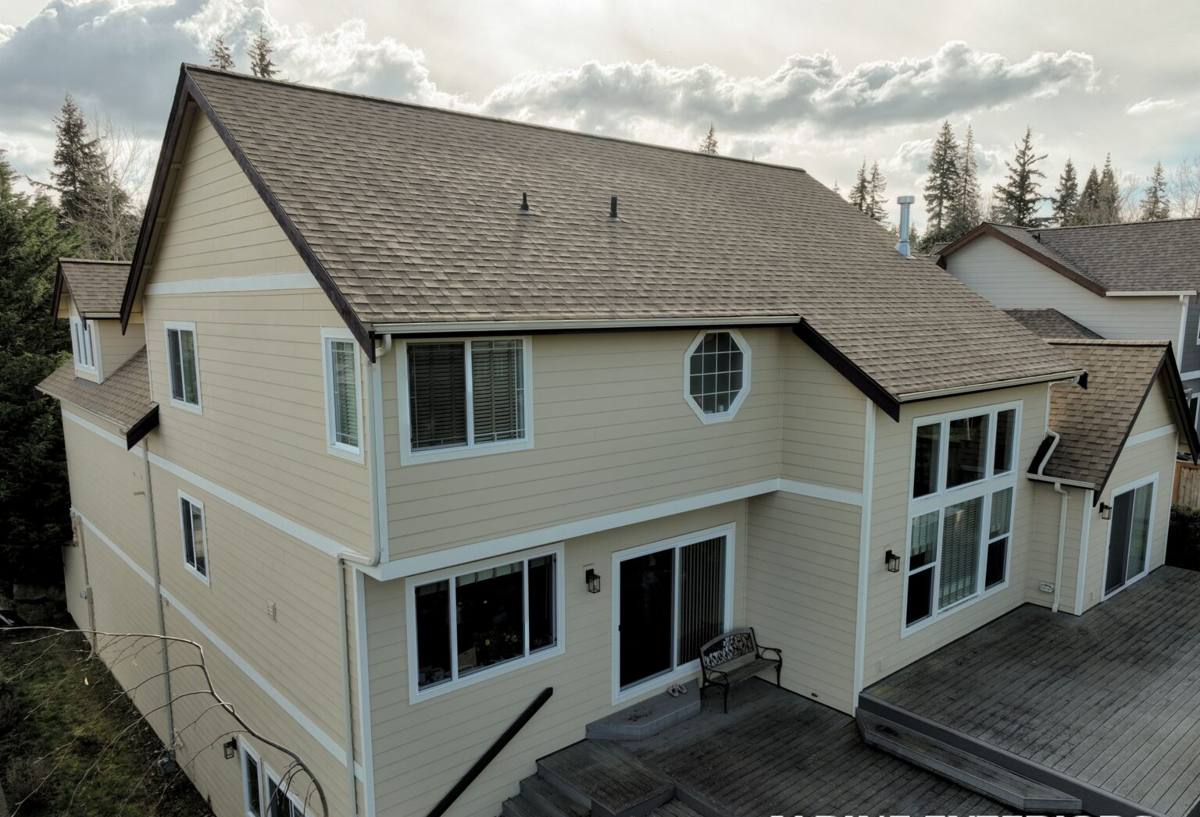
What Storm Damage Actually Looks Like on an Everson Roof
Not all storm damage is obvious from the ground. Some of the most costly problems start small and get worse quietly under a layer of moss or behind a flashing seam that's just barely open. Common patterns we see after wind and rain events in this area include:
- Shingles lifted, cracked, or torn loose at ridges and edges where wind uplift is strongest
- Flashing pulled away from chimneys, skylights, or wall-to-roof transitions after repeated wind loading
- Granule loss on asphalt shingles from wind-driven rain, leaving bald spots that age faster
- Fascia and roof-edge trim damage from branches or debris carried by gusts
- Soft spots or discoloration on interior ceilings that show up days or weeks after the storm, once water has had time to track through the deck
- Moss buildup at valleys and low-slope sections that holds moisture against the roofing material long after the storm has passed
The gap between "storm happened" and "leak shows up inside" is the dangerous part. Water doesn't always drip straight down from where it enters — it can travel along the deck or rafters and show up several feet away, which is why a proper inspection matters more than a quick look from the driveway.
Our Storm Damage Roof Repair Process
1. Inspection, Not Guesswork
We walk the roof (weather permitting) and check attic space where accessible, looking at the actual deck and framing for staining, softness, or daylight coming through — not just the shingle surface. Wind and rain damage is often worse underneath than it looks from above.
2. Documentation
We photograph and note what we find, in a form that's usable for an insurance claim if you're pursuing one. This includes close-up shots of damaged sections, flashing conditions, and any interior water evidence.
3. Straight Talk on Scope
We tell you plainly whether this is a repair, a partial re-roof of one section, or something that's genuinely reached the point of full replacement. We don't pad a small repair into a bigger job, and we don't recommend a patch on a roof that's past the point where patches hold.
4. The Repair Itself
Matching shingle repairs are done with attention to how the surrounding roof has weathered, proper nailing patterns for wind resistance, and flashing details sealed correctly rather than just caulked over — caulk is a stopgap, not a fix, on any flashing joint that's supposed to shed water long-term.
5. Follow-Up Check
After a repair, especially one done between storm systems, we recommend a follow-up look once the roof has been through another weather cycle, to confirm the fix is holding under real conditions rather than just in dry weather.
What a Correct Repair Actually Involves
A repair that's done right addresses the cause, not just the visible symptom. That usually means:
- Deck condition — if the sheathing underneath has absorbed water and gone soft, replacing shingles over it just hides a problem that will resurface.
- Fastener pattern — shingles that lifted once in a wind event are often under-nailed or nailed with the wrong pattern for the roof's exposure; a repair should correct that, not just re-nail the same way.
- Flashing integrity — step flashing, valley flashing, and chimney/skylight flashing are where most "mystery leaks" originate. These need to be reset or replaced properly, not just resealed.
- Matching materials — shingles fade and weather over time, so a patch using new material next to older, weathered shingles won't always blend, but it should still tie in correctly at seams and overlaps so it performs like the rest of the roof.
Repair vs. Replace: How We Help You Decide
This is the question every homeowner with storm damage eventually asks, and the honest answer depends on more than just the size of the visible damage.
| Factor | Leans Toward Repair | Leans Toward Replacement |
|---|---|---|
| Extent of damage | Localized to one section or slope | Multiple sections, or damage scattered across the roof |
| Roof age | Under roughly 10-12 years, still has useful life | Nearing or past typical shingle lifespan for this climate |
| Deck condition | Solid, dry sheathing under the damaged area | Soft or water-stained decking found during inspection |
| Moss/algae history | Minor, surface-level growth | Long-term moss that's degraded shingle granules broadly |
| Prior repairs | First real repair needed | Roof already has multiple past patch jobs |
We'll walk you through where your roof lands on this before recommending anything — there's no reason to replace a roof that just needs a section repaired, and no reason to keep patching one that's telling you it's done.
Moss, Debris, and the Long Whatcom County Wet Season
Storm damage repair and moss control are connected more than most homeowners realize. A roof that's already carrying moss holds moisture longer after a storm, which slows drying and increases the odds that wind-driven rain finds its way through a marginal spot in the flashing or shingle edge. Clearing moss and keeping valleys and gutters free of debris isn't cosmetic — it's part of keeping the roof's actual water-shedding system working the way it's designed to.
If your roof has heavy moss buildup, we'll flag it as part of the storm repair visit, since treating it at the same time is more efficient than a separate trip, and it reduces the chance of the same trouble spot causing problems again next season.
Repair Materials: What Holds Up Here
Not every repair material behaves the same way under Whatcom County's wet, salt-influenced coastal air. Here's how the common options compare for storm-damage patch work specifically:
| Material | Behavior in this climate | Best use case |
|---|---|---|
| Matching asphalt shingle | Reliable, cost-effective, widely available in matching profiles | Localized storm damage on an otherwise sound asphalt roof |
| Metal flashing (step, valley, drip edge) | Holds up well to moisture if properly sealed; corrosion risk if the wrong metal type is used near salt air | Any repair touching flashing joints, chimneys, or valleys |
| Sealants/caulk | Short-term only; breaks down under UV and repeated wet/dry cycling | Never as a standalone flashing fix — only as a secondary seal |
We stand behind proper mechanical flashing repair over sealant-only fixes as our standard practice, because a sealed joint that isn't also physically shedding water correctly tends to fail again within a season or two in this kind of weather.
Insurance and Documentation
Wind and storm damage is often covered under standard homeowner's policies, but claims move faster and more smoothly with clear documentation taken close to the event. If you suspect storm damage, it's worth having it inspected sooner rather than later — both because active leaks get worse with each additional rain, and because adjusters generally respond better to damage that's clearly tied to a specific, datable storm event rather than damage that's been sitting for months.
Why a Crew That Already Works Everson Matters
Storm repair work benefits from local familiarity in a few concrete ways. We know what typical roof ages and construction look like on homes in this area, which speeds up an accurate assessment. We know how moss and wind exposure tend to concentrate on certain roof orientations given the local terrain and prevailing weather patterns. And because we're already working in and around Blaine and the surrounding Whatcom County communities, we can usually respond faster after a storm event than a crew traveling in from farther away — which matters when there's active water getting into a home.
Quick Post-Storm Inspection Checklist
- Check the attic (if accessible) for new staining, damp insulation, or daylight through the deck
- Look at ceilings and upper walls inside for new discoloration or soft spots
- From the ground, scan roof edges and ridges for shingles that look lifted, torn, or missing
- Check gutters and downspouts for shingle granules, which can indicate accelerated wear
- Note any visible flashing that looks bent, separated, or displaced around chimneys and vents
- Photograph anything that looks off, with a date, before calling for an inspection
Get an Honest Look at Your Roof
If a recent storm has you wondering whether your roof needs attention, or you've noticed a leak and aren't sure how bad it is underneath, we're happy to take a look. We'll give you a clear, honest read on what's actually going on and what it will take to fix it right — no pressure, no upsell. Reach out for a free estimate using the form below.