 Blaine Siding
 Roof Repair Built for Everson's Weather
Homes in and around Everson sit in a stretch of Whatcom County that gets hit from two directions: salt-laden air rolling in off the water near Blaine, and the steady, driving rain that settles over this part of Washington for much of the year. Add a moss season that can run from early fall through late spring, and a roof here is working harder than a roof almost anywhere else in the state. Roof repair in this area isn't just about patching a leak — it's about understanding how moisture, wind-driven rain, and organic growth interact with your specific roofing system over time.
We work on roofs throughout the Blaine and Everson area regularly, which means we're not guessing at how local conditions affect shingles, flashing, and underlayment. We're seeing the same failure patterns repeat on similar homes, and that experience shapes how we diagnose and repair every roof we touch.
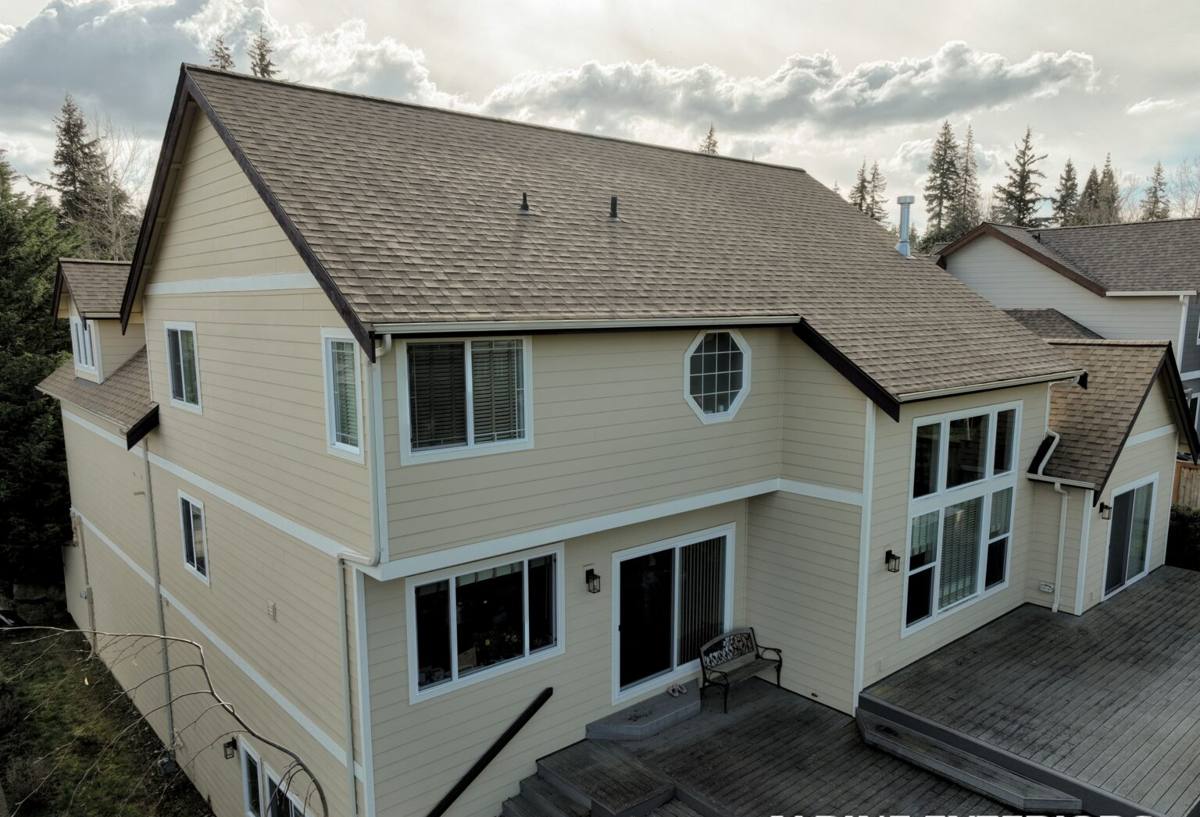
Why Everson Roofs Fail Differently
A roof leak in a dry inland climate usually traces back to age or storm damage. Here, the causes are often slower and less obvious.
Moss and Organic Growth
Moss doesn't just sit on top of a roof — it holds moisture against the surface long after rain has stopped, and its root structure works into shingle granules and seams. Over months and years, that constant dampness breaks down asphalt shingles faster than sun exposure alone would, and on wood or older composite roofing it can accelerate rot at the deck level. Moss growing thick along ridge lines and in shaded north-facing sections is one of the most common reasons we get called out for a "small leak" that turns out to be a larger moisture problem underneath.
Salt Air and Metal Fatigue
Proximity to salt air speeds up corrosion on exposed metal — flashing, vent boots, nail heads, and gutter hardware. Corroded flashing is one of the single biggest causes of roof leaks we find on repair calls, because it's often invisible from the ground and only shows up as a stain on a ceiling or a damp spot in the attic.
Driving Rain and Wind-Driven Moisture
Rain that comes in at an angle, pushed by wind off open fields and water, finds its way into gaps that a straight-down rain never would. Roof valleys, chimney flashing, skylight curbs, and the transitions where a roof meets a wall are all vulnerable spots where wind-driven rain can work its way underneath roofing material even when the shingles themselves look fine.
What a Correct Roof Repair Actually Involves
A proper repair starts with figuring out the real source of the problem, not just patching where the water is showing up inside the house. Water often travels along rafters or sheathing before it drips somewhere visible, so the stain on your ceiling can be several feet from the actual entry point.
- Full roof inspection, including attic and underside of decking where accessible, to trace the water path
- Assessment of moss coverage and any granule loss or shingle degradation it has caused
- Close inspection of all flashing — chimney, valley, sidewall, and vent boot — for corrosion, gaps, or failed sealant
- Check of underlayment condition in the affected area once shingles are pulled back
- Evaluation of ventilation, since poor attic airflow traps moisture and worsens both mold risk and moss growth from the underside up
- Repair or replacement of only the damaged material, with proper shingle, flashing, and underlayment integration — not just sealant smeared over the visible gap
That last point matters. A repair that's just a bead of roofing cement over a crack might stop water for one season, but it doesn't address why the failure happened, and it often traps moisture rather than shedding it. We repair roofs the way we'd want one repaired on our own house — matched materials, proper flashing technique, and enough follow-through to confirm the fix holds.
Common Repair Types We See in This Area
| Issue | Typical Cause Locally | What the Repair Involves |
|---|---|---|
| Leak at chimney or wall flashing | Corroded or improperly lapped flashing, salt air degradation | Remove and replace flashing with correct step/counter-flashing technique |
| Shingle granule loss and curling | Prolonged moss coverage holding moisture against shingles | Moss removal, damaged shingle replacement, treatment to slow regrowth |
| Valley leaks | Wind-driven rain forced under improperly lapped valley material | Re-flash valley, install proper underlayment, re-shingle with correct overlap |
| Soft or spongy decking | Long-term moisture intrusion through a hidden gap | Cut out and replace affected sheathing before re-roofing that section |
| Vent boot cracking | Rubber boot material breaking down from age and weather cycling | Replace boot with a durable, weather-appropriate seal |
Moss Removal and Prevention
Because moss is such a persistent issue for roofs in this part of Whatcom County, we treat it as part of the repair process rather than an afterthought. Removing moss the wrong way — scraping aggressively or pressure-washing — can strip granules and do more damage than the moss itself. We remove growth carefully, clear debris from valleys and gutters where moss loves to establish, and where appropriate, discuss zinc or copper strip installation along the ridge, which lets rainwater carry trace metal down the roof slope to discourage regrowth. It's not a permanent fix on its own, but paired with clear valleys and good airflow, it meaningfully extends the time between moss treatments.
Our Repair Process
1. Inspection and Honest Assessment
We start by looking at the whole roof, not just the spot you're worried about. If there's one flashing failure, there's a good chance similar flashing elsewhere on the roof is at a similar stage of wear. We'll tell you what needs attention now versus what to keep an eye on.
2. Clear Explanation Before Any Work
You'll know what we found, why it's happening, and what the repair involves before we start. If a "repair" isn't the right call — because the roof is old enough that a patch would just be a temporary fix — we'll say so plainly rather than doing unnecessary work.
3. The Repair Itself
We use materials matched to your existing roof where possible, proper flashing techniques rather than sealant shortcuts, and take the time to integrate new material correctly with what's already there so water sheds the way it's supposed to.
4. Cleanup and Follow-Through
We clear debris, remove old material, and leave the site the way we found it. If you have questions after the fact about how the repair is holding up through the next rainy season, we're reachable.
When Repair Makes Sense vs. When It Doesn't
Not every roof problem should be a full replacement, and not every leak can be responsibly patched. A homeowner in Everson dealing with an aging roof deserves a straight answer about which category their roof falls into.
- Repair usually makes sense when: the roofing material is still within its useful life, the damage is localized to flashing, a section of shingles, or a single leak point, and the underlying decking is sound
- Replacement should be considered when: multiple areas show separate, unrelated failures, the shingles are broadly past their expected lifespan, or moisture has caused widespread decking damage rather than a single isolated spot
We'll always give you our honest read on which situation you're in. A repair on a roof that's fundamentally at the end of its life is a short-term fix that costs money without solving the underlying problem.
What Roof Repair Typically Costs
Costs vary based on the type of damage, roof pitch and accessibility, and how much material needs replacing. Broadly speaking, a straightforward flashing repair or small shingle section replacement tends to be a modest cost, while repairs involving decking replacement or extensive moss and multiple flashing points cost more due to the added labor and material. We'll always provide a clear, itemized estimate before any work begins so there are no surprises.
Why Local Experience Matters
A roofing crew that only occasionally works in Whatcom County might treat every repair the same way they would in a drier climate. A crew that regularly works roofs near Blaine and Everson knows to check flashing for salt-driven corrosion as a matter of course, knows which roof orientations collect moss fastest given the region's weather patterns, and knows how wind-driven rain typically finds its way into valleys and wall transitions in this area. That local pattern recognition often means catching a developing problem before it becomes a bigger repair — or an interior one.
Simple Maintenance Between Repairs
A few habits can meaningfully extend the time between repair calls for homes in this climate.
- Keep gutters and valleys clear of leaves and debris, especially heading into fall rains
- Have moss addressed before it spreads across a full slope, not after
- Check attic ventilation periodically — trapped moisture from below is as damaging as rain from above
- Have flashing points checked every couple of years given the corrosive effect of salt air in this area
- Address small leaks promptly rather than waiting for them to become larger repairs
Get an Honest Look at Your Roof
If you're dealing with a leak, visible moss buildup, or just want a second opinion on a roof that's showing its age, we're happy to take a look. We'll give you a straightforward assessment and a clear estimate — no pressure, no upsell, just what your roof actually needs. Fill out the form below to schedule a free estimate.