 Blaine Siding
 Why Everson Homes Put Extra Demands on a Window
Everson sits in the part of Whatcom County where marine air off the Salish Sea meets the Nooksack River valley. That combination means long stretches of damp, overcast weather, wind-driven rain that doesn't just fall straight down, and a moss and mildew season that can run most of the year on shaded or north-facing walls. Windows here aren't just about keeping heat in during the winter — they're the first line of defense against moisture that's constantly looking for a way into the wall cavity around the frame.
Older single-pane and early-generation double-pane windows in this area tend to fail in predictable ways: fogged glass from a broken seal, soft or discolored trim from slow water intrusion, and drafts that get worse every year as vinyl frames shrink and gaskets harden. None of that is unique to any one house — it's what this climate does to a window over fifteen or twenty years, and it's why a straightforward glass-and-frame swap done without attention to flashing and sealing rarely holds up here.
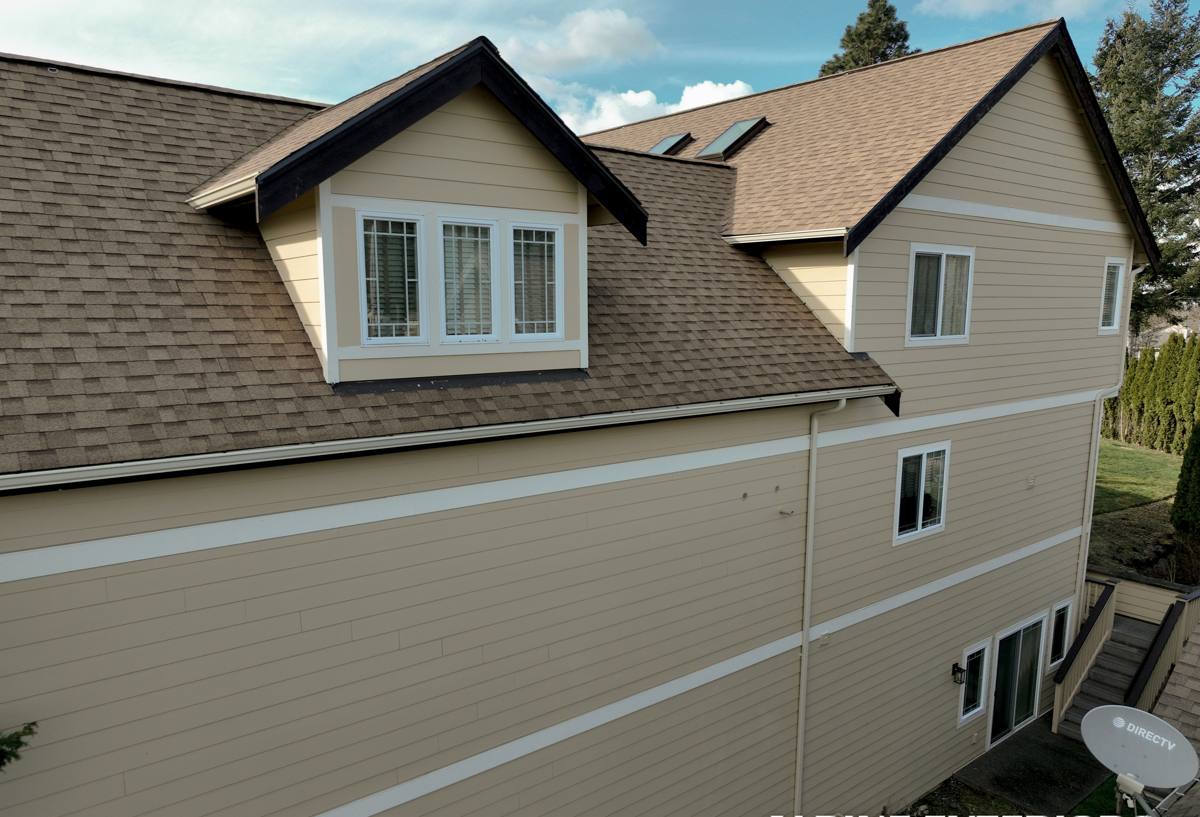
What "Energy-Efficient" Actually Means
The term gets used loosely, so it's worth being specific about what actually affects comfort and your heating bill in a house in this climate.
- U-factor — measures how much heat escapes through the window. Lower is better; this is the number that matters most for a heating-dominated climate like ours.
- Solar Heat Gain Coefficient (SHGC) — how much solar heat passes through the glass. Less critical here than in sunnier climates, but still worth matching to sun exposure on south- and west-facing walls.
- Air infiltration rating — how much air leaks around the sash when it's closed. This is where a lot of "energy-efficient" windows quietly underperform if the installation isn't sealed correctly, regardless of the glass package.
- Glass package — double-pane with low-E coating and argon fill is the practical standard for this region; triple-pane adds cost with diminishing returns unless the home has unusual noise or exposure issues.
A window with excellent factory ratings can still perform poorly if it's installed with gaps in the sealant, no back-dam flashing, or insulation stuffed in around the frame instead of properly sealed. In this climate, the installation determines as much of the real-world performance as the window itself.
Problems We See Most Often in This Area
Moisture Intrusion Around the Frame
Driving rain that hits a wall at an angle finds any gap in the flashing or sealant and works its way behind the trim. Over time this shows up as soft wood, peeling paint, or dark staining at the sill — often long before the glass itself shows any sign of failure.
Seal Failure and Fogging
Constant humidity swings between wet winters and warmer summer days stress the gas seal between panes faster than in drier climates. A fogged or cloudy pane means the seal is gone and the insulating gas has escaped — that unit needs replacing, not just cleaning.
Moss and Organic Growth
Shaded elevations and anything under an overhang or tree canopy can develop moss or mildew on frames and sills, especially wood or lower-grade vinyl. This is mostly cosmetic on the window itself, but it's a sign of standing moisture that can also be affecting the siding and trim nearby.
Drafts and Rising Energy Bills
Aging weatherstripping and warped sashes let conditioned air out year-round. Homeowners usually notice this first as a cold spot near a window in winter, not as a line item on a utility bill — but it adds up.
What a Correct Installation Actually Involves
This is where most of the long-term performance difference comes from, and it's largely invisible once the trim is back on. The steps that matter:
- Remove the old unit and inspect the rough opening for hidden rot or prior water damage before anything new goes in.
- Install a sloped sill pan so any water that does get past the exterior seal drains back outside instead of pooling in the frame.
- Integrate flashing tape with the house wrap in the correct shingle-lap order — this is the detail that determines whether water sheds down and out or gets trapped behind the siding.
- Set the window plumb, level, and square, then shim and fasten per the manufacturer's spec — an out-of-square frame stresses the sash and shortens the life of the seals.
- Insulate the gap around the frame with a low-expansion foam or backer rod, never packed fiberglass, which does little to stop air movement.
- Seal the interior and exterior with the right sealant for the surface — and never seal the bottom of the exterior trim, which needs to stay open as a drainage path.
| Approach | What Happens Over Time |
|---|---|
| Correct flashing + sill pan + sealed frame | Water sheds outside the wall assembly; window and surrounding trim last through their expected service life |
| Glass/frame swap without addressing flashing | Looks fine for a year or two, then moisture finds the same old path and starts rotting the rough opening from the inside out |
| Sealant used as the only defense against water | Sealant is a maintenance item, not a system — it will eventually crack or shrink, and there's no backup drainage path behind it |
Choosing the Right Frame Material for This Climate
Frame material affects both energy performance and how the window holds up against constant damp weather.
| Material | Strengths in This Climate | Trade-offs |
|---|---|---|
| Vinyl | Won't rot, low maintenance, good insulating value, wide price range | Lower-end vinyl can warp or discolor with age; quality varies a lot between manufacturers |
| Fiberglass | Very stable in temperature and humidity swings, holds paint well, strong long-term durability | Higher upfront cost than vinyl |
| Wood or wood-clad | Traditional appearance, good insulator | Exterior wood is a real maintenance commitment in a climate this wet — we're upfront with homeowners about that before they commit to it |
| Aluminum | Durable frame, slim sightlines | Poor insulator on its own and prone to condensation unless thermally broken — not a fit for most Everson homes wanting energy savings |
For most Everson homes, a quality vinyl or fiberglass window with a double-pane low-E argon glass package hits the right balance of upfront cost, energy performance, and low maintenance in a wet climate. We'll walk through the actual options and trade-offs for your specific house rather than pushing one product line.
Our Process, Start to Finish
- On-site assessment — we look at each window's condition, the rough opening, existing flashing, and any signs of past water intrusion, not just the glass.
- Honest recommendation — full replacement where the frame or opening needs it, and a clear explanation if a repair or partial fix is genuinely the more sensible option for a given window.
- Written estimate — itemized by window, with the product, glass package, and installation scope spelled out so there are no surprises.
- Installation — old units removed, openings inspected and repaired as needed, new units installed with proper flashing, sill pans, and sealing as described above.
- Cleanup and walkthrough — every window operated and checked with you before we consider the job done.
What Affects the Cost
Every house and every window is different, so we don't quote a flat per-window number without seeing the job. Broadly, pricing for a quality vinyl or fiberglass energy-efficient window installed correctly tends to run somewhere in the low-to-mid four figures per opening, with variation driven by:
- Window size and whether it's a standard or custom shape
- Frame material and glass package selected
- Condition of the existing rough opening — hidden rot adds repair time before the new window can go in
- Number of windows done at once (per-unit cost typically drops on larger projects)
- Trim and interior finish work needed to match the existing house
- Access — second-story or hard-to-reach windows take more time and equipment
Why It Matters That We Already Work in Everson
A crew that's worked windows throughout Whatcom County knows what a given elevation, roofline, and exposure typically means for water and moisture behavior before they even start the estimate. That's not something you get from a national installer working off a generic template — it's the difference between a window that's sealed to spec on paper and one that's actually detailed for how rain moves across this specific kind of house in this specific climate. We show up knowing what to check for, and we don't treat flashing and drainage as optional extras.
Keeping New Windows Performing for the Long Haul
Energy-efficient windows installed correctly need very little upkeep, but a few habits extend their life in a climate like this:
- Clear debris and leaves from sills and tracks so water doesn't sit against the frame
- Rinse pollen, salt-tinged air residue, and grime off frames a couple times a year — buildup can trap moisture against the surface
- Check exterior caulking annually where trim meets siding, and have any cracked sealant redone before it becomes a leak path
- Keep an eye on shaded or north-facing units for early moss growth, and clean it off before it spreads to the surrounding trim
If your windows are drafty, fogged, or just past their useful life, we're happy to take a look and give you a straightforward, no-pressure estimate — no obligation, and no pressure to replace anything that doesn't need it. Use the form below to get started.