 Blaine Siding
 Window Installation Built for Everson's Climate
Everson sits in the Nooksack River valley in Whatcom County, close enough to the Salish Sea that homes here deal with the same marine-influenced weather that shapes the rest of the region: long wet winters, driving rain that comes in sideways during a southwesterly blow, and a moss season that can stretch from October well into spring. Windows take more abuse from this climate than almost any other part of a house, because every seam, joint, and piece of trim around a window opening is a place water can find its way in if the installation isn't done right.
A window that looks fine from the curb can still be failing where it counts — behind the trim, in the framing, under the sill. We've replaced enough windows in homes around this area to know that the failures we see almost never come from a bad window unit. They come from a window that was installed without proper flashing, without a sloped sill, or without attention to how water actually moves down a wall in a place that gets this much rain.
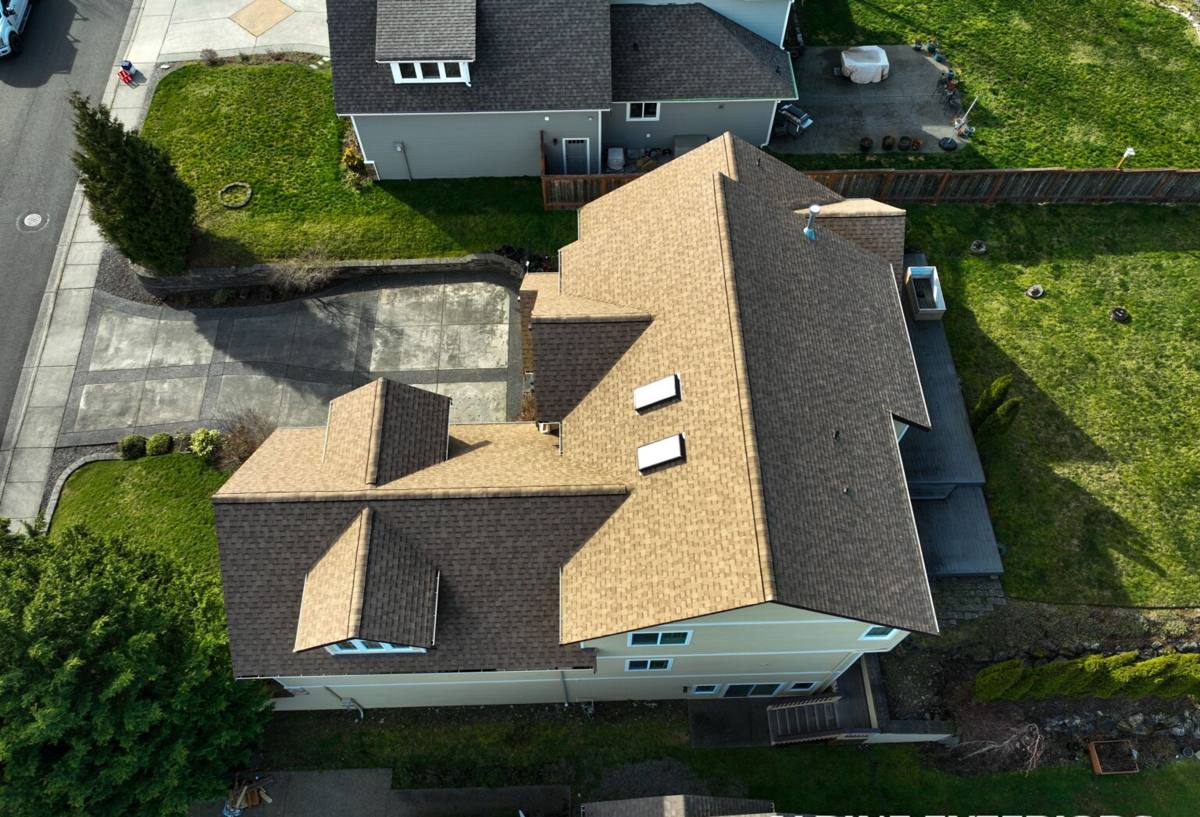
What Constant Moisture Does to Windows and the Framing Around Them
Driving Rain and Wind-Driven Water
Whatcom County storms don't just drop rain straight down — wind pushes it sideways and up under trim, siding laps, and window flanges. If a window was installed without a proper drainage plane and flashing sequence, that wind-driven water gets behind the window frame and into the wall cavity, where it can sit for months without anyone noticing until there's visible rot, a soft spot in the drywall, or a musty smell in the room.
Moss, Algae, and Trapped Moisture
The same damp, shaded conditions that grow moss on a roof or north-facing siding also let algae and mildew take hold on window sills, tracks, and exterior trim. On older wood-framed windows, that constant dampness is what eventually causes the wood to swell, stick, and rot at the corners — usually starting at the bottom corners of the sill, where water naturally collects.
Salt-Tinged Marine Air
Whatcom County's proximity to Puget Sound and the Strait of Georgia means the air carries a mild salt content even well inland, and that accelerates corrosion on hardware, screens, and metal window components over the years. It's a slower factor than rain or moss, but it's part of why we pay attention to the quality of hardware and weatherstripping, not just the glass, when we spec windows for homes in this area.
What a Correct Window Installation Actually Involves
Window installation looks simple from the outside — pull the old one, drop in the new one, caulk around the edges. Done that way, it's also one of the most common sources of water damage in homes throughout this region. A correct installation follows a specific sequence, and skipping steps is exactly what causes the leaks and rot we get called out to fix years later.
Sill Pan and Flashing
Before a new window ever goes into the opening, the rough opening needs a sloped sill pan so that any water that does get past the window has somewhere to go — out, not into the wall. Flashing tape goes around the jambs and head in a specific shingle-style order (sides first, then head) so water is always directed downward and outward, never trapped behind a layer above it.
Weather-Resistive Barrier Integration
The window flange has to tie into the house's weather-resistive barrier (the building wrap) correctly, with the barrier overlapping the flashing at the top and the flashing overlapping the barrier at the sides and bottom. Get this order backward and you've built a shingle that sheds water into the wall instead of away from it.
Air Sealing and Insulation
The gap between the window frame and the rough opening needs to be sealed with a low-expansion foam or backer rod and sealant — not stuffed with fiberglass insulation alone, which does nothing to stop air infiltration and can hold moisture against the frame.
Interior and Exterior Sealant
The final bead of sealant around the window trim, both inside and out, is what most homeowners see, but it's the last line of defense, not the first. A window that relies on caulk alone to keep water out will fail eventually — caulk shrinks, cracks, and needs maintenance, while proper flashing keeps working even after the caulk has aged.
Signs an Everson Home Needs New Windows
- Visible condensation or fogging between the panes of a double-pane window — this means the seal has failed and the insulating gas has escaped
- Windows that are difficult to open, close, or lock, especially on older wood or aluminum frames
- Soft, spongy, or discolored wood on the sill, jamb, or trim around a window
- Noticeable drafts near the window even when it's fully closed and latched
- Rising heating bills without a clear explanation elsewhere in the house
- Visible daylight or gaps around the frame from the interior
- Persistent moss, algae, or black staining on the exterior trim around the window
- Single-pane glass still in place on an older home that hasn't been updated
Choosing the Right Window Material for This Climate
Material choice matters more here than it does in drier parts of the state, because whatever you choose is going to spend most of the year wet, humid, or both. Here's how the common options compare for a home in this part of Whatcom County.
| Material | Moisture Performance | Maintenance | Typical Lifespan |
|---|---|---|---|
| Vinyl | Doesn't rot or corrode; handles constant moisture well | Low — occasional cleaning | 20-30+ years |
| Fiberglass | Very stable in wet/dry cycling, minimal expansion or contraction | Low | 30-40+ years |
| Wood (unclad) | Requires diligent upkeep to prevent rot in this climate | High — repainting, sealing | Varies widely with maintenance |
| Aluminum-clad wood | Good moisture protection on the exterior, warm wood interior | Moderate | 25-35+ years |
We don't install unclad wood windows as our default recommendation for homes in this area — not because wood windows are a bad product, but because a Whatcom County winter is unforgiving of any gap in the maintenance schedule. Vinyl, fiberglass, and clad-wood options all give you the moisture resistance this climate demands with a lot less upkeep, and that's a trade-off worth discussing honestly rather than glossing over.
Our Window Installation Process
- On-site assessment — we look at existing window condition, framing, and any signs of past water intrusion before recommending anything
- Product selection — we walk through material, glass, and style options based on your home, your budget, and how the window will hold up here specifically
- Precise measurement — every opening gets measured individually; older homes rarely have perfectly uniform openings
- Careful removal — old windows come out without unnecessary damage to surrounding siding or trim
- Sill pan and flashing installation — the sequence described above, done the same way on every window, every time
- Window installation and leveling — shimmed, squared, and fastened per manufacturer specs
- Air sealing and insulation — low-expansion foam or backer rod around the frame
- Interior and exterior trim and sealant — finished to match the surrounding siding and trim
- Final walkthrough — every window opens, closes, and locks the way it should before we consider the job done
Cost Factors for Window Replacement
We don't quote pricing without seeing the actual openings, but these are the factors that move the number up or down on most projects in this area.
| Factor | How It Affects Cost |
|---|---|
| Number of windows | More openings means more material and labor, though per-window cost usually drops slightly on larger jobs |
| Material | Vinyl is typically the most budget-friendly; fiberglass and clad-wood cost more upfront but last longer |
| Glass package | Double-pane vs. triple-pane, and any low-E or gas-fill upgrades, add cost but improve efficiency |
| Condition of the opening | Rot repair or reframing at an opening adds labor beyond a straightforward swap |
| Window size and style | Large picture windows, bays, or custom shapes cost more than standard double-hung or slider units |
| Trim and siding tie-in | Matching existing exterior trim or siding profiles can add finishing time |
Why Hire a Crew That Already Works in Everson
Window installation isn't a product you buy so much as a job that has to be done correctly on your specific house, in your specific climate. A crew that regularly works in Everson and the surrounding Whatcom County towns already knows how local building departments handle window permits, what kind of flashing sequence holds up against the wind-driven rain this area sees every winter, and how the region's damp, moss-prone conditions affect material choices over time. That's not something a crew unfamiliar with the area picks up on the first job — it comes from having already seen how houses here age.
It also matters for warranty support. If a window ever has an issue years down the road, a local crew that's still working in the area is far easier to get back out to your house than an installer who was only in town for one project.
Caring for New Windows After Installation
New windows installed correctly need very little upkeep, but a little seasonal attention goes a long way in this climate:
- Clear debris and moss buildup from window tracks and sills a couple of times a year, especially after fall leaf drop
- Check exterior caulking annually for cracking or gaps, particularly after a hard winter
- Keep gutters and downspouts clear so water isn't sheeting down across window openings
- Operate locks and hardware periodically even on windows you don't open often, to keep mechanisms from seizing
If you're dealing with drafty, foggy, or hard-to-operate windows in Everson, or you're planning ahead for a full replacement, we're happy to take a look and give you a straightforward, no-pressure estimate — just fill out the form below.