 Blaine Siding
 Why Blaine Harbor's Waterfront Setting Changes the Siding Equation
Homes near Blaine Harbor sit about as close to open saltwater as a house in Whatcom County gets. That waterfront position is the whole appeal of living there, but it also means the exterior of the house is working harder than a home ten miles inland. Salt-laden air moves off Drayton Harbor and Semiahmoo Bay and settles on every exposed surface, wind-driven rain comes in almost sideways during winter storms, and the deep shade and dampness that show up under mature trees and on north-facing walls keep moss and algae growing for most of the year. None of that is unique to one street or one block — it's the general condition of anything close to the water in this part of Blaine, and it's the reason siding choices and installation details that work fine in a drier inland town can fail early here.
This page is about one job in one place: installing siding correctly on a Blaine Harbor home, given what the local climate actually does to a wall over the years. It's not a general "why siding matters" page — it's what we've learned installing on waterfront and near-waterfront homes in this specific corner of Whatcom County.
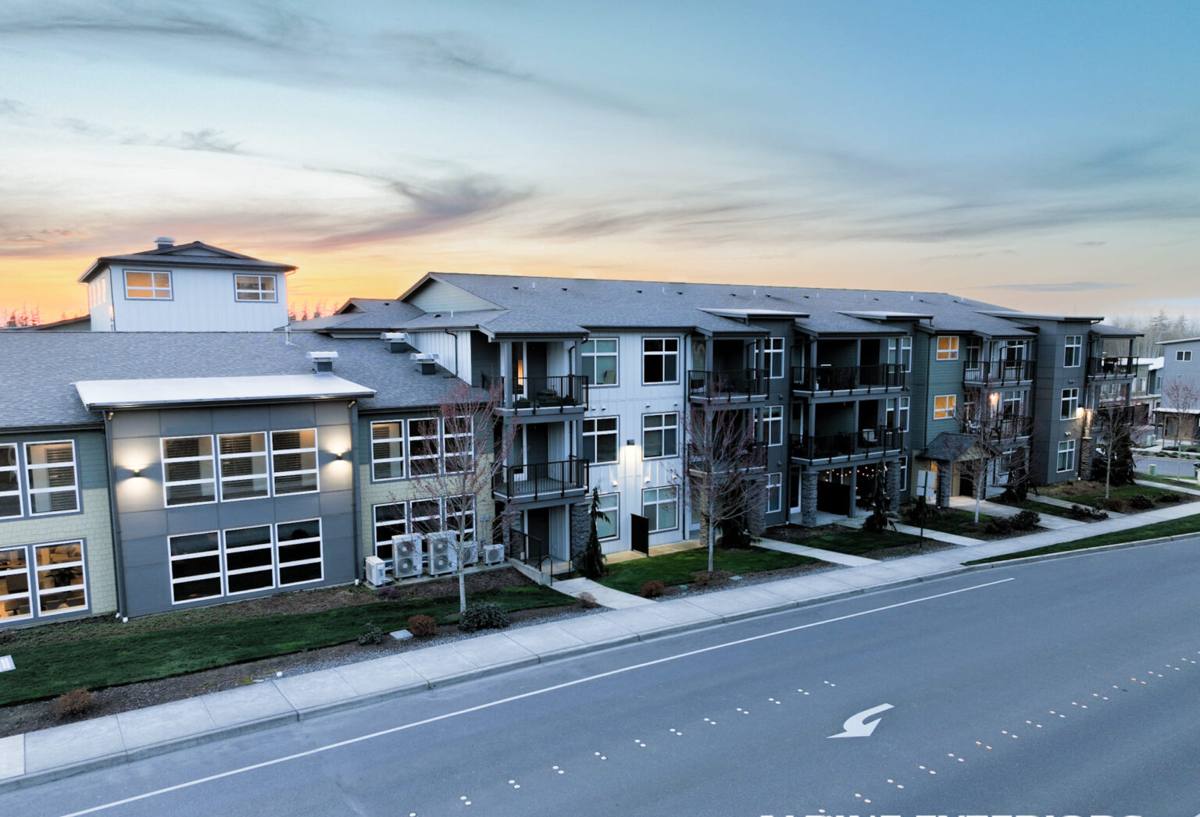
What Salt Air, Driving Rain, and a Long Moss Season Actually Do to Siding
Salt Air and Fasteners
Airborne salt doesn't just sit on the surface of the siding — it works its way into fastener heads, trim joints, and any spot where two materials meet. Over years, salt exposure accelerates corrosion in anything less than a properly rated fastener, and it degrades caulking and sealants faster than the same products would wear inland. A siding job that looks fine going up can start showing rust streaks and failed joints within a few winters if the wrong fasteners or sealants were used.
Wind-Driven Rain
Blaine Harbor's exposure means rain frequently arrives at an angle instead of falling straight down, especially during winter frontal systems off the Strait of Georgia. Wind-driven rain finds weaknesses that vertical rain never would — gaps at butt joints, under-lapped courses, poorly flashed windows and corners. A siding system that isn't installed with real attention to lap, flashing, and water management will eventually let moisture behind the cladding, and once water gets behind siding on a coastal wall, it doesn't dry out quickly.
Moss and Algae
Whatcom County's wet season runs long, and shaded, damp walls near the harbor stay damp longer than walls on a drier, more open lot. Moss and algae need moisture and organic material to take hold, and untreated or porous siding surfaces give them exactly that. Beyond the cosmetic green-black staining, moss holds moisture against the siding surface, which extends the amount of time the material stays wet after every rain event — a slow, compounding problem more than a dramatic one.
Why This Exposure Is Exactly Why We Only Install James Hardie Fiber Cement
We don't install every siding product on the market, and homes like the ones near Blaine Harbor are a big part of why. Fiber cement from James Hardie is engineered specifically to resist moisture-related failure — it doesn't rot, it isn't a food source for the fungi that drive rot, and it's non-combustible. Hardie's ColorPlus factory finish is baked on and warranted against peeling and cracking in ways that field-applied paint on wood-based products isn't, which matters directly in an environment where UV, salt, and moisture all work against a painted surface at once.
We specifically don't install products like LP SmartSide, vinyl siding, Cemplank, Allura, or primed spruce and cedar on Blaine Harbor homes. That's not because those products can't work somewhere — it's because, in our experience, none of them handle this specific combination of salt exposure, driving rain, and constant dampness as well as Hardie's fiber cement does over the long run. Engineered wood products carry moisture-related warranty exclusions that matter more here than inland. Vinyl expands and contracts with temperature swings and can become brittle over time, and its seams and fastening system give wind-driven rain more opportunities to find a way in. We'd rather install one product line we trust completely on every home than offer several and let a homeowner unknowingly pick the one that's a poor match for a harbor-facing wall.
Hardie Product Lines We Use Here
| Product | Typical Use | Why It Fits Blaine Harbor |
|---|---|---|
| HardiePlank lap siding, HZ10 formulation | Primary wall cladding | Engineered for wetter, colder climate zones; resists moisture-driven damage |
| HardiePanel vertical siding | Accent walls, gable ends | Clean modern look with the same fiber cement durability |
| HardieTrim boards | Corners, window and door trim, fascia | Matches the plank's moisture resistance at the most water-exposed transitions |
| ColorPlus factory finish | All exposed surfaces | Baked-on finish holds color and resists moss staining better than field paint |
What a Correct Installation Actually Involves
Buying the right product is only half the job — how it's installed is what determines whether it performs for the next 30-plus years or starts causing problems in five. On a Blaine Harbor home, we pay particular attention to:
- Water-resistive barrier and flashing: A continuous weather barrier behind the siding, with proper flashing at every window, door, and roofline intersection, so any moisture that does get past the cladding has somewhere to go besides the sheathing.
- Rainscreen gap: A ventilated gap between the siding and the wall assembly lets any trapped moisture drain and dry instead of sitting against the back of the board — especially valuable on shaded, harbor-facing walls that never get much direct sun to dry them out.
- Fastener selection: Corrosion-resistant, manufacturer-approved fasteners driven at the correct spacing and depth — not just "close enough" — because a fastener that starts to corrode near the coast becomes a leak point.
- Correct lap and clearance: Proper overlap between courses and correct clearance from grade, decks, and roof lines, which matters more where wind-driven rain is common and standing moisture at the base of a wall doesn't evaporate quickly.
- Caulking and sealant discipline: Sealing only where the manufacturer specifies, with a sealant rated for the exposure, since over-caulking can trap moisture just as easily as under-caulking can let it in.
Our Process on a Blaine Harbor Job
- On-site assessment: We look at wall orientation relative to the water, existing moisture or moss damage, trim and window condition, and any areas where past work has already failed.
- Tear-off and sheathing check: Old siding comes off and we inspect the sheathing underneath for rot or hidden damage before anything new goes up — this step matters more here than inland, since water intrusion tends to go unnoticed longer behind older siding on a shaded, coastal wall.
- Weather barrier and flashing install: A continuous, correctly lapped water-resistive barrier and flashing package goes on before a single piece of siding.
- Rainscreen and fastening: We install the ventilated gap system, then hang HardiePlank, HardiePanel, or HardieTrim per James Hardie's published specifications for this climate zone.
- Finish and detail work: Trim, corners, and any exposed cuts are sealed and finished according to Hardie's fastening and sealant guidelines.
- Final walkthrough: We go over the finished job with the homeowner, including basic care notes specific to a harbor-facing exterior.
Signs Your Current Siding Is Already Losing the Fight
- Persistent green or black staining that returns quickly after cleaning
- Soft or spongy spots when you press on the siding, especially near the bottom courses
- Visible rust streaks running down from nail heads or trim fasteners
- Paint that's peeling, bubbling, or chalking faster than it should
- Gaps opening up at butt joints, corners, or around window and door trim
- A musty smell or visible staining on interior walls that share an exterior with a shaded, harbor-facing side of the house
Cost Factors Specific to a Blaine Harbor Project
Every home is different, but a few factors come up consistently on jobs near the harbor:
| Factor | Why It Affects Cost |
|---|---|
| Extent of hidden moisture damage | Sheathing repair or replacement found during tear-off adds material and labor beyond the siding itself |
| Wall exposure and access | Waterfront lots can have tighter access, steeper grades, or scaffolding needs on harbor-facing elevations |
| Trim and detail complexity | Homes with more corners, window trim, and roofline transitions require more flashing and cut work |
| Product line and finish | HardiePanel accents or premium ColorPlus finishes cost more than a straightforward lap siding job |
| Rainscreen system inclusion | Adding a ventilated rainscreen gap is additional labor but pays off directly in this climate |
We give straightforward, itemized estimates rather than broad guesses, because the moisture condition behind the existing siding is usually the biggest unknown until tear-off starts.
Why Hiring a Crew That Already Works Blaine Harbor Matters
A siding crew that mostly works drier, inland neighborhoods can install a technically fine product and still get the details wrong for a harbor-facing wall — because those details (rainscreen gaps, fastener corrosion resistance, flashing at wind-driven rain angles) matter more here than they do twenty minutes inland. A crew that's done multiple jobs specifically in this stretch of Whatcom County already knows which walls take the worst of the weather, what tends to hide behind older siding near the water, and which installation shortcuts simply don't hold up in this exposure. That local pattern recognition is hard to substitute with a spec sheet alone.
If you're weighing a siding replacement on a Blaine Harbor home, we're happy to walk the exterior with you, point out what we see, and put together a straightforward, no-pressure estimate using the form below.