 Blaine Siding
 Why Blaine Harbor Decks Wear Out Faster Than Most
A deck in Blaine Harbor lives a harder life than one a few miles inland. The homes closest to the water take on a steady dose of salt-laden air off the harbor, and that air doesn't just sit on the surface of your deck boards — it works its way into every fastener, hinge, and piece of metal hardware holding the structure together. Add Whatcom County's long stretch of driving rain and the moss season that follows it, and you've got three separate forces all attacking the same structure at once: salt corrosion, moisture intrusion, and organic growth that traps both.
None of this means a deck in Blaine Harbor is doomed to fail early. It means the deck has to be built and repaired with that exposure in mind from the start — different fasteners, different flashing details, and a maintenance rhythm that assumes moss and standing water are going to show up whether you want them to or not.
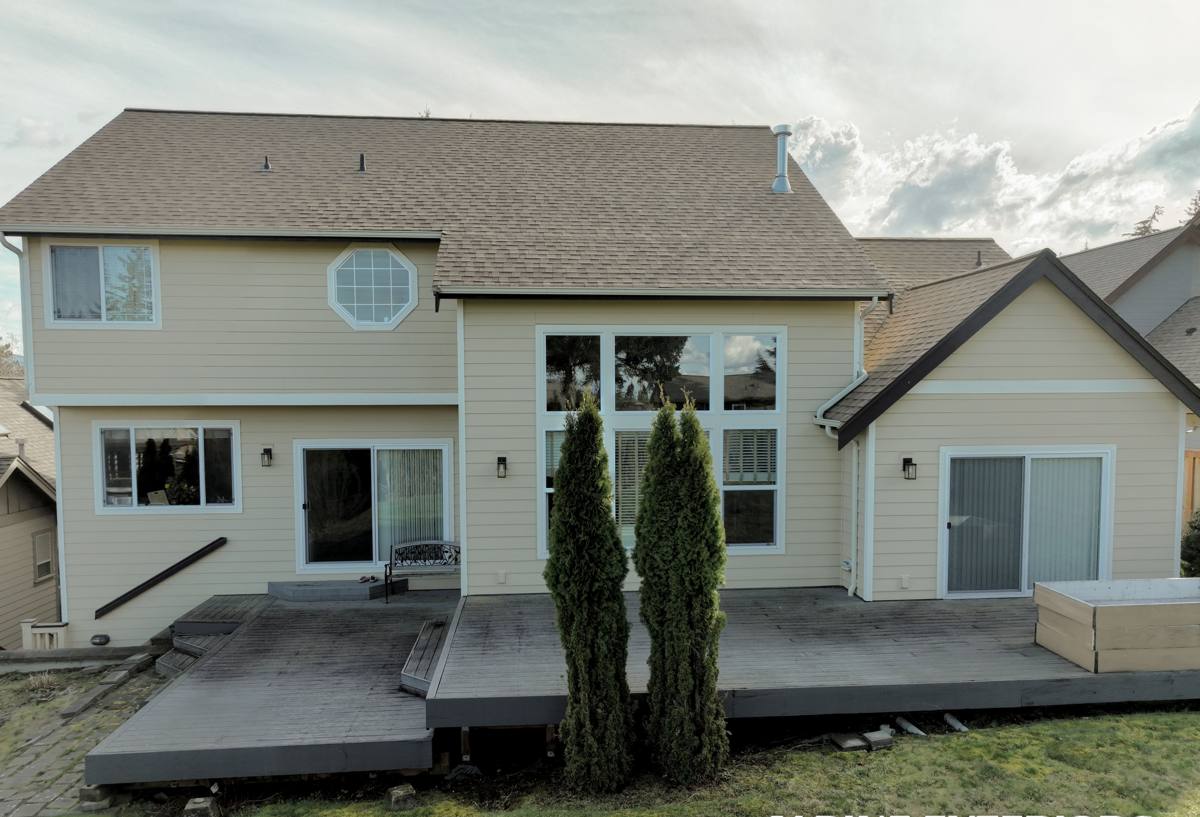
Signs a Deck Needs Repair, Not Just a Cleaning
Surface Problems You Can See
- Boards that feel spongy or flex underfoot, especially near the house or along stair treads
- Rust streaks bleeding out from screw heads, joist hangers, or post brackets
- Green or black film that comes back within weeks of pressure washing
- Gaps opening up where the deck meets the house, or around post bases
- Railings that wiggle when you lean on them, even slightly
Problems Hiding Underneath
The signs above are the easy ones. The more serious issues — a rotted ledger board, corroded joist hangers, footings that have shifted — usually don't announce themselves until the surface damage is already advanced. This is the main reason we don't just quote a "board replacement" over the phone. What looks like a cosmetic fix on top can be sitting on framing that's already compromised underneath.
The Part of the Deck Most Homeowners Never See
The ledger board is the piece that bolts your deck to the house itself, and it's almost always the first thing to fail in a wet coastal climate. Water gets behind the ledger through a flashing detail that was never installed correctly, or one that's simply aged out, and it sits there — against the house framing, against the deck's main structural connection — with nowhere to go. By the time you notice a soft spot in the decking above it, the ledger and the rim joist behind it may already be compromised.
This matters more in Blaine Harbor than it would somewhere drier, because the same driving rain that soaks the deck surface is also finding its way sideways into that ledger connection during storms off the water. A proper repair always includes pulling back enough decking to actually look at this connection, not just patching what's visible from above.
Fasteners and Hardware: Why Salt Air Changes the Math
Every screw, nail, bolt, and metal bracket on a deck is a potential weak point near salt water, and not all hardware handles that exposure the same way. This is one of the most common corners cut on decks built or repaired by crews unfamiliar with coastal conditions — the fasteners look fine going in, and then fail years before the wood around them does.
| Fastener/Hardware Type | Corrosion Resistance Near Saltwater | Where We Use It |
|---|---|---|
| Standard electro-galvanized | Low — coating is thin and wears through quickly in salt air | We avoid it on Blaine Harbor exterior work entirely |
| Hot-dip galvanized | Moderate to good — thick zinc coating, but coating can degrade over many years | Structural brackets, joist hangers on standard repairs |
| Stainless steel (305/316) | High — resists salt corrosion far longer than galvanized options | Fasteners for ledger boards, railings, and any hardware near ground contact or standing moisture |
Stainless costs more up front. On a full deck it can add a meaningful amount to the hardware line of an estimate. But replacing corroded fasteners twice in ten years costs more than paying for the right ones once, and in a harbor-adjacent location, that's not a hypothetical — it's the normal maintenance cycle if the cheaper hardware goes in.
Moss, Algae, and the Long Wet Season
Moss doesn't just make a deck look neglected — it holds moisture directly against the wood or composite surface for months at a time. In Whatcom County's climate, that growing season runs long, and a flat horizontal deck surface with tight board spacing is close to ideal moss habitat: shade, moisture, and no airflow to dry things out between rain events.
Two things fix this over the long term, and neither is a one-time cleaning:
- Board spacing and drainage gaps that actually let water pass through instead of pooling on top of joists
- Joist tape or flashing over the framing itself, so the water that does get through doesn't sit directly on bare wood
A pressure wash addresses the symptom for a season. Correcting drainage during a repair addresses the reason it keeps coming back.
Repair vs. Replacement: What Actually Drives the Decision
Not every deck problem calls for a full teardown, and not every "repair" is worth doing instead of a rebuild. The honest answer depends on how much of the structure below the decking surface is still sound.
| Factor | Favors Repair | Favors Replacement |
|---|---|---|
| Framing and ledger condition | Solid, no soft spots when probed | Rot found at ledger, beams, or multiple joists |
| Footings | Level, no visible movement or heaving | Settling, cracking, or undersized for current code |
| Decking surface | Isolated boards affected | Widespread cupping, splitting, or moss staining across the whole surface |
| Age of original build | Under 10–15 years with good hardware | Older deck with unknown or outdated fastener types |
We probe the framing before we quote anything, not just the boards you can see from the yard. A deck that looks rough on top but has sound bones underneath is often a good repair candidate; one with hidden rot at the ledger or footings usually isn't worth patching around.
Decking Material Trade-offs When We Rebuild a Section
When boards need full replacement, homeowners usually ask us to compare pressure-treated lumber, cedar, and capped composite. Each has a real trade-off, and we'd rather walk through it honestly than push whatever's easiest for us to install.
Pressure-Treated Lumber
Lowest upfront cost and easy to source and match to existing framing. It needs regular sealing to hold up to Blaine Harbor's rain and salt exposure, and skipping that maintenance is the single biggest reason treated decks fail early here.
Cedar
Naturally more rot-resistant than treated lumber and holds up well visually, but it's a softer wood — more prone to surface scratching and still benefits from periodic finish maintenance in a wet climate.
Capped Composite
Highest upfront cost, but no sealing or staining required, and the capped surface resists moisture absorption far better than either wood option. The trade-off is that composite is less forgiving to repair in small sections later — color-matching an older composite board to new stock isn't always possible, so a partial repair years down the road may look mismatched even when it's structurally fine.
Our Deck Repair Process
- Full inspection of decking, framing, ledger connection, and footings before any quote is written
- Photos and a plain-language explanation of what's failing and why, including anything we find that isn't visible from the surface
- A written estimate that separates surface repair from structural work, so you know exactly what you're paying for
- Removal of affected decking to properly inspect and repair framing, flashing, or ledger connections underneath
- Hardware selected for the exposure — stainless or hot-dip galvanized as appropriate, never standard coated fasteners on exterior coastal work
- Correct drainage gaps and joist protection reinstalled, not just cosmetic board replacement
- Final walkthrough so you can see and understand the completed repair before we consider the job done
Permits, Code, and Guardrail Safety
Structural deck work — rebuilding framing, replacing footings, or altering railings and stairs — typically requires a permit through the local jurisdiction, and guardrail height and baluster spacing are governed by code, not homeowner preference. This matters most on older Blaine Harbor decks, where railings built decades ago may no longer meet current spacing requirements even if they feel sturdy. We handle the permitting conversation as part of the estimate for any repair that touches structure, so there are no surprises after the work starts.
Why It Matters to Hire a Crew That Already Works Blaine Harbor
A contractor who mostly works inland jobs isn't wrong about decks in general — they're just working from a different set of assumptions. They may not default to stainless hardware unless asked, may not expect the ledger rot we routinely find here, and may not factor in how much faster moss returns this close to the water. None of that shows up as a problem on day one. It shows up two or three years later, when hardware corrodes early or moss comes back within a season of a "fix."
Working Blaine Harbor regularly means we already know what to check first, what hardware to spec by default, and what a normal repair looks like here versus a drier, inland property. That's less guesswork for you and fewer surprises once the decking comes up.
If you're dealing with soft spots, corroded hardware, or a moss problem that keeps coming back, we're happy to take a look and give you a straightforward, no-pressure estimate — just fill out the form below.