 Blaine Siding
 Why Blaine Harbor Roofs Age Differently Than Roofs Inland
A roof in Blaine Harbor does more work than a roof twenty miles inland. It sits close to Semiahmoo Bay and the open water of the Strait of Georgia, which means it takes on salt-laden air almost year-round, absorbs long stretches of driving rain off the water, and spends a good chunk of the year shaded and damp enough for moss to take hold. None of that is unusual for Whatcom County, but it does mean the same asphalt shingle roof that performs fine in a drier, sunnier part of the state can wear out faster here if it wasn't built with these conditions in mind.
This page is about one job in one part of town: asphalt shingle roofing for homes in and around Blaine Harbor. We're not going to give you a generic rundown of shingle roofing everywhere. We're going to walk through what actually happens to a roof at this elevation, this close to the water, and what a correctly built shingle roof needs to hold up against it.
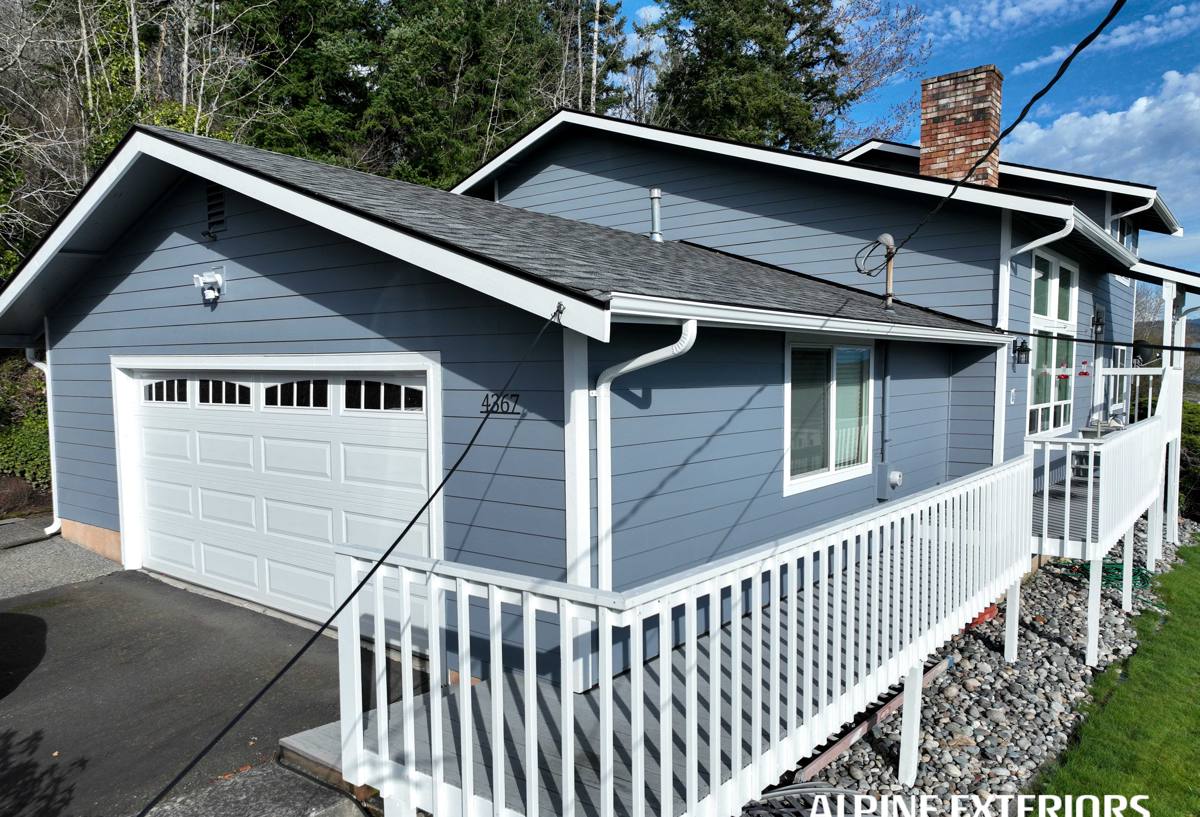
What Salt Air, Rain, and Moss Actually Do to a Shingle Roof
Salt Air and Metal Components
Asphalt shingles themselves tolerate salt air reasonably well, but the metal components around them don't always fare as well. Flashing, fasteners, and vent hoods that aren't rated for coastal exposure can corrode years before the shingles themselves are due for replacement. When that happens, water finds its way in around the metal long before the field of the roof shows any wear, and homeowners are often surprised the leak isn't coming from where the shingles look worst.
Driving Rain and Wind-Driven Water
Blaine Harbor gets its share of storms rolling in off the water, and wind-driven rain behaves differently than rain falling straight down. It can push up under shingle tabs, work sideways along ridges and hips, and find gaps at penetrations that would stay dry in a calmer climate. A roof here needs sealed laps, correctly lapped underlayment, and hip and ridge details that account for wind direction, not just a shingle laid flat and nailed down.
Moss, Algae, and Shade
The long, wet, mild season here is exactly what moss and algae need to establish themselves, especially on north-facing slopes or roofs shaded by mature trees. Moss isn't just cosmetic. Once it roots into a shingle's surface, it holds moisture against the mat, lifts tabs as it grows, and accelerates granule loss. A roof that's left unchecked for a few seasons can lose years of service life to moss alone.
Choosing the Right Asphalt Shingle for a Coastal, Damp Climate
Not every asphalt shingle product is built the same way, and in a climate like this, the differences matter more than they would somewhere drier. The table below outlines what we weigh when we're specifying shingles for a Blaine Harbor home.
| Shingle Feature | Why It Matters Here | What We Recommend |
|---|---|---|
| Algae-resistant granules | Copper- or zinc-infused granules resist the streaking and moss-friendly buildup common in shaded, damp areas | Standard on most jobs we spec for this neighborhood |
| Wind rating | Homes exposed to open water gusts need a higher sealed wind rating than the manufacturer's base product | Match rating to actual site exposure, not just code minimum |
| Shingle weight/thickness | Heavier shingles resist wind uplift and hold laminated layers together better in repeated wet-dry cycles | Mid- to upper-tier laminated shingles over budget 3-tab in exposed spots |
| Sealant strip quality | A weak factory sealant strip is the first thing to fail under repeated wind-driven rain | Confirm sealant activation temperature and coverage before installing |
We're not going to tell you a specific brand is bad. Every major manufacturer makes a range of products, and the right choice depends on your roof's exposure, slope, and shade pattern. Our job is to match the product to the conditions your specific roof actually faces, not to sell whatever's cheapest to stock.
What a Correctly Built Shingle Roof Involves, Step by Step
Tear-Off and Deck Inspection
We don't install new shingles over old ones, and we don't install over a deck we haven't inspected. Coastal moisture works into decking over time, especially around old flashing and valleys, and any soft or delaminated sheathing gets replaced before anything new goes down. Covering up a compromised deck just hides the problem for a year or two.
Ice and Water Shield at Vulnerable Areas
Even though Blaine doesn't see the ice-dam problems of colder inland climates, self-adhered ice and water membrane still earns its keep at eaves, valleys, and around penetrations here because it's the best defense against wind-driven rain finding a gap. We treat it as standard at these locations rather than an upgrade.
Synthetic Underlayment, Fully Lapped
Over the rest of the deck, a synthetic underlayment laid with correct overlap and fastening pattern gives the roof a second line of defense if wind ever drives water up under a shingle tab. This is a detail that's easy to rush and impossible to inspect once the shingles are on, so it's one of the places we pay closest attention during installation.
Flashing That's Actually Rated for Coastal Exposure
Step flashing, valley metal, and vent flashing all need to be a material and finish that holds up to salt air rather than standard mill-finish metal that starts pitting within a few seasons. This is one of the most common corners cut on coastal roofs, and it's also one of the most common causes of early leaks.
Correct Nailing Pattern and Fastener Material
Shingles fail early far more often from bad fastening than bad material. Nails placed too high, too few per shingle, or driven at an angle void manufacturer wind warranties and give storms an opening. In a wind-exposed location like Blaine Harbor, we don't treat the nailing pattern as a minor detail — it's the difference between a roof that holds its warranty and one that doesn't.
Ventilation: The Part of the Roof You Don't See
Balanced Intake and Exhaust
A shingle roof's lifespan depends as much on what's happening underneath it as on the shingles themselves. Attic ventilation that's out of balance traps moisture, and trapped moisture in a damp climate like this shows up as premature shingle deterioration from underneath, along with condensation issues in the attic itself. We check soffit intake and ridge or roof-vent exhaust together, not in isolation, because one without the other doesn't work.
Why This Matters More Near the Water
Homes near Blaine Harbor already carry more ambient moisture in the air than homes further inland. A poorly ventilated attic in this environment doesn't just shorten shingle life — it can lead to sheathing rot and mold issues that cost far more to fix than the roof itself.
How Our Process Works
- Roof and attic assessment — we look at current shingle condition, deck condition where visible, flashing, and ventilation before quoting anything.
- Written estimate — a clear scope of work and materials, not a vague number, so you know exactly what's being installed and why.
- Scheduling around weather windows — we plan tear-off and dry-in around realistic weather forecasts rather than rushing a roof open during an unpredictable stretch.
- Tear-off, deck repair, and dry-in — the roof is never left exposed longer than necessary once it's opened up.
- Shingle installation and detail work — flashing, valleys, and penetrations get the same attention as the field of the roof.
- Final walkthrough — we go over the completed roof with you, including ventilation and any maintenance recommendations specific to your property.
Maintenance That Actually Extends a Blaine Harbor Roof's Life
A well-installed roof still needs upkeep in this climate. Here's what we recommend homeowners stay on top of between inspections:
- Clear debris and organic buildup from valleys and gutters at least twice a year, more often under trees
- Watch for early moss growth on shaded, north-facing slopes and address it before it spreads
- Check attic ventilation isn't blocked by insulation at the soffits
- Have flashing and penetrations inspected after major windstorms, not just on a fixed schedule
- Trim overhanging branches that keep sections of roof shaded and slow to dry
- Avoid pressure washing shingles — it strips granules and shortens shingle life rather than protecting it
Why a Crew That Already Works Blaine Harbor Makes a Difference
Roofing crews who work this specific area regularly develop a feel for how homes here actually behave — which slopes hold moss, which exposures take the worst of the storms off the water, and which older flashing details tend to fail first. That familiarity shows up in smaller ways too: knowing what permitting and inspection process to expect in Whatcom County, understanding typical roof pitches and styles in the neighborhood, and not treating a coastal roof like an inland one with a different zip code. It's the difference between a roof that's technically installed correctly and one that's actually built for where it sits.
Signs Your Blaine Harbor Roof May Need Attention Now
You don't need to wait for an active leak to have a roof looked at. Granules collecting in gutters, shingles that look cupped or curled at the edges, moss established in more than a small patch, or daylight visible around vent penetrations from the attic are all signs worth having checked before they become a bigger repair.
If you're weighing a repair against a full replacement, or just want an honest read on where your roof currently stands, we're happy to take a look. The form below gets you a free, no-pressure estimate from a crew that knows this stretch of coastline.