 Blaine Siding
 Roofing Built for Blaine Harbor's Coastal Exposure
Blaine Harbor sits right where the weather comes off the water first. Homes here take a different kind of beating than roofs even a few miles inland — salt-laden air, wind-driven rain that gets pushed sideways under flashing and shingle tabs, and a long, damp moss season that starts earlier and lasts longer than in drier parts of Whatcom County. A new roof installation here isn't just about swapping old shingles for new ones. It's about choosing materials and details that are actually suited to a marine environment, and installing them in a way that holds up to it.
We install roofs across Blaine and the surrounding harbor-facing neighborhoods, and the patterns repeat house after house: fasteners that corrode faster than they should, underlayment that was never rated for this much moisture exposure, and moss that's been left to grow into the shingle mat until it's holding water against the roof deck. A correctly installed roof in this area accounts for all of that from day one, not as an afterthought.
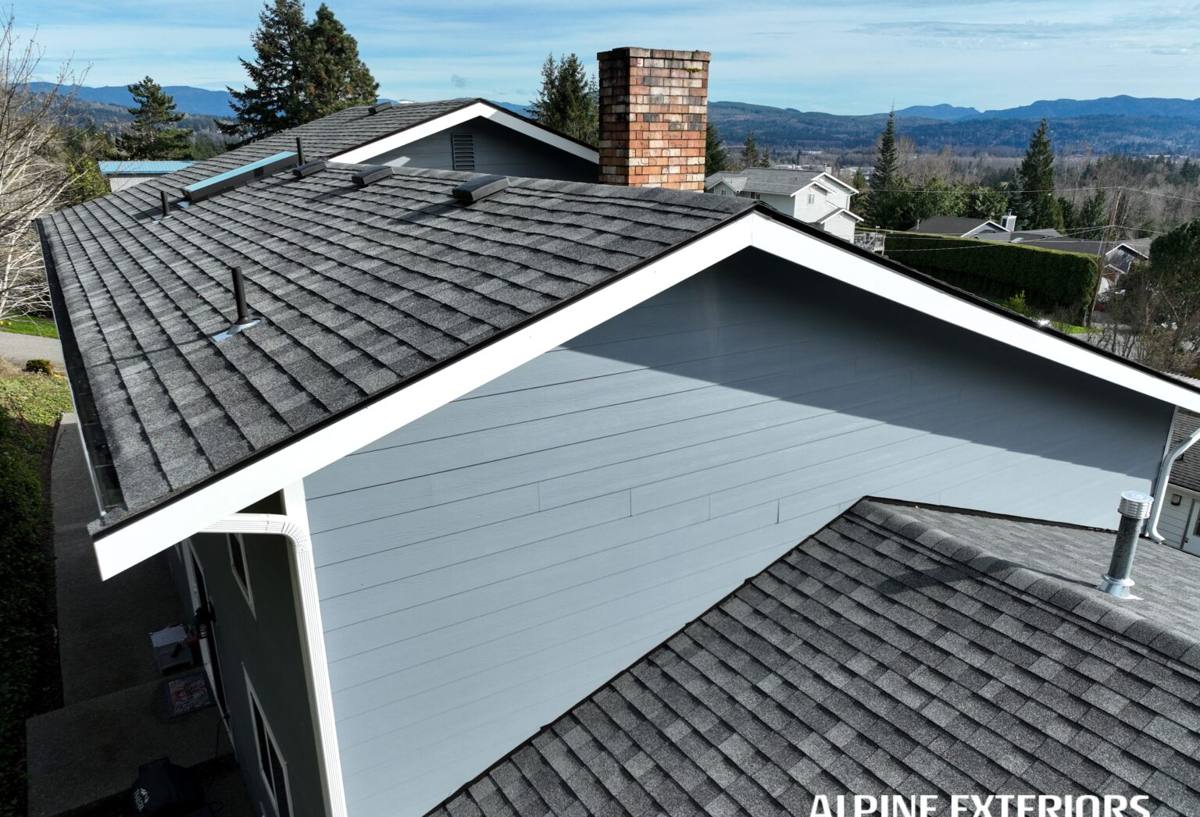
What Salt Air and Driving Rain Actually Do to a Roof
It helps to understand the specific mechanisms at work, because they shape almost every material and installation decision on a Blaine Harbor roof.
Salt Air and Metal Components
Salt in the air accelerates corrosion on anything metal — nails, flashing, vents, and gutter hardware. Standard electro-galvanized fasteners that would last decades further inland can start showing rust streaks and weakening within a few years this close to the water. This matters more than it sounds like it should, because a roof's long-term integrity often comes down to its fasteners and flashing long after the shingles themselves are still serviceable.
Wind-Driven Rain
Rain that comes in mostly straight down is a manageable problem — gravity does most of the work. Rain that's being pushed sideways by harbor winds behaves differently. It can work its way up under shingle tabs, through poorly lapped underlayment, and around flashing that wasn't sealed with this kind of exposure in mind. Roof details that are "good enough" in a calmer inland setting can fail in a spot that regularly sees sideways rain off the water.
Moss and Sustained Moisture
Blaine's moss season runs long because the roof surface rarely gets a real chance to dry out fully between storms. Moss doesn't just look bad — it holds moisture against the shingle surface and roof deck, which shortens shingle life, can lift tabs, and in shaded or north-facing sections eventually contributes to deck rot if it's left unaddressed for years.
What a Correctly Installed Roof Includes Here
A new roof installation in Blaine Harbor should address each of the issues above directly, not generically. That means specific choices at the material and detail level.
- Corrosion-resistant fasteners and flashing — stainless steel or heavy-gauge coated materials in place of standard galvanized where salt exposure is highest, especially at ridge caps, valleys, and roof-to-wall transitions
- Full synthetic underlayment rated for extended UV and moisture exposure, properly lapped against the direction of prevailing wind and rain
- Ice-and-water shield at vulnerable points — valleys, eaves, and around penetrations — even though this isn't a heavy-snow area, because it also performs well against wind-driven rain intrusion
- Zinc or copper strips near the ridge where moss pressure is heaviest, to slow regrowth without relying on chemical treatments alone
- Proper attic and roof ventilation so the underside of the deck can dry out between wet spells instead of staying damp
- Sealed, correctly lapped flashing at every chimney, skylight, and wall intersection, not just caulked over
None of these are exotic upgrades — they're standard trade practice applied with the local climate actually in mind, rather than a generic install that happens to be located near the water.
Choosing Materials for This Specific Exposure
There's no single "best" roofing material for every home, but some options are a clearly better fit for Blaine Harbor's conditions than others. The table below reflects general trade-offs, not brand-specific claims.
| Material | Performance in Salt Air / Driving Rain | Moss Resistance | Maintenance Consideration |
|---|---|---|---|
| Architectural asphalt shingle | Good, with corrosion-resistant fasteners and proper flashing | Moderate — benefits from zinc/copper strips | Periodic moss and debris removal recommended |
| Standing seam metal | Very good when finished with a marine-grade coating and correct fastener spec | High — sheds moisture quickly, little surface for moss to grip | Low; watch fastener and sealant condition over time |
| Synthetic/composite shingle | Good; less prone to granule loss from wind-driven rain than some asphalt products | Moderate to high depending on product | Low to moderate |
| Wood shake | Fair — natural material, more sensitive to sustained moisture | Lower — retains moisture, more prone to moss and moss-related decay | Higher; requires more frequent upkeep in this climate |
We'll walk through which option fits your home's roof pitch, shading, budget, and how exposed your particular lot is to wind off the harbor — a roof tucked behind a windbreak of trees has different needs than one facing the water directly.
Our Installation Process
A new roof is a big investment, so the process should be straightforward and predictable, not a mystery until the crew shows up.
1. On-Site Assessment
We inspect the existing roof, deck condition, ventilation, and flashing details, and take note of specific exposure factors — how much direct wind and rain the roof takes off the harbor, shaded areas prone to moss, and any signs of past moisture intrusion.
2. Material and Scope Recommendation
Based on that assessment, we recommend materials and details suited to your home specifically, along with a clear, itemized estimate. Broad cost ranges for a full roof replacement vary widely by roof size, pitch, layer removal, and material choice — we'll give you real numbers for your home rather than a generic figure.
3. Tear-Off and Deck Inspection
Old roofing is removed down to the deck, which is then inspected for rot or soft spots — common in older Blaine Harbor homes where moss or minor leaks have gone unaddressed for a while. Any damaged decking is repaired before anything new goes on.
4. Underlayment, Flashing, and Roofing Installation
Underlayment, ice-and-water protection at vulnerable points, and flashing go in first, followed by the roofing material itself, installed to manufacturer spec and adjusted for local wind and rain exposure.
5. Final Walkthrough
We walk the finished roof with you, confirm ventilation and flashing details, and go over any moss-prevention or maintenance recommendations specific to your property's sun and shade patterns.
Signs a Blaine Harbor Roof Needs Replacing, Not Just Patching
Not every roofing problem calls for a full replacement, but certain signs in this climate usually mean patching is a short-term fix at best.
- Granule loss heavy enough that shingles look patchy or bald in wind-exposed areas
- Moss that's established itself under shingle tabs rather than just on the surface
- Curling, cupping, or lifted shingle edges, especially on wind-facing slopes
- Rust staining or visible corrosion around flashing, vents, or fasteners
- Soft or spongy spots on the deck felt during an inspection or from the attic side
- Recurring leaks around chimneys, skylights, or wall intersections despite prior patch repairs
- A roof approaching or past the expected lifespan of its material, particularly if it's had minimal moss maintenance
Why Local Installation Experience Matters
Roofing crews who work Blaine Harbor regularly aren't guessing at what this environment does to a roof — they've seen which fastener types hold up, which flashing details actually stop wind-driven rain, and which parts of a property tend to grow moss fastest based on tree cover and sun exposure. That local pattern recognition shows up in the small decisions made throughout an install: where to add extra sealant, which corrosion-resistant hardware is worth the upgrade, and how to set up ventilation so the deck actually dries out between storms instead of staying damp all winter.
It also matters for warranty coverage. Manufacturer warranties on roofing materials generally require installation according to their specifications, and improper installation — including using the wrong fastener type for a coastal environment — can affect what's covered if a problem shows up later. A crew familiar with Whatcom County's coastal conditions is more likely to get those details right the first time.
Maintaining Your Roof After Installation
A well-installed roof in Blaine Harbor still benefits from some routine attention given the local conditions.
- Have moss growth checked and removed before it establishes under shingle tabs, typically during the wetter months
- Keep gutters clear so water isn't backing up under the roof edge during heavy rain
- Watch for debris buildup in valleys, where moisture tends to sit longest
- Schedule a periodic visual inspection of flashing and fasteners, since salt-air corrosion develops gradually and is easiest to address early
If you're weighing a new roof for a home in Blaine Harbor, we're glad to take a look and walk you through what your roof specifically needs — no pressure, no generic sales pitch. Reach out for a free estimate using the form below.