 Blaine Siding
 Why Decks Near Blaine Harbor Take More Punishment
A deck built three blocks from Drayton Harbor or Semiahmoo Bay lives a harder life than the same deck built twenty miles inland. Salt-laden air off the water accelerates corrosion on anything metal — nails, screws, joist hangers, railing brackets — long before the visible wood shows its age. Add Whatcom County's driving rain, which comes in sideways often enough to soak areas a plain vertical downpour would miss, and moisture works its way into end grain, ledger connections, and fastener holes that were never meant to stay wet.
Then there's moss season, which in this part of Washington runs a good chunk of the year. Shaded decking, the underside of railings, and the gaps between boards hold humidity long after the rest of the yard has dried out. Moss and algae don't just look bad — they act like a sponge sitting on the wood surface, keeping it damp for days after a storm has passed. On a deck near Blaine Harbor, that cycle of wet-shade-wet repeats more often than it does even a few miles inland, and it's usually what turns a 15-year deck into a 9-year deck.
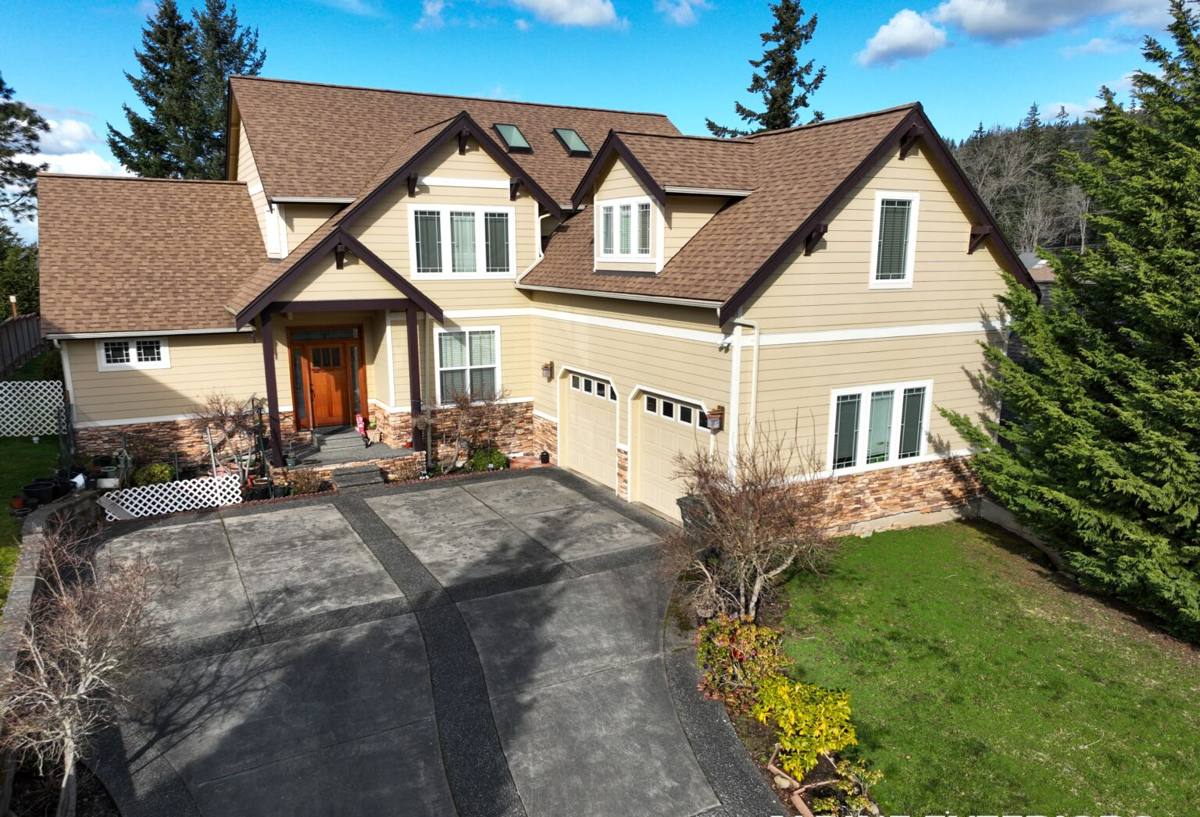
Signs Your Deck Has Reached the End of Its Life
Not every deck problem means a full replacement. Some are legitimate repairs. But there's a point where patching individual boards or swapping out a rotted post stops making sense — either because the structure underneath is compromised, or because you'd be spending real money to extend the life of a deck that's already on borrowed time. Here's what tells us it's replacement time rather than repair time:
- Boards that feel spongy or flex noticeably underfoot, especially near the house or at stair landings
- Soft or discolored wood where the deck framing meets the house (the ledger board area)
- Rust streaks bleeding from fastener heads, which usually means the fasteners are failing from the inside out
- Visible gaps, movement, or wobble where posts meet footings or where the deck meets the house
- Moss or algae that returns within a few weeks of cleaning, which points to a moisture problem the surface can't shed
- A structure that predates current attachment and flashing standards, even if the boards themselves still look decent
If you're only seeing one or two of these and the framing underneath tests solid, a repair may genuinely be the right call — we'll tell you that when it's true.
What a Proper Deck Replacement Actually Involves
A deck replacement done right isn't just pulling up old boards and screwing down new ones. The decking surface is the part everyone sees, but it's also the least important part when it comes to whether the deck lasts. A correct job works from the structure outward:
We start by fully exposing the framing — removing the old decking so we can actually see the ledger board, joists, beams, and post connections instead of guessing at their condition from underneath. Anything showing rot, corrosion, or undersized framing gets flagged before we go further, because building new decking on top of compromised structure just hides the problem for another owner to find later. From there we check the ledger attachment to the house band, confirm footings are sound and set to proper frost depth, and replace framing lumber with material rated for exposed, high-moisture use rather than standard interior-grade lumber.
Choosing the Right Decking Material for a Harbor Environment
Wood: Still a Solid Choice, With a Real Maintenance Commitment
Pressure-treated fir and cedar remain common choices, and there's nothing wrong with them — they cost less upfront and they're easy to repair board-by-board down the road. The trade-off in a salt-air, high-moss climate is maintenance: wood needs regular cleaning, and periodic staining or sealing, or moss and gray weathering set in fast. Homeowners who don't mind that upkeep, or who plan to stay on top of it, often do fine with wood.
Composite and Capped PVC: Less Upkeep, Different Trade-Offs
Composite and capped-PVC decking resist moss growth and moisture absorption better than raw wood, which matters in a climate where boards rarely get a long stretch to fully dry out. They don't need staining. The trade-offs are a higher material cost, and — depending on the product — sensitivity to how it's fastened and how the substructure ventilates underneath. We install composite over framing that's built to the manufacturer's spacing and airflow requirements, not framing designed around wood decking, because skipping that step is what leads to warping or fastener pull-through complaints down the line.
| Factor | Wood (Cedar / PT) | Composite / Capped PVC |
|---|---|---|
| Moss & algae resistance | Lower — needs regular cleaning | Higher — sheds moisture better |
| Salt-air durability | Good with maintenance | Strong, minimal maintenance |
| Upfront material cost | Lower | Higher |
| Ongoing maintenance | Cleaning, periodic sealing/staining | Occasional washing |
| Board-by-board repair | Straightforward | Depends on product/color matching |
Framing, Fasteners, and Flashing: The Parts Nobody Sees
Ledger Flashing
Most deck failures that end up being safety issues — not just cosmetic ones — trace back to water getting behind the ledger board where the deck attaches to the house. In a climate with as much driving rain as Blaine gets, that connection needs proper flashing that sheds water away from the house band, not just caulk covering a gap. We treat this as a non-negotiable part of every replacement, whether the homeowner asked about it or not.
Fastener Metallurgy
Standard galvanized fasteners hold up fine in a lot of the country. Close to the water, they corrode faster than most people expect, and a corroding fastener doesn't fail quietly — it stains the wood around it and weakens its grip long before it visibly breaks. We use stainless or coated fasteners rated for coastal and treated-lumber exposure, matched to whatever decking material is going down, because mismatched metals against treated lumber is its own corrosion problem.
Our Deck Replacement Process
- On-site assessment — we look at the existing structure, ledger connection, footings, and drainage before quoting anything, since framing condition changes the scope
- Written scope and material selection — you know what's being replaced, what's being reused (if anything), and why
- Tear-off and structural inspection — old decking comes up, framing gets inspected with everything exposed
- Framing repair or replacement — ledger flashing, joists, beams, and post connections brought up to a standard built for this climate
- Decking installation — fastener spacing and pattern set to the material manufacturer's specification
- Railings, stairs, and final walkthrough — hardware checked, site cleaned up, and we walk it with you before calling it done
What Deck Replacement Costs in Blaine Harbor
Every deck is different, so we won't quote a number without seeing yours — but the factors that move the price are consistent. This gives you a sense of what to expect before we get on site:
| Cost Factor | Why It Matters |
|---|---|
| Deck size and footprint | Larger surface area means more material and labor hours, straightforwardly |
| Framing condition | Rotted joists, ledger damage, or bad footings add repair scope beyond the surface |
| Decking material | Wood costs less upfront; composite and PVC cost more but need less upkeep |
| Railing system | Basic wood rail vs. metal, cable, or composite railing changes cost significantly |
| Stairs and landings | Each additional stair run and landing adds framing, decking, and railing |
| Height and permit requirements | Decks above a certain height, or attached in certain ways, may need permitting or engineering review |
Keeping a New Deck Healthy Through the Wet Season
A well-built deck still needs some basic upkeep to actually hit its expected lifespan in this climate. A few habits go a long way:
- Sweep debris out of board gaps regularly — trapped leaves and needles hold moisture against the wood
- Rinse off moss and algae as soon as it appears rather than waiting for it to spread
- Keep gutters and downspouts clear so runoff isn't dumping extra water onto the deck surface
- Check railings and stair connections once a year for movement or corrosion at the fasteners
- If you have wood decking, plan on cleaning and resealing on the schedule your material actually needs — skipping years is what shortens its life
Why Hiring a Crew That Already Works Blaine Harbor Matters
A contractor who mostly works inland projects isn't necessarily doing anything wrong, but they may not default to coastal-grade fasteners, may not think through ledger flashing as carefully, or may not factor in how much shade and moss exposure a given deck will actually see. Crews who work Blaine Harbor regularly build those decisions into the plan from the start, because they've seen what a few Whatcom County wet seasons do to a deck that wasn't built for them. That's less about any single product and more about habits — the flashing detail that gets done even when it's not asked for, the fastener choice that accounts for salt air, the framing that's inspected before it's covered up again.
If your deck is showing its age or you're just planning ahead, we're happy to take a look and give you a straight answer — repair, replace, or hold off — with a free, no-pressure estimate. There's a form below to get started.