 Blaine Siding
 Building Decks for Blaine Harbor's Marine Climate
A deck near Blaine Harbor lives a harder life than one ten miles inland. The lot sits close to open water, which means salt-laden air moving across every exposed surface, wind-driven rain that gets pushed sideways up under rail caps and into end-grain, and a moss season that runs long into the shoulder months because the humidity rarely lets surfaces dry out. Whatcom County's climate is wet most of the year, but harbor-adjacent properties get an extra layer of exposure that inland Blaine and Custer decks don't deal with as much. We build decks in this specific micro-climate regularly, and the difference between a deck that lasts and one that starts failing in year three usually comes down to decisions made before the first board goes down.
This page covers what a deck built for Blaine Harbor conditions actually needs, how we approach the build, and what to watch for whether you're building new or replacing a deck that didn't hold up.
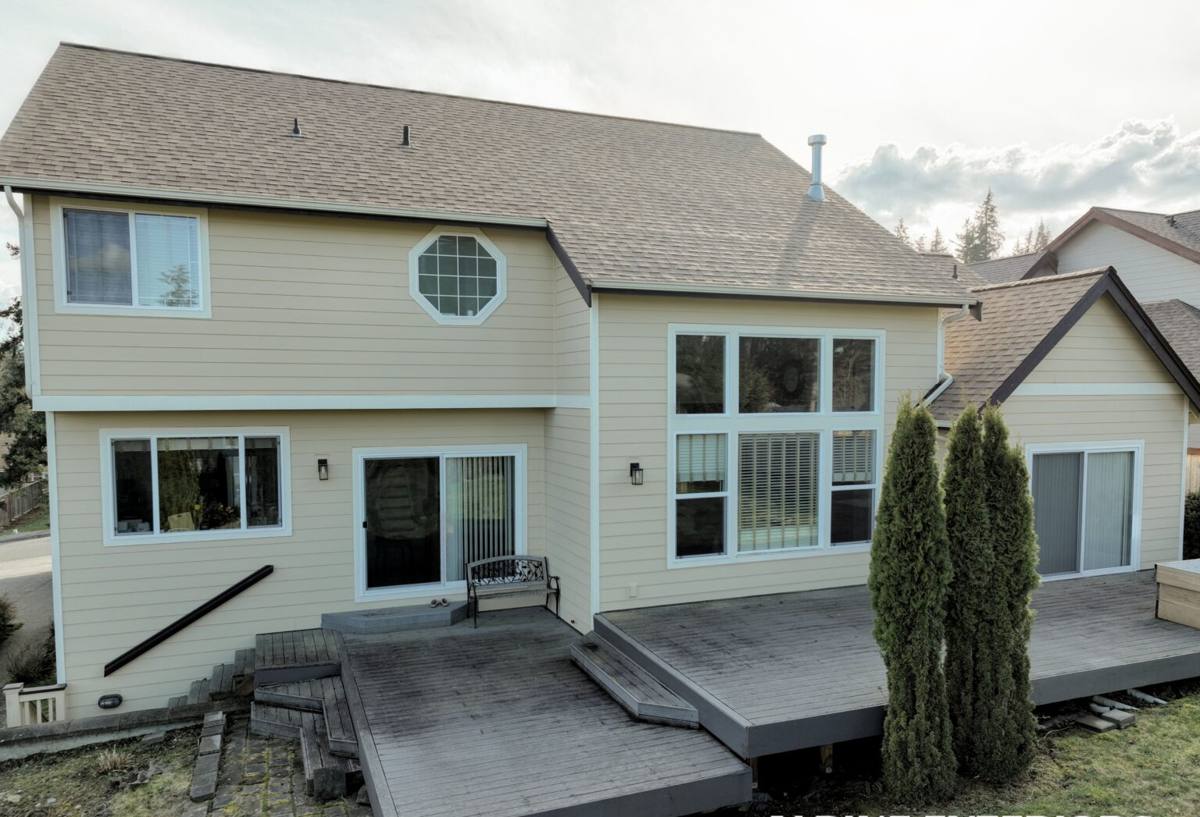
What Salt Air and Harbor Exposure Do to a Deck
Salt air isn't just a coastal talking point — it has real, measurable effects on the materials in a deck:
- Fasteners corrode faster. Standard exterior screws and nails that would be fine inland can start showing rust streaks within a couple seasons this close to the harbor. Fastener choice matters more here than almost anywhere else in the region.
- Metal railings, brackets, and hardware pit and oxidize sooner. Uncoated or lower-grade aluminum and steel components take visible damage faster in salt-air exposure.
- Wood surfaces hold moisture longer. Salt is hygroscopic — it draws moisture out of the air and holds it against the wood surface, which extends the time boards stay damp after a rain event and feeds the next problem.
- Moss and algae establish faster and more aggressively. Combine the extra humidity with a deck that's shaded by trees or the house itself, and you get a longer moss season than a comparable deck a mile or two inland.
None of this means a deck near the harbor is a bad idea — decks near the water are some of the most-used outdoor spaces in Blaine. It means the build has to account for what the site actually throws at it, not what a generic spec sheet assumes.
Driving Rain and Deck Design
Wind off the water pushes rain at an angle instead of straight down, which changes how water moves across a deck. Rain gets driven up under rail caps, into the joints where fascia boards meet, and against the house wall behind the deck. A deck built without that in mind will show water staining and early rot right at those transition points — long before the field decking itself shows any wear. Flashing at the ledger board, proper slope away from the house, and gapping that lets water shed instead of pool are not optional details on a harbor lot; they're the difference between a 20-year deck and a 7-year deck.
Decking Material Options for This Exposure
We'll walk through options honestly, including the trade-offs, rather than push whatever's easiest to install.
| Material | How it handles salt air & moisture | Maintenance | Typical lifespan here |
|---|---|---|---|
| Pressure-treated lumber | Decent if fasteners and hardware are matched correctly; treated wood resists rot but surface can still gray and check | Needs sealing/staining every 1-2 years in this climate | 10-15 years with upkeep |
| Cedar | Naturally rot- and insect-resistant, ages well visually, but softer surface takes more wear from moss cleaning | Regular cleaning and periodic oil/stain | 15-20 years with upkeep |
| Composite decking | Doesn't absorb moisture like wood, resists moss staining better, but quality varies a lot by product line | Occasional wash, no staining/sealing | 25+ years, backed by manufacturer warranty |
| PVC/capped composite | Best moisture and salt resistance of the common options; fully sealed surface sheds water and doesn't feed moss growth as readily | Lowest maintenance of the group | 25-30+ years |
We don't push composite or PVC on every job — a well-built cedar deck with the right maintenance plan is a legitimate choice, and plenty of homeowners prefer the look and feel of real wood. What we won't do is put standard pressure-treated lumber down with mismatched fasteners and call it good for harbor exposure, because that combination is where we see premature failure most often.
Fasteners and Hardware — Where Corners Actually Get Cut
This is the detail that separates a deck that ages gracefully from one that develops rust streaks and loose connections within a few years. For anything within reach of harbor salt air, we use stainless steel or heavily corrosion-rated coated fasteners, and we match structural hardware — joist hangers, post bases, hurricane ties — to the same standard. It costs more up front than standard galvanized hardware. It's not a place we cut cost, because replacing corroded structural hardware later means tearing into a finished deck.
Moss and Algae Management by Design
You can't eliminate moss risk on a shaded, humid lot near the harbor, but you can design a deck that doesn't invite it:
- Proper board spacing so air moves underneath and between boards instead of trapping moisture
- Adequate clearance between the deck framing and the ground or grade below
- Surface materials with lower moisture absorption in shaded or low-sun areas
- Drainage that actually moves water off the deck instead of letting it pool in low spots
A deck that's designed to dry out between rain events will stay ahead of moss. One that traps moisture under low clearance or tight, unvented board spacing will grow moss no matter what surface material you chose.
What a Correct Deck Build Involves
Foundation and Framing
Footings need to be sized and set to local frost and soil conditions, not guessed at. Framing lumber, whether treated or a naturally resistant species, needs consistent spacing and blocking so the structure doesn't develop movement or squeak over time. This is also where hardware selection matters most — the framing connections are what hold the deck together structurally, and they're the hardest part to inspect or fix once decking is installed over them.
Ledger Attachment and Flashing
Where the deck attaches to the house is the single most common failure point on any deck, anywhere — not just near the harbor. Proper flashing keeps water from tracking behind the ledger board and into the house's wall structure, which can lead to rot that's expensive to find and fix. Given the driving rain patterns near open water, we treat ledger flashing as a non-negotiable step, not an optional upgrade.
Railings and Guards
Railings need to meet code for height and baluster spacing, and hardware here should carry the same corrosion resistance as the rest of the structure. Metal rail components exposed to salt air without adequate coating are one of the first things to visibly degrade on a harbor-adjacent deck.
Surface Finishing
Whether it's wood needing a first coat of sealant or composite that's ready to use as installed, the finishing step is what determines how the deck looks and performs in its first few seasons. Rushing this step, or skipping it on wood decking, shortens the timeline before you're looking at graying, cracking, or moss establishment.
Our Process
- On-site assessment. We look at sun exposure, tree cover, proximity to the water, drainage patterns, and the condition of anything being replaced.
- Material and design conversation. We walk through the options honestly — what fits your budget, your maintenance appetite, and the actual exposure of your specific lot.
- Permitting. Deck projects in Blaine typically require a permit; we handle that process so it's not on you to navigate.
- Build. Footings, framing, flashing, decking, and railings, built to the standards above — not the minimum code allows, but what actually holds up in this climate.
- Walkthrough. We go over the finished deck with you, including a realistic maintenance schedule based on the material you chose.
Repair vs. Replace: A Practical Checklist
If you've got an existing deck near Blaine Harbor showing wear, here's how we help homeowners think through repair versus replacement:
- Soft or spongy spots in the decking, especially near the house — often a sign of moisture intrusion at the ledger
- Rust staining around fasteners or visible hardware corrosion
- Persistent moss regrowth within weeks of cleaning, suggesting a drainage or clearance problem rather than just a surface issue
- Railing posts that feel loose or wobble under hand pressure
- Gaps opening up between boards or boards cupping/warping unevenly
- Visible daylight or gaps at the ledger-to-house connection
A deck with isolated board damage or a failing rail section can often be repaired. A deck with structural or ledger-level problems, especially one built without adequate flashing or corrosion-rated hardware to begin with, is usually more cost-effective to rebuild correctly than to keep patching.
Why a Crew That Already Works Blaine Harbor Matters
A contractor who mainly builds decks inland, away from salt air, can still do competent framing and finish work — but they may not default to stainless fasteners, corrosion-rated hardware, or the drainage and clearance details that matter specifically near open water. Those aren't universal deck-building defaults; they're decisions shaped by seeing what actually fails on harbor-exposed decks over time. We build in this specific pocket of Whatcom County regularly, which means the material and hardware choices described above aren't an upsell — they're just what we spec by default for this exposure, because we've seen what happens when they're skipped.
If you're planning a new deck near Blaine Harbor or dealing with one that's showing its age, we're happy to take a look and give you a straightforward assessment. Reach out for a free, no-pressure estimate using the form below.