 Blaine Siding
 Roofing on the Semiahmoo Peninsula Is Its Own Job
Semiahmoo sits out on the water, tucked against Semiahmoo Bay and Drayton Harbor, and that location changes what a roof has to deal with compared to a house a few miles inland in Blaine. Homes here take on salt-laden air off the water almost year-round, along with wind-driven rain that comes sideways off the bay during winter storms. Add in the tree cover on many Semiahmoo lots and the long, damp Whatcom County shoulder seasons, and you've got a recipe for moss, algae streaking, and metal components that corrode faster than the manufacturer's brochure assumes. A shingle roof that would hold up fine in a drier, more inland part of the county can show real wear here years ahead of schedule if it wasn't built with this exposure in mind.
This page is about one job done right: asphalt shingle roofing for Semiahmoo homes. Not a general roofing pitch — the specific material choices, install details, and maintenance habits that matter for houses sitting this close to salt water.
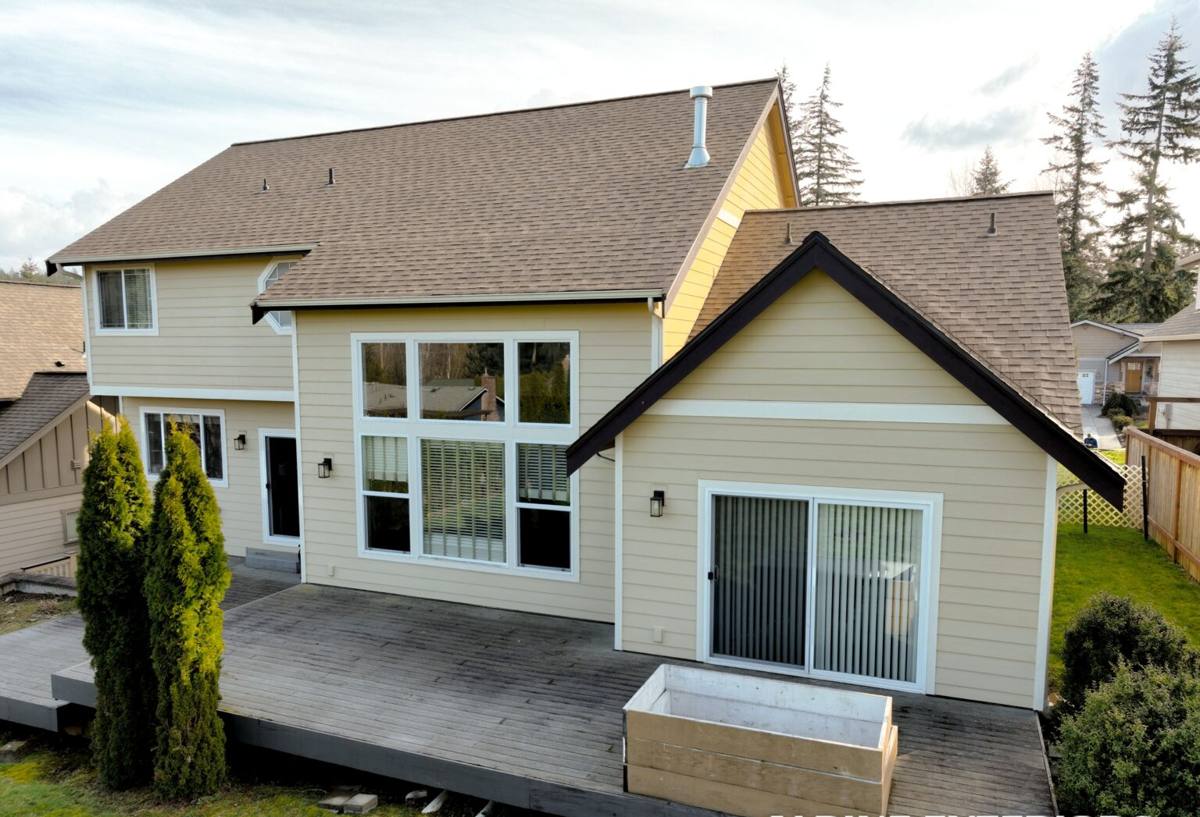
What Salt Air and Moss Season Actually Do to a Roof
Salt Air
Airborne salt doesn't just sit on the surface — it works into fasteners, flashing seams, and any exposed metal on the roof. Standard galvanized nails and cheap flashing can start showing rust streaks and pitting well before a comparable roof set back from the water. Once metal starts to corrode, water finds its way past it, and that's how a small flashing failure turns into a rotted deck.
Wind-Driven Rain
Storms coming off the bay don't just drop rain straight down — they push it sideways and up under shingle edges, into valleys, and around chimneys and vents. A roof with tight-but-not-storm-rated nailing patterns or minimal underlayment coverage can see water intrusion at exactly the spots that look fine in dry weather.
Moss and Algae
Shaded, moisture-heavy lots — common around Semiahmoo's tree-lined properties — grow moss fast. Moss holds water against the shingle surface, lifts tabs as it grows, and accelerates granule loss. Algae streaking is mostly cosmetic, but heavy moss growth is a real structural concern if it's left unaddressed for a few seasons.
What a Correctly Built Shingle Roof Includes Here
None of this is exotic — it's just not optional in a place like Semiahmoo, the way it might be treated as "upgrade" elsewhere.
- Full ice-and-water shield membrane at eaves, valleys, and around all penetrations — not just the code minimum
- Synthetic underlayment rated for high-wind, high-moisture exposure across the whole deck, not just critical zones
- Corrosion-resistant fasteners and flashing (stainless or high-grade coated) at chimneys, sidewalls, and vent boots
- Algae-resistant (AR) shingles with copper or zinc granules where moss and streaking are a known issue
- Proper balanced attic ventilation — intake at the eaves, exhaust at the ridge — to keep moisture from condensing under the deck
- Storm-rated nailing pattern, not the minimum four-nail pattern some crews default to
Skip any one of these on a Semiahmoo home and you're not saving real money — you're moving the cost to a leak repair or an early tear-off five to ten years down the road.
Signs a Semiahmoo Roof Needs Attention
A few things worth checking from the ground, or having a crew check for you, before small issues become deck damage:
- Moss buildup along ridges, in valleys, or on the north-facing slope
- Granules collecting in gutters or downspouts — a sign shingles are wearing thin
- Rust streaking below flashing, vent boots, or chimney counterflashing
- Curling, cupping, or lifted shingle tabs, especially near roof edges facing the water
- Dark streaking that doesn't wash off — algae, not just dirt
- Soft spots or sagging when walked (a sign of deck moisture damage)
- Daylight visible through the attic roof deck, or damp insulation near the eaves
Our Asphalt Shingle Roofing Process
1. Inspection and Deck Check
We start by getting on the roof, not just estimating from photos. We check the deck for soft spots or rot — common where old flashing has failed — and note ventilation gaps, valley condition, and any areas with heavy moss or algae growth.
2. Tear-Off and Deck Repair
Full tear-off to bare deck on replacements. Any damaged or rotted decking gets replaced before anything new goes down — covering over a compromised deck is how a new roof fails early.
3. Underlayment and Flashing
Ice-and-water shield at all vulnerable zones, synthetic underlayment across the field, and new flashing at every penetration, valley, and wall intersection. This is the step that matters most for wind-driven rain resistance, and it's the step that's easiest to shortcut if a crew is rushing.
4. Shingle Installation
Shingles installed to manufacturer spec with a storm-rated nailing pattern — proper nail count and placement, not just "enough to hold it down." We match shingle selection to the exposure level of the specific roof slope, since a north-facing, shaded slope near the water needs more algae resistance than a sun-exposed south slope.
5. Ventilation
We check and correct intake/exhaust balance where needed. Poor ventilation traps moisture under the deck, which shortens shingle life from underneath — invisible until it's a bigger problem.
6. Cleanup and Walkthrough
Magnetic sweep for nails, full site cleanup, and a walkthrough so you know what was done and what to watch for going forward.
Choosing Shingles for This Climate
Not every asphalt shingle product is built the same way, and the differences matter more here than in a drier part of the state.
| Shingle Type | Typical Lifespan | Best Fit for Semiahmoo |
|---|---|---|
| 3-Tab | 15-20 years | Budget option; lower wind rating, more exposed to moss without AR treatment |
| Architectural / Dimensional | 25-30 years | Our default recommendation — better wind rating, thicker profile handles driving rain better |
| Premium/Designer Architectural | 30+ years | Worth it on prominent water-facing homes; heaviest wind and impact ratings available in asphalt |
Across all three tiers, we push algae-resistant (AR) granules as close to standard on Semiahmoo homes, given how consistently moss and streaking show up here. It's a modest cost difference upfront against a real difference in how the roof looks and performs in year five and beyond.
What Affects Cost
| Factor | Why It Matters Here |
|---|---|
| Roof pitch and access | Steeper Semiahmoo homes with water views often have pitch and access challenges that affect labor time |
| Deck condition | Salt-air corrosion and past leaks sometimes mean deck repair is needed before shingles go down |
| Shingle tier | 3-tab vs. architectural vs. premium changes both material cost and expected lifespan |
| Flashing scope | Homes with more chimneys, skylights, or wall intersections need more flashing work |
| Ventilation upgrades | Older homes often need intake or exhaust vents added or corrected |
| Moss/debris removal | Heavy existing moss buildup adds prep time before tear-off can start |
We don't quote a number without seeing the roof — anyone who does is guessing. What we can say honestly is that the biggest cost swings come from deck condition and shingle tier, not from labor rates.
Why It Matters to Hire a Crew That Already Works Semiahmoo
A roofing crew that mostly works inland jobs isn't necessarily going to think about salt-air fastener corrosion, or push algae-resistant shingles as a default rather than an upsell. It's not that other crews can't do the work — it's that the details that matter most on a waterfront Whatcom County property aren't always top of mind if you don't see this exposure regularly.
Working Blaine and the Semiahmoo area regularly also means knowing the local permitting process, understanding typical wind exposure ratings for this stretch of coastline, and having a realistic sense of how a given roof design will hold up against the specific weather pattern here — not a generic Pacific Northwest average.
After Installation: Keeping a Semiahmoo Roof Performing
- Rinse moss and debris off gently once or twice a year — pressure washing can strip granules, so a soft rinse or approved treatment is safer
- Keep gutters clear so water doesn't back up under the shingle edge during storms
- Trim back overhanging branches to reduce shade and debris buildup that feeds moss growth
- Have flashing and vent boots checked every few years — these fail before the shingles usually do
- Address small leaks immediately; deck rot from a slow, ignored leak is the most expensive repair on this list
If you're dealing with moss buildup, a roof that's due for replacement, or you just want an honest read on what condition your Semiahmoo roof is really in, we're glad to come take a look. The estimate is free, there's no pressure, and you'll get a straight answer about what your roof actually needs — use the form below to get started.