 Blaine Siding
 Semiahmoo Siding Takes a Different Kind of Beating
Semiahmoo sits out on its own spit at the edge of Semiahmoo Bay, which means homes here catch weather that inland Blaine and the rest of Whatcom County simply don't see as much of. Salt-laden air off the water works on caulk, fasteners, and paint film year-round. Driving rain off the Strait doesn't fall straight down — it hits siding at an angle, which pushes water into laps, seams, and trim joints that were never designed to take water head-on. And the long, gray moss season here means anything shaded or north-facing stays damp for weeks at a stretch, which is exactly what moss, algae, and rot need to get established.
None of that is a reason to panic about your siding. It's a reason to repair it correctly the first time, with materials and methods suited to a bayfront exposure instead of a generic patch job. That's the whole focus of this page: what siding repair actually needs to look like for a Semiahmoo home.
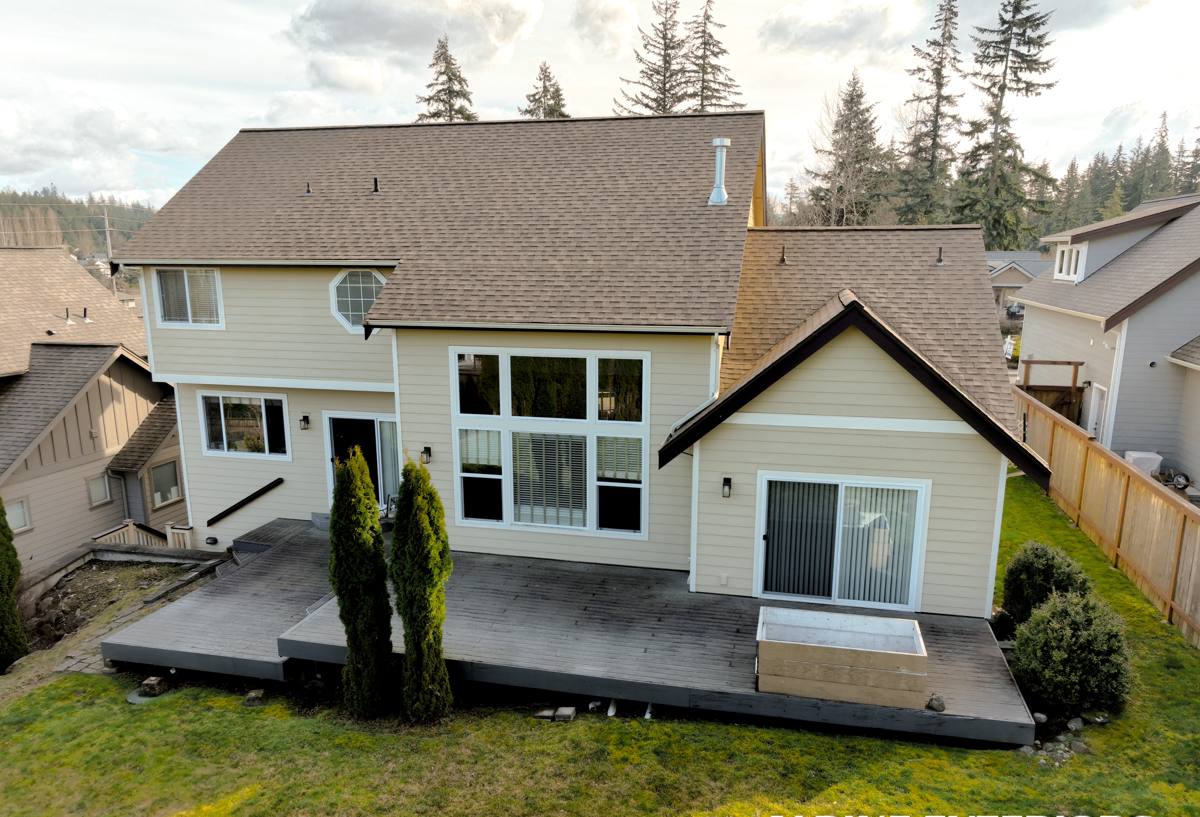
What Salt Air, Rain, and Moss Actually Do to Siding
Salt Air
Airborne salt is corrosive to exposed metal — nail heads, flashing edges, and fastener caps — and it accelerates the breakdown of caulk and paint film faster than the same products would wear a few miles inland. On lower-quality siding, that shows up as chalking, fading, and brittle trim joints years before you'd expect it.
Wind-Driven Rain
Rain that's being pushed sideways doesn't respect standard lap overlaps the way vertical rain does. It finds its way behind loose boards, through failed caulk lines, and around windows and corner trim that weren't flashed with a wind-exposed site in mind. Once water gets behind siding, the damage is happening on the sheathing and framing side, where you can't see it until it's advanced.
Moss and Prolonged Moisture
Whatcom County's long wet season means shaded siding — under eaves, behind landscaping, on north walls — can stay damp for extended stretches. Moss and algae take hold, and where they do, they hold moisture against the siding surface even longer. On wood-based products, that moisture cycle is what drives swelling, delamination, and eventual rot.
Signs Your Semiahmoo Home Needs Siding Repair
- Soft, spongy, or visibly swollen boards, especially near the ground, around windows, or under eaves
- Paint that's peeling, bubbling, or failing in patches rather than evenly across a wall
- Visible moss or algae growth that keeps coming back after cleaning
- Gaps or cracks at seams, corners, and trim joints where caulk has shrunk or pulled away
- Staining or streaking below nail heads or fastener lines
- Warped, cupped, or buckled panels, particularly on the sides of the house that face the water or prevailing wind
- A musty smell or visible staining on interior walls that share a wall with damaged siding
Any one of these on its own might be a simple repair. Several of them together, especially on the same wall, usually mean water has been getting behind the siding for a while and the repair needs to start with the sheathing, not just the surface.
What a Correct Repair Actually Involves
A siding repair that's done right isn't just pulling a bad board and nailing up a new one. On a Semiahmoo property, we treat every repair as a chance to check whether the underlying problem — a flashing gap, a failed seal, a moisture trap — has been fixed, not just covered up.
Diagnose Before You Patch
We pull back the damaged siding to look at the water-resistive barrier, flashing, and sheathing underneath. If the framing is compromised, replacing the visible board without addressing what's behind it just guarantees the same failure comes back in a year or two.
Match the Material
Repairs need to match the existing siding in profile, exposure, and finish as closely as possible so the patch doesn't stand out or create a mismatched weather seal at the transition. Where we're replacing sections of James Hardie siding, we work from the same product line and ColorPlus finish wherever it's still available, so the repair blends and performs consistently with the rest of the wall.
Reseal and Reflash Properly
Every repair gets proper flashing at windows, doors, and horizontal transitions, and fresh sealant at joints designed to move without cracking. On a site that takes wind-driven rain, these details matter more than they would on a sheltered inland lot.
Address the Moisture Source
If moss or prolonged dampness caused the damage, we look at what's keeping that section wet — poor drainage, tight landscaping against the wall, inadequate roof overhang — and flag it, because a repair without addressing the cause is a repair you'll be paying for again.
Repair or Replace? What We Actually Look At
Not every damaged section needs a full re-side, and not every home is a good candidate for spot repairs. Here's how we weigh it:
| Factor | Leans Toward Repair | Leans Toward Replacement |
|---|---|---|
| Extent of damage | Isolated to one or two areas | Spread across multiple walls |
| Cause | Localized flashing or caulk failure | Widespread moisture intrusion or old, failing material |
| Underlying material | James Hardie or another fiber cement product still in good condition | Wood-based or vinyl siding showing systemic wear |
| Age of siding | Well within expected service life | Approaching or past typical lifespan |
| Sheathing condition | Sound, dry framing behind the damage | Soft or rotted sheathing found during inspection |
We'll always tell you honestly which side of that table your home falls on. If a repair is the right call, we're not going to talk you into a full replacement.
Why We Repair With James Hardie Fiber Cement
This company installs and repairs with James Hardie fiber cement exclusively — we don't install LP SmartSide, vinyl, Cemplank, Allura, primed spruce, or cedar. For a bayfront property, the reasoning is straightforward: fiber cement doesn't rot, doesn't attract moss the way wood substrates can, and holds up to salt air and driving rain far better than wood-based or vinyl alternatives over the long run. Hardie's HZ5 product line is engineered specifically for wetter, harsher climates like ours, and the factory-applied ColorPlus finish resists the fading and chalking that salt air accelerates on field-painted surfaces.
When we repair a section of Hardie siding, we're not fighting the material — it holds its shape, takes fasteners consistently, and matches predictably. When we're asked to patch a failing wood or vinyl product, we'll do honest work, but we'll also tell you plainly if the underlying material is what's driving the recurring problem, because no repair fixes a product limitation.
How We Handle a Repair Job on Semiahmoo
- Inspection. We walk the exterior, check moisture-prone areas first (north walls, under eaves, near grade), and pull back siding where damage suggests deeper trouble.
- Written scope. You get a clear explanation of what's damaged, why, and what the repair involves — no vague line items.
- Material match. We source matching Hardie product and finish, or discuss options where an exact match isn't available.
- Repair and reflash. Damaged sections come out, sheathing gets checked and addressed if needed, and new siding goes in with correct flashing and sealant.
- Final check. We walk the repaired area with you before we call it done.
Why It Matters to Hire a Crew That Already Works Semiahmoo
Repair work on a bayfront property is different from repair work three miles inland, and it shows in the details: how tight the flashing needs to be around a window that takes direct spray, how much clearance to leave near grade where salt spray and standing moisture both show up, and which walls in this specific microclimate are going to need attention again if the underlying cause isn't dealt with. A crew that's already worked homes on this spit knows what to check first and won't need to learn Semiahmoo's weather at your expense.
Simple Maintenance That Extends Siding Life Here
- Rinse off salt residue and grime periodically, especially on walls facing the water
- Keep gutters and downspouts clear so water isn't running down the siding face
- Trim back landscaping that's holding moisture against a wall
- Address any moss or algae growth early, before it spreads or holds moisture longer
- Re-caulk joints at the first sign of cracking or gaps, rather than waiting for water intrusion
- Have isolated soft spots or paint failures inspected promptly rather than watching them spread
If you're seeing any of the warning signs above on a Semiahmoo home, we're happy to take a look and give you a straight answer on what it needs — repair, partial replacement, or just routine maintenance. Reach out for a free, no-pressure estimate using the form below.