 Blaine Siding
 Semiahmoo's Waterfront Exposure Is a Different Kind of Roofing Problem
Semiahmoo sits out on the water, and that changes what a roof has to deal with compared to homes further inland in Whatcom County. Homes here catch salt-laden air off the bay, take wind-driven rain straight off the water with almost nothing to break it up, and sit under a marine layer that keeps everything damp for long stretches of the year. A roofing material that holds up fine three miles inland can wear noticeably faster out on the spit or along the waterfront because it's dealing with airborne salt and near-constant moisture exposure that inland homes simply don't see.
That combination — salt air, driving rain, and a long moss season — is exactly why we get asked about metal roofing so often in this neighborhood. It's not a trend; it's homeowners noticing that their asphalt shingles or wood shakes are aging faster than they expected and looking for something that's built to handle the specific conditions Semiahmoo throws at a roof.
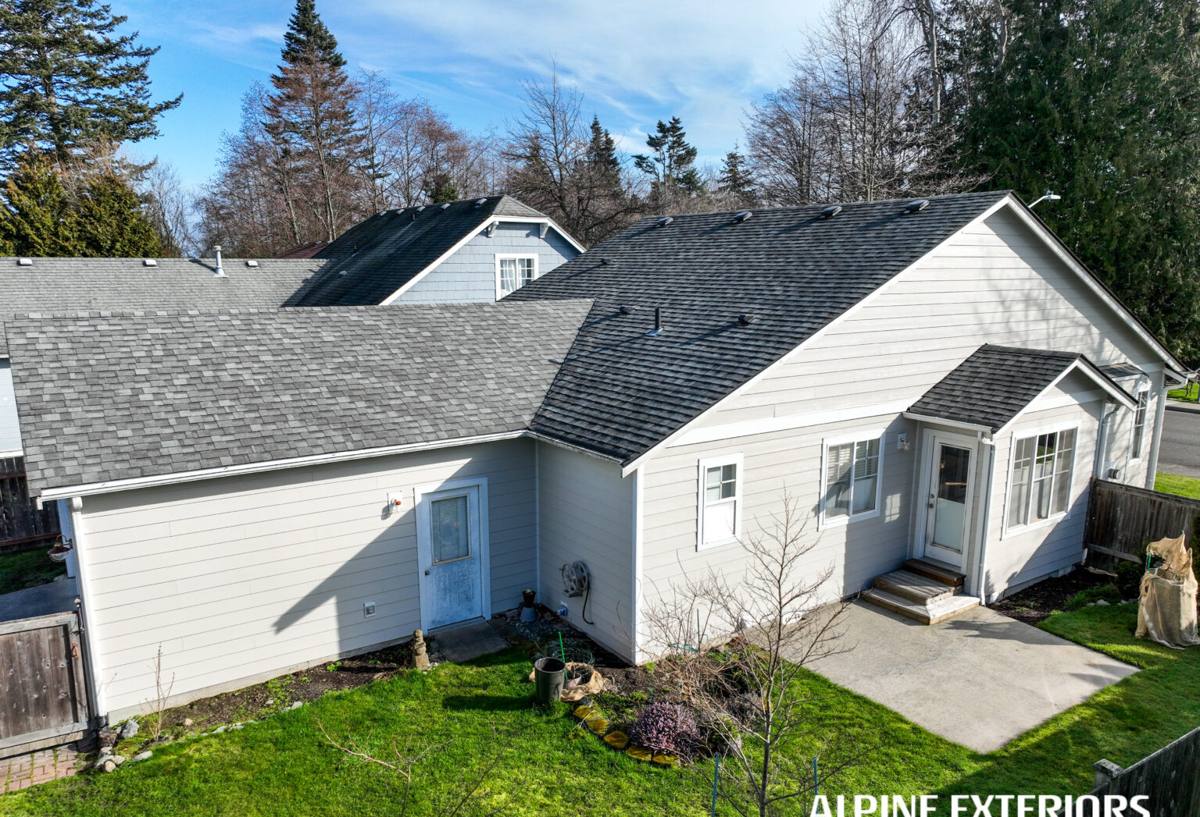
What Salt Air Actually Does to a Roof Over Time
Salt air doesn't just sit on a roof surface — it works its way into fasteners, flashing seams, and any exposed metal edge. On a standard asphalt roof, the bigger issue is usually the granule loss and accelerated UV breakdown that comes with constant moisture cycling. On homes with older metal accents, gutters, or flashing, salt exposure speeds up corrosion at joints and fastener heads if the metal and coatings weren't chosen with coastal exposure in mind.
This is why material selection matters more in Semiahmoo than it does for a similar house a few miles inland. The right metal, the right coating, and the right fasteners aren't optional upgrades here — they're the difference between a roof that looks the same in fifteen years and one that's showing corrosion streaks at every seam by year eight.
Blaine's Moss Season and Why It's Longer Than People Expect
Whatcom County's wet season stretches long, and shaded, north-facing roof slopes near the water can stay damp for weeks at a time. That's ideal growing conditions for moss, and moss doesn't just sit on a roof looking unattractive — it holds moisture against the roofing material, works into seams and laps, and on wood or asphalt roofing it can lift edges and accelerate rot in the decking underneath.
Metal roofing doesn't eliminate moss risk entirely — moss can still take hold in debris buildup or on north-facing runs with poor airflow — but a smooth, properly sloped metal panel gives moss far less to grip onto than shingle tabs or shake butt-ends, and it sheds the standing moisture that moss needs to establish itself in the first place.
Why Metal Roofing Fits This Particular Climate
We don't push metal roofing on every home — it's not the right fit for every budget or every architectural style — but for Semiahmoo's exposure profile, the case is straightforward:
- Wind-driven rain resistance: Properly lapped and fastened metal panels shed heavy, sideways rain far better than shingle systems, which rely on gravity and can allow wind-driven water to work backward under tabs.
- Slower moss colonization: Fewer horizontal ledges and rough surfaces for spores and debris to catch on.
- Longevity under UV and salt cycling: A quality metal roof with the right coating system holds its finish and structural integrity far longer than asphalt exposed to the same salt-air cycling.
- Lower long-term maintenance burden: Fewer granules to lose, no shake splitting, and less susceptibility to the freeze-thaw-damp cycle that wears down other materials here.
The trade-off is upfront cost and the fact that a metal roof only performs as well as its installation — poor flashing or fastener work on a metal roof causes problems just as real as a bad shingle job, sometimes more visible ones.
Standing Seam vs. Exposed-Fastener Panels
For waterfront and near-waterfront homes, we generally steer people toward standing seam over exposed-fastener panel systems, and the reasoning comes straight from the exposure:
| Factor | Standing Seam | Exposed-Fastener Panel |
|---|---|---|
| Fastener exposure to salt air | Fasteners hidden under seams, minimal salt contact | Fasteners exposed on the panel face, more vulnerable to corrosion over time |
| Wind-driven rain performance | Interlocking seams shed sideways rain well | Relies on gasketed screws staying tight and sealed |
| Long-term maintenance | Very low — no fasteners to re-torque or reseal | Gaskets and washers can need attention over the roof's life |
| Upfront cost | Higher material and labor cost | More budget-friendly |
| Best fit | Waterfront and high-exposure sites | Sheltered sites, outbuildings, budget-driven projects |
Coatings and Fastener Metal Matter as Much as the Panel
On a Semiahmoo roof, we pay close attention to two things a lot of homeowners don't think to ask about: the coating system on the panel (a good PVDF-type finish holds color and resists salt-driven chalking far better than a basic paint system) and the fastener/flashing metal compatibility. Mixing incompatible metals — say, the wrong fastener alloy against a given panel — sets up galvanic corrosion that shows up as staining and pitting right at the fastener, often within a few years in a salt-air environment. It's a small detail that makes a real difference in how the roof looks and holds up a decade out.
What a Correct Metal Roof Install Actually Involves
A metal roof is only as good as what's underneath it and how the details are handled. On every Semiahmoo project we check off the same core items, because skipping any one of them is where coastal metal roofs actually fail:
- Full tear-off and deck inspection — any soft, rotted, or moss-damaged sheathing gets replaced before anything new goes down
- Ice-and-water shield at eaves, valleys, and any low-slope transitions, not just the minimum code strip
- High-temp synthetic underlayment rated for the panel type, sealing out wind-driven rain even if a seam is ever compromised
- Proper ridge and soffit ventilation so damp attic air isn't sitting against the underside of the deck
- Corrosion-compatible flashing at every penetration, chimney, and wall transition — matched metal, not whatever's convenient
- Fastener spacing and clip attachment matched to the wind exposure of the specific site, not just a generic schedule
- Panel seams and end laps sealed and lapped to shed water in the prevailing wind direction for that roof
Our Process for Semiahmoo Metal Roofing Projects
We start with an on-site inspection that looks at the roof itself, the deck condition underneath, and the specific exposure of that home — a roof tucked behind trees on the leeward side of the spit gets a different wind and moisture read than one facing open water. From there we walk through panel and coating options with actual trade-offs laid out, not just a single recommendation. Once a system is chosen, we handle tear-off, deck repair where needed, underlayment, and the panel install as one continuous job rather than staging it out — a half-finished roof left exposed overnight in this climate is asking for water intrusion. We finish with a walk-through so the homeowner understands the flashing details and any maintenance items specific to their roof.
Maintenance in a Salt-Air, High-Moss Environment
Metal roofing is genuinely lower-maintenance than asphalt or shake, but "lower-maintenance" doesn't mean "no maintenance" in this environment. A few things we recommend to Semiahmoo homeowners:
- Rinse accumulated salt residue off the roof surface periodically, especially after long dry spells followed by wind events
- Keep gutters and valleys clear of needles and debris so water isn't sitting against panel edges or fascia
- Walk the roofline visually once or twice a year looking for any moss establishing on shaded slopes or in debris pockets
- Have flashing and penetration seals checked every few years, since these are the points most likely to need attention before the panels themselves ever do
Cost Factors Homeowners Should Understand Going In
Metal roofing costs more upfront than asphalt, and the range on any given Semiahmoo home depends on a handful of real factors rather than a flat per-square-foot number:
| Factor | Why It Moves the Price |
|---|---|
| Panel system (standing seam vs. exposed-fastener) | Standing seam costs more in material and labor but performs better in wind-driven rain and salt exposure |
| Roof complexity | Valleys, dormers, and multiple roof planes mean more flashing work and cut panels |
| Deck condition | Rot or moss damage found at tear-off adds sheathing repair before the new roof goes on |
| Coating/finish grade | Higher-grade coatings resist salt-air fading and chalking longer, at a higher material cost |
| Ventilation upgrades | Adding proper ridge/soffit venting during the reroof adds labor but protects the deck long-term |
We give straightforward, written estimates broken out so homeowners can see what's driving the number, rather than a single lump figure.
Why It Matters That We Already Work in Semiahmoo
A roofing crew that mostly works inland jobs isn't necessarily thinking about galvanic corrosion between fastener and panel metal, or about how a roof facing open water needs different fastener spacing than one tucked behind a treeline. We work in Blaine and around Semiahmoo regularly enough that accounting for wind exposure, salt air, and the region's moss season isn't a special consideration we have to think through from scratch — it's just part of how we spec and install every roof out here. That local familiarity shows up in the small decisions: which flashing metal we pair with which panel, where we add extra ice-and-water protection, and how we sequence a job around this area's weather windows.
If you're weighing a metal roof for a Semiahmoo home, we're happy to come take a look, walk the roof, and talk through what actually makes sense for your specific site and budget — no pressure, no pushy sales pitch. Reach out for a free estimate using the form below.