 Blaine Siding
 Deck Repair Built for Custer's Climate
Custer sits close enough to the water and to the open farmland north of Blaine that decks here take a beating most inland homes never see. Salt-laden air off the Strait works into fasteners and metal connectors year-round, driving rain drives moisture sideways under railings and ledger boards, and a long moss season keeps deck surfaces damp for months at a stretch. None of that is dramatic on its own, but stacked together over a few Whatcom County winters, it's exactly what turns a solid deck into a soft, spongy, or unsafe one.
Deck repair in Custer isn't the same job as deck repair in a dry inland climate. The failure points are different, the materials that hold up are different, and the timing of when you catch a problem matters more here because moisture damage in this climate doesn't stay small — it spreads.
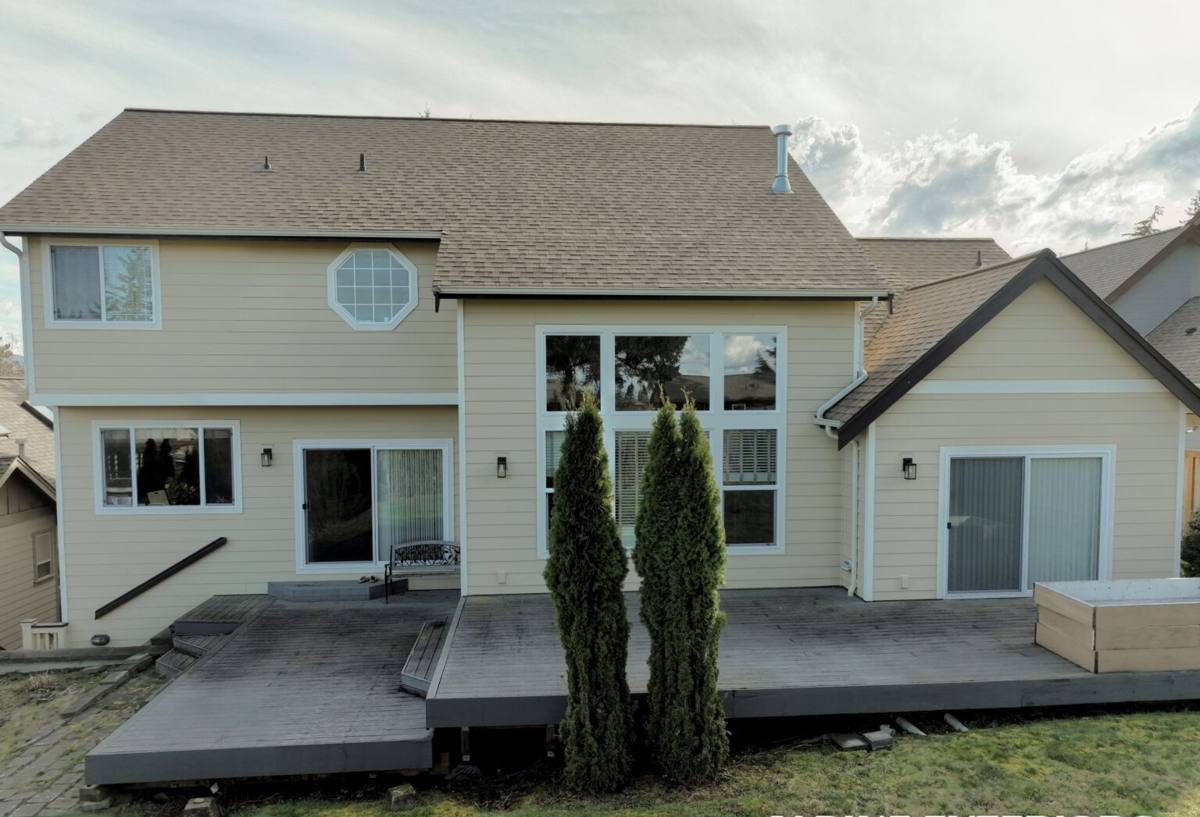
What Actually Fails on Custer Decks
Most of the repair calls we see in this area fall into a short list of recurring problems. Understanding which one you're dealing with helps you know what kind of repair you actually need, versus what a quick patch will only delay.
Ledger Board and Ledger Flashing
The ledger board — where the deck attaches to the house — is the single most common failure point we find. If the flashing behind it was installed poorly, or has simply aged out, driving rain pushes water behind the siding and into the ledger over time. This is a structural issue, not a cosmetic one, because the ledger carries a large share of the deck's load.
Fastener and Hardware Corrosion
Salt air accelerates corrosion in exposed screws, joist hangers, and structural connectors — especially on decks facing open exposure toward the water or fields. Corroded hardware can look fine from a few feet away while losing real holding strength underneath. This is why we check hardware condition directly rather than assuming a deck is fine because the boards look okay.
Moss, Algae, and Surface Decay
A long moss season means deck boards, especially in shaded or north-facing spots, stay damp far longer than boards in full sun. Moss and algae hold moisture against the wood surface, which accelerates rot in real wood decking and can trap grime under composite boards if they aren't cleaned periodically. Left alone, this turns a cleaning problem into a board-replacement problem.
Railings and Post Connections
Railings take direct wind and rain exposure and are often the first thing to loosen. A wobbly railing is sometimes just a loose bolt — but it can also be a sign that the post base has been sitting in trapped moisture and has started to soften.
Stair Stringers and Ground-Level Framing
Anything close to grade holds moisture longer and gets less airflow. Stair stringers and the framing near ground level are worth checking even when the rest of the deck looks solid, because problems here tend to develop quietly.
How We Assess a Deck Repair in Custer
We don't quote a repair off a quick walk-around. A proper assessment means physically checking the parts of the deck that fail first in this climate, not just the parts that are visible from the yard.
- Probe the ledger board and surrounding framing for soft spots or hidden rot
- Check ledger flashing condition where it meets the house siding
- Inspect joist hangers, post bases, and other structural hardware for corrosion
- Test railings and posts for movement, not just visible damage
- Check stair stringers and any framing near ground level
- Assess moss and algae buildup on the deck surface and underneath, where drainage allows
- Check board spacing and drainage — decks that don't shed water well hold moisture longer
From that assessment, we can tell you honestly whether you're looking at a targeted repair — replacing specific boards, hardware, or flashing — or whether the damage has spread far enough that a full or partial rebuild makes more sense. We'd rather tell you that upfront than have you pay for a patch that fails again in a year or two.
Repair Versus Replace: How We Decide
Not every deck problem needs a full rebuild, and not every deck problem should be patched. The honest answer usually comes down to where the damage is and how far it's spread.
| Situation | Typical Approach | Why |
|---|---|---|
| A few soft or cracked boards, structure otherwise sound | Board-by-board replacement | Framing is healthy; no reason to touch what isn't failing |
| Corroded hardware, boards still solid | Hardware and fastener replacement | Restores structural strength without disturbing decking |
| Ledger board rot from flashing failure | Ledger and flashing repair, sometimes partial framing replacement | Structural connection to the house has to be solid — no shortcuts here |
| Widespread rot across joists and multiple boards | Partial or full rebuild | Patching isolated spots on a deck that's failing broadly rarely holds |
| Heavy moss/algae, structure sound | Cleaning and surface treatment, not replacement | Surface growth alone doesn't mean structural failure |
The goal is always to fix what's actually broken — not to sell a bigger job than the deck needs, and not to patch over something that's going to keep failing.
Materials That Hold Up in This Climate
Whatever material your deck is built from, the details of the repair matter more here than in a milder climate. A few things we pay attention to on every job in the Custer area:
Fasteners and Hardware
We use fasteners and structural hardware rated for coastal or high-moisture exposure. Standard hardware that's fine in a drier climate corrodes faster here, and re-doing a repair because the hardware failed early isn't a good use of anyone's money.
Flashing Details
Ledger flashing gets particular attention because it's the point of the deck most exposed to driving rain pushed sideways against the house. Getting the flashing overlap and drainage path right is what actually prevents the next round of hidden rot — it's not a cosmetic detail.
Wood Versus Composite Repairs
Real wood decking can be repaired board-by-board and, with regular cleaning, holds up fine here — but it does need that maintenance, especially through moss season. Composite decking sheds moss and algae more easily on the surface, though it still needs proper drainage underneath and isn't immune to hardware or framing issues below. We'll talk through the honest maintenance trade-offs of each rather than pushing one material as a fix-all.
Our Repair Process
Every deck repair we do in Custer follows the same basic steps, whether it's a small fix or a larger structural repair:
- On-site inspection, including probing hidden and ground-level areas, not just a visual check
- A clear, written explanation of what's actually wrong and why it happened
- An honest recommendation — repair, partial rebuild, or full rebuild — with the reasoning behind it
- A written estimate before any work starts, no surprise add-ons mid-job
- Repair work using fasteners and materials suited to this region's exposure
- A final walkthrough so you can see and understand what was done
We don't upsell repairs. If a deck needs a rebuild, we'll say so and explain why. If it just needs a few boards and some hardware, that's what we'll quote.
Maintenance That Extends the Life of a Repair
A good repair only lasts if the deck is maintained afterward, especially given how long moss season runs in this part of Whatcom County. A few habits make a real difference:
- Clear moss and debris from deck surfaces and gaps between boards at least once a year
- Keep gutters and downspouts near the deck clear so water isn't dumping directly onto or under it
- Check railings and stair connections for movement each season
- Look at the ledger area where the deck meets the house for any staining or soft siding
- Reapply sealant or stain on wood decking on the schedule the product calls for — don't stretch it out
Why Hire a Crew That Already Works in Custer
A contractor who works this area regularly already knows which parts of a Custer deck tend to fail first, what the local exposure to salt air and driving rain actually does to fasteners and framing over time, and how long moss season really runs here versus a generic seasonal estimate. That local familiarity means less time spent diagnosing and more time spent fixing the actual problem — and it means the repair is built with this climate in mind from the start, not adapted after the fact.
If you're seeing soft spots, loose railings, staining near the house, or heavy moss buildup on your deck, it's worth having it looked at before the next wet season adds to the damage. We're happy to come out, take an honest look, and give you a straightforward, no-pressure estimate — no obligation, just a clear picture of what your deck actually needs.