 Blaine Siding
 Windows in Peace Arch Take a Different Kind of Beating
Homes near the Peace Arch border crossing sit in one of the more exposed pockets of Blaine. You're close enough to Semiahmoo Bay and the Strait of Georgia that salt-laden air is a constant, and the same weather systems that roll off the water bring driving, sideways rain rather than the gentle straight-down kind. Add in Whatcom County's long, damp shoulder seasons — where surfaces stay wet for days at a time — and you get a moss season that isn't really a season at all, it's most of the year. Windows here don't fail because homeowners neglected them. They fail because the installation didn't account for what this specific stretch of coastline does to a building envelope.
Salt air accelerates corrosion on hardware, fasteners, and lesser window components. Wind-driven rain finds gaps that would never leak in a calmer climate. And persistent moisture feeds the moss, algae, and mildew that trap dampness against wood trim and sills. A window that's a fine product almost anywhere else in the state can still underperform in Peace Arch if it's installed like the weather is an afterthought.
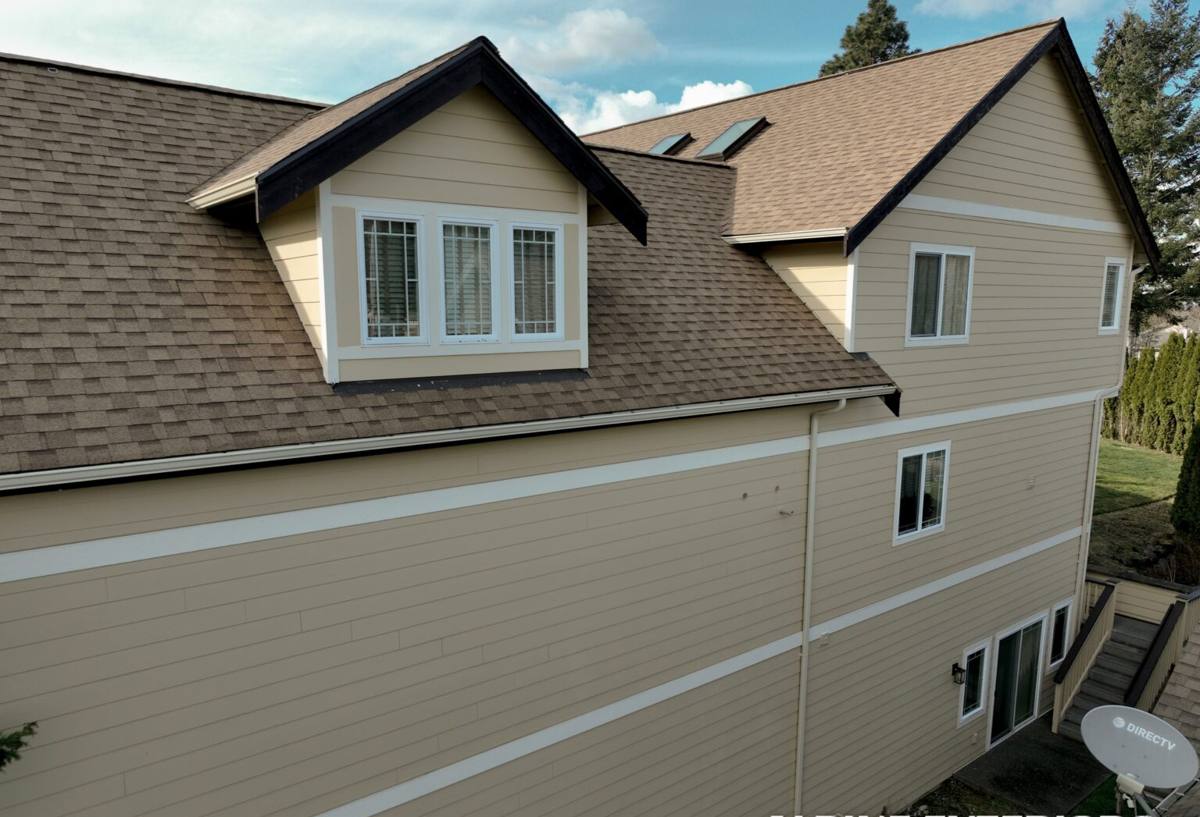
Signs Your Current Windows Are Losing the Battle
Most window failures near the border don't show up as a dramatic leak — they show up as small, easy-to-ignore signs that add up over a few wet seasons.
- Soft or discolored wood trim around the window frame, especially on the side that faces the water or prevailing wind
- Condensation building up between panes, which means the seal on a double-pane unit has failed
- Drafts you can feel with a hand near the sash, even with the window latched
- Visible gaps, cracked caulk, or paint that's bubbling at the frame's edge
- Moss or dark streaking on the sill or the wall just below the window
- Hardware — locks, cranks, hinges — that's stiff, corroded, or won't fully engage
- Higher heating bills without any other explanation
Any one of these on its own might just mean a caulk touch-up. Two or three together, especially on an older window, usually means moisture has already gotten past the surface and into the framing.
What a Correct Window Installation Actually Involves
The window itself is only part of the job. In a climate like this, how it's installed matters as much as what's installed.
Flashing and Drainage Come First
Before a new window ever goes into the opening, the rough opening needs proper flashing — a water-resistive barrier integrated with the wall's house wrap so that any water that does get behind the siding is directed back out, not into the framing. This is the step that gets skipped most often on rushed jobs, and it's the step that matters most in a wind-driven-rain environment. We treat every opening as if it will see water at some point, because on this coastline it eventually will.
Sealing That Accounts for Wind Pressure
A bead of caulk around the trim isn't a seal — it's cosmetic. The real seal happens at the window's nailing fin and the sill pan underneath it, using materials rated to stay flexible through temperature swings and to bond even when the framing is a little damp, which it often is here for weeks at a stretch. Wind-driven rain pushes water uphill against gaps that would never leak in still weather, so the sealing detail has to hold under pressure, not just gravity.
Fastener and Hardware Choices
Salt air corrodes standard fasteners and hinges faster than most homeowners expect. We use corrosion-resistant fasteners and hardware suited to a marine-influenced climate rather than whatever ships standard with a budget window package, because replacing corroded hardware on a five-year-old window is a false economy.
Choosing the Right Window for This Exposure
There's no single "best" window brand or style for every house — it depends on the wall's exposure, the home's age, and your budget. But some material and glass choices hold up more predictably in salt air and heavy moisture than others.
| Option | How It Handles Salt Air & Moisture | Trade-Off |
|---|---|---|
| Vinyl frame | Won't corrode or rot; low maintenance | Limited color/finish options; can flex in large sizes |
| Fiberglass frame | Very stable in wet, salty conditions; strong | Higher upfront cost |
| Wood or wood-clad | Classic look but vulnerable where cladding is breached | Requires more diligent maintenance near the coast |
| Aluminum frame | Strong but conducts cold and can corrode without coating | More condensation risk; needs marine-grade finish |
| Double-pane, Low-E glass | Solid baseline performance for our winters | Standard choice; not the most efficient available |
| Triple-pane glass | Better insulation and sound dampening from wind/rain | Added cost and weight; matters more on exposed walls |
For most Peace Arch homes, vinyl or fiberglass frames with Low-E double-pane glass strike the right balance of durability and cost. On walls that take the brunt of the wind off the water, fiberglass and triple-pane upgrades earn their keep faster.
How Our Process Works
1. On-Site Assessment
We look at each window opening individually — not every wall on a house takes the same weather. We check the condition of the existing framing, sill, and any signs of past water intrusion before recommending anything.
2. Product Selection
We walk through frame material, glass package, and hardware options based on that wall's exposure and your budget — no upselling to the most expensive option if a mid-range unit will genuinely hold up.
3. Removal and Opening Inspection
Once the old window comes out, we inspect the rough opening for hidden rot or moisture damage. This is often the first time anyone's actually seen the condition of the framing in years, and it's the point where problems get caught before they're sealed back up.
4. Flashing, Sill Pan, and Air-Sealing
We install or repair flashing and a sloped sill pan so water sheds outward, then set the window plumb, level, and square before sealing the fin and interior air gap.
5. Trim, Finish, and Walkthrough
Exterior trim and caulking are finished to shed water, not just look clean, and we walk the job with you so you know what to watch for going forward.
What Drives the Cost
Every home and opening is different, so we give exact numbers only after a walkthrough — but these are the main factors that move the price up or down.
| Factor | Effect on Cost |
|---|---|
| Frame material (vinyl vs. fiberglass vs. wood-clad) | Fiberglass and wood-clad run higher than vinyl |
| Glass package (double-pane vs. triple-pane) | Triple-pane adds cost but pays back on exposed walls |
| Condition of existing framing | Rot repair at the opening adds labor and material |
| Window size and configuration | Larger or custom shapes cost more than standard sizes |
| Number of windows done at once | Bundling multiple openings typically lowers per-window cost |
| Access and story height | Second-story or hard-to-reach windows add labor time |
Why It Matters to Hire a Crew That Already Works This Area
A crew that mostly installs windows inland doesn't necessarily think about salt-air hardware corrosion, sill pan drainage for wind-driven rain, or how much moss buildup to expect on a north-facing sill by November. Working Blaine and the border area regularly means we've seen how different wall exposures in this specific stretch of Whatcom County actually perform over time — which details are worth the extra step and which are just upselling. It also means we're familiar with the permitting expectations for Blaine and the county, so there are no surprises mid-project.
Being local also means we're not disappearing after the install. If a seal needs a look after the first hard winter storm, we're a short drive away, not a call center.
Maintaining Your Windows After Installation
A correctly installed window still benefits from basic upkeep in this climate:
- Rinse salt residue off frames and glass periodically, especially after storms off the water
- Keep gutters and downspouts clear so runoff doesn't pool against upper-window sills
- Brush moss or algae off sills and trim before it holds moisture against the surface
- Check caulking annually and touch up any cracked or peeling sections early
- Exercise locks and cranks periodically so hardware doesn't seize from disuse
None of this is difficult, but skipping it is how a well-installed window still ends up with a shortened lifespan on this coastline.
Get a Straight Answer on Your Windows
If you're not sure whether your Peace Arch home needs a full window replacement or just some targeted repair and resealing, we're happy to take a look and tell you honestly. Use the form below to request a free, no-pressure estimate.