 Blaine Siding
 Cherry Point Roofs Deal With More Than Just Wind
Cherry Point sits right up against the water on the Whatcom County coastline, and that location shapes everything about how a roof ages here. It isn't just occasional storms that cause trouble — it's the daily grind of salt-laden air, wind coming straight off the Strait of Georgia, and a wet season that stretches on far longer than most homeowners expect. A roof in a sheltered inland neighborhood might go years between real problems. A roof at Cherry Point is working harder every single week, and when a storm does hit, it's often the final push on damage that's already been building quietly for months.
That's the context we bring to every storm damage call out here. We're not just patching whatever blew loose in the last windstorm — we're looking at the roof as a system that's been under constant coastal stress, and repairing it in a way that actually holds up to the next round.
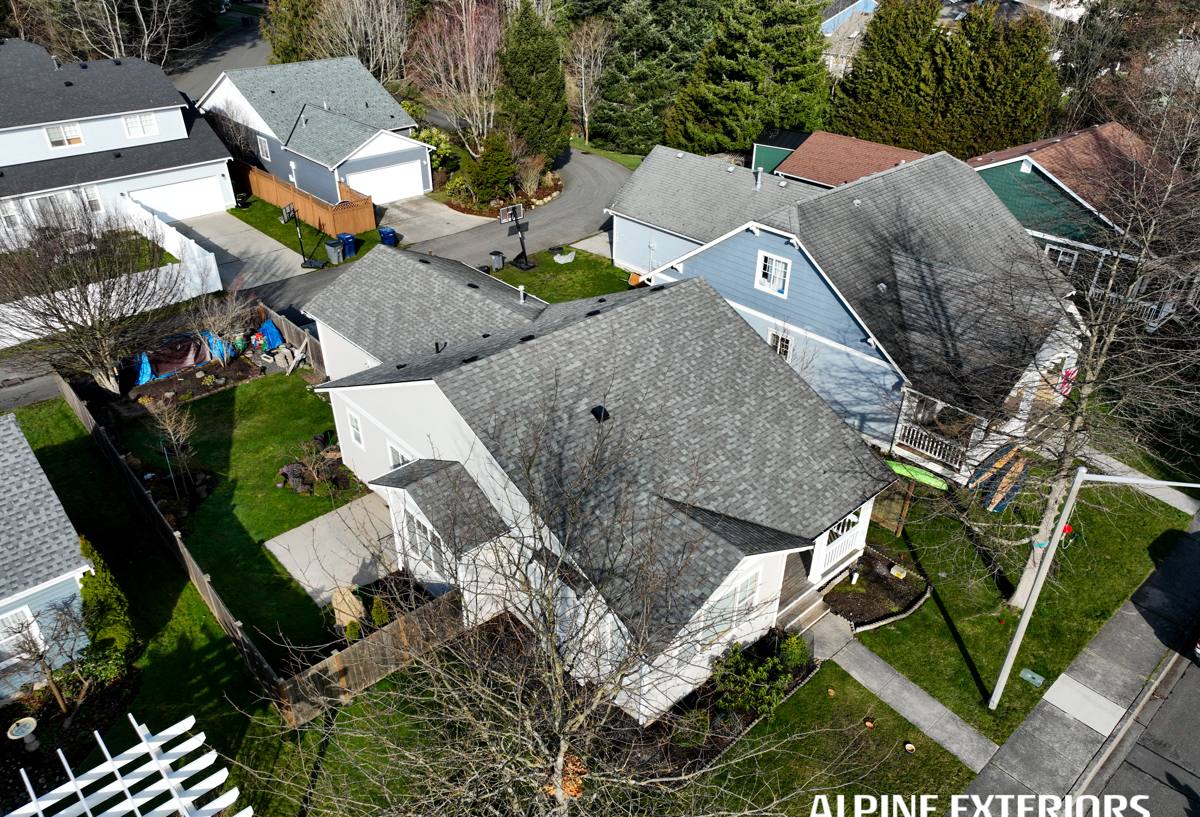
What Storm Damage Actually Looks Like on a Cherry Point Roof
Wind-Driven Rain, Not Just Wind
Straight-line wind gets blamed for a lot of roof damage, but out here the bigger enemy is often wind-driven rain — water pushed sideways and upward under shingles, flashing, and ridge caps instead of just running downhill the way it's supposed to. This kind of intrusion doesn't always leave an obvious mark on the outside. It shows up later as a stain on a ceiling, a musty smell in an attic, or soft decking that wasn't soft last year.
Wind Uplift and Missing or Lifted Shingles
Sustained wind off open water can lift shingle tabs, break seals, or tear pieces off entirely, especially on roofs that were already weakened by age or prior moisture damage. A missing shingle is an obvious problem. A lifted-but-not-missing shingle is the sneakier one — it looks fine from the ground but is no longer sealed against the next storm.
Debris Impact
Branches and debris come down in windstorms anywhere, but properties near tree lines and open fields around Cherry Point tend to see more of it than a tightly packed subdivision. Impact damage can range from a few cracked shingles to punctured decking, and it's not always visible without getting up on the roof.
Moss and Trapped Moisture
This region's long moss season deserves its own mention because it interacts directly with storm damage. Moss holds moisture against the roof surface, keeps shingles damp longer after every rain, and slowly lifts shingle edges as it grows. A roof with moss buildup is more vulnerable when a storm hits, because the shingles underneath are already compromised. We regularly find that what looks like straightforward storm damage is really storm damage on top of moss-related wear that's been developing for a season or two.
Why Waiting Costs More Here Than Elsewhere
Every roofing region has a version of "don't wait, it gets worse." In a marine climate like Cherry Point's, that timeline is compressed. Exposed decking or underlayment doesn't get a chance to dry out between rain events for much of the year, so a small leak that might sit dormant in a drier climate can turn into rot, insulation damage, or interior water staining within a few weeks here. Salt air also accelerates corrosion on exposed fasteners and metal flashing once a roof's protective layer has been breached, which is another reason a "small" storm repair shouldn't sit on the to-do list.
Our Storm Damage Repair Process
1. Full Roof Inspection, Not Just a Spot Check
We start by looking at the whole roof, not just the area a homeowner points us to. Storm damage rarely stays confined to one spot, and a thorough inspection catches lifted shingles, compromised flashing, or early moisture intrusion that hasn't announced itself yet.
2. Clear Documentation
We document what we find with photos and a written summary, which matters if you're filing an insurance claim. Clear, specific documentation of storm-caused damage (as opposed to general wear) makes the claims conversation much smoother.
3. An Honest Repair-or-Replace Recommendation
Not every storm-damaged roof needs to be replaced, and not every roof can be responsibly patched. We'll tell you which situation you're in and explain why, including how the age and condition of the roof going into the storm affects that decision.
4. The Repair Itself
Repairs are matched to the actual failure — resealing and replacing shingles, repairing or replacing damaged flashing, addressing any decking that's been compromised by moisture, and making sure the repaired section ties into the surrounding roof correctly so it isn't a weak point the next time wind and rain come through together.
Repair or Full Replacement? Key Factors We Weigh
Homeowners often want a straight answer before we've even looked at the roof, which is understandable but not realistic. The right call depends on a few specific factors:
| Factor | Favors Repair | Favors Replacement |
|---|---|---|
| Roof age | Roof is in the earlier half of its expected lifespan | Roof is already near or past its expected service life |
| Extent of damage | Localized to one section or slope | Spread across multiple areas or the whole roof |
| Decking condition | Solid, dry decking under the damaged area | Soft, rotted, or repeatedly wet decking |
| Prior moss/moisture history | Minimal history of trapped moisture | Chronic moss buildup or previous leak repairs nearby |
| Insurance scope | Claim covers a defined repair area | Adjuster's scope already supports full replacement |
We'll walk through these factors with you directly rather than defaulting to whichever option is more profitable for us. A well-executed repair on a roof with life left in it is often the right, cost-effective answer.
Materials We Use and Why
Given the salt exposure and near-constant moisture cycle at Cherry Point, we lean toward materials and fastening methods with a strong track record in marine and coastal conditions — corrosion-resistant fasteners and flashing, underlayment that holds up under repeated wetting, and shingle products with solid wind ratings. Some lower-cost or highly maintenance-sensitive roofing products simply don't make sense for this environment; they may perform fine inland but require more upkeep and are less forgiving of installation error out here. We'll always explain the trade-offs of any material we recommend rather than just naming a brand.
Working With Your Insurance Claim
Storm damage repairs often involve an insurance claim, and we're used to working alongside that process. That means providing damage documentation the adjuster can use, being available to walk the roof with them if needed, and writing repair scopes that reflect what actually needs to be fixed. What we won't do is inflate a scope of work to chase a bigger payout — our documentation reflects the real damage, which protects you if questions come up later.
Why a Crew That Already Works Cherry Point Matters
Storm repair isn't just a technical skill, it's a logistics problem, and local familiarity solves a lot of it. Knowing the access to waterfront and rural properties in the area, understanding how quickly weather windows can close near the water, and having already worked with Whatcom County permitting and inspection expectations all shorten the time between "storm hit" and "roof is sound again." A crew showing up from well outside the area is starting from zero on all of that, on a job where speed and correct sequencing genuinely matter.
We also see the long-term pattern of how roofs perform in this specific stretch of coastline — which flashing details tend to fail first, which slopes take the brunt of wind-driven rain, and how quickly moss reestablishes after a repair. That pattern recognition comes from repeated work in the area, not from a single job.
After a Storm: A Quick Homeowner Checklist
- Look for shingles in the yard, gutters, or on the ground near the house
- Check ceilings and attic spaces for new staining, damp spots, or musty odor
- Note any sagging, soft-feeling, or visibly uneven roof sections from the ground
- Check gutters and downspouts for granule buildup, a sign of shingle wear
- Photograph any visible exterior damage before cleanup, for insurance purposes
- Avoid getting on the roof yourself, especially on wet or moss-covered surfaces
- Call for an inspection promptly rather than waiting to see if a small leak gets worse
Get a Straight Answer on Your Roof
If your Cherry Point home has been through a recent storm, or you're noticing signs that damage has been developing quietly over time, we're glad to take a look. We'll give you a clear, honest assessment of what's actually going on and what it will take to fix it right — no pressure, no upsell. Reach out using the form below for a free estimate.