 Blaine Siding
 Roofing for a Tough Stretch of Coastline
Cherry Point sits on one of the more exposed pieces of shoreline in Whatcom County, and the homes out here take a beating that roofs a few miles inland simply don't see. Salt-laden air off the Strait of Georgia, wind-driven rain that comes in sideways instead of straight down, and a moss season that can run eight or nine months out of the year all combine to shorten the life of a roof that wasn't built or installed with this specific environment in mind. A new roof installation here isn't just about swapping old shingles for new ones. It's about choosing materials and installation details that are actually suited to salt exposure, sustained moisture, and biological growth.
We install roofs across Blaine and the surrounding Whatcom County coastline, and Cherry Point is part of our regular service area. That matters more than most homeowners realize, and we'll explain why later in this page. First, let's talk about what this climate actually does to a roof over time.
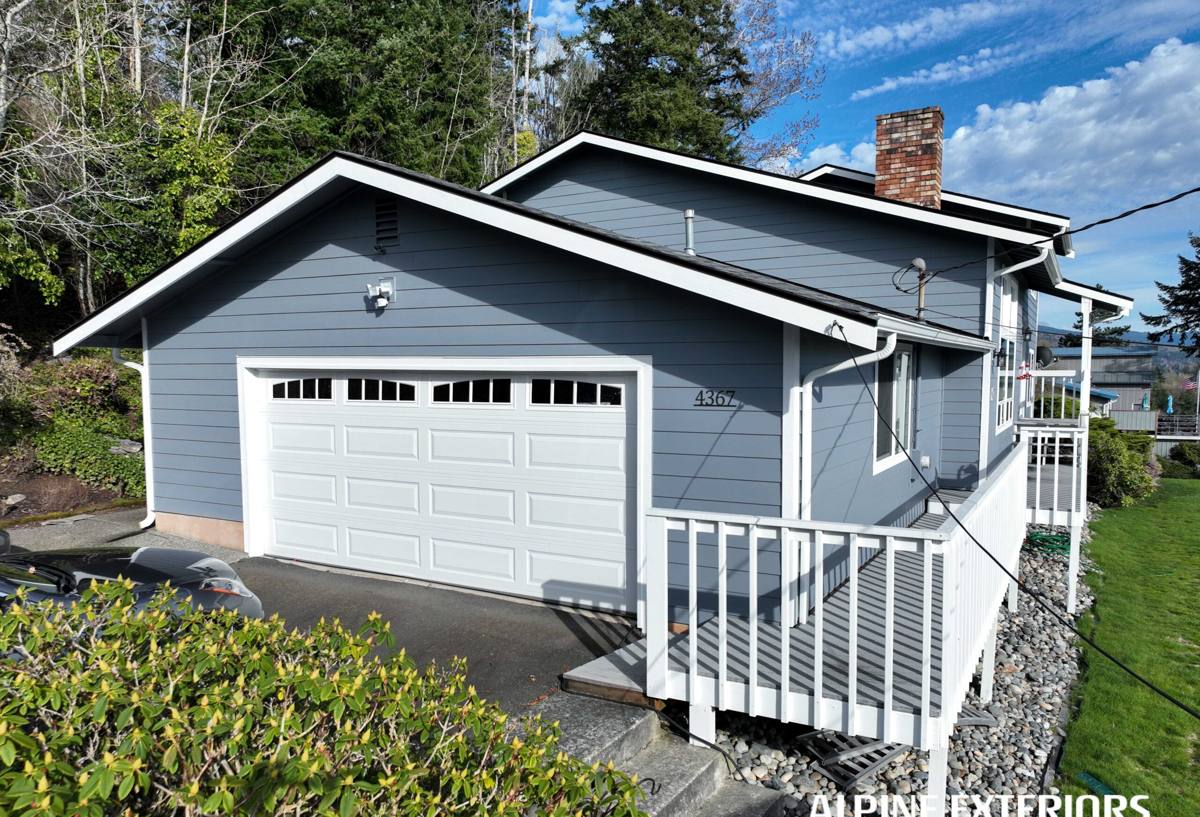
What Salt Air, Driving Rain, and Moss Do to a Roof
Salt Air and Corrosion
Airborne salt is corrosive to exposed metal. Roofing nails, flashing, drip edge, vent caps, and any exposed fasteners are all vulnerable if they aren't rated for coastal exposure. Standard electro-galvanized fasteners can start showing rust streaks and losing holding strength well before a comparable roof inland would. Over years, corroded fasteners loosen, flashing seams open up, and water finds its way in through paths that were never a problem when the roof was new.
Wind-Driven Rain
Blaine and the Cherry Point area get plenty of rain that doesn't fall straight down — it's pushed sideways by wind off the water. That kind of weather exploits any gap in a roof system that relies on gravity alone to shed water. Shingle laps, valley flashing, and roof-wall transitions all need to be installed with wind-driven rain in mind, not just a standard rainfall pattern. This is one of the most common places we find shortcuts on roofs that were installed by crews without local experience.
Moss and Sustained Moisture
Northwest Washington's long, damp shoulder seasons are ideal for moss growth, and Cherry Point's tree cover and coastal humidity make it worse than average. Moss holds moisture against the roof surface, works its way under shingle tabs, and lifts material over time. On a new roof, the right material choice and edge details can slow moss colonization significantly. On an older roof, established moss is usually a sign the underlying shingles have already been compromised.
What a Correct New Roof Installation Actually Involves
A roof is a system, not a single product. Shingles get the attention, but most leaks and premature failures trace back to what's underneath and around them. A correct installation for this climate includes:
- Full tear-off to the decking so we can inspect and repair any rot or soft spots before anything new goes down
- Ice-and-water shield or equivalent self-adhering membrane at eaves, valleys, and roof-wall intersections, where wind-driven rain and ice damming are most likely
- Synthetic underlayment rated for extended exposure, since Northwest weather can delay a job or leave underlayment exposed longer than a dry-climate schedule assumes
- Corrosion-resistant fasteners and flashing suited to coastal salt exposure
- Balanced intake and exhaust ventilation, sized to the attic, not just a token ridge vent
- Properly stepped and counter-flashed details at chimneys, walls, and dormers
Skip any one of these and the roof may look fine for a season or two before the shortcut shows up as a leak, a soft spot, or premature granule loss.
Choosing a Roofing Material for Cherry Point's Climate
There's no single "best" roofing material for every home — it depends on budget, roof pitch, architectural style, and how much long-term maintenance a homeowner wants to take on. Here's how the common options stack up specifically against salt air, wind-driven rain, and moss:
| Material | Salt Air Resistance | Wind-Driven Rain | Moss Resistance | Typical Lifespan |
|---|---|---|---|---|
| Architectural asphalt shingle | Good, with coastal-rated fasteners | Good with correct underlayment/flashing | Moderate; benefits from algae-resistant granules | 25–30 years |
| Standing seam metal | Very good with proper coatings/fasteners | Excellent — few horizontal laps | Very good; sheds moisture quickly | 40–50+ years |
| Cedar shake | Fair; needs regular maintenance | Fair; more seams and gaps | Poor without diligent upkeep | 20–30 years with maintenance |
| Synthetic/composite shingle | Good | Good with proper installation | Good, low water absorption | 30–50 years |
For most Cherry Point homes, a quality architectural asphalt shingle with coastal-appropriate flashing and fasteners is the practical choice. Where budget allows and the homeowner wants to minimize long-term maintenance, standing seam metal performs exceptionally well against everything this climate throws at a roof.
Our Installation Process
1. On-Site Assessment
We start with a full roof and attic inspection — not just a look from the ground. We check decking condition, existing ventilation, flashing details, and any signs of past leaks or moss damage specific to the home's exposure.
2. Material Selection Walkthrough
We go over material options honestly, including trade-offs in cost, maintenance, and expected performance in this specific location — not a one-size-fits-all recommendation.
3. Tear-Off and Deck Repair
Old roofing comes off down to the deck. Any rot, delamination, or soft spots get repaired before new material goes down. This step gets skipped by corner-cutting crews and it's the single biggest predictor of how long a roof will actually last.
4. Underlayment and Flashing
Self-adhering membrane goes at the vulnerable points, synthetic underlayment covers the field, and all flashing is installed to shed wind-driven rain rather than rely on shingles alone.
5. Roofing Material Installation
Installed to manufacturer spec with corrosion-resistant fasteners, correct nailing patterns, and attention to exposure and reveal — details that matter more in high-wind coastal conditions than they do in calmer inland settings.
6. Ventilation Check and Final Walkthrough
We confirm intake and exhaust ventilation is balanced, clean up the site, and walk the finished roof with the homeowner.
Ventilation: The Detail Most Roofs Get Wrong
A roof that traps moisture underneath it will fail early no matter how good the shingles are. In a climate as damp as this one, balanced attic ventilation isn't optional — it's what keeps condensation from building up on the underside of the decking and rotting it from below. We size intake vents (usually at the soffit) and exhaust vents (ridge or box vents) to work together, based on the actual attic square footage, not a generic rule of thumb. Homes near Cherry Point with poor ventilation are some of the ones we most often see with premature decking failure, even when the shingles on top still looked reasonable.
Signs a Cherry Point Roof Needs Replacement, Not Just Repair
Not every roof problem calls for a full replacement. But certain signs point toward a roof that's past the point where patching makes sense:
- Granule loss heavy enough that shingles look patchy or bald in spots
- Moss established across multiple sections, not just isolated shaded areas
- Soft or spongy spots when walked, indicating decking damage
- Rusted or failing flashing around chimneys, vents, or wall intersections
- Daylight visible through the attic roof deck
- Repeated leaks in different locations after previous repairs
- Shingles curling, cupping, or losing their seal in multiple areas
If a roof shows two or more of these, a full replacement is usually more cost-effective than continuing to chase repairs.
Cost Factors for a New Roof at Cherry Point
Every roof is different, but the biggest cost drivers on jobs out here tend to be consistent:
| Factor | Why It Matters Here |
|---|---|
| Roof size and pitch | Steeper roofs and larger square footage require more material and labor time |
| Decking condition | Rot from prior moss or leak damage adds repair cost discovered during tear-off |
| Material choice | Metal and composite options cost more upfront but reduce long-term maintenance |
| Flashing and ventilation upgrades | Coastal-grade materials and proper venting add cost but directly extend roof life here |
| Access and site conditions | Tree cover, roof complexity, and staging affect labor time |
We give straightforward, itemized estimates so homeowners can see exactly where the money goes — no vague lump-sum numbers.
Why It Matters That We Already Work This Area
A roofing crew that mostly works drier, more sheltered parts of Whatcom County can still do competent work, but they may not default to coastal-rated fasteners, extra flashing attention, or ventilation sized for this level of moisture unless they're specifically asked. Crews that already work Cherry Point and the Blaine coastline build those details into every job as a matter of course, because they've seen what happens when they're skipped. That local pattern-recognition — knowing which roof-wall transitions leak first in this wind pattern, which materials hold up against this level of salt exposure — comes from doing the work here repeatedly, not from a general roofing background alone.
Get a Straightforward Estimate
If your roof near Cherry Point is showing its age, or you just want an honest read on where it stands, we're glad to take a look. There's no pressure and no sales script — just a clear assessment and a straightforward estimate using the form below.