 Blaine Siding
 Windows Built for the Peace Arch Stretch of Blaine
The homes along the Peace Arch area of Blaine sit close enough to the water and the border that they take weather most inland Whatcom County houses never see. Salt-laden air off Semiahmoo Bay and the Strait works into window frames and hardware year-round. Wind-driven rain off the water finds every gap in an old sash. And the long gray moss season here, stretching from fall through spring, keeps everything outside damp for months at a time. Windows in this pocket of Blaine don't fail because they're old — they fail because they were never built or installed for this specific combination of salt, wind, and standing moisture.
We work Peace Arch-area homes regularly, which means we already know which failure patterns show up here before we even start a walk-around: swollen sashes on the north and west exposures, corroded hardware on windows facing the water, and moss creeping into sill joints that were sealed with the wrong material a decade ago. This page covers what a correct energy-efficient window job looks like for this specific stretch of Blaine — not a generic window replacement pitch.
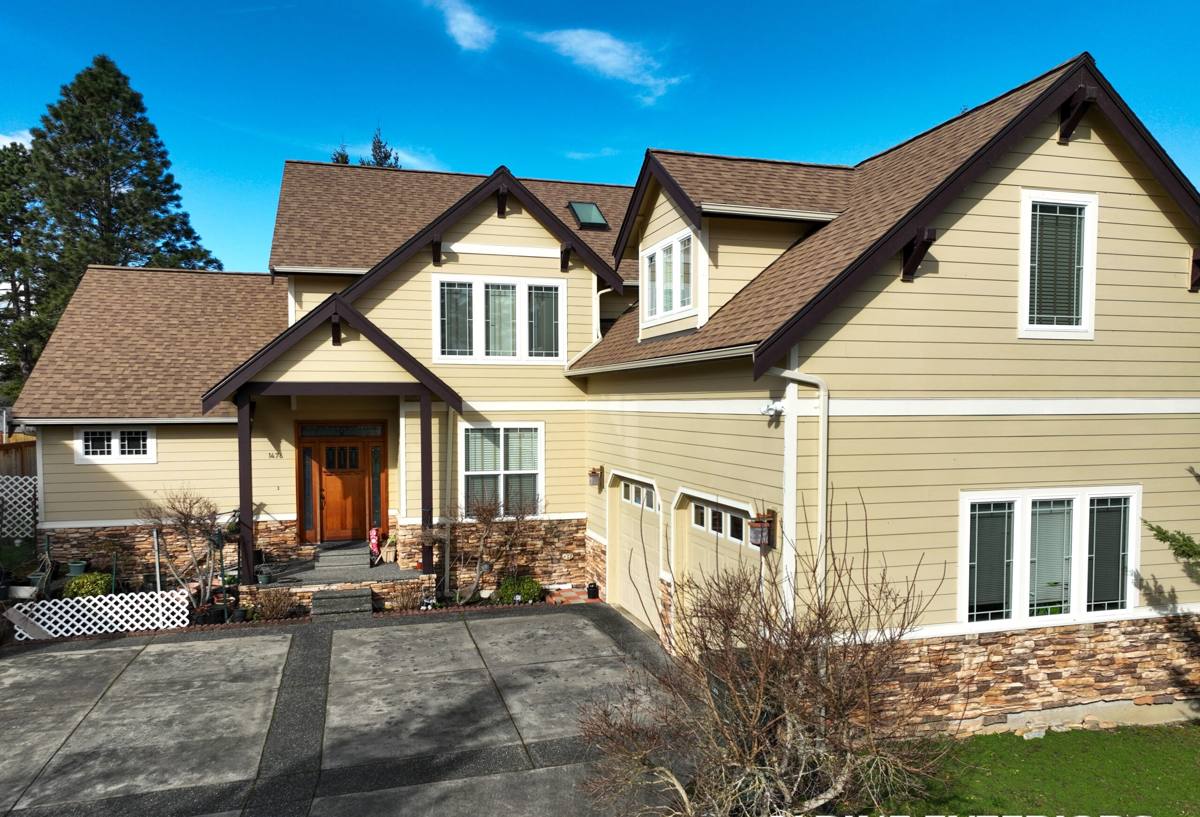
What Peace Arch's Climate Actually Does to Windows
Salt Air and Metal Components
Salt in the air is corrosive to unprotected metal hardware — hinges, locks, balance systems, and screen frames. On homes closest to the water, we see this show up as stiff or seized hardware years before the glass or frame shows any real wear. Cheaper aluminum or bare-steel hardware corrodes faster than marine-grade or properly coated components, which is why hardware spec matters as much as glass spec out here.
Driving Rain and Water Intrusion
Wind off the water doesn't just blow rain against the glass — it drives it sideways into any gap around the frame. A window that would be fine in a sheltered inland yard can leak here if the flashing, sill pan, and sealant details aren't done correctly. Most of the water damage we find around old Peace Arch-area windows didn't come through the window itself; it came through a bad perimeter seal that let water track behind the trim and into the wall framing.
Moss and Prolonged Moisture
Blaine's moss season means exterior wood trim and sills stay damp for extended stretches, especially on north-facing walls that don't get much direct sun to dry out. Untreated or poorly finished wood window components hold that moisture and eventually rot from the outside in. This is less about the window unit itself and more about what surrounds it — sills, trim, and the wall assembly behind the window.
What a Correct Job Looks Like Here
Energy-efficient windows are only as good as the install. In this climate, three things matter more than they would in a drier, more sheltered part of the county:
- Frame material matched to exposure. Homes with direct water views or exposed western walls need frame and hardware materials that hold up to salt air, not just cost-effective inland-grade components.
- Proper flashing and sill pan detail. The window opening has to shed water outward and downward, every time, regardless of wind direction. This is a installation detail, not a product feature — even a premium window leaks if the opening isn't flashed correctly.
- Sealed, ventilated trim. Trim and sill areas need finishing and detailing that lets any incidental moisture dry out rather than trapping it against wood or fiber components.
We also pay close attention to glass package selection for this specific microclimate. Low-E coatings and gas-filled insulated glass units help with year-round comfort and energy bills, but the bigger practical win for Peace Arch-area homes is often the seal quality and frame performance — because a window that leaks air or water undermines the energy benefit of good glass anyway.
Frame Material Comparison for Coastal Blaine Exposure
| Frame Type | How It Handles Salt Air | Maintenance Burden |
|---|---|---|
| Vinyl | Doesn't corrode; performs consistently near the water | Low — occasional cleaning, no repainting |
| Fiberglass | Very stable, resists salt and moisture exposure well | Low — durable finish, minimal upkeep |
| Wood (clad exterior) | Good if cladding is intact; exposed wood is vulnerable | Moderate — depends on cladding integrity over time |
| Bare aluminum | Prone to corrosion and pitting in salt air over time | Higher — hardware and finish need more frequent attention |
We don't push one frame material on every home. The right call depends on how exposed the specific wall is, the home's existing trim and siding, and the homeowner's maintenance preference. What we won't do is install a frame or hardware package that we know underperforms in this specific salt-and-rain environment just because it's cheaper up front — that trade-off tends to show up as a callback in a few years, and we'd rather have that conversation honestly before the job starts.
Our Process for Peace Arch-Area Window Jobs
1. On-Site Assessment
We walk the exterior and look at each window's exposure individually — which walls face the water and prevailing wind, where moss and moisture are already collecting, and where existing hardware or sills show early corrosion or rot. Exposure varies a lot even across one house here, so recommendations aren't one-size-fits-all.
2. Product and Glass Selection
We talk through frame material, hardware grade, and glass package options based on that exposure assessment, along with the home's existing exterior finishes. Budget and priorities are part of that conversation — not every window on a house needs the same spec.
3. Removal and Opening Prep
Old windows come out carefully, and we inspect the framing and sill underneath for hidden rot or water damage before anything new goes in. This is where problems that started years ago, often invisible from inside, get caught and addressed rather than covered up.
4. Flashing, Sealing, and Installation
Correct sill pan and flashing detail comes first, then the window unit, then perimeter sealing designed to shed wind-driven rain rather than just block it. This sequence is what actually keeps water out long-term in a driving-rain environment.
5. Trim and Finish Work
Exterior trim is finished and sealed to handle Blaine's extended damp season, with attention to drainage and airflow so trim doesn't trap moisture against the wall.
6. Final Walkthrough
We check operation, seals, and finish work with the homeowner before calling the job done.
Signs a Peace Arch-Area Home Needs Window Attention
- Sashes that stick, especially on north or water-facing walls
- Visible corrosion or stiffness in window hardware and locks
- Moss or dark staining building up on sills or lower trim
- Drafts or cold spots near windows during winter wind events
- Soft or discolored wood trim around window openings
- Condensation forming between panes on older insulated glass units
- Rising energy bills without a clear explanation elsewhere in the home
Energy Efficiency in a Marine Climate
Whatcom County's marine climate means Blaine homes deal with more consistent cool, damp weather than big temperature swings. That changes what "energy efficient" should mean for a Peace Arch-area window job. Insulated glass and a tight, well-sealed frame do more for comfort and heating costs here than high-solar-gain glass designed for hot, sunny climates. The priority is keeping conditioned air in and cold, damp air out, consistently, through months of wind and rain rather than short bursts of extreme heat or cold.
A properly installed, well-sealed window also reduces condensation risk on interior glass and sills, which matters in a climate where excess indoor moisture combined with cool glass surfaces can contribute to mold and mildew issues over a long wet season.
Why Hire a Crew That Already Works This Area
Window replacement done wrong in this microclimate doesn't fail quietly — it shows up as a leak behind drywall, a rotted sill, or hardware seized shut within a few seasons. A crew that already works Peace Arch-area homes has seen these specific failure patterns before and builds the install around them, rather than treating every job like it's in a dry inland neighborhood. That local pattern recognition is worth more than a generic warranty when the climate itself is the thing working against a bad install.
We're straightforward about trade-offs between frame materials, glass packages, and price points, and we won't recommend a spec we don't think will hold up to this specific exposure. If a lower-cost option is genuinely the right fit for a particular wall or budget, we'll say so.
If you're weighing window replacement for a Peace Arch-area home in Blaine, we're happy to take a look and give you a straightforward, no-pressure estimate based on your home's actual exposure and condition. Use the form below to get started.