 Blaine Siding
 Deck Replacement in Nooksack: Building for a Wet, Salt-Touched Corner of Whatcom County
Nooksack sits in a part of Whatcom County where the weather doesn't do a deck any favors. Salt-tinged air drifts in off the Salish Sea on windier days, driving rain comes through in long stretches rather than quick showers, and the mild, damp climate keeps things wet enough, long enough, that moss gets a real foothold on almost any horizontal wood surface. A deck out here isn't just outdoor furniture — it's a structure that sits low to the ground, catches standing water on its surface, and takes moisture from above, below, and the sides all at once. That combination wears out decks faster than homeowners usually expect, especially when the original build didn't account for it.
We work this stretch of Whatcom County regularly out of our Blaine-area base, and deck replacement is one of the calls we get most often from homeowners who've already tried patching a board here or a post there and are past the point where repair makes sense. This page covers what actually happens to decks in the Nooksack area, what a correct replacement involves, how we approach the job, and why local experience matters more here than a lot of homeowners realize going in.
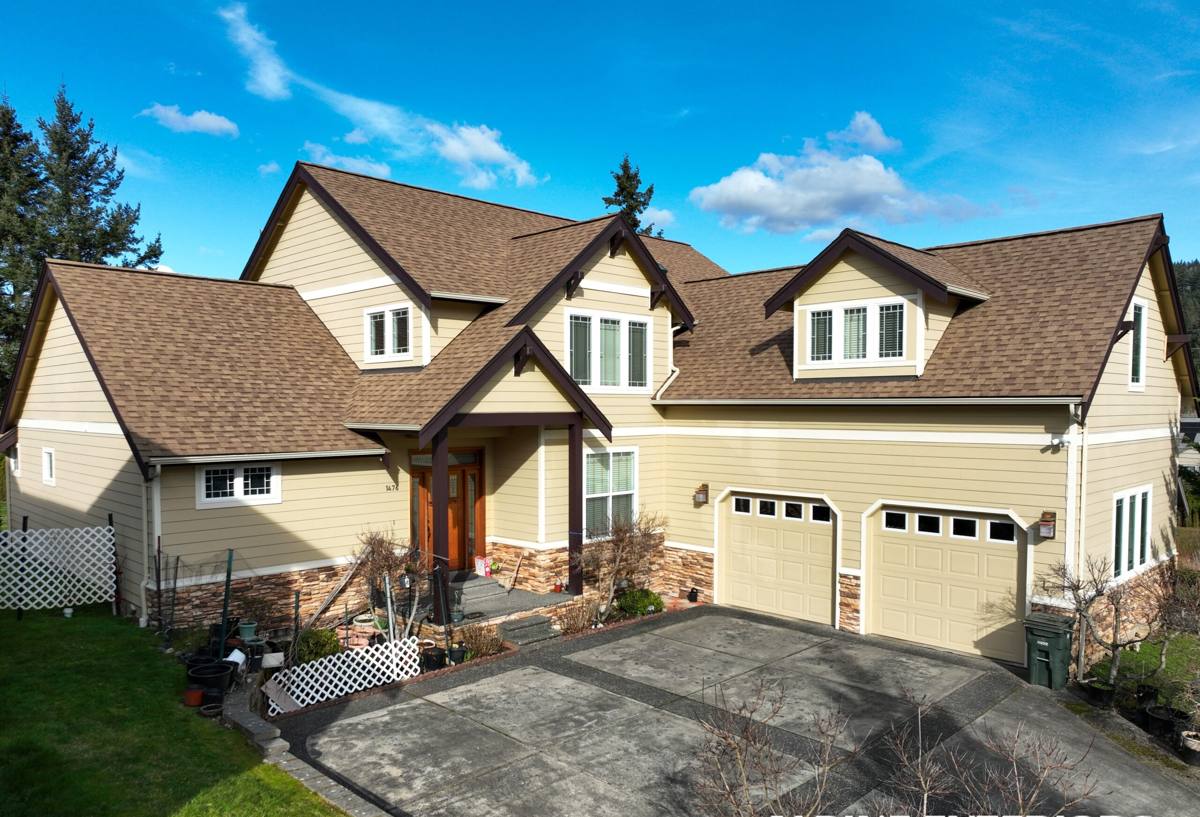
What Nooksack's Climate Actually Does to a Deck
Salt Air Carried Inland
Nooksack isn't waterfront, but it's close enough to the coast that salt-laden air reaches inland on breezier days, especially through the fall and winter storm season. Salt doesn't need direct ocean exposure to do damage — it settles on fasteners, joist hangers, and any exposed metal hardware over time, speeding up corrosion in ways that aren't visible from the top of the deck until a board starts to lift or a railing gets loose. It's a slower process than what a waterfront home deals with, but over the life of a deck it adds up.
Driving Rain and Standing Water
Storms in this part of the county tend to bring sustained, wind-pushed rain rather than brief downpours. On a deck, that means water gets driven under railings, into board gaps, and against ledger connections rather than just falling straight down and running off. Decking that doesn't have proper spacing or slope holds that water on the surface longer, and framing underneath that doesn't drain well stays damp for days after a storm has passed rather than drying out between rain events.
A Long Moss and Mildew Season
Mild temperatures plus near-constant moisture add up to a moss season that can run most of the year on shaded decks or those under tree cover, which describes a lot of properties around Nooksack. Moss holds moisture directly against the decking surface, and on wood that means accelerated rot underneath a layer that looks like it just needs cleaning. Composite and PVC decking resist moss better than wood, but even those surfaces need airflow underneath to fully avoid the problem.
Signs a Nooksack Deck Needs Replacement, Not Just Repair
Not every deck problem means starting over. But there's a point where patching individual boards or hardware stops being a real fix and starts being a way to delay a bigger job. Some signs we look for when we're deciding whether repair still makes sense:
- Soft, spongy, or spring-back decking across more than a board or two, not just one isolated spot
- Rot or soft wood at the ledger board where the deck attaches to the house — this is a structural connection, not a cosmetic one
- Wobbly or leaning support posts, or visible movement when the deck is loaded
- Rust streaking from fasteners or joist hangers, especially on framing you can't fully inspect from above
- Footings that have shifted, heaved, or show visible cracking
- A deck more than 15-20 years old built with older lumber and hardware standards that don't match current best practice
- Repeated moss or algae growth that comes back within weeks of cleaning, no matter how it's treated
If what you're seeing is limited to surface wear on decking boards with a structurally sound frame underneath, repair or a deck resurface can be the right call. Once the framing, ledger, or footings are compromised, replacement is usually the more honest answer, because a repair on a failing structure doesn't fix the underlying problem — it just delays it.
What a Correct Deck Replacement Involves
Ledger Board and Flashing
The ledger board — where the deck attaches to the house — is the single most common failure point we find on tear-offs in this climate, and it's also the connection that does the most structural work. A correct replacement uses proper flashing that directs water away from the house band joist rather than letting it pool behind the ledger, along with fasteners rated for the load and spaced to code. This detail is invisible once the deck is finished, which is exactly why it's the part most likely to get shortcut on a lower-quality job.
Framing and Fasteners
Joists, beams, and posts need to be sized correctly for the span and load, and every connection — joist hangers, post bases, structural screws — should use corrosion-resistant, exterior-rated hardware given the salt exposure this area gets. Standard interior-grade fasteners have no place in a Whatcom County deck build; the cost difference is small relative to how much faster corrosion sets in without them.
Footings and Post Bases
Footings need to sit below frost depth and be sized for the loads they're carrying, with post bases that keep the wood post itself off the concrete and out of standing water. A lot of older decks in this area were built with posts set directly into or against concrete, which traps moisture against the wood and is one of the more common places we find rot on a tear-off.
Decking Surface and Drainage
Proper board spacing lets water drain through rather than pool on the surface, and a slight slope away from the house helps the whole structure shed water instead of holding it. This matters more in a climate with sustained rain than in a drier one, where a flatter deck or tighter spacing might not cause real problems.
Decking Material Options for This Climate
There isn't one universally "correct" decking material — the right choice depends on budget, maintenance tolerance, and how much moisture and shade a particular deck deals with. Here's how the common options compare for a wet, salt-touched climate like Nooksack's:
| Material | Moisture & Moss Resistance | Maintenance | Typical Lifespan |
|---|---|---|---|
| Pressure-treated lumber | Good if properly sealed and maintained; vulnerable if coating lapses | Needs regular cleaning and re-sealing every 1-2 years | 10-15 years with upkeep |
| Cedar | Naturally moisture- and insect-resistant, but softer surface holds moss if not maintained | Periodic sealing and cleaning to keep its appearance and resistance | 15-20 years with upkeep |
| Composite decking | Strong moisture and moss resistance; doesn't rot | Occasional washing; no sealing or staining | 25-30 years, backed by manufacturer warranty |
| PVC decking | Fully synthetic, essentially immune to rot and moisture damage | Lowest maintenance of the common options | 25-30+ years, backed by manufacturer warranty |
We install pressure-treated and cedar framing and decking as well as composite and PVC surface options, and we'll walk through the honest trade-offs for your specific property rather than push whichever material has the best margin. A heavily shaded, moss-prone lot is a strong argument for composite or PVC; a homeowner who doesn't mind periodic maintenance and wants a natural wood look may be perfectly happy with cedar.
Our Deck Replacement Process
- On-site assessment: We inspect the existing deck's framing, ledger connection, footings, and hardware to confirm whether replacement is the right call and to understand what the new structure needs to account for on your specific lot.
- Design and material selection: We talk through decking material, railing style, and layout, with honest input on how each option holds up in this climate and what it costs to maintain over time.
- Permitting: We handle the permit application with Whatcom County where the scope of work requires one, so the finished deck is inspected and on record.
- Demolition and disposal: The old deck comes out, including framing and footings that aren't being reused, and we haul away the debris.
- Framing and structural work: New footings, posts, beams, joists, and ledger flashing go in to current code and manufacturer specifications, sized for the actual loads the deck will carry.
- Decking, railing, and finish work: Surface decking and railings go on last, with attention to board spacing, drainage, and fastener placement.
- Final walkthrough: We go over the finished deck with you, including basic care and maintenance guidance specific to the material you chose.
Cost Factors for a Nooksack Deck Replacement
We won't quote a number without seeing the property, since size, framing condition, ledger accessibility, and material choice all move the price significantly. What generally drives cost on jobs like this:
- Deck size and footprint, including any multi-level or wraparound design
- Height off the ground, which affects footing depth, post length, and whether stairs or additional railing are needed
- Decking material — pressure-treated and cedar run less upfront than composite or PVC, though the maintenance and lifespan trade-offs matter over time
- Condition of existing footings and framing, and whether they can be reused or need full replacement
- Railing style and any built-in features like benches, planters, or lighting
- Site access for equipment and material delivery
These are general drivers, not a quote. A property with easy access and a straightforward rectangular footprint costs less to build on than one with tight access, a steep grade, or a design with multiple levels — which is exactly why we walk the site before putting a real number in front of a homeowner.
Permits and Building Code in Whatcom County
Most deck replacements of any meaningful size require a permit through Whatcom County, particularly when the deck attaches to the house or sits above a certain height off the ground. Requirements cover things like ledger attachment, guardrail height, baluster spacing, and stair geometry, and they exist because a deck is a structure people stand on, not just a cosmetic feature. We handle the permit process as part of the job rather than leaving it for the homeowner to sort out, and we build to pass inspection rather than treating code minimums as optional.
Why a Crew That Already Works Nooksack Matters
A contractor who works this part of Whatcom County regularly has already seen how salt-tinged air, driving rain, and a long moss season play out on real decks over years, not just how a material performs on a spec sheet. That shows up in practical decisions on a build: which hardware is worth the extra cost given the corrosion exposure here, how much slope and spacing actually keeps water moving on a shaded lot, and where a ledger connection needs extra attention because of how a particular house is built. A crew learning those lessons for the first time on your deck is a different experience than one that's already made those calls dozens of times in this exact climate.
Questions Worth Asking Before You Hire
- Are you licensed and insured to do structural deck work in Washington?
- Will you pull the required Whatcom County permit, and who's responsible for the inspection?
- What hardware and fastener grade do you use given the salt exposure in this area?
- How do you handle a ledger connection to make sure water doesn't get behind it?
- Can you walk me through the trade-offs between the decking materials you offer?
Get a Free, No-Pressure Estimate
If your deck in Nooksack is showing soft spots, loose railings, rot at the ledger, or is just old enough that you're wondering whether it's still safe to use, we're glad to take a look. Reach out using the form below to schedule a free, no-pressure estimate — we'll give you a straightforward read on whether repair or replacement is the right call for your property.